Zinc-plated fasteners receive zinc by electrodeposition. Batch hot-dip galvanized fasteners are immersed in molten zinc, producing a coating that includes zinc-iron alloy layers. Both use zinc to protect steel, but the process, coating build and mating-thread arrangement differ.
For a zinc plated vs galvanized comparison, define “galvanized” first. This guide means batch hot-dip galvanizing, often shortened to HDG. Mechanical galvanizing and other zinc-coating processes should be identified separately when they appear on a quotation.
Zinc plated vs galvanized: start with the process
The American Galvanizers Association describes zinc plating as an electro-deposition process used on fasteners. It commonly produces a smooth, bright surface. Its guide also identifies several other ways of applying zinc, which is why a broad finish label can be ambiguous.
In batch hot-dip galvanizing, prepared steel enters a molten zinc bath. The zinc reacts with the steel to form an alloyed coating. The process name therefore conveys more information than a description such as “silver finish.”
A useful comparison identifies the actual process offered by each supplier. If one quotation says “zinc plated” and another says only “galvanized,” the first question is what the second supplier means. Comparing the prices before resolving that wording may compare different coating systems.
Compare the coating, not just its color
A bright surface is an appearance observation. It does not establish the coating process, specified coating amount or suitability for the intended exposure. A matte gray surface leaves similar questions unanswered.
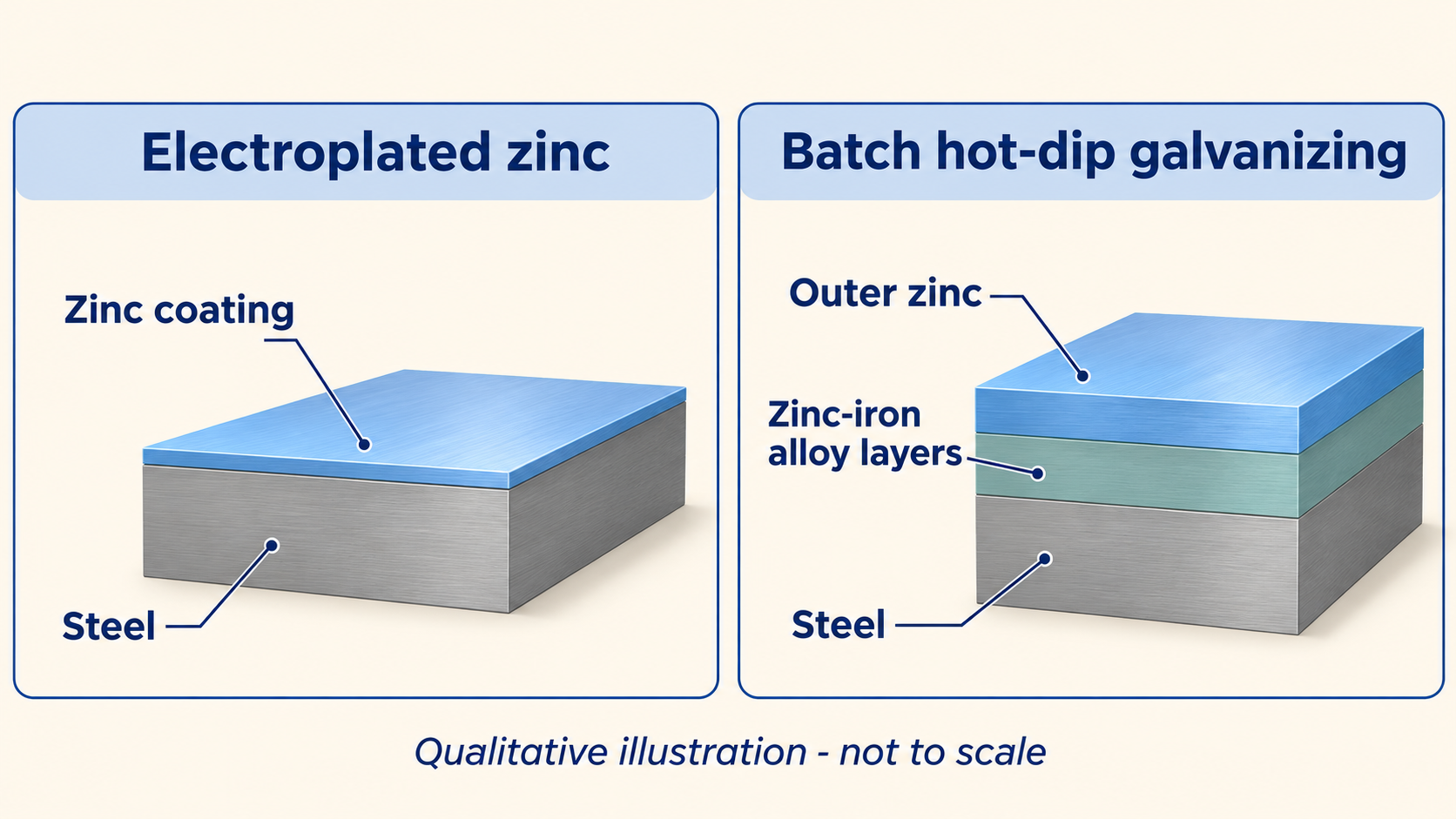
The AGA’s process explanation describes a typical batch HDG coating as zinc-iron alloy layers beneath an outer zinc layer. Electroplated zinc is deposited on the substrate. The illustration below separates these qualitative relationships without assigning a thickness to either purchased part.
When reviewing samples, keep appearance and specification evidence in separate fields. A photograph can help agree on visual expectations, while the finish designation and inspection information identify what was supplied.
That separation also makes a proposed change easier to assess. “Looks similar” can answer an appearance question, but it cannot settle a change in coating process or mating fit.
Check the nut and bolt as a coated pair
A finish change can affect the threaded assembly. Portland Bolt explains that the coating build on hot-dip galvanized bolt threads is accommodated by appropriately oversize-tapped mating nuts. Its guidance rejects treating ordinary zinc-plated or plain nuts as interchangeable with that mating arrangement.
This is an assembly-selection issue, rather than a reason to modify parts until they fit. The supplier needs to identify the intended bolt-and-nut combination and how its coated threads are specified.
The nut size chart distinguishes nominal thread size, wrench width and thickness. Those dimensions organize a part description, but nominal thread size alone does not establish the coated-pair relationship.
Consider a replacement request that retains the bolt’s nominal thread designation while changing its finish. The nut line should be reviewed at the same time. Leaving the existing nut description untouched does not answer whether it is the appropriate mate for the proposed coated bolt.
The reverse substitution also deserves attention. A nut selected with additional thread allowance for an HDG bolt should not be assumed equivalent on a different bolt finish. Resolve the pair through the specified assembly, rather than accepting either component in isolation.
Describe exposure before choosing a finish
The amount of zinc and the environment in which it is consumed both influence protection. The AGA’s discussion of coating thickness and service life emphasizes actual exposure, including moisture, airborne salts and local conditions.
“Outdoor” is therefore an incomplete purchasing description. A sheltered connection that retains moisture and a freely draining connection may face different local conditions, even at the same facility.
Useful exposure notes describe what reaches the fastener and how long the surface remains wet. They also identify whether salts or process contaminants are relevant. These inputs are more informative than choosing solely from a photograph of the finish.
A general coating comparison cannot supply a guaranteed maintenance interval for an unspecified joint. If an enquiry asks for a service-life statement, the supporting assumptions should include the actual coating and exposure conditions.
For a broader material decision, the carbon steel versus stainless steel guide discusses the separate choice of base material and protection system. A coating comparison should remain connected to the actual fastener specification.
Read a quotation through three separate checks
One line of quotation text can appear complete while answering only one part of the selection. The following review separates finish identity, assembly fit and exposure evidence.
| Quotation information | What it helps identify | What still needs confirmation |
|---|---|---|
| Named zinc-coating process | The coating system being offered | The specified finish details and supporting records |
| Nominal bolt and nut thread | The basic mating designation | The intended coated-pair fit |
| Stated exposure or service requirement | The environment to be considered | The conditions supporting any protection or maintenance claim |
These checks are independent. Clear finish wording does not prove that the nut selection has been reviewed. A correctly identified pair does not establish a service-life claim for a location the supplier has not been told about.
Use the table to mark an unresolved item precisely. “Confirm the process meant by galvanized” or “identify the matching nut” gives the supplier a specific question. A broad request to confirm that the finish is suitable can hide which information is missing.
Make the purchase line specific
A useful purchase line identifies the fastener and finish requirements, the relevant mating components and the governing drawing or agreed specification. It records proposed deviations explicitly.
For example, an enquiry can ask the supplier to identify whether its offered zinc finish is electroplated or batch hot-dip galvanized, then identify the mating nut supplied with the proposed bolt. The exposure information can accompany that request as a separate input.
This wording does not select a universal coating or approve a connection. It makes the proposed supply easier to compare with the actual requirement.
The most useful outcome is a comparable quotation: the coating process is named, the coated assembly is identified and any protection claim is tied to stated conditions. That is a stronger basis for selection than treating every zinc-colored fastener as the same product.
References
American Galvanizers Association: zinc-coating processes for fasteners
American Galvanizers Association: batch galvanizing and other zinc coatings
Portland Bolt: galvanized bolt and nut thread allowance
American Galvanizers Association: coating thickness and exposure conditions