What each washer is actually doing in the joint
A disc spring, also called a Belleville disc, is a circular conical element. When compressed between two flat surfaces, the cone flattens and produces axial force. Its load curve depends on outside diameter, inside diameter, free height, thickness, material, friction, and the number and orientation of discs. A single disc can provide high force in a short axial space; nested or opposed stacks alter force and travel in a controlled way.
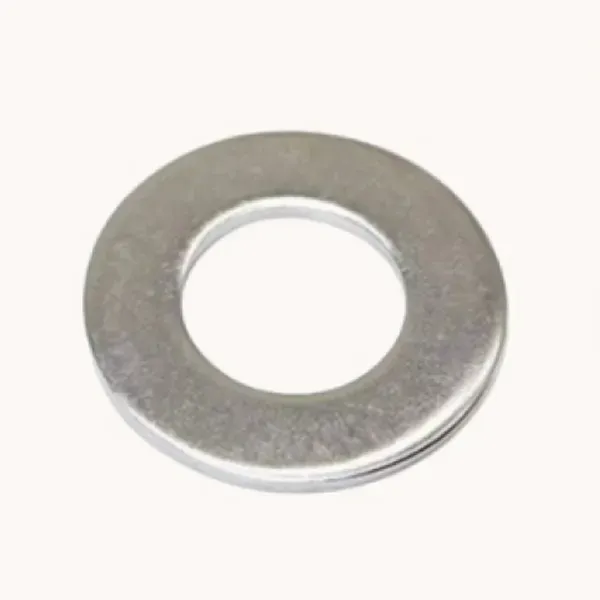
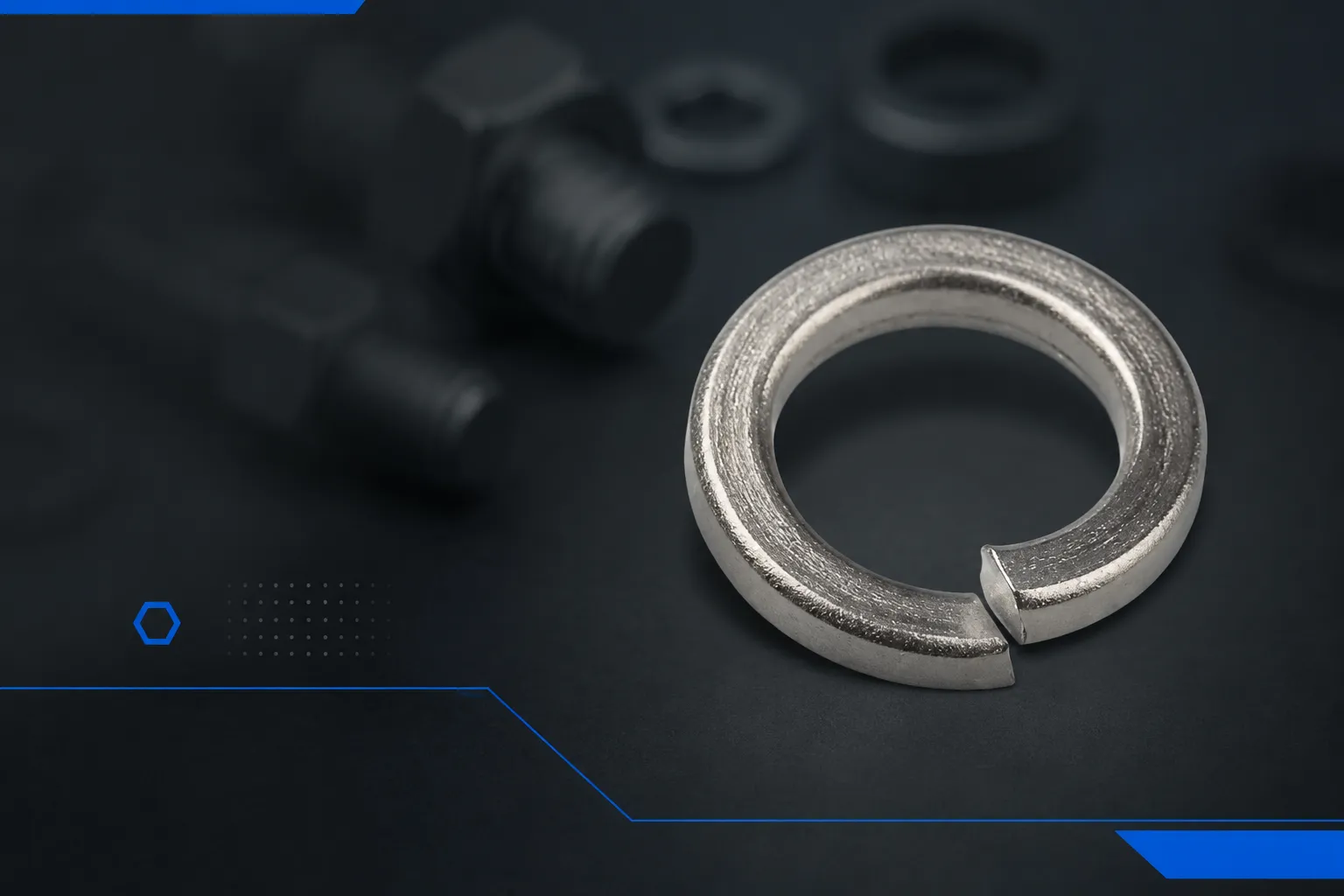
A helical spring lock washer starts as a split ring with a helical offset. Tightening the joint flattens that offset and creates a small spring reaction, while the sharp ends can bite into mating surfaces. In practice, preload retention is governed by embedment, surface finish, friction, fastener torque scatter, and transverse movement. It is not a substitute for a calculated disc-spring load path in a joint that needs measurable travel or compensation.

People sometimes search for a spr belleville when they mean a disc spring, a conical washer, or a supplier’s shorthand for a spring washer. The phrase can point to different geometries, so a drawing and load requirement are more reliable than a short catalog term. A true belleville spring lock washer description should identify whether the part is conical and whether its performance is calculated or simply used as a locking aid.
How load, deflection, and vibration differ in practice
Force path and working range
Disc-spring behavior is normally analyzed against force and deflection. DIN 2092 calculations use the disc proportions and material assumptions to estimate the characteristic curve; a design review then checks stress, fatigue, and permissible travel. Stacking discs in the same direction increases force, stacking in series increases travel, and alternating orientations can balance both. Friction between discs must be considered because it changes the measured response.
The spring-lock washer response is less convenient to model as a precision force device. Its helical leg flattens early, and its locking contribution can diminish when surfaces settle or the joint slips. A torque audit using ISO 16047 or a controlled clamp-load test can expose this scatter. If the joint must maintain a defined load across thermal movement, gasket relaxation, or repeated cycling, the belleville spring lock washer choice should be challenged against a calculated disc stack or another engineered tensioning method.
Vibration and relaxation
Neither design should be sold as a universal anti-vibration solution. Transverse vibration tests such as DIN 25201 or NASM 1312-7 evaluate a complete fastened joint, not just a washer in isolation. A disc spring can maintain useful travel as the joint settles, provided it remains inside its elastic range and the stack is guided. A helical washer may lose contact pressure after embedment, and its split ends can mark softer coatings. Joint geometry, preload, and prevailing torque often matter more than the washer name.
For temperature changes, select material and spring rate together. Stainless steel, carbon steel, and nickel alloys have different modulus, relaxation, and corrosion behavior. The specification should state temperature range and atmosphere; “stainless” alone does not define a fatigue or corrosion guarantee. A belleville spring lock washer term should never hide these service conditions.
How the term spr belleville affects engineering and purchasing decisions
| Dimension | Disc spring | Helical spring lock washer |
|---|---|---|
| Primary function | Calculated axial force, travel, and compensation | Basic locking aid and small elastic reaction |
| Load definition | Force-deflection curve can be specified and tested | Highly dependent on torque, surfaces, and flattening |
| Envelope efficiency | High force in short axial height | Low-profile, but limited useful travel |
| Stacking | Parallel, series, or mixed orientation with a drawing | Normally used singly; stacking is rarely a controlled design |
| Vibration suitability | Can compensate for settlement when joint analysis supports it | Must be validated in the actual joint; not a guaranteed locking method |
| Durability | Fatigue life depends on stress, cycles, material, and finish | Edges and coating can wear; relaxation may reduce effect |
| Unit-cost tendency | Higher engineering and inspection effort, often justified by load control | Low part cost, but rework and retest can dominate total cost |
| Best documentation | Drawing, spring curve, material, heat treatment, and test record | Standard designation, dimensions, material, and joint torque process |
For a deeper terminology check, the guide on Belleville spring washer terminology explains why naming conventions overlap. It is useful background, but the joint drawing remains the controlling document.
Application and cost-driver matrix
| Application or cost driver | Preferred starting point | What to verify before release |
|---|---|---|
| Thermal expansion in a compact flange | Disc-spring stack | Operating temperature, travel, stress range, guide diameter, and relaxation |
| Bolt preload indicator or compensation | Single or series disc spring | Target force at working deflection and calibration method |
| General outdoor equipment with ordinary bolts | Helical washer only if the joint standard and test support it | Corrosion system, surface hardness, torque procedure, and vibration result |
| Frequent service disassembly | Disc spring or a positive locking feature selected with the joint | Reuse policy, loss of preload, and replacement interval |
| Cost pressure on a high-volume assembly | Compare part price with labor, inspection, and failure exposure | Illustrative total-cost model, supplier capability, and incoming checks |
| Unclear catalog term such as spr belleville | Pause and request a drawing | Conical profile, dimensions, standard, load curve, and material traceability |
The matrix separates a low purchase price from total cost of ownership. An illustrative calculation might compare one extra inspection minute and a retest against a higher-priced disc spring that arrives with a documented curve; actual labor rates and failure probabilities must come from the buyer’s process data. The point is to price uncertainty, not invent a universal saving.
How standards, drawings, and compliance boundaries shape washer selection
DIN 2092 is a calculation method for disc springs, not a blanket product certification. DIN EN 16983 covers quality and dimensions for disc springs, while ISO 19690-2 provides technical specifications for disc springs. DIN 6796 applies to conical spring washers for bolted connections, a category that can be confused with a general spring lock washer. A belleville spring lock washer drawing should identify the applicable geometry before any standard is cited. Each standard should be cited only when the supplied geometry and inspection actually follow it.
ISO 9001 describes a quality-management system. It does not prove that a particular disc spring, spr belleville, or belleville spring lock washer conforms to a dimensional, material, or fatigue requirement. Commercial documents should identify the applicable standard, revision, material grade, heat treatment, coating, sampling plan, and any customer-specific test. A procurement search for spr belleville should therefore be matched to a drawing before a quotation is compared. Unsupported certification language can create rejection, warranty, and destination-market compliance risk.

For context, the Schnorr standard disc-spring overview shows how established manufacturers present dimensions and options. Buyers should treat such information as a technical reference, then reconcile it with the project’s own drawing, environment, and validation plan.
How engineers can select a washer safely for a specified joint
- Define the joint. Record bolt size and grade, clamped materials, grip length, gasket or coating, target preload, external load, temperature, and expected cycles.
- Choose the behavior. If the joint needs a known force-deflection curve or settlement compensation, start with a disc-spring design. If the need is simply a standard washer in a low-risk joint, assess whether a helical washer is appropriate at all; catalog searches for spr belleville are not enough evidence.
- Draw the geometry. State outside and inside diameter, thickness, free height, working height, orientation, guide features, and allowable parallelism. Never approve a belleville spring lock washer by text label alone.
- Set the evidence plan. Request material and heat-treatment records, dimensional inspection, load-deflection data where relevant, and a joint-level torque or vibration test. Use a named method and acceptance criteria rather than “tested.”
- Release a controlled source. QIYI Fastener can discuss configurable spring washers, disc springs, and related fastening components when the buyer supplies the joint data and documentation requirements; the spring-washer product page is a useful starting point for standard helical options. The brand should be evaluated on drawing control, traceability, sampling, and response to deviations–ot on an unsupported claim that every washer is interchangeable.
Engineers who need stacking examples can review the disc-spring washer design and stacking guide. For application context, the article on disc-spring uses and applications helps translate load requirements into equipment decisions. Neither resource replaces a signed project drawing and test plan.
What engineers should ask before approving a washer
Is a Belleville spring the same as a spring lock washer?
No. A disc spring is a conical element engineered for axial force and deflection; a helical spring lock washer is a split, offset ring used as a basic locking aid. They may both sit under a bolt head, but their load curves and validation needs differ.
What does “spr belleville” mean on a purchase order?
It is often shorthand for a spring or disc spring, but it is not a complete technical designation. A buyer may see spr belleville in one catalog and “disc spring”in another; ask for a drawing, dimensions, material, standard, working load, and orientation before accepting the order.
When should a belleville spring lock washer be used?
Use that phrase only after confirming that the part is a conical disc spring intended for the joint, not merely a helical washer with “Belleville”in a catalog category. A request written as spr belleville should be converted into the same force, deflection, fatigue exposure, and applicable-standard checks before a joint-level test.
Can spring lock washers prevent loosening under vibration?
They can contribute friction or resilience in some low-demand joints, but performance depends on preload, surfaces, and transverse motion. A vibration method such as DIN 25201 should assess the complete assembly; a positive locking feature may be more appropriate when safety consequences are high.
How should Belleville springs be stacked?
Discs in the same direction raise force, while discs arranged in series raise travel; mixed stacks balance both. The designer should calculate the curve, account for friction, provide guidance, and mark orientation on the assembly drawing.
Does ISO 9001 certify a specific washer?
No. ISO 9001 concerns the supplier’s quality-management system. Part conformity still requires the specified dimensions, material, process records, and test evidence for the applicable standard and customer requirements.
What the references say about washer selection
- ISO 19690-2: Disc springs technical specifications.
- ISO 9001 quality-management-system overview.
- Schnorr standard disc springs.
- Schnorr disc-spring expertise and technology.
The reliable rule is simple: specify the force path, then name the washer. When a project reaches the sourcing decision, review QIYI Fastener’s washer products and contact the team with the joint drawing, environment, and evidence requirements so the proposed part can be checked before release.