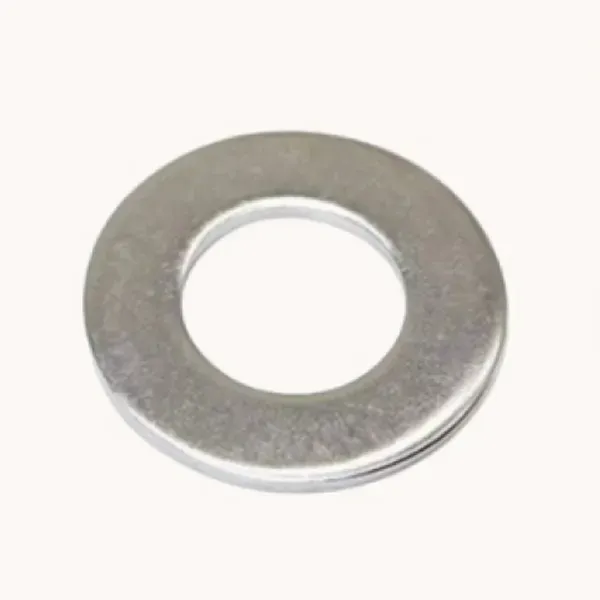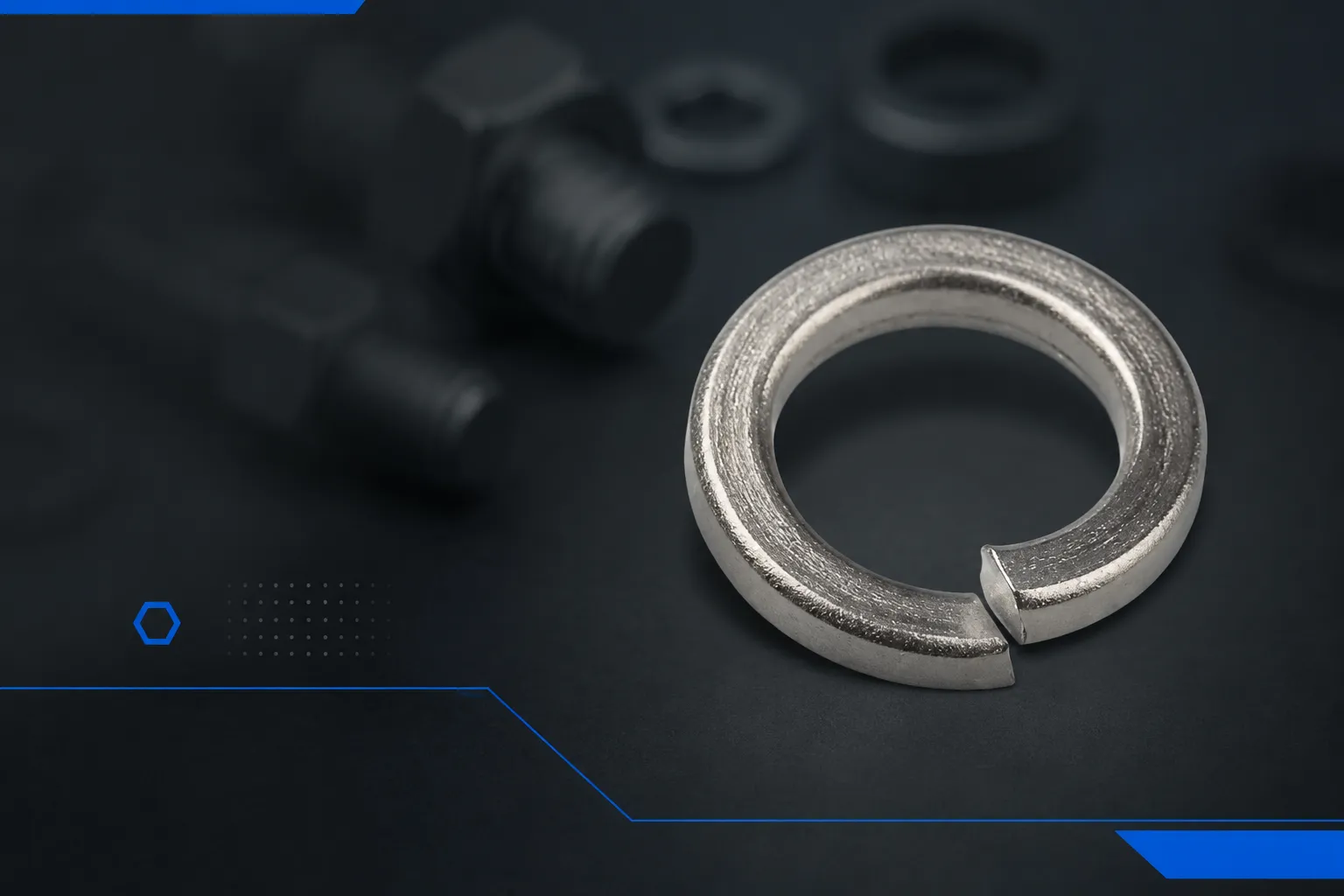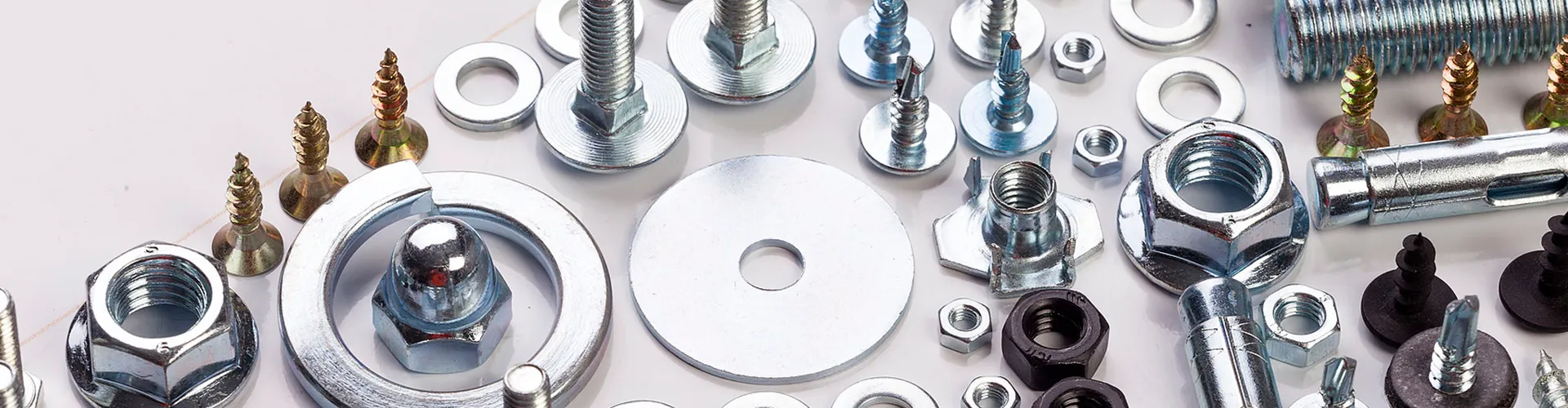
Belleville spring washers and disc springs may look similar, but their intended functions are different
What a disc spring is designed to do
A disc spring is a shallow, annular cone. Under axial compression, its cone height reduces and it produces a nonlinear reaction force. The key dimensions are outside diameter, inside diameter, thickness, free cone height, and material condition. In a belleville disk spring, small changes in thickness or cone height can materially change the force curve; that is why dimensions, tolerances, and calculation assumptions matter. A belleville disk spring should consequently be identified by its drawing and working requirements, rather than by its conical outline alone.
Disc springs are commonly used where a compact axial spring must maintain force through movement: bolted joints subject to settling, valve assemblies, clutches, tooling, safety devices, or bearing arrangements. The useful motion is not simply the available installation gap. It is the specified working deflection over which the required force, stress level, and expected service life remain appropriate.
The terminology is a practical source of procurement risk. “Belleville” may describe a cone-shaped form, but form alone does not establish material grade, load curve, fatigue suitability, surface condition, or compliance with a particular standard. In this guide, belleville disc spring refers to the engineered disc-spring function rather than to a generic visual description. A buyer comparing belleville spring washers with engineered disc springs should therefore begin with function and measurable dimensions, not a catalogue label or a photograph.
What a conical spring washer is designed to do
A conical spring washer is generally selected for bolted-joint service. It can add elastic compliance beneath a nut or bolt head and may help offset limited embedment, relaxation, or thermal movement when it is correctly matched to the joint. DIN 6796 applies to conical spring washers for bolted joints; it should not be treated as a shortcut label for every conical disc spring. Buyers sourcing belleville spring washers should still state the fastener size, bearing face, and intended joint function.

That distinction affects installation. A washer can be installed as one element of a bolted joint, whereas a disc-spring set may require a defined series, parallel, or mixed stack; orientation, lubrication, seating faces, and the compressed height all affect the result. A belleville disc spring is therefore not automatically interchangeable with a standard spring washer simply because both are conical.
The load–deflection behavior of a Belleville disk spring drives the engineering decision
Why the force curve matters
For a disc spring, load is not proportional to deflection across the entire travel in the way many buyers expect from a simple coil spring. DIN 2092 is used to calculate disc-spring characteristics and stresses from geometry and material assumptions. Its output is an engineering basis, not proof that a supplied part has passed a particular test or will survive every duty cycle. This is why a belleville disk spring should be compared at stated load points rather than by nominal diameter alone.
The load curve matters because a bolted joint has its own stiffness. If a joint settles by a small amount after tightening, a more compliant spring element can reduce the loss of force compared with a very stiff clamped system; however, the available travel must be real, the washer must remain in its intended operating range, and the bolt still needs correct preload. No washer substitutes for an inadequate tightening procedure, damaged threads, poor bearing surfaces, or an incorrectly sized fastener.
Series and parallel stacking are not cosmetic choices
In a series stack, similarly oriented discs are arranged so that deflection capacity increases while the force level remains broadly comparable to one disc, subject to friction and tolerance effects. In a parallel stack, discs face in the same direction, increasing force at a similar deflection. Mixed stacks combine both effects. The number of discs alone is not a reliable specification: orientation, contact surfaces, guide geometry, and the working point must also be stated. A belleville disc spring stack should therefore be ordered with its sequence and compressed height clearly defined. For a fuller discussion of stack layouts, see this guide to disc-spring stacking and design principles.
Illustrative calculation only: if one qualified disc spring delivers an approximate target force at 1.0 mm of working deflection, two matching discs in series can provide approximately 2.0 mm of travel near that force, while two in parallel can provide approximately twice the force near 1.0 mm. For a belleville disc spring assembly, this approximation still needs to be checked against contact friction and the selected stack. Actual performance must be calculated and, where necessary, verified for the specified geometry, material, friction, tolerance, temperature, and fatigue duty.
This comparison helps sourcing and maintenance teams distinguish Belleville spring washers from disc springs
| Decision factor | Engineered disc spring | Conical spring washer for a bolted joint |
|---|---|---|
| Primary purpose | Controlled axial force and deflection from an engineered belleville disc spring, including assemblies and stacks | Elastic element beneath a fastener in a bolted joint |
| Specification focus | Load curve, dimensions, material, stress, stack arrangement, cycle duty | Bolt size, washer geometry, joint interface, installation and service condition |
| Usable travel | Defined working range, often expanded through series stacking | Usually limited and governed by the bolted-joint design |
| Performance verification | Calculation plus relevant dimensional, load, material, or fatigue checks | Dimensional and functional checks appropriate to the washer and joint |
| Compatibility risk | High if guide, seating, stack order, or working height is unspecified | High if used as a universal anti-loosening or preload remedy |
| Unit-cost tendency | May rise with controlled material, geometry, testing, or custom configuration | Often simpler to source, but not necessarily lower joint-life cost |
| Total-cost logic | Can justify added specification effort when force retention or compact travel prevents downtime | Can be suitable for straightforward joints when its limited function matches the requirement |

The hidden cost is usually not the washer price. It is the consequence of an ambiguous callout: rework after loss of preload, repeated retorquing, flange leakage, unplanned inspection, or a drawing change after samples have been ordered. For a vibration-critical joint, selecting belleville spring washers only because they resemble a proven disc-spring arrangement can transfer cost from purchasing to maintenance. A sourcing team should also avoid grouping all belleville spring washers under one stock description when their geometry or intended bolt-joint service differs.
Teams should use an application matrix before releasing a Belleville disk spring or spring-washer purchase order
| Application condition | Questions to resolve | Likely selection direction | Evidence to request |
|---|---|---|---|
| Vibrating pump or flange | What preload loss, joint settlement, bolt grade, temperature, and available movement are expected? | Evaluate a bolted-joint washer only within the complete joint design; use a calculated disc-spring solution where controlled travel is required. | Drawing, dimensions, material, coating, installation torque/preload procedure, functional test plan |
| Valve or actuator | What force is needed at each position, and how many cycles are expected? | Disc spring or calculated stack with defined load–deflection window | Load points, stack order, working height, cycle assumptions, inspection criteria |
| Tooling or fixture | Is compact high force needed, and is guided travel available? | Disc springs with suitable guidance and contact surfaces | Space envelope, force tolerance, guidance detail, service environment |
| General bolted cover or bracket | Is the concern installation variation, settling, vibration, or anti-rotation? | Select the fastening strategy as a system; a conical washer may be one element, not the whole strategy. | Joint drawing, fastener grade, surface condition, applicable standard, assembly instruction |
For engineers selecting a belleville disk spring for machine duties, the relevant application question is not “which washer is strongest?” It is “what force must remain after the permitted movement?” A belleville disk spring used in a guided actuator can call for a different specification from one used to compensate movement in a flange assembly. The answer may point to a standard disc, a stack, a conical washer, or a different joint design. Application examples and design considerations are covered in this guide to disc-spring uses and applications.
Standards, documentation, and compliant claims determine how disc springs are specified
Standards must be named with their scope intact. DIN EN 16983 sets dimensional and quality requirements for disc springs. DIN 2092 is a calculation method for disc springs; it helps establish load and stress relationships but is not a product certificate. ISO 19690-2 concerns technical specifications for disc springs. DIN 6796 applies to conical spring washers intended for bolted joints. A buyer should confirm the current edition, the applicable product category, and any customer-specific drawing requirements before inserting a standard into a purchase order. A belleville disk spring quotation should identify the exact standard or drawing being invoked, rather than relying on a general “DIN type” description; the same discipline helps distinguish belleville spring washers from application-specific disc-spring parts.
None of these references automatically certifies a manufacturer, a shipment, a finished machine, or its field performance. A standard/test method is not a product certificate. If the destination market, end use, or tender requires a declaration, material traceability, inspection report, corrosion test, or other evidence, that requirement should be written into the procurement package and evaluated against the actual scope. General quality-management information such as ISO 9001 may describe a management-system framework; it does not establish that a particular washer meets a stated dimensional or performance requirement.
Engineers should select the correct Belleville spring washers or disc springs for the joint
- Define the joint or mechanism first. Record bolt size, clamped-part stiffness, available height, target preload or spring force, expected movement, temperature, media, and access for assembly. For belleville spring washers, also establish whether the need is limited elastic compensation or a broader locking strategy.
- Specify the working point, not only free dimensions. For a belleville disc spring, state the required force at one or more deflections and whether the design uses a single disc, series stack, parallel stack, or mixed arrangement. For each belleville disk spring in that arrangement, include the free height and intended working height.
- Separate retention, anti-loosening, and compensation goals. Vibration resistance can depend on joint preload, surface conditions, locking method, and installation control. Do not assign all of those functions to a washer without validation.
- Request comparable documentation. Ask suppliers to identify the material, relevant standard or drawing, dimensional tolerances, finish, lot identification where needed, and the method used for any reported load values. A belleville disc spring request should make its acceptance criteria as explicit as its dimensions.
- Validate the assembled condition. Check compressed height, seating, torque or tension procedure, and the joint’s behavior under representative vibration or temperature conditions before releasing a critical design. This confirms whether each belleville disk spring is operating at its intended working point.
For procurement teams that need configurable fastening components and clear drawing-based communication, QIYI Fastener can support the selection conversation with product information rather than a generic equivalence claim. Buyers reviewing basic configurations can start with spring washer product details and align any final selection with their joint drawing and validation plan; this is particularly important when comparing catalogue belleville spring washers with a drawing-controlled disc-spring assembly.
These frequently asked questions clarify Belleville disk spring and disc-spring selection
Is a Belleville disc spring the same as a Belleville spring washer?
Not necessarily. Both can be conical, but a disc spring is commonly specified around a calculated load–deflection function, while a conical spring washer is generally selected for use beneath a fastener in a bolted joint. Compare the intended function, dimensions, working deflection, and applicable standard before treating them as equivalents.
Can Belleville spring washers stop a bolt from loosening under vibration?
They may contribute elastic compliance when matched to the joint, but no washer provides a universal answer to vibration loosening. Joint preload, bolt selection, bearing surfaces, settling, transverse movement, and the installation process must all be assessed. This applies equally when belleville spring washers are specified by a familiar trade term. Validate the complete assembly under representative conditions.
When should a disc-spring stack be used?
Use a stack when the required force or working travel cannot be achieved by one disc within the available envelope. Series arrangements are used to increase travel, parallel arrangements to increase force, and mixed stacks to tune both. The stack must be calculated and specified with orientation and working height, not assembled by count alone.
Does DIN 2092 certify Belleville disc springs?
No. DIN 2092 is a calculation method for disc springs, not a certificate. It can support a design calculation, but the purchase specification should separately state the dimensional, material, inspection, and acceptance evidence required for the supplied parts.
What should appear on a disc-spring request for quotation?
Include the drawing or dimensions, material and finish, required load at stated deflection, free and working height, quantity per stack, stack orientation, environmental conditions, cycle expectation where relevant, and applicable standard. A clear RFQ makes it possible to compare quotations on function instead of on a visually similar part number.
These references support informed Belleville spring washer and disc-spring selection
- ISO 19690-2: Technical specifications for disc springs
- ISO: ISO 9001 quality management overview
- Schnorr: Standard disc springs
- Schnorr: Disc-spring technical information
The dependable choice is the component whose force, movement, and evidence fit the assembly—not the one whose name looks most familiar.When the drawing, load target, or service conditions need a second review, contact QIYI Fastener to discuss the QIYI Fastener washer range and a configuration suited to the application.