Summary: Domestic sourcing can improve traceability only when the buyer defines material, dimensions, testing records, origin evidence, and the intended application. The Fastener Quality Act is a U.S. law with defined coverage and marking requirements; buyers should map its applicability before accepting a country-of-origin statement. For critical joints, request the applicable specification and lot documentation before release.
Fastener manufacturers usa should be assessed against the drawing, not a country label
A domestic claim and a compliant part answer different questions. The first concerns where production or sourcing occurred; the second concerns whether the delivered bolt, nut, screw, or washer meets the purchase order and its technical specification. Buyers comparing fastener manufacturers usa should begin with the drawing revision, thread form, material condition, coating, mating components, and the service environment.
For fastener manufacturers usa evaluations, that means recording the requested origin language separately from the dimensional and material requirements. The separation prevents a valid sourcing preference from masking an incomplete engineering specification.
The U.S. Fastener Quality Act establishes requirements for covered fasteners and includes exemptions and application limits. It should be read as a legal framework, not as a blanket product certification or proof of origin. A practical control is to retain the manufacturer identity, lot reference, and the test reports called for by the order.
Start with the joint rather than the catalog family
NASA’s Fastener Design Manual explains why bolt preload, friction, seating surfaces, and tightening method affect joint performance. That source is useful when an engineering team must distinguish a material issue from an installation issue. In a traceable workflow, the named technical basis may be a drawing, an ASTM designation, or a documented torque-and-tension method; it should be stated before quotation.
That record is also useful when fastener manufacturers usa quotations reach receiving inspection: the same item identifier can connect the RFQ, certificate, and incoming check without guessing at the product’s history.

American made fasteners need traceability that survives receiving inspection
Receiving teams can treat “Made in USA” as a claim to verify, rather than a substitute for a specification. For american made fasteners, ask the seller to identify what the claim describes—manufacture, final processing, or a broader supply-chain representation—and request supporting documentation that is appropriate to the order. Do not infer a supplier’s manufacturing location from a company name, a distributor address, or a product photograph.
When american made fasteners are requested for a controlled assembly, the PO should say which origin representation is required and which documents must accompany the lot. This is more actionable than requiring a marketing phrase with no defined scope.
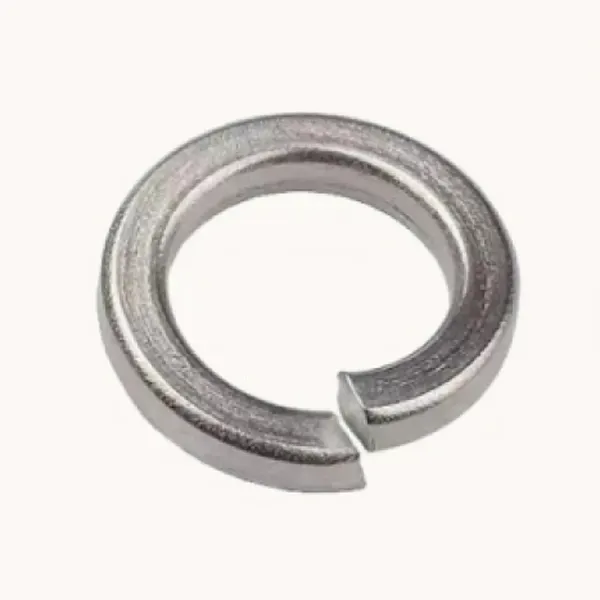
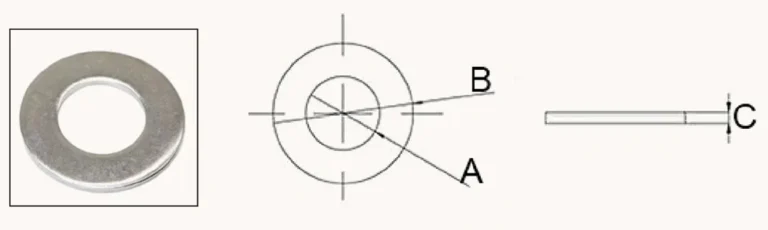
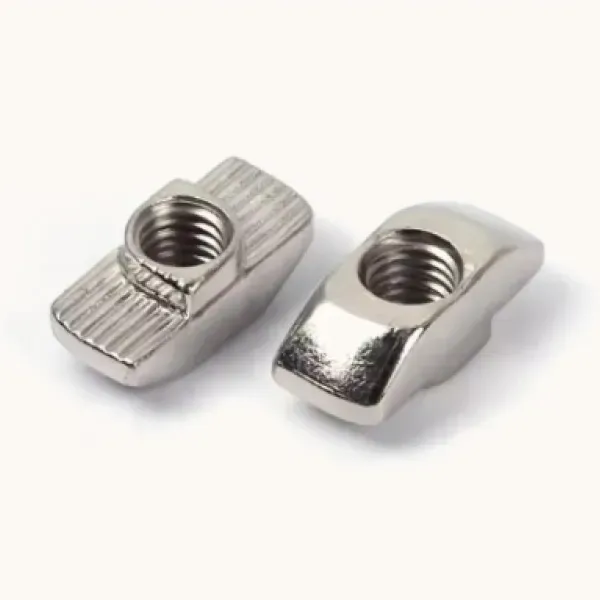
ASTM F436/F436M-19 is a specification for hardened steel washers used with certain high-strength bolting assemblies. It is a material and product specification, not an origin certification. When an assembly calls for mating hardware, compare the required designation and records with the relevant T-nut-with-spring-ball product information before approving alternates.
| Decision dimension | Documented domestic-source offer | Offer with an unsupported origin statement | Buyer check |
|---|---|---|---|
| Origin representation | Scope is stated for the supplied item | Scope is unclear or only marketing language | Ask what production step the claim covers |
| Conformance | Specification and requested records are identified | “Equivalent” is not defined | Match drawing, ASTM designation, and order terms |
| Receiving efficiency | Lot and documentation can be reconciled | Manual follow-up may be needed | Set document requirements before shipment |
| Total-cost tendency | Fewer unknowns during inspection and assembly | Potential review, rework, or replacement exposure | Evaluate the cost of verification, not unit price alone |
This comparison does not establish that all american made fasteners perform alike. Performance remains a function of design, material, processing, installation, and verification; where the application is critical, the buyer should name the required test method or governing standard in the purchase order.
Accordingly, american made fasteners should be compared on the evidence available for the exact part number, not on an assumed category-wide performance level.
USA made fasteners sourcing works best when documentation follows the lot
For usa made fasteners, purchasing and quality staff should agree on the evidence package before an RFQ is issued. A certificate of conformance can confirm that a supplier states conformance to stated requirements, but it does not automatically replace material test reports, dimensional records, independent inspection, or origin evidence when those are contractually required.
Documentation for usa made fasteners should identify the item and lot clearly enough for a buyer to match it to the receiving plan. If the requirement is unclear, resolve it before production release rather than after delivery.
The following verification matrix keeps the request focused on the evidence a buyer can actually compare at receipt. It also makes an illustrative total-cost calculation more realistic: a low unit quote can create avoidable cost if a line is held while records are clarified.
| Sourcing question | Useful evidence | What it can support | What it cannot prove alone |
|---|---|---|---|
| Is the item to the specified design? | Drawing revision, dimensional inspection, thread-gage result | Conformance to stated geometry | Country of origin |
| Is the material and condition correct? | Mill or test documentation as required by the order | Reported material properties and lot linkage | Correct assembly preload after installation |
| Can an origin claim be reviewed? | Supplier statement with defined scope and item identification | The supplier’s stated representation | All upstream manufacturing steps without supporting evidence |
| Does the joint need added control? | Specified installation procedure or torque-tension verification | Process evidence for the application | Universal suitability for every joint |
Fastener manufacturers usa evaluations should connect standards, installation, and commercial risk
Standards and regulations must be selected for the actual product and destination market. The Fastener Quality Act may be relevant to covered fasteners sold in the United States. ASTM F436/F436M-19 applies to a defined washer specification, while NASA’s design manual is technical guidance rather than a commercial certification. Calling any of these sources a certification without evidence can create avoidable claim, receiving, and contract risk.
Similarly, american made fasteners should not be approved because a general standard appears in a catalog. The buyer needs a direct connection between the listed standard, the requested part, and the evidence supplied for that order.
For a buyer comparing fastener manufacturers usa, the right question is not “Which standard proves everything?” It is “Which requirement governs this item, what inspection or test method is required, and who supplies the record?” That distinction helps quality teams establish a fair incoming-inspection plan.
A concise selection guide for domestic-source requests
- Freeze the drawing revision, required dimensions, material, finish, thread, and mating hardware before soliciting quotes.
- State whether the origin requirement concerns manufacture, processing, or a defined domestic-content claim, and request evidence sized to that requirement.
- Identify the governing standard or test method; ASTM F436/F436M-19, for example, should be specified only when its scope fits the washer required.
- Set lot identification, certificates, and any material or dimensional records as purchase-order deliverables.
- Where a configurable sourcing discussion is needed, Qiyi Fastener can be approached about relevant hammer-nut product information and the documentation a buyer needs; no origin conclusion should be drawn without supplier-specific evidence.
These steps make usa made fasteners a controlled procurement category instead of a phrase added after the technical decision. They also preserve the information an engineer needs if the joint later requires a design or process review.
A repeatable review for fastener manufacturers usa requests lets purchasing compare lead-time discussions without losing the design controls that protect the assembly.
Frequently Asked Questions
What is a fastener supplier?
A fastener supplier is a business that sources, manufactures, distributes, or coordinates bolts, nuts, screws, washers, and related hardware for buyers. The supplier’s role may include product selection, documentation, packaging, and logistics. Buyers of american made fasteners should clarify whether it is the manufacturer, a distributor, or both for the item being quoted.
Who is Birmingham fastener?
“Birmingham Fastener” is a company name, not a generic technical designation. This article does not make a claim about that company’s ownership, manufacturing footprint, products, or origin representations. A buyer should consult the company’s current official materials and request item-specific documentation before relying on a claim.
Who makes fasteners?
Fasteners are made by manufacturers using processes such as forming, machining, threading, heat treatment, and coating; distributors may also source and package them. A buyer needing fastener manufacturers usa should identify the legal manufacturer and the specific production scope for each line item. The answer can differ between a bolt, nut, washer, and specialty assembly.
How many fasteners are there in USA?
There is no single reliable count because “fasteners” can refer to businesses, stocked SKUs, or individual parts in use. The appropriate procurement measure is the qualified supplier and part scope for the purchase order, not an unsupported national total. Use an auditable supplier list and item-level records instead.
Is fastener Express made in the USA?
This cannot be confirmed from a brand name alone. Ask Fastener Express for an item-specific origin statement and evidence that defines the claim’s scope, then compare it with the order requirements. The same approach applies to any supplier offering usa made fasteners.
Does American fastener supply industrial fasteners?
This is a supplier-specific commercial question that should be checked with American Fastener’s current public catalog or sales contact. A buyer should also verify the exact industrial application, specification, availability, and documentation—not merely the category wording. American made fasteners should not be inferred from a category name, and that prevents an inferred product claim from becoming a release decision.
USA made fasteners procurement ends with a documented decision, not a slogan.
References
- United States Code, Title 15, Chapter 14A
- ASTM F436/F436M-19 — Hardened Steel Washers
- NASA — Fastener Design Manual
Choose evidence before urgency: a documented joint decision is easier to defend than a familiar origin phrase.
For a current product discussion, review Qiyi’s T-bolt product information and contact Qiyi Fastener with the drawing and documentation requirements in hand.