When a sourcing manager in Monterrey encountered fretting on a bolted gearbox cover, he approved a quick washer swap during a restart, watched clamp load fall again after the first vibration run, and then discovered that the real problem was selection: the joint needed a defined spring-preload element, not a loosely described expansion type ordered by diameter alone.
Summary: Start with joint load, available deflection, and interface geometry before comparing metric belleville washers, an expansion washer, or expansion washers for retention work. DIN 6796 is useful because it addresses conical spring washers for bolted joints, but it is a scope standard rather than a blanket product certification. In practice, even a small installed-travel change can alter clamp-load behavior, so buyers should request the drawing, the working deflection, and the receiving checks before release.
Metric belleville washers should be selected from load, travel, and fit first
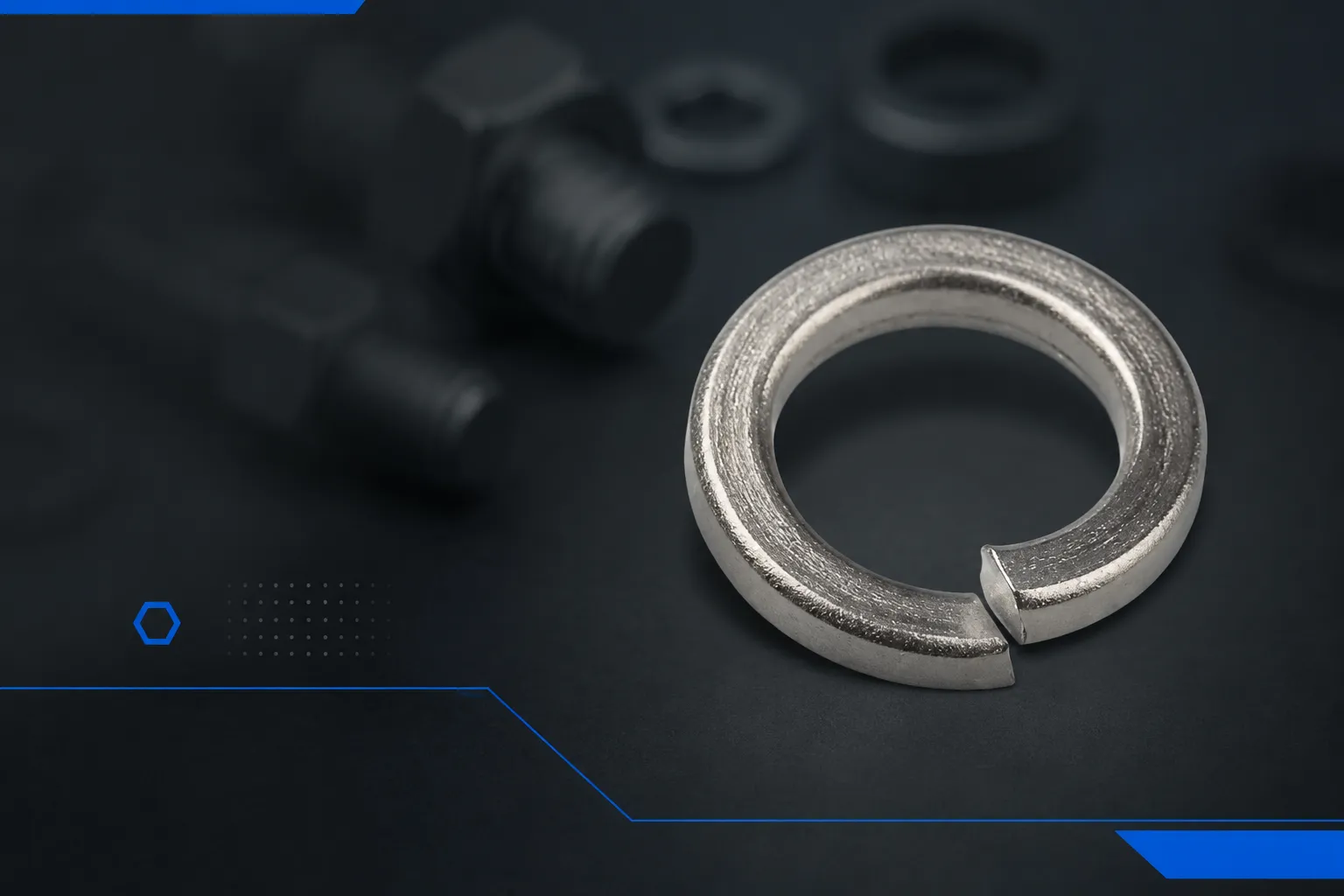
metric belleville washers are axial spring elements used to add or stabilize preload in a compact space, while an expansion washer often serves a different retention or fit function, and grouped expansion washers may be evaluated for assembly convenience rather than spring-rate control. SCHNORR’s disc-spring technical material shows why stack arrangement changes force and travel, and the NASA bolted-joint design reference shows why preload control matters to joint reliability; the washer family has to match the job, not just the nominal diameter.
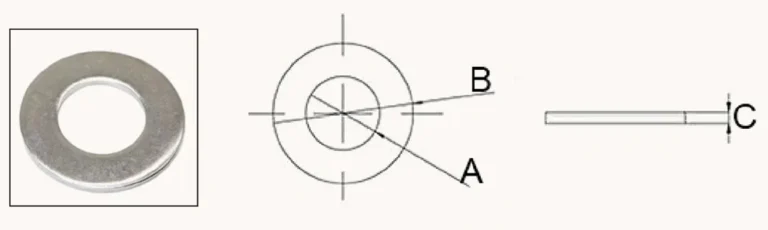
For metric belleville washers, start with the bolt or stud size, the bearing surface, the free height, the thickness, and the usable deflection window in the assembled joint. DIN 6796 is commonly cited for conical spring washers used in bolted joints, while broader disc-spring references may include geometries intended for other spring applications. That distinction matters because a buyer may receive a part with the right outside diameter but the wrong load curve for the installed height.
A practical first screen is to ask how much preload must be maintained and how much movement the joint can tolerate as surfaces settle. In disc-spring theory, two identical washers stacked in series increase available travel, while two in parallel increase load at a similar travel; SCHNORR’s technical pages use this relationship to explain why stack orientation cannot be treated as a minor detail. Before asking for quotations, many teams also review this internal guide to Belleville washer dimensions, sizes, and specifications so the requested metric size and height terms are unambiguous.

An expansion washer must match the joint movement and the retention method
The term expansion washer is less standardized across industries, so the buyer should define the geometry and duty instead of assuming every supplier means the same thing. In some applications the part expands or grips radially to retain position; in others it provides a spring action at an interface. Because an expansion washer can describe more than one functional form, the request for quotation should state the mating shaft or hole size, the axial or radial load, and the allowed deformation after installation.
This is also where specification drift becomes expensive. If the drawing says only “spring washer,” one supplier may quote a conical disc spring and another may quote a different retaining style. For teams that need a quick vocabulary reset, this article on what is a spring washer is useful as a basic reference before the purchasing language is finalized. The procurement lesson is simple: define the retention mechanism first, then compare suppliers on whether they can document that function.

Expansion washers and metric belleville washers solve different cost and reliability problems
The commercial mistake is to compare expansion washers and metric belleville washers as if they were interchangeable line items. Usually they are not. Expansion washers are often chosen to secure position, simplify installation, or manage fit at an interface, whereas metric belleville washers are selected to generate or preserve axial preload as the joint relaxes, vibrates, or cycles thermally. Hidden cost appears when the wrong family shifts verification work, reassembly time, and field risk back to the buyer.
| Evaluation dimension | Metric Belleville washer choice | Expansion washer choice | Buyer question |
|---|---|---|---|
| Primary function | Manage preload and deflection | Support retention, grip, or interface control | Is the joint problem axial spring force or positional retention? |
| Performance evidence | Load at defined deflection or stack height | Fit, retention force, or installation behavior | What measurable acceptance point matters at receiving? |
| Durability concern | Preload loss, fatigue, or flattening | Loss of grip, deformation, or removal damage | What failure shows up first in service? |
| Unit-cost tendency | May cost more when testing or stacking is required | May cost less per piece but require tighter fit review | Which documents are included with the quoted part? |
| Total cost of ownership | Can reduce retorque or joint troubleshooting | Can reduce assembly steps when retention is the need | Which option lowers rework over the full service cycle? |
| Application condition | Usually preferred option | Why it fits | Selection check |
|---|---|---|---|
| Bolted flange with vibration and embedment risk | Metric Belleville washer | Provides a controlled axial spring effect | Confirm load at installed deflection and bolt-seat contact. |
| Shaft or interface retention with limited axial space | Expansion washer | Retention behavior matters more than preload curve | Confirm mating dimensions, grip behavior, and removal limits. |
| Thermal cycling where clamp load must stay stable | Metric Belleville washer stack | Compensates for settlement and differential movement | Review single-disc versus stack orientation before approval. |
| General replacement where the old print is vague | Depends on proven function | The legacy name may not describe the real duty | Inspect the assembly and rewrite the requirement from function. |
Metric belleville washers and expansion washers should be checked against standards, documents, and receiving plans
Use standards carefully and only for the claims they actually support. DIN 6796 is relevant when the product is a conical spring washer for a bolted joint; it does not certify every disc spring-like part or prove fitness in a specific assembly. ISO 6508-1, by contrast, is a Rockwell hardness test method, so it can support material-condition checking but not replace a functional load or retention check. The NASA bolted-joint reference is also a design source, not a product certificate. For expansion washers, the governing requirement may instead be the customer drawing, a retaining-feature specification, or an agreed installation test.
The commercial consequence of loose standards language is real: unsupported claims can create rejected lots or incoming inspections that never align with the purchase order. A disciplined receiving plan should connect the claim to the evidence; for disc springs that may be dimensional checks plus load at a stated deflection, while for a retention part it may be fit, insertion, removal, or holding-force criteria.
- Write the requirement from function first: preload control points to disc-spring logic, while interface retention points to the appropriate expansion geometry.
- Request the minimum proof set before release: drawing, material callout, finish, receiving dimensions, and one functional check tied to the service condition.
- Separate standards by scope: note whether the cited reference is a product standard, a test method, or a design document so commercial claims stay supportable.
- For repeat programs, ask the supplier whether stack orientation, tooling, heat treatment, or mating-dimension changes trigger notification and document revision.
Frequently Asked Questions
Are metric belleville washers the same as DIN 6796 washers?
Not always. DIN 6796 is a specific bolted-joint disc-spring washer standard, while metric belleville washers can be discussed more broadly in catalogs, custom drawings, or stack designs outside that exact scope. The safe action is to check whether the quotation and drawing both cite the same geometry, dimensions, and use case.
When is an expansion washer better than a single disc spring?
An expansion washer is usually the better choice when the job is retention, fit, or positional control rather than controlled axial preload. If the service problem is clamp-load loss in a bolted joint, a disc spring approach is often more relevant. Buyers should ask what failure mode they are preventing before comparing quotes.
Can expansion washers replace split lock washers in every joint?
No; expansion washers are not one universal substitute because their function depends on geometry, interface, and installation method. In some assemblies they improve retention, but in others they do little for preload stability or may not match the seat conditions at all. The right replacement path is to review the actual joint behavior, not only the old part name.
What documents should buyers request before ordering?
Ask for the production drawing, material and finish callouts, dimensional tolerances, lot identification method, and at least one functional acceptance check that matches the application. For disc-spring applications, that may mean load at a defined deflection; for retention parts, it may mean fit or holding-force evidence. The more critical the assembly, the more valuable revision control becomes.
References
- SCHNORR Group: Standard Disc Springs
- SCHNORR Group: Disc Springs Expertise and Technologies
- NASA Reference Publication: Fastener Design Manual
The memorable rule is simple: select the washer by the failure mode you need to prevent, because similar diameters can hide very different mechanical jobs.
If your team is comparing disc-spring preload options with expansion washers, QIYI Fastener can help review the drawing package and point you to suitable metric belleville washers; for project-specific support, please contact us.