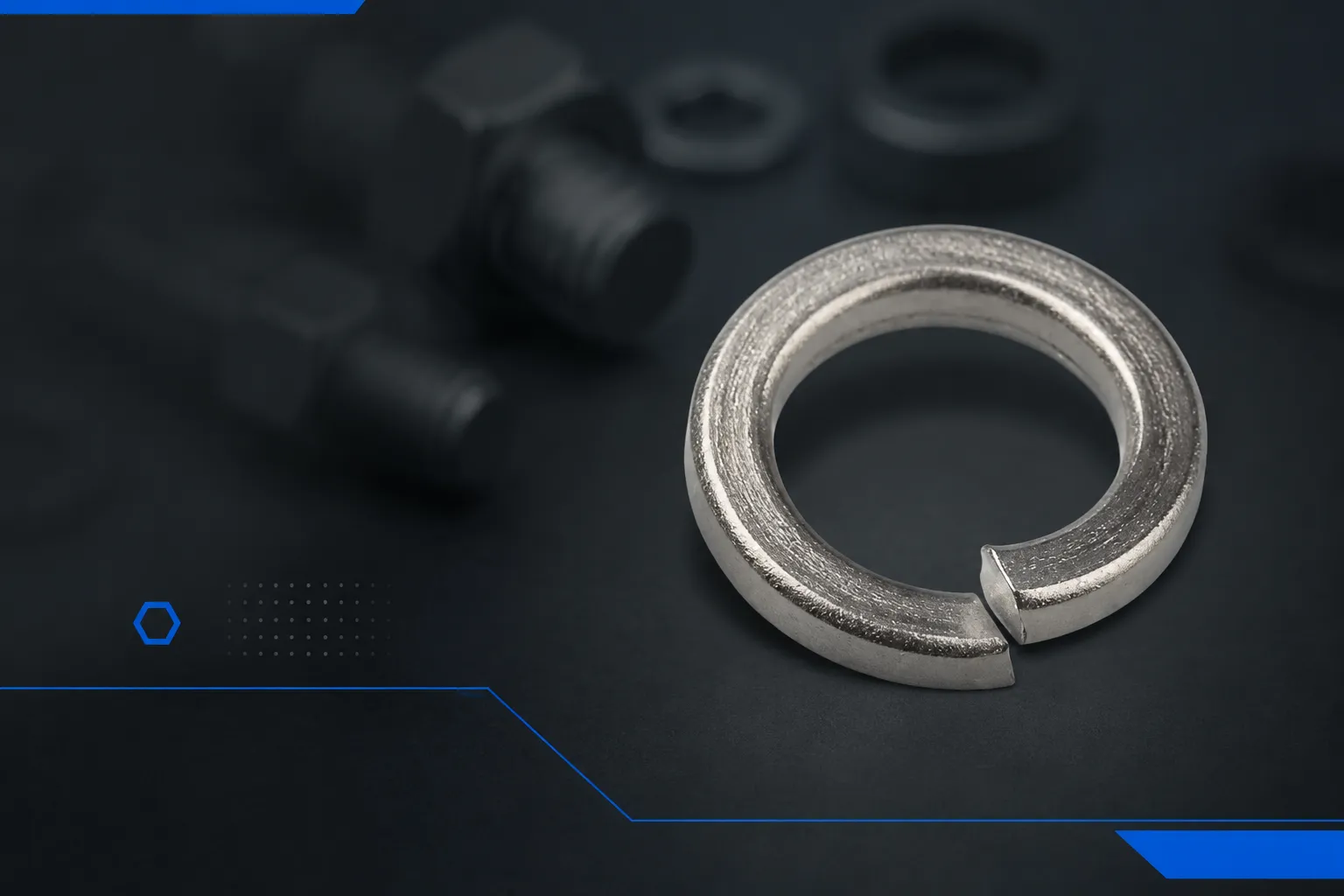
A spring washer is an advanced variety of washer that enhances the functionality and lifespan of bolted joints that will experience mechanical loads. Comprised of a flexible material such as spring steel, spring washers are carefully designed to create an axial force that maintains tightness in a bolted assembly. The function of spring washers becomes especially important in industries that rely on mechanical assembly connection (screws, bolts, nuts, etc.) due to the continuous exposure to mechanical and vibrational loads, as well as thermal variations and stresses on the fastener. Knowledge of spring washer design and function is essential for any person working with mechanical systems or assembly connections.
What Does a Spring Washer Do?
One important role of a spring washer is to help prevent loose nuts/bolts from coming loose as they age and wear. They are designed to be elastic in nature so when a nut/bolt assembly is under tension, the elasticity works against forces that would tend to loosen it, such as vibration, thermal expansion and/or shock, by absorbing some of that energy. While flat washers provide a method to distribute the tension evenly over the surface of the fastener’s head, spring washers will provide some dynamic response to the fasteners as well once they are installed under the heads of the fasteners. Once the spring is installed, it exerts a constant force on the fastener even if the conditions change, helping to maintain the secure fit of the fastener. The ability to maintain this constant force makes spring washers invaluable in high-stress applications, including automotive assemblies, construction equipment, and heavy machinery.
Spring washers don’t just keep fasteners from coming loose – they also assist with reducing damage to attached materials from two bolted connections. By absorbing impact and preventing metal-on-metal connection, these springs reduce wear on other components over time.
When to Use a Spring Washer?
Correctly identifying the right conditions in which to employ spring washers will provide maximum success and durability for your project. Spring washers are used in applications where there is motion, impact, or where the joint could otherwise loosen over time. Typical applications include:
Vibration-Prone Environments: Spring washers work well in situations with a lot of vibration, such as automotive engines, industrial machinery and aircraft components. The spring washer’s elasticity helps to absorb shock and keep the fasteners from becoming loose.
High-Temperature Settings: Springs are used in assemblies that will be subjected to temperature changes (for example, in pressure vessels and heating systems) to allow a component to expand and contract with the changes in temperature while maintaining the components’ structural integrity.
Dynamic Load Systems: Many types of heavy-duty appliances and machine movers can be affected by dynamic load. Using a spring washer helps to absorb any impact and thereby reduces the wear on both the fastening device and the parts that have been fastened together.
Electrical Applications: In addition to being used for mechanical applications, spring washers are also used in electrical systems, where they provide a reliable connection even under external loads.
Utilizing spring washers provides long-term protection for your structural elements or components, eliminating the need for time-consuming repairs and expensive component replacements caused by fasteners breaking down over time.
Types of Spring Washers
Various designs of spring washers can meet a range of applications and provide different features for those applications. This article will discuss some of the more commonly used types of spring washers.
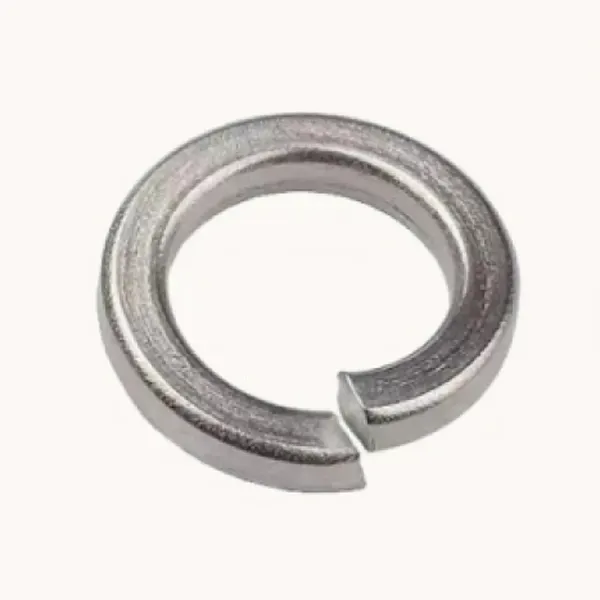
1. Helical Spring Washers: Helical spring washers are defined by their helical shape and are commonly used to counteract the effects of loosening that result from vibration or torque. The shape of helical spring washers enables them to compress and expand slightly, producing friction and tension that hold the fastener in place. Helical spring washers are frequently used in automotive parts and industrial machinery.
2. Conical Spring Washers: A conical design allows for equally distributing loads with maximum axial flexibility. The unique geometric shapes of conical washers allow for even distribution of pressure across the fastened surfaces, decreasing the possibility of uneven wear. Conical spring washers are frequently used in power tools, structural applications, and sensitive instruments.
3. Belleville Washers: Belleville washers (also known as disc springs) work best to generate large amounts of force in a very small space. Their application is typically in applications where there is preloading involved, such as creating a seal on a piping system by the flanges, or where bolted joints are going to carry very high loads.
4. Lock Washers: Lock washers were created to provide a secure grip between two surfaces through their ridged surface. The primary purpose of a lock washer is to help keep screws and bolts tight, especially where they are subjected to continuous motion or vibration, thus preventing them from coming undone over time.
Every type of spring washer is designed to work best in its own application. If you choose the correct type of washer for your project, you will achieve the best possible performance and the most reliable assembly.
Materials Used in Spring Washers
The construction of a spring washer’s material is an important factor in its effectiveness, how long it will last, and whether or not it is appropriate for the application you intend to use it in. The majority of spring steel washers have been produced with materials specifically intended to produce durable and flexible high-strength products; here are some common materials that can be found in spring washers:
1. Spring Steel: With great strength and durability, according to the manufacturer of springs “Due to the strength and durability of spring steel, spring washers are made from spring steels in order to withstand excessive forces and remain in their original shape.”
2. Stainless Steel: Stainless steel spring washers provide protection from corrosion; therefore, they are most commonly found in cases where there is exposure to moisture, chemicals, and/or extreme weather conditions. Some examples of where stainless steel spring washers are used include marine, automotive, and outdoor industries.
3. Bronze and Copper: The main use of these types of material is their ability to conduct electricity and resist heat damage. The electronic and electrical sectors have benefited the most from this property.
4. Alloy Steel: Alloy steel consists of various combinations of metals that have been combined for greater strength as well as improved resistance and durability. High stress industrial uses are common with this type of steel.
By knowing the properties of a material, users can select a type of washer that is appropriate for the intended use, or application, depending on whether they need the washer to be durable, carry a load, or resist the environment.
How to Choose the Right Spring Washer
Choosing the best spring washer requires a careful evaluation of its operating conditions, against the demands of the application in question. Some of the important aspects that should be taken into consideration are:
Load Capacity: Determine the level of force required for the washer to maintain tension and prevent loosening.
Environmental Conditions: Determine if chemicals, moisture, or extreme temperatures will be present around the washer. In harsh environments like this, a washer made of stainless steel or covered material is preferred.
Space Constraints: Make sure the washer you are using has the right compression performance and its sizes fit in with the dimensions of your assembly.
Vibration Levels: If you’re using washers in applications where there will always be vibrations, then it’s best to choose ones specifically made for absorbing shock such as helical washers or locking type washers.
Industry Standards: Many different businesses have established guidelines for properties such as hardness, thickness and elasticity. It is important that you choose washers that meet these guidelines to ensure the best performance from your washer.
To select the right washers, you need to first comprehend your application much more thoroughly and then compare your requirements from that application to the designs and materials of the washer(s).
Frequently Asked Questions
What does a spring washer do?
In providing tension to create shock absorption between a bolted joint, as well as maintaining load through the use of spring washers and preventing loosening of fasteners caused by vibration and thermal expansion or contraction.
When to use a spring washer?
The use of spring washers in areas like dynamic load, temperature change and motion is essential so that the fastening is secure.
What are spring washer types?
Various types of spring washer can be used for different purposes including helical springs, conical springs, Belleville springs and lock washers, which can be selected depending on their specific requirements.
How do you install a spring washer?
Spring washers go between the fasteners (bolts/screws) and the surfaces which are being secured. Make sure that it is properly placed with the special shape providing the required tension to fit the application.
Are spring washers reusable?
Spring washers may be reused (at least once) depending on the project; however, multiple usages in a very high-duty cycle could also result in a loss of elasticity/effectiveness of the washer. Inspect the washer for damage and/or distortion before attempting to reuse.
Can spring washers be used with all types of fasteners?
Spring washers can indeed be used in conjunction with a vast array of fasteners (i.e., bolts, screws, nuts) but whether or not you will find them suitable will depend on your specific application(s), and how well the fastener fits both the application and itself (in terms of size and type).
Do spring washers work in high-speed rotating assemblies?
Indeed, spring washers, particularly those suited for harsh vibration and stress environments, provide excellent retention of components attached to machines in continuous motion (such as engine or turbine assemblies) during operation.
To sum up, spring washers are very important to many types of industries as they provide support and stability for bolted connections. They prevent vibration from loosening fasteners as well as allow for the proper distribution of load in high-stressed applications. The understanding of what type of spring washer to choose, and the materials of construction, along with the factors to take into account when selecting them, will greatly enhance the quality of mechanical design and performance of mechanical systems. Whether your project involves machinery, automotive, or construction applications, selecting a spring washer can have a major impact on how well your assembly is fastened together and how long it will remain fastened.