The main types of screws differ in how they engage the receiving part. Machine screws use an existing female thread. Self-tapping screws create the mating thread in a suitable hole, while self-drilling screws also make the hole within their specified drilling range. Wood screws and screws designed for direct assembly into plastics require selection for those materials.
Names also describe other features. “Socket” identifies a drive arrangement, “countersunk” describes a head form, and “shoulder” identifies a shank feature. These categories overlap. A useful selection starts with the joint, then adds the head, drive and material requirements.
Sort types of screws by the receiving thread
Identify where the female thread will come from before comparing catalog photographs. Is there a nut, a tapped hole or a threaded insert? Will the screw create a thread in a prepared hole? Or must the selected fastener drill and thread the receiving material during installation?
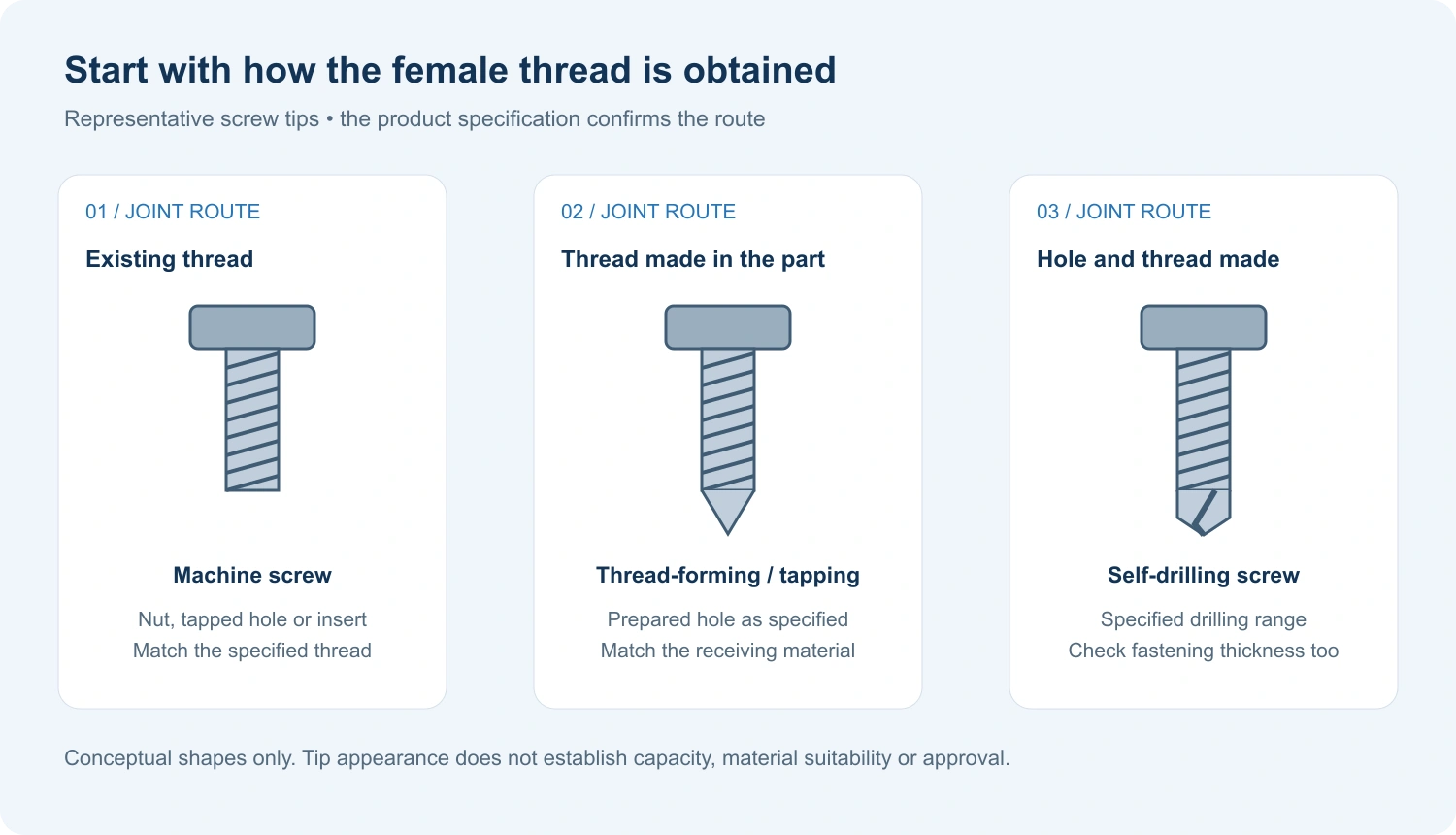
This separation prevents a pointed tip from being treated as a complete specification. Two pointed screws can have different intended substrates and hole requirements. Likewise, a drill-shaped tip tells the buyer to check a drilling specification; it does not prove that the screw can pass through any metal stack.
Common families and the question each one raises
The table groups selected screw types by function rather than presenting every head and drive as a separate family. Use the final column to identify the next missing detail in a drawing, quotation or replacement request.
| Screw family | Typical defining feature | Selection question |
|---|---|---|
| Machine screw | Thread engages a nut or tapped hole | What exact mating thread is specified? |
| Self-tapping screw | Creates a mating thread in the receiving part | Which material and prepared hole does this product require? |
| Self-drilling screw | Drill tip makes the hole before thread engagement | What drilling and fastening ranges apply to this variant? |
| Wood screw | Pointed screw intended for wood fastening | Which wood application and installation instructions govern? |
| Direct-to-plastic screw | Thread system developed for plastic assembly | Which polymer and hole geometry were specified? |
| Set screw | Commonly headless; used to secure one part relative to another | What point form and contact arrangement does the design require? |
| Shoulder screw | Unthreaded shoulder provides a locating or pivot surface | What shoulder dimensions and fit are required? |
A part may belong to several descriptions at once. For example, “socket-head machine screw” combines drive or head information with the thread route. Recording only one of those descriptions can leave a supplier to infer the rest. The drawing or complete part specification should resolve that ambiguity.
Match the product to the receiving material
“Self-tapping” does not make a screw interchangeable across sheet metal, wood and plastic. The receiving material and the hole preparation belong in the selection record. For a plastic part, the material grade and molded or machined hole geometry are essential inputs to the selected screw system.
The EJOT / ATF DELTA PT technical brochure illustrates this dependency: it addresses direct fastening in thermoplastics and ties application design to material and pilot-hole parameters. It also offers different head and drive versions within the system. The thread’s intended function therefore cannot be inferred from the head alone.
For procurement, the practical consequence is straightforward. A substitute with a similar silhouette still needs comparison against the specified material, thread system and installation requirements. If the original selection record is missing, a photograph can help identify candidates, but it cannot close those questions.
Drilling capacity is different from thickness fastened
Self-drilling product data may distinguish the material thickness the tip can drill from the thickness of parts the screw can fasten. Hilti’s S-MD 01 Z product listing presents drilling capacity and thickness fastened as separate fields. Those fields apply to the selected variant and stated application conditions.
A buyer should therefore record both values from the relevant product data and compare each with the corresponding joint requirement. A single note saying “suitable length” does not establish either match. Nominal length, drilling ability and the fastened stack answer different questions.
This distinction also matters when a cover plate changes thickness but the supporting member stays the same. The revised assembly needs a fresh comparison with the selected screw’s data; the previous part number alone does not explain which limits were checked.
Add head, drive and material after defining the route
Once the receiving thread arrangement is known, select the head and drive against the assembly drawing and available tool access. Specify the required fastener material, mechanical properties and finish separately. A head name does not establish any of those properties.
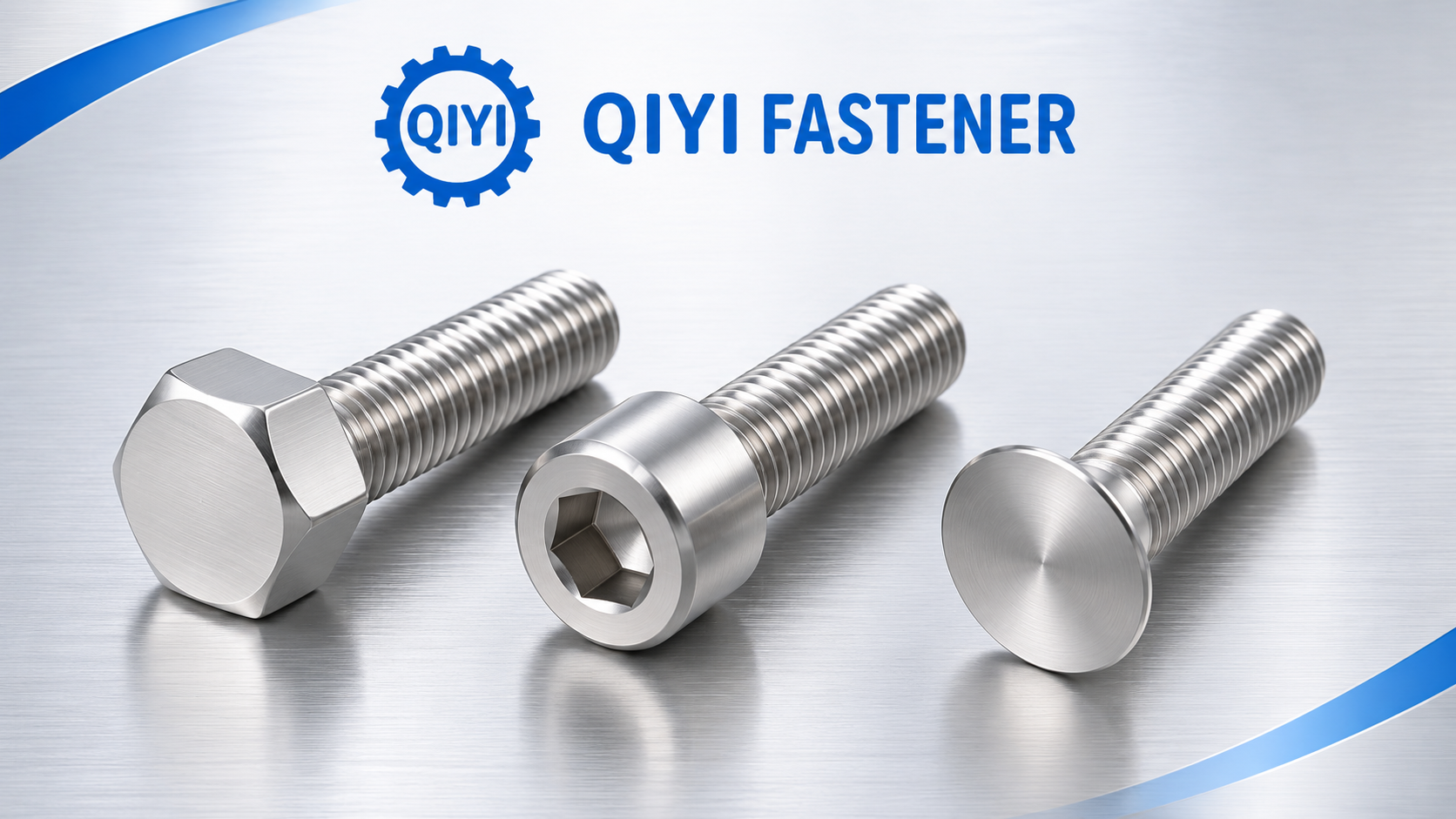
For a joint designed around an existing mating thread, QIYI’s socket-head cap screw page provides a product form to evaluate. Confirm the selected dimensions and material requirements against the drawing. That page does not establish availability of self-drilling or direct-to-plastic alternatives.
Example: preparing a sheet-cover purchase request
Consider a hypothetical removable sheet cover attached to a metal support. Before requesting prices, the buyer records whether the support already has a specified female thread. If it does, the candidate follows the existing-thread route. If it does not, the designer must define how the joint obtains its hole and mating thread.
For a proposed self-drilling solution, the record should identify the support material, drilling thickness, fastened stack and exact candidate variant. The reviewer then checks those inputs against the product’s stated application and capacity. Head clearance, drive access, finish and the assembly’s mechanical requirements remain separate acceptance items.
The resulting purchase request names the approved part and the drawing revision, with any unresolved requirements clearly identified. This example is a selection record, not a fastening design approval. Its purpose is to make the next technical question visible before a similar-looking screw becomes an unintended substitute.