A jam nut is commonly a thin hex nut used against a regular nut in a double-nut arrangement. The thin nut is a component; the locking effect depends on how the pair is assembled. Adding a second nut does not, by itself, establish a functioning locking method.
For selection, separate three questions: which parts are specified, which assembly method applies, and what evidence shows that the required arrangement was achieved. A photograph of two nuts answers only part of that review.
What is a jam nut?
Bolt Science’s two-nut explanation uses the name for a thin hex nut paired against a standard nut. This identifies a familiar component and its role. It does not assign every nut sold under that name the same dimensions or mechanical requirements.
A purchase request should therefore identify the actual nut specification. “Jam nut” alone leaves questions about the thread, height and other required details. A matching thread size is necessary information, but it is not the whole description.
The nut size chart separates thread size, width across flats and thickness. That distinction is useful here because a thin profile describes one feature, rather than an entire compatible assembly.
Keep the component name and the method name separate in documents. A parts list can correctly identify a jam nut while leaving the required double-nut assembly method unspecified.
What creates the locking action?
Bolt Science’s explanation attributes the effect to opposed thread contact developed by a particular tightening method. The nuts are made to jam against the bolt threads. Simply tightening another nut onto an existing nut may provide little locking effect.
The important selection distinction is between a stack of components and the intended condition of that stack. Counting the nuts establishes the first; it does not establish the second.
This also changes the question asked of an assembly photograph. Instead of asking only “Are there two nuts?”, ask what the photograph can document. It may identify order and visible parts while leaving the tightening method unrecorded.
A locking explanation should not be confused with a completed joint specification. The responsible design still needs to define the parts and assembly requirements for the actual connection.
Which nut goes next to the joint?
In Bolt Science’s described thin-and-regular-height arrangement, the thin nut sits next to the joint and is held while the upper nut is tightened. That order belongs to the particular method being explained.
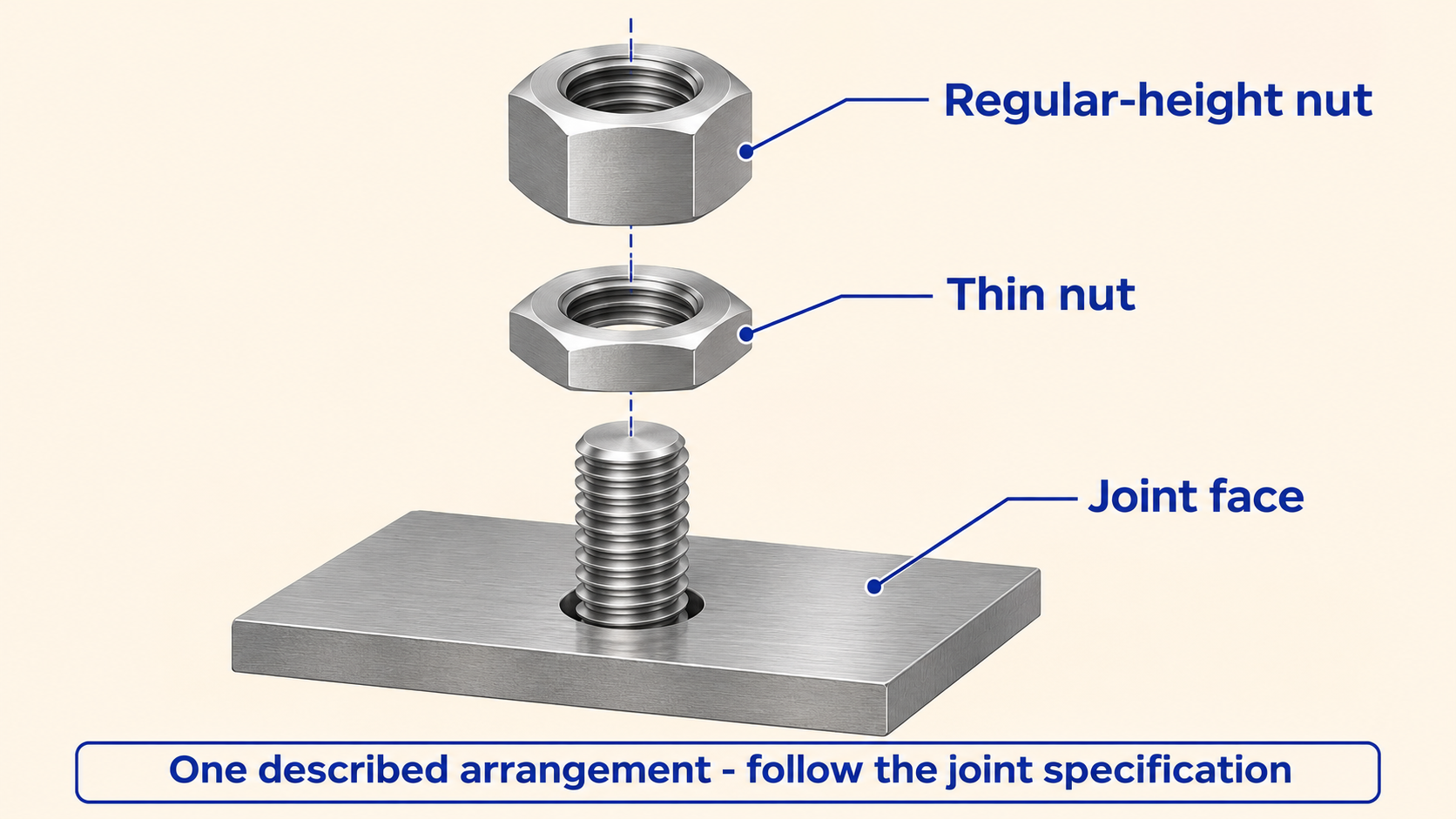
The same source warns that substantial bolt extension can make a thin nut next to the joint inappropriate because of thread-stripping risk. The illustrated order is therefore not a universal instruction for every assembly.
When reviewing an existing design, locate its governing assembly requirement. If an illustration and the approved drawing differ, the discrepancy needs resolution before using the illustration as an instruction.
Nut order is a useful visible check, but a visible match cannot confirm the whole method. The record should connect that check with the actual assembly requirements.
Why two nuts do not guarantee retention
Bolt Science warns about overtightening and about assuming that two thin nuts can replace a suitable full-height combination. Neither extra tightening nor an extra thin nut is a general repair for a poorly defined arrangement.
Nord-Lock’s manufacturer comparison emphasizes operator skill, installation demands and limitations under vibration. Its commercial assessment should be read in that context. It does not provide an independent universal rating for every possible two-nut joint.
These sources make a common purchasing shortcut unhelpful: asking whether “jam nuts work” without identifying the arrangement. A useful answer needs the actual method and service conditions, rather than a verdict attached to the name alone.
For a proposed application, separate evidence of the mechanism from evidence of suitability. Understanding how jamming can occur does not establish the performance of a particular assembly in service.
A supplier’s general description may explain the product category. Application approval requires evidence relevant to the specified joint. Keep those two types of information distinct when reviewing a recommendation.
Review the arrangement in three stages
A short review record can prevent an observation from becoming an unsupported acceptance statement. The following stages organize the information; they are not a substitute for the applicable inspection requirements.
Before assembly: identify the components. Record the drawing reference and the specified nuts and mating fastener. Note whether the actual parts have been confirmed or are still candidates. This gives the next reader a clear distinction between an approved part and a proposed substitute.
For assembly: identify the method. Record the governing instruction and who is responsible for resolving missing requirements. A statement such as “use two nuts” does not explain how the intended condition is to be achieved. An unresolved method should remain an open question in the record.
After assembly: describe the evidence. State what was observed or checked under that method. A photograph can support visible arrangement; a recorded assembly check addresses its own defined requirement. Avoid giving either item a broader meaning than it supports.
This sequence helps purchasing, assembly and review teams exchange the same information. It also makes disagreements easier to locate: component identity, method selection and evidence of completion are different questions.
Describe the requirement before choosing parts
A useful enquiry identifies the intended arrangement and supplies the relevant drawing or specification. It should distinguish a request for a thin nut from a request to recommend or validate a complete locking method.
If a different retention design is being considered, the prevailing torque nut guide covers that separate category. Its presence in a catalogue does not make it an approved replacement for a specified double-nut arrangement.
Ask a proposed supplier to identify deviations explicitly. A change in nut form, pairing or required assembly method should not disappear behind a broad statement that both options are locking nuts.
The decision should end with an identifiable set of parts, a defined method and evidence appropriate to the joint. A jam nut can be part of that answer. Its name alone cannot supply the missing requirements.
References
Bolt Science: two-nut locking mechanism, arrangement and limitations
Nord-Lock: manufacturer assessment of double-nut locking