When a maintenance engineer in Taichung—Maya Chen—encountered a conveyor-guard joint that loosened after a line restart, she replaced the nut, tightened the joint, and marked the bearing surface. By the next inspection, the witness mark had moved and a bright ring had appeared in the painted bracket. The reversal came when the team compared the purchase description with the mating surface: the issue was selection and specification—the order said only “lock nut,” while the assembly needed a defined interface—not proof that the first part was inherently defective.
A keps lock nut keeps the locking interface captive during handling
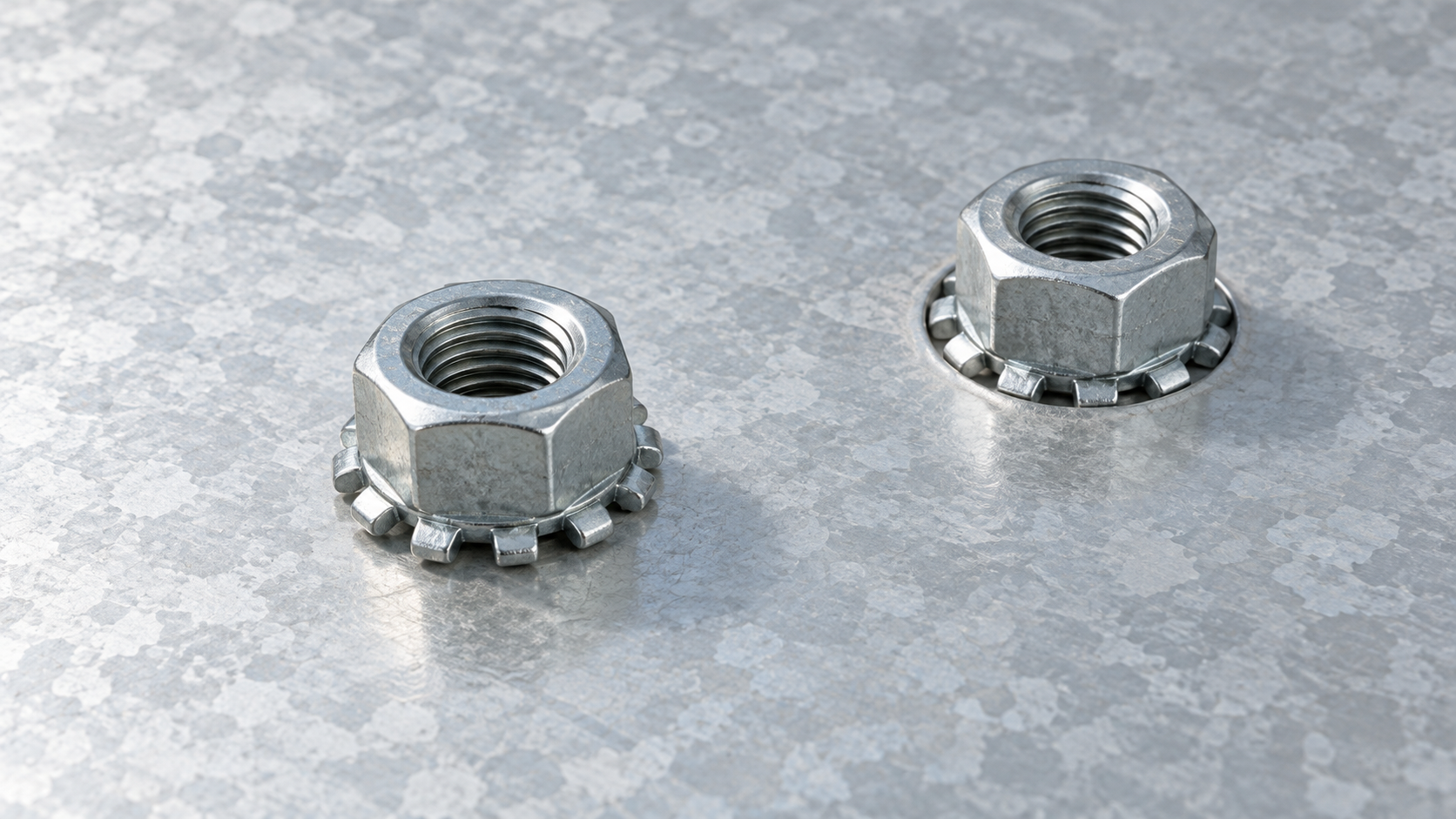
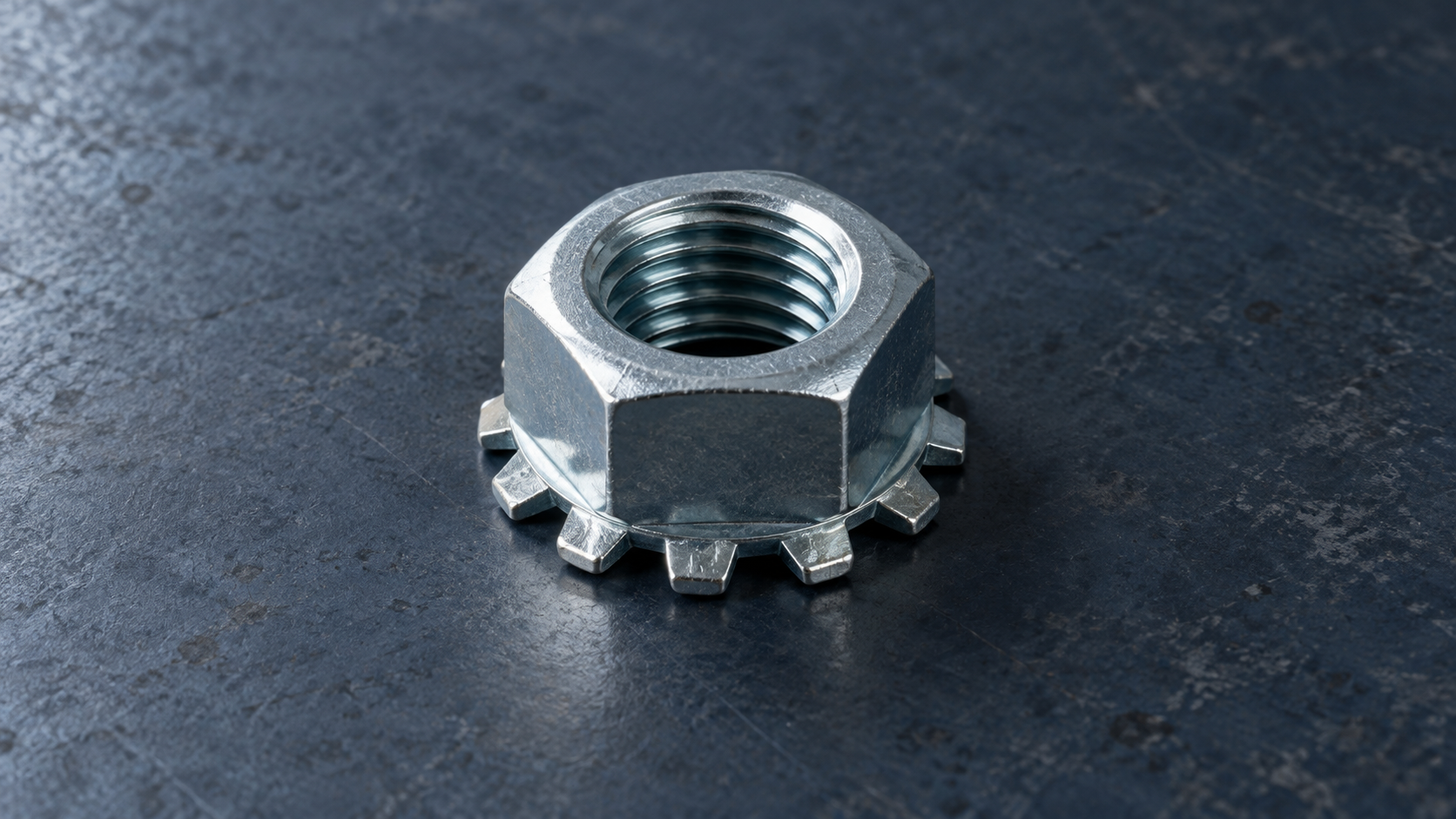
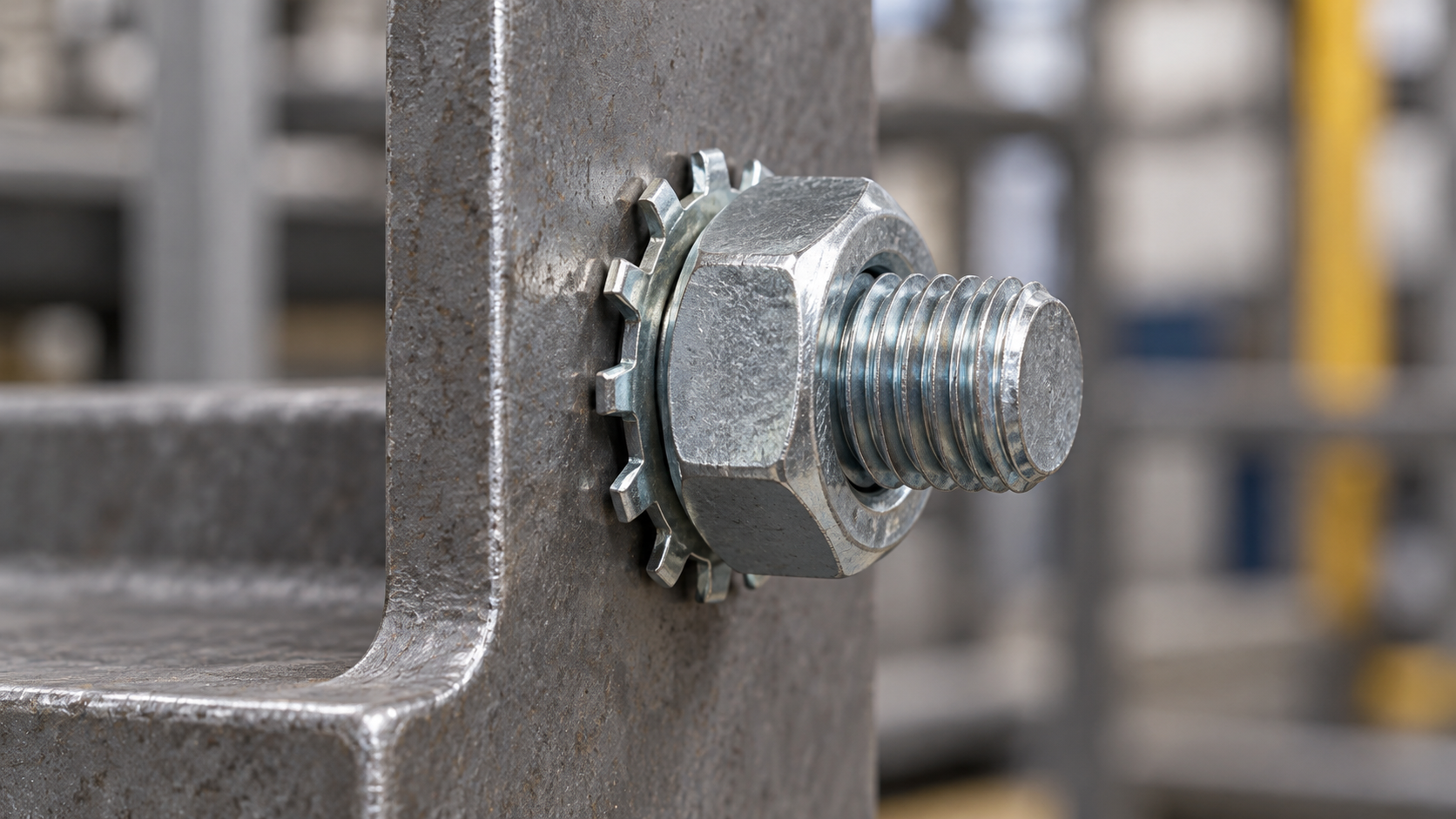
This washer-integrated nut is commonly a hex nut retained with an external-tooth lock washer. The washer is a separate functional element, but it remains captive on the nut while parts are picked, presented, and installed. When the joint is tightened, the teeth bear against the mating surface. That arrangement can reduce loose-component handling, yet it does not by itself establish a vibration rating, reuse limit, material grade, or universal installation torque.
The useful comparison is therefore mechanical, not merely visual. A washer-integrated nut acts at the bearing interface; an insert-type nut develops prevailing torque through a polymer insert; a serrated flange design combines an integral flange with serrations. Surface material, coating, hardness, allowed marking, joint movement, and access for tightening may change the suitability of each approach. A drawing should identify the geometry and stack-up rather than rely on a generic “locking nut” label.
For a sourcing brief, an industrial fastener manufacturers guide can help organize questions about drawings, material declarations, lot identification, and test evidence. The guide is most useful when it supports a controlled requirement; it is not a substitute for the exact part specification.
Three interface questions prevent a misleading comparison
- Is the locking feature a captive but separate washer, a polymer insert, or an integral serrated flange?
- Can the mating material accept the teeth or serrations without unacceptable marking, coating damage, or loss of function?
- Does the assembly drawing reserve the required bearing diameter, clearance, thread engagement, and installation access?
These questions also expose hidden cost. A part that is easy to pick may still create rework if its teeth damage a coated surface; a part that looks interchangeable may require different inspection or installation controls. ISO 16047 can support a controlled torque–clamp-force evaluation, but a test report is meaningful only when the hardware, lubrication, tightening method, and acceptance criteria are defined.
A keps lock nut differs from a nylon insert lock nut in mechanism and evidence
The keps lock nut and the nylon insert lock nut resist loosening at different locations. In the first, the captive external-tooth washer bears on the joint surface. In the second, a polymer insert creates prevailing torque on the mating thread. Neither description alone proves performance in a particular joint, and a plain flange nut should not be presented as either one.
Reuse is a specification question for the insert design, not a universal number. The honest procurement control is to identify the governing product or application specification and use prevailing-torque test evidence for the actual part and condition. Temperature, chemicals, installation history, and the required prevailing torque can matter; do not promise a fixed reuse count simply because the insert is nylon.
Comparison of common fastening approaches
| Fastener approach | Locking mechanism | Compatibility and durability question | Assembly and maintenance effect | Unit-cost tendency and TCO question |
|---|---|---|---|---|
| Washer-integrated nut | Captive external-tooth washer at the bearing surface | Can the surface accept tooth contact and permitted marking? | Nut and washer are handled together; inspect the washer position and joint stack-up | Compare reduced loose-part handling with surface, inspection, and rework exposure |
| Nylon insert lock nut | Polymer insert creates prevailing torque on the thread | Are temperature, chemical exposure, and governing reuse requirements defined? | Installation torque and prevailing-torque evidence need control; replacement policy may matter | Evaluate insert-related process and replacement costs rather than assuming a cheaper part is lower TCO |
| Serrated flange nut | Integral flange plus serrations at the bearing interface | Will serrations suit the mating material, coating, and allowed marking? | One-piece flange geometry can simplify presentation; verify seating and inspection access | Compare bearing coverage, damage risk, and sourcing evidence, not only piece price |
| Plain flange nut | Integral flange provides bearing area; no automatic locking feature | What separate locking method, if any, is defined by the joint? | May need a separate washer or another specified retention method | Account for added components, picking, omission risk, and maintenance controls |
A washer-integrated nut is not automatically a prevailing-torque nut merely because it is sold as “locking.” Likewise, the flange on a plain flange nut does not create serrations. ISO 2320 is relevant when the specified solution falls within its prevailing-torque type steel-nut scope; it should not be used to infer a qualification for every external-tooth washer assembly.
A serrated flange nut changes the bearing interface and surface question
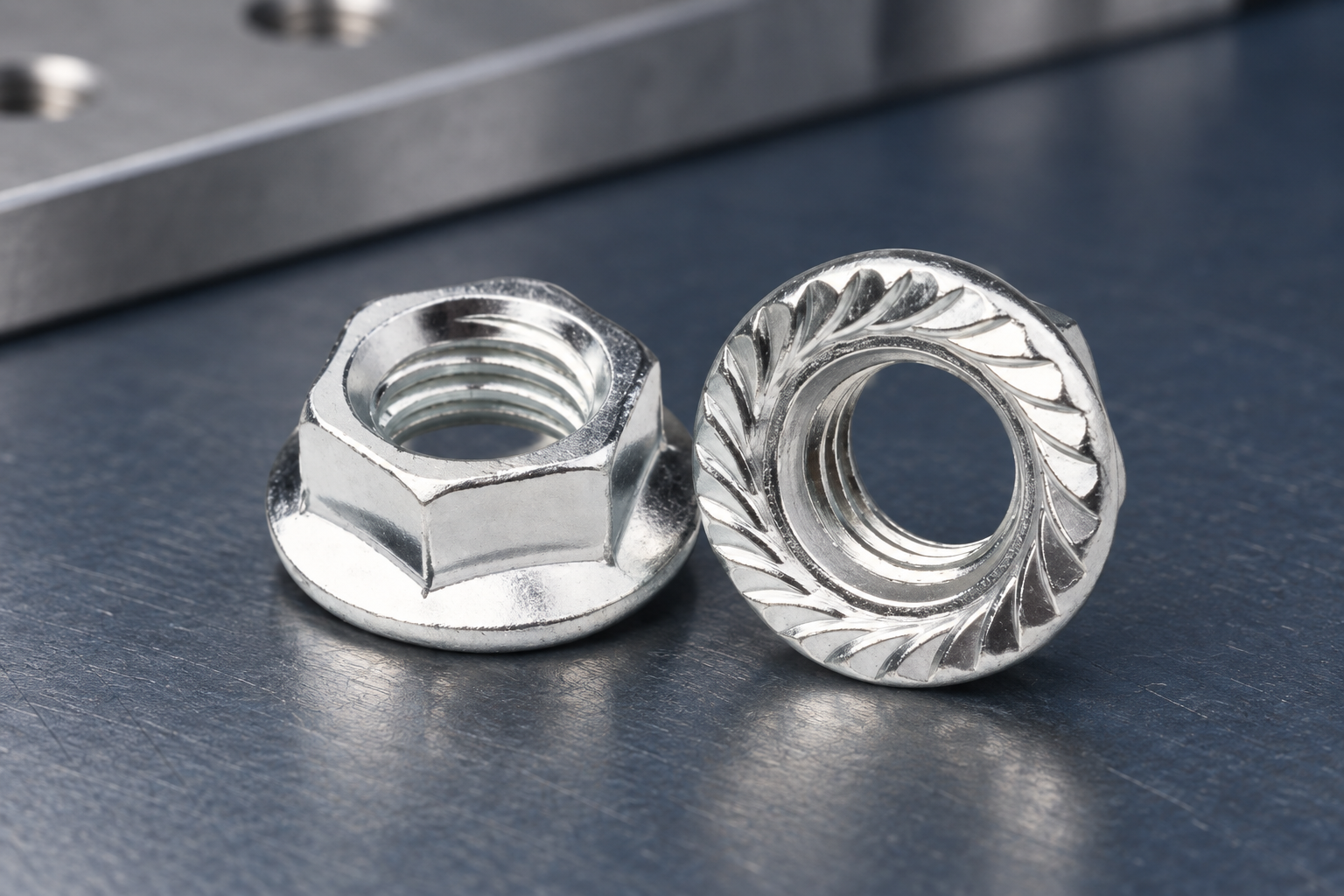
A serrated flange nut combines an integral flange with serrations intended to act at the bearing interface. This can be useful when the joint requires integrated bearing area and the mating surface can accept the serrated contact. The selection is conditional: confirm the base material, coating, permitted marking, joint duty, and applicable drawing or specification before treating a serrated flange nut as a direct replacement for a keps assembly.
A plain flange nut is different. Its flange may spread bearing load or provide a larger seating area, but it is not automatically a serrated flange nut and does not automatically resist loosening. If a purchase order says “flange nut,” the buyer should state whether serrations, a prevailing-torque feature, a separate washer, or no locking feature is intended.
For a related category reference, review flange nuts; catalogue presence still needs to be checked against the drawing, mating surface, and evidence request.
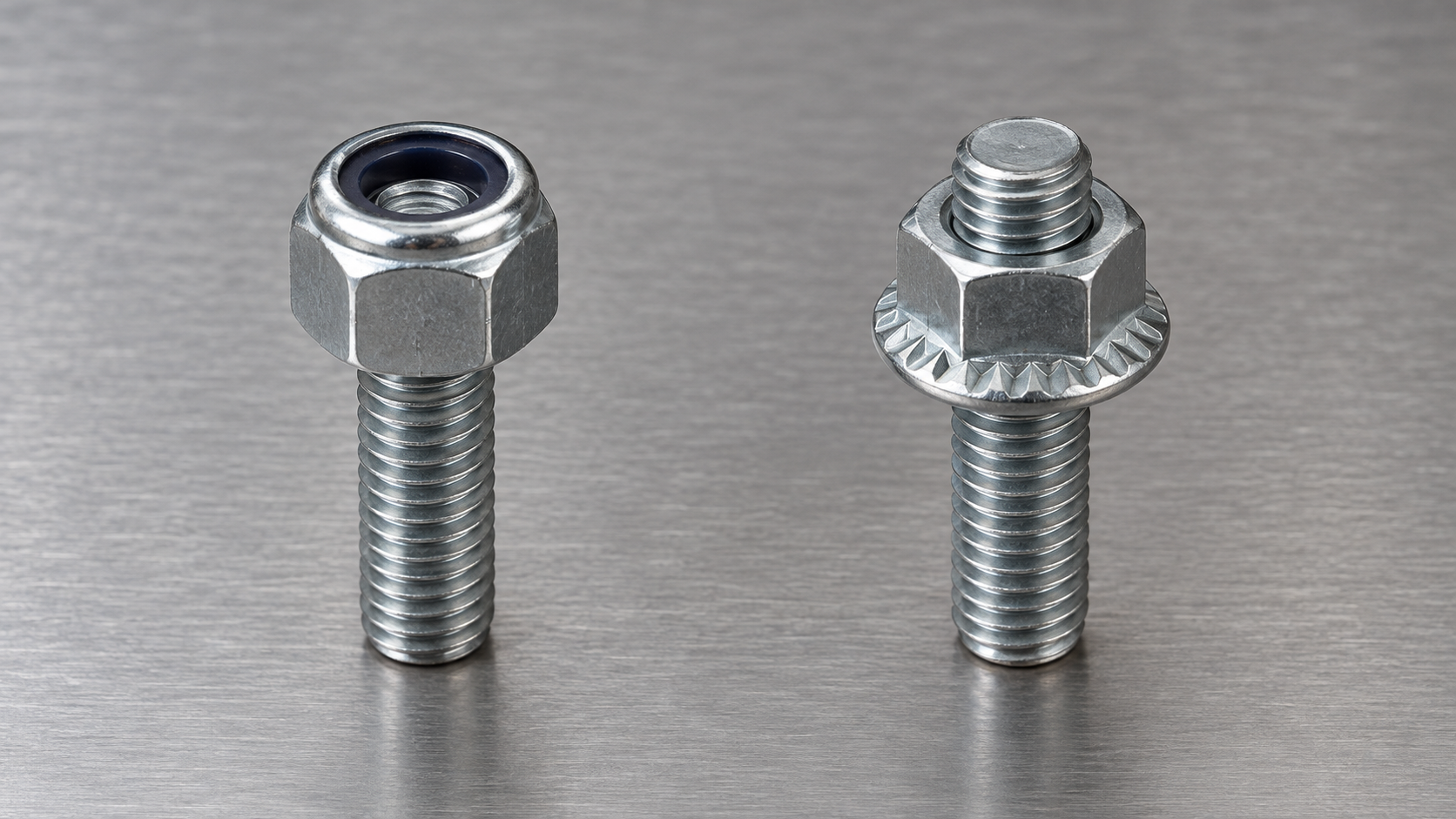 A generic comparison highlights two different interfaces: serrations act at the bearing surface, while a nylon insert acts on the thread
Selection dimensions beyond the catalogue name
| Selection dimension | What to document | Why it changes the choice |
|---|---|---|
| Mating surface | Steel, aluminium, coated sheet, painted bracket, hardness, and marking limits | External teeth and serrations may need a different surface assessment from a polymer insert. |
| Service environment | Temperature range, chemicals, moisture, vibration, and inspection interval | Polymer and surface-interface behavior must be evaluated against the actual environment. |
| Assembly process | Manual or automated feed, tool access, torque control, and loose-part handling | A captive washer may aid presentation, while a prevailing-torque part may require process evidence. |
| Joint consequence | Load path, movement, safety significance, and what happens if preload changes | The acceptable locking method is a joint decision, not a catalogue category decision. |
| Evidence and cost driver | Drawing revision, material/finish records, test plan, sampling, and replacement policy | Documentation, inspection, and rework can outweigh a small unit-cost difference. |
Where a design relies on measured tightening behavior, define the test hardware and acceptance criteria before requesting data. ISO 16047 names a torque/clamp-force test method; it does not certify a complete joint or guarantee the same result for a different lubricant, surface, washer arrangement, or installation sequence.
Standards for a keps lock nut define scope, testing, and evidence
ISO 2320 covers prevailing-torque type steel nuts and their mechanical and performance requirements within its stated scope. Review it when the requirement is for an applicable prevailing-torque nut, including an insert-type design where the specification calls for it. It does not automatically classify a washer-integrated nut or a serrated flange nut as a compliant prevailing-torque product.
ISO 16047 covers torque/clamp-force testing. It can be used to structure a comparison or validation plan when the purchaser defines the nut, bolt, lubrication, tightening rate, clamp length, and acceptance limits. Calling a product “tested to ISO 16047” is not the same as claiming product certification or suitability for every joint.
FAA Advisory Circular 43.13-1B addresses acceptable methods, techniques, and practices for aircraft inspection and repair in its stated context. NASA-STD-5020 addresses threaded fastening systems for NASA program use. These sources may inform controlled aerospace work, but neither is a blanket approval for a commercial fastener, a supplier, or an unspecified application. Destination market, intended use, contract language, and the exact claim determine the evidence needed.
Unsupported standards language creates practical exposure: a customer may reject a lot, an auditor may request records that do not exist, or a design team may assume a test method is a certification. Keep the product designation, applicable standard, test method, acceptance criteria, and claim wording separate in the purchasing record.
Select a keps lock nut with a documented joint requirement
- Define the interface. State the thread, nut geometry, captive-washer or flange requirement, mating material, finish, permitted marking, and any controlled dimensions.
- Describe the duty. Record movement, vibration, temperature, chemicals, inspection interval, and the consequence of loosening; do not use “lock nut” as the whole requirement.
- Match evidence to risk. Request the drawing, material or finish documentation, lot identification, and any agreed prevailing-torque or ISO 16047 test plan. If reuse matters, state the governing requirement and acceptance test rather than a guessed count.
- Approve the actual assembly. Check a representative sample with the mating component and installation method. Confirm that a serrated flange nut, plain flange nut, nylon insert design, or keps assembly has not been substituted under a broad catalogue label.
Qiyi Fastener can support a sourcing inquiry for a keps lock nut and related industrial hardware by comparing the requested drawing, materials, finishes, quantities, and documentation needs. Availability and suitability should be confirmed against the buyer’s specification; no product-specific stock, certification, or universal reuse data is assumed here.
Frequently Asked Questions
How many times can you use a nylon insert lock nut?
There is no universal reuse count that applies to every nylon insert lock nut. Reuse depends on the governing specification, the actual prevailing-torque test evidence, service conditions, and installation history. Follow the design authority’s replacement rule or qualify reuse with the specified test method.
What are the differences between a keps nut and a nylon lock nut?
A keps nut commonly uses a captive external-tooth washer whose teeth bear against the mating surface. A nylon lock nut uses a polymer insert that develops prevailing torque on the thread. Compare the surface, environment, process, and applicable evidence before substituting one for the other.
When should you use serrated flange nuts?
Use serrated flange nuts when the joint requires an integral bearing flange and the mating material, coating, allowed marking, and joint duty are compatible with serrated contact. Confirm the exact drawing or specification, because a serrated flange nut is not interchangeable with a plain flange nut or a keps assembly by name alone.
What are the differences between a nylon lock nut and a flange nut?
A nylon lock nut uses a polymer insert to create prevailing torque, while a flange nut primarily provides an integral bearing surface; a flange nut may be plain or may include a separate locking feature such as serrations. Confirm whether locking is required, where it acts, and what evidence the joint specification demands.
References
- NASA-STD-5020B, Requirements for Threaded Fastening Systems in Spaceflight Hardware.
- ISO 16047, Fasteners — Torque/clamp force testing.
- FAA Advisory Circular 43.13-1B, Acceptable Methods, Techniques, and Practices — Aircraft Inspection and Repair.
- NASA-STD-5020, Requirements for Threaded Fastening Systems in Spaceflight Hardware.
For a focused sourcing discussion, share the application, mating materials, drawing revision, quantity, and documentation needs through Qiyi Fastener’s contact page.