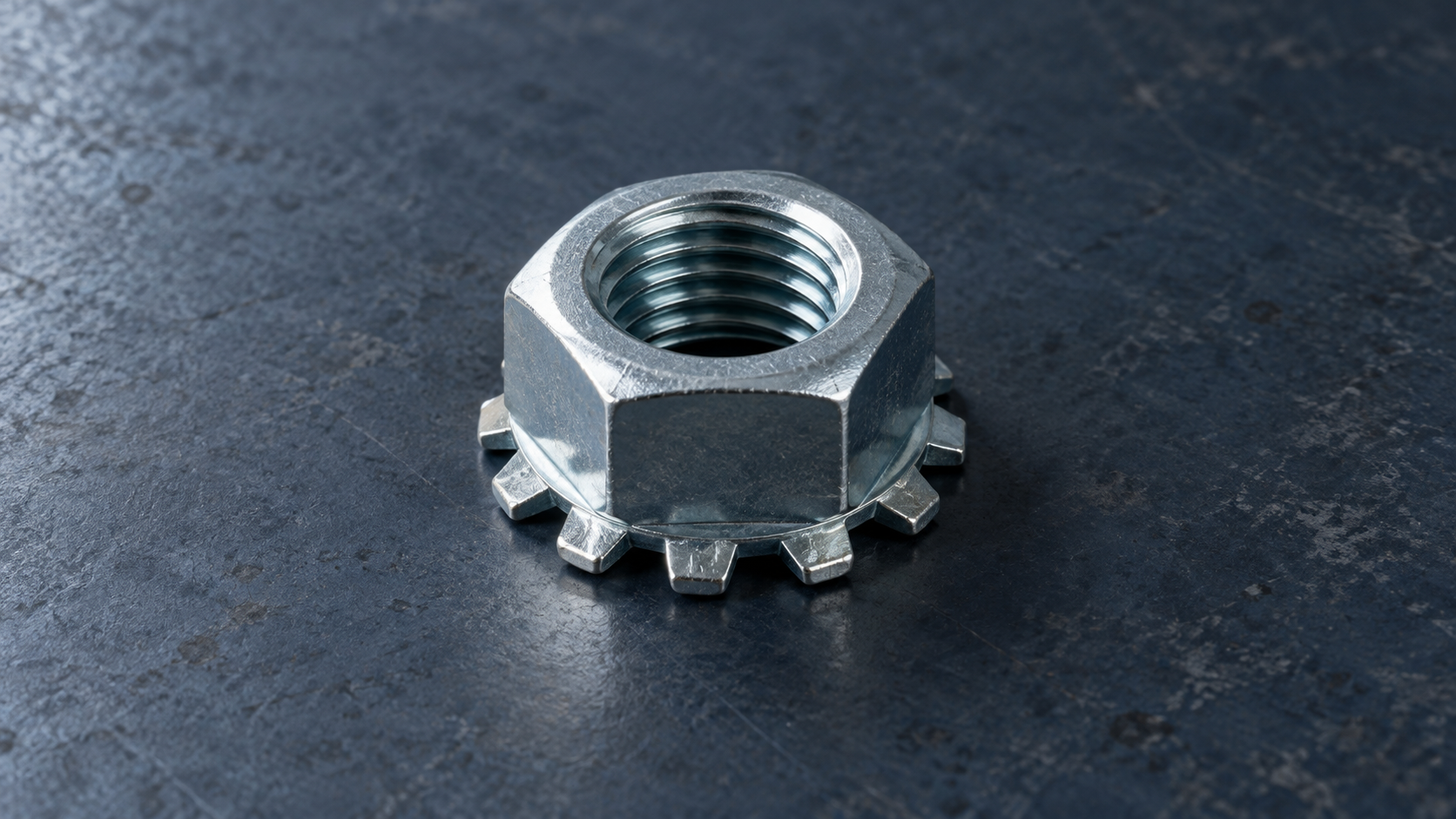
Summary: Keps Nuts commonly combine a hex nut with a captive external-tooth lock washer; the washer stays attached during handling and its teeth bear against the mating surface as the joint is tightened. ISO 16047 is a torque/clamp-force test method, while ISO 2320 covers prevailing-torque type steel nuts, so neither automatically certifies this assembly. Define the joint, surface, material, thread, process, and evidence required before treating a supplier name as a specification.
Keps Nuts combine a hex nut with a captive washer
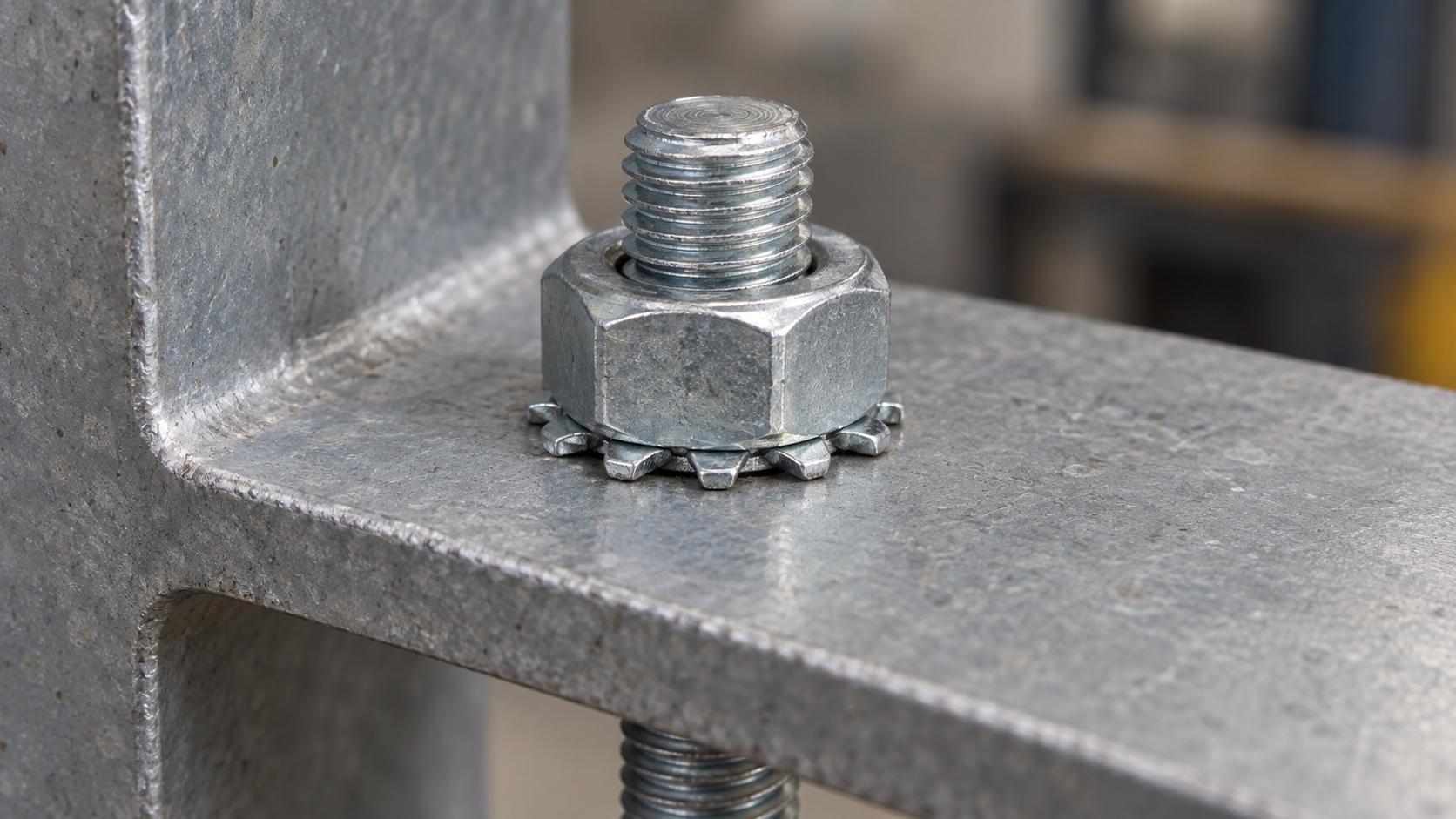
A Keps nut is normally a two-part functional assembly: a hex nut and an external-tooth lock washer that is captive on the nut. The washer is separate from the nut body, but it remains attached while parts are picked, presented, and installed. During tightening, the teeth bear against the mating surface and create the intended locking interface. That mechanism is different from a nylon insert or from a plain nut paired with a loose washer.
The name describes a construction more reliably than it predicts service performance. Surface material, finish, hardness, joint movement, clamp load, and assembly control all affect whether the arrangement is appropriate. A supplier drawing should identify the washer position and geometry; the purchase requirement should also state the thread designation, nut material, finish, and inspection evidence. ISO 16047 can be used to plan a controlled torque–clamp-force evaluation, but its use does not turn a generic part into a universally qualified product.
For buyers developing a sourcing brief, an industrial fastener manufacturer guide can help structure questions about drawings, traceability, material declarations, and test reports before quotations are compared.
Keps Nuts and flange lock nuts solve different interfaces
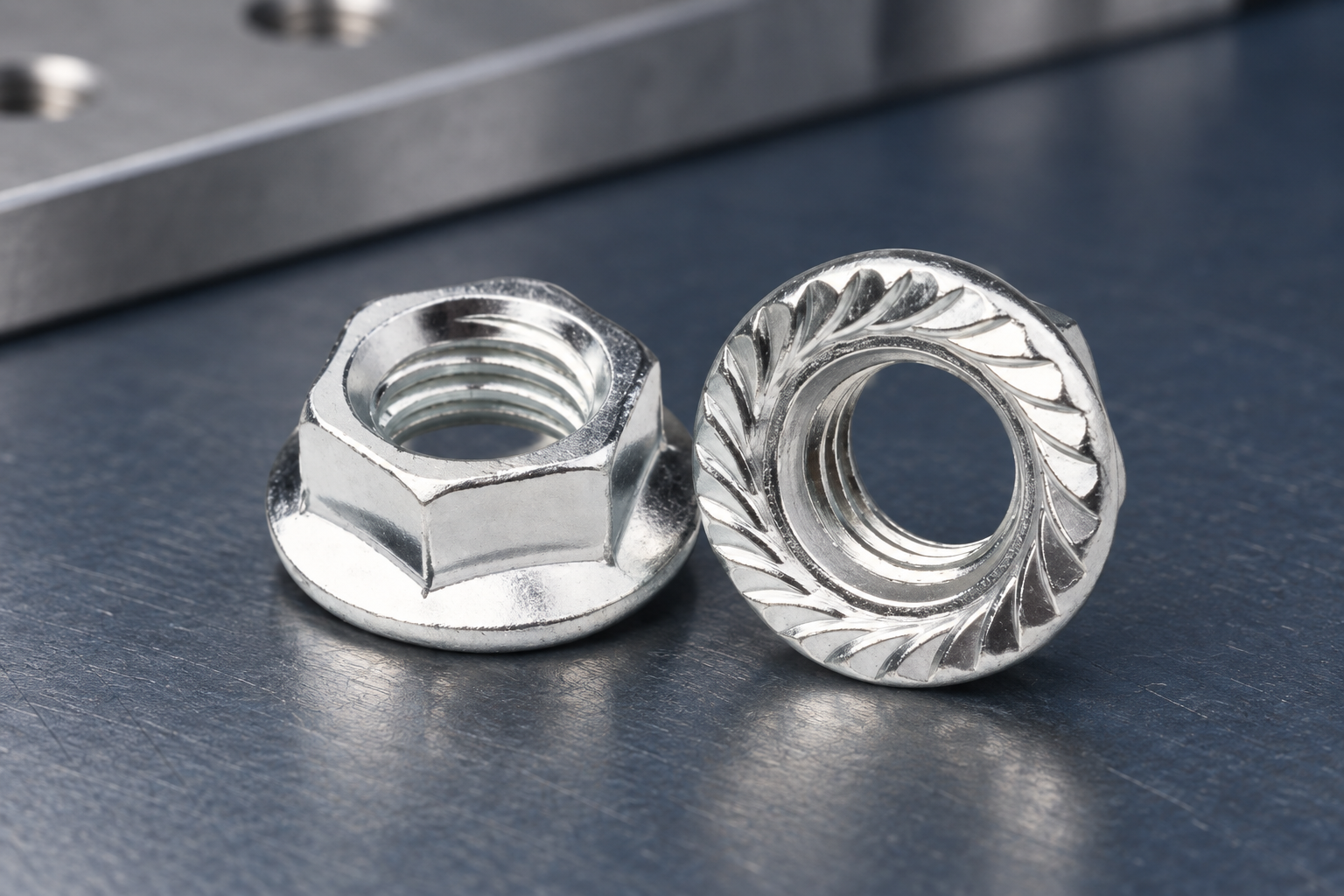
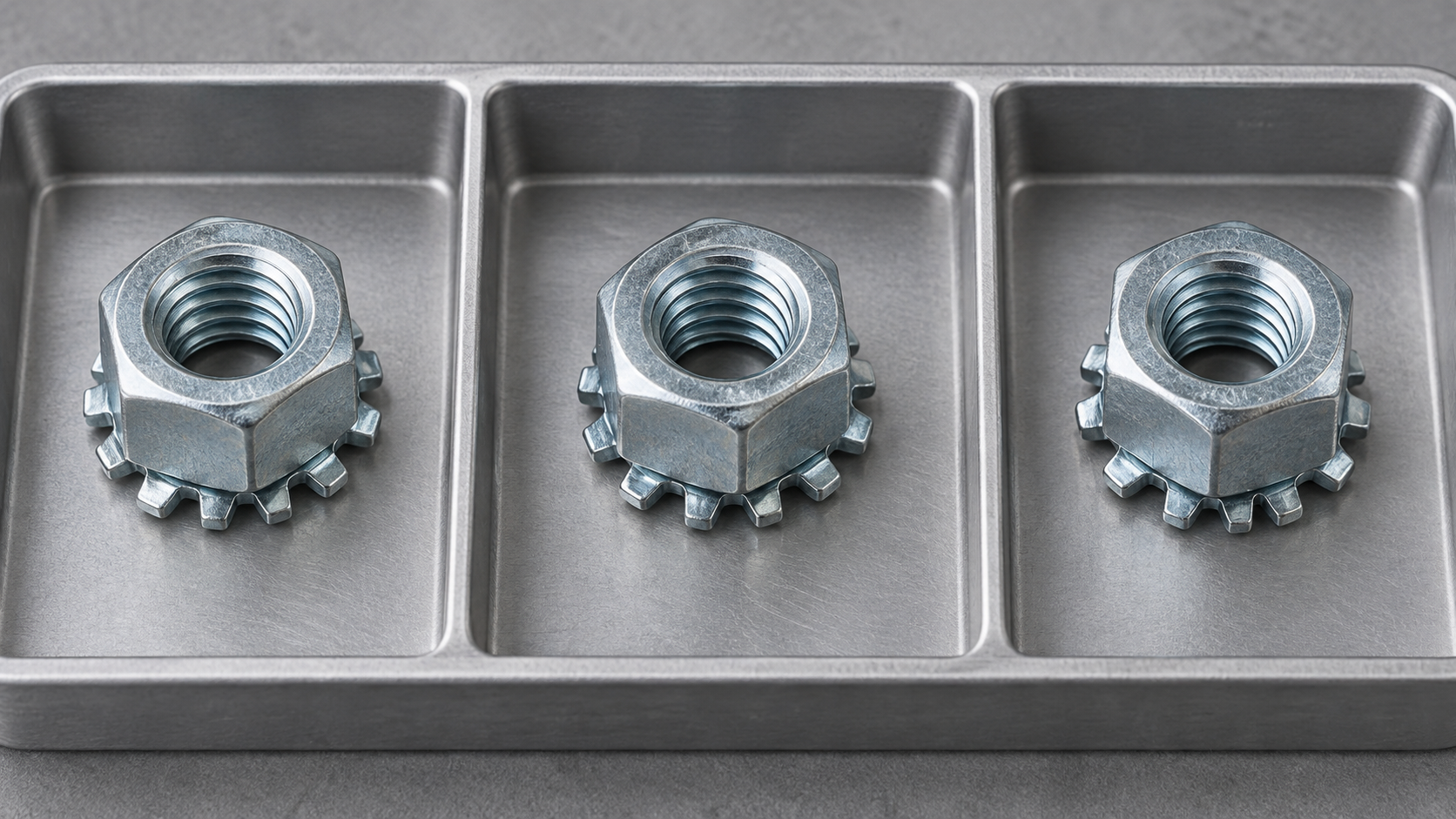
The practical distinction is the location of the bearing and locking feature. A Keps nut uses a captive washer below the nut body. By contrast, flange lock nuts have an integral flange and a locking feature such as serrations or another specified design. A flange nut without a locking feature is not automatically a flange lock nut, and a flange lock nut is not automatically interchangeable with a washer-integrated assembly.
There are three questions behind a visual comparison. First, is the locking element captive but separate, or formed as part of the nut? Second, will the teeth or serrations contact a surface that can accept the intended interface without unacceptable marking? Third, does the joint drawing reserve space for the bearing diameter and the required stack-up? These questions are more useful than assuming that every serrated or flanged part offers the same resistance to loosening.
Comparison of common joint approaches
| Approach | Locking or bearing feature | Assembly implication | Evidence to request | Total-cost consideration |
|---|---|---|---|---|
| Keps nut | Captive external-tooth washer | Nut and washer are handled as one retained assembly | Drawing, materials, finish, and application-specific test plan | May reduce loose-part handling; confirm the complete joint stack-up |
| Flange lock nut | Integral flange plus a specified locking feature | One-piece nut geometry; bearing and locking surfaces are integrated | Flange and serration geometry, material, and applicable performance evidence | Compare surface coverage, installation, and sourcing requirements |
| Plain flange nut | Integral flange without an assumed locking feature | Provides a bearing surface but not necessarily a locking action | Drawing and joint design showing how loosening is controlled | Do not price it as an equivalent substitute for a lock design |
| Plain nut with separate washer | Depends on the specified washer and joint design | Two loose components must be staged and installed | Washer type, orientation, and process controls | Consider picking, omission, inspection, and return exposure |
When the bearing geometry is the deciding issue, review the relevant flange nut range by drawing and locking feature, rather than relying on the word “flange” in a catalog title. The same discipline applies when a quotation calls a washer-integrated part a K-lock nut.
Standards for k-lock nuts define evidence and scope
The market term k-lock nuts is commonly used for a washer-integrated assembly like a Keps nut, but naming varies by supplier. Geometry should control the requirement: state “hex nut with captive external-tooth washer” when that is the intended construction. This avoids silently substituting a prevailing-torque nut, a flange lock nut, or a plain flange nut because all three may appear under a broad “locking nut” search.
ISO 2320 addresses prevailing-torque type steel nuts and their mechanical and performance requirements. It is relevant when the specified product is an applicable prevailing-torque nut; it should not be presented as automatic certification for a captive external-tooth washer assembly. ISO 16047 addresses torque/clamp-force testing. A report made with that method can support an agreed evaluation, but the hardware, lubrication, tightening procedure, and acceptance criteria still need to be defined.
For regulated or safety-sensitive work, the intended market and use control the compliance question. FAA Advisory Circular 43.13-1B describes acceptable methods, techniques, and practices for aircraft inspection and repair in its stated context; NASA-STD-5020 addresses threaded fastening systems for NASA program use. Neither is a shortcut for claiming that a commercial washer-integrated nut is approved for aviation or space hardware. Unsupported certification language can create qualification, audit, warranty, and liability costs even when the part itself is dimensionally correct.
Select Keps Nuts by joint, surface, and documentation
Use the following five-step selection routine before assigning a part number:
- Describe the geometry: specify the hex nut, captive external-tooth washer, thread designation, material, finish, and any drawing-controlled dimensions.
- Check the mating surface: record substrate, coating, finish, permissible marking, and whether tooth contact is acceptable for the assembly.
- Define the duty: identify static or moving service, joint movement, inspection interval, consequence of loosening, and the complete fastener stack-up. Do not infer a universal vibration rating.
- Control the process: document access, tooling, lubrication, tightening sequence, operator or automation controls, and how the captive washer must be seated.
- Match evidence to the claim: request the drawing, material and finish information, lot traceability, and any agreed test plan; use ISO 16047 only with stated test conditions and acceptance criteria.
Selection matrix for procurement and design review
| Decision dimension | Question to answer | What changes if the answer is unclear? |
|---|---|---|
| Application consequence | What happens if the joint loosens between inspections? | Escalate the locking strategy and evidence review; appearance alone is not validation. |
| Surface compatibility | Can the mating material accept external-tooth contact and its marking? | Compare a washer-integrated option with a specified flange or other design. |
| Assembly flow | Will captive retention reduce picking or omission risk? | Assess the full work instruction, not only the component count. |
| Documentation | Which drawing, material, traceability, and test records are required? | Write the evidence requirement before treating supplier terminology as equivalent. |
| Change control | Could a substitute alter the interface or installation method? | Require engineering review and a controlled first-article or sample check. |
Qiyi Fastener can support sourcing and specification inquiries for Keps Nuts and related industrial hardware by helping a buyer organize drawings, materials, finishes, quantities, and documentation needs.
Frequently Asked Questions
What are Keps Nuts?
This fastener is commonly a hex nut supplied with a captive external-tooth lock washer. The washer remains attached during handling and its teeth bear against the mating surface when tightened. Confirm the exact geometry, material, finish, and joint requirement with the supplier drawing.
How do Keps Nuts work?
As the hex nut is tightened, the captive washer is clamped at the bearing interface and its external teeth engage the mating surface. This is an interface-based locking arrangement, not a nylon-insert or automatically prevailing-torque mechanism. Suitability depends on the surface, joint design, installation process, and documented part specification.
What is a flange lock nut?
A flange lock nut combines an integral flange with a specified locking feature, such as serrations or another design intended to resist loosening. The flange provides an integrated bearing surface, but the locking behavior comes from the feature defined by the product design. A plain flange nut should not be described as a flange lock nut without that feature.
How are Keps Nuts different from flange lock nuts?
The washer-integrated assembly uses a separate but captive external-tooth washer beneath the hex nut. Flange lock nuts integrate the flange and locking feature into the nut body. Compare the two against the mating surface, allowed marking, assembly method, and required evidence rather than substituting one from a shared catalog label.
Are Keps Nuts and K-lock nuts the same?
They are commonly treated as the same market category when both names refer to a hex nut with a captive external-tooth washer. Supplier terminology varies, however, so the honest purchasing control is to specify the geometry instead of relying on the name. Ask for the drawing and confirm the washer is captive and external-toothed.
References
- ISO 16047: Fasteners — Torque/clamp force testing.
- FAA Advisory Circular 43.13-1B: Acceptable Methods, Techniques, and Practices — Aircraft Inspection and Repair.
- NASA-STD-5020: Requirements for Threaded Fastening Systems in Spaceflight Hardware.
The dependable fastener is the one whose interface was specified before the first loosening mark appeared.
When your team is ready to compare a washer-integrated option with adjacent designs, share the drawing, application context, quantity, and documentation requirements through Qiyi Fastener’s contact page.