How does NASM25027 define the procurement problem?
The standard addresses aerospace self-locking nuts, a category intended to provide a locking function in a threaded joint rather than rely only on clamp load or an added loose locking device. Its scope should not be stretched into a blanket approval for every prevailing-torque nut, nylon-insert nut, all-metal locknut, flange nut, anchor nut, plate nut, or commercial catalog item. The official SAE standard landing page is the appropriate starting point for controlled access and revision information; a page title or catalog description is not enough to establish product conformity.
Temperature classes identify a selection boundary, not a universal rating
The three named temperature levels are 250 deg F, 450 deg F, and 800 deg F. Under NASM25027, the applicable class must be read together with the nut design, material system, finish, lubricant or process requirements, and referenced detail information. Procurement teams should not convert the highest number into a universal continuous-use claim, because the joint environment, exposure duration, mating hardware, and installation controls can be limiting factors.
A useful technical review separates four questions: Which class applies? Which exact configuration is ordered? Which controlled document defines it? Which records demonstrate compliance? Temperature alone cannot answer whether a nut has the required prevailing-torque behavior before and after reuse cycles, whether its coating is compatible with the service environment, or whether the lot passed the applicable inspections.
Locking function and joint function are related but not interchangeable
A self-locking nut can add resistance to rotation, but it does not correct inadequate preload, damaged threads, poor joint stiffness, or an incorrect grip condition. FAA AC 43.13-1B provides accepted practices for aircraft hardware and includes guidance on the use and inspection of self-locking nuts. It is maintenance guidance, not a product certificate and not a replacement for the purchase specification.
For spaceflight hardware, NASA-STD-5020 addresses threaded fastening systems at the system design and verification level. It helps engineers consider preload, locking, verification, and joint reliability within a broader fastening system, but it does not turn a commercial nut into a conforming aerospace part. The product specification, system requirements, drawing, and contract therefore have distinct roles.
Comparable appearance does not establish comparable control
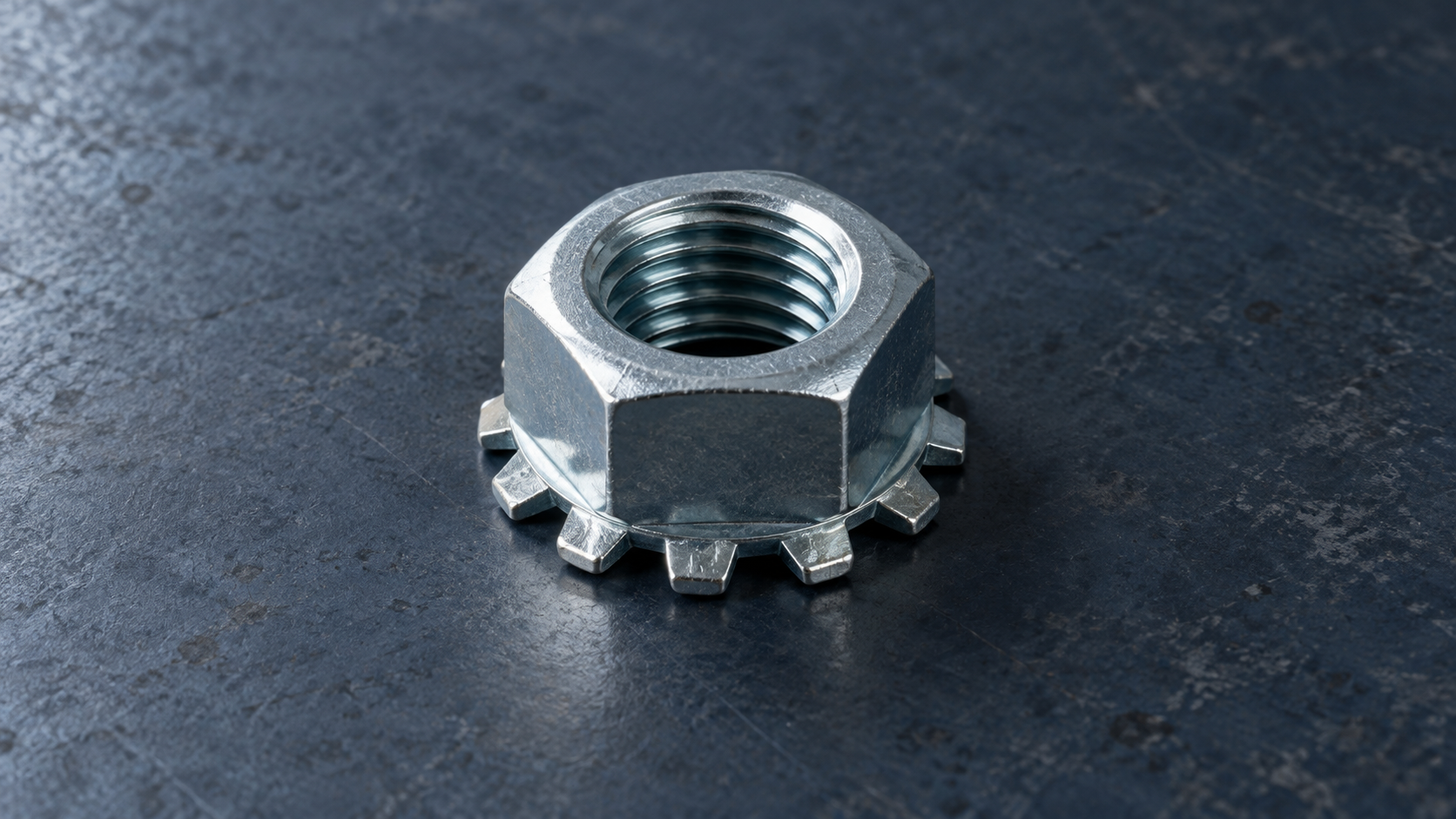
| Decision factor | Controlled aerospace self-locking nut | Generic commercial locknut | Procurement consequence |
|---|---|---|---|
| Designation | Complete specification and part identification are required | May use only catalog family and size | Similar dimensions do not establish interchangeability |
| Temperature basis | Class and applicability are controlled by the relevant documents | Rating may follow a supplier-specific basis | Do not compare headline temperatures without scope |
| Locking performance | Applicable requirements and acceptance evidence are specified | Test basis can vary or may not be stated | Request the named requirement and records |
| Traceability | Contract may require manufacturer, lot, process, and inspection linkage | Packaging or invoice traceability may be the only record | Define records before ordering |
| Unit-cost tendency | Higher documentation and control burden | Usually lower control burden | Compare total acquisition risk, not piece price alone |
| Replacement risk | Lower when designation and evidence match the contract | Potentially higher in controlled applications | Wrong-source savings can be erased by quarantine and rework |
The evidence package should expand with application risk
| Procurement dimension | Question to resolve | Evidence to request | Common mistake |
|---|---|---|---|
| Revision status | Which revision is contractually applicable on the order date? | Controlled standard status plus drawing and contract references | Using an undated web summary |
| Configuration | Does the full designation match size, style, and class? | Purchase description, drawing, and referenced detail document | Ordering from diameter alone |
| Material and process | Are the required material system, heat treatment, finish, and lubricant identified? | Records required by the controlled documents and contract | Accepting only a generic material name |
| Qualification | Is an approved or qualified source/listing required? | Current listing or source evidence, when applicable | Confusing a catalog listing with qualification |
| Lot acceptance | Did the delivered lot meet applicable inspection and test requirements? | Lot-linked inspection, test, and traceability records | Assuming qualification replaces lot acceptance |
An illustrative cost comparison makes the commercial issue clear. If a low-price substitution saves $0.40 on each of 2,000 nuts, the apparent saving is $800. A single receiving hold that consumes 24 engineering and quality hours, plus sorting and schedule disruption, can exceed that amount even before any aircraft or assembly impact is considered. These figures are illustrative, not market prices; the point is that evidence gaps shift cost from the purchase line to quality, production, and program risk.
How should buyers verify NASM25027 compliance and select a source?
Separate standard status, product qualification, and lot acceptance
First, verify the current revision and status at the time of purchase. SAE provides the official access point, while DLA ASSIST Quick Search can be used to check government standardization status and related records. Buyers should not rely on a remembered revision letter or an uncontrolled copy, and this article intentionally does not state one.
Second, determine whether the contract requires a qualified source, an approved manufacturer, or a particular listing. Qualification or listing indicates that a source or product has satisfied a defined approval route within its scope; it does not automatically prove that every delivered lot passed its required acceptance checks. Conversely, a certificate of material, catalog photo, or dimensional match alone cannot prove qualification or full conformance.
Third, define lot evidence before the request for quotation. The purchase order should state the exact specification and full part designation, required revision basis, traceability depth, inspection or test records, certificate language, and any source restrictions. Unsupported compliance claims can lead to rejection, quarantine, supplier corrective action, requalification work, or loss of schedule.
Use a five-step sourcing checklist
- Freeze the technical baseline. Record the complete designation, current controlled revision, referenced detail documents, drawing notes, service temperature, and mating thread requirements.
- Translate requirements into the RFQ. State qualification, traceability, inspection, test, packaging, preservation, and document-delivery requirements rather than requesting an “aerospace locknut” generically.
- Review the source against the exact need. Confirm manufacturing scope, controlled processes, evidence availability, and any contractually required listing. Qiyi Fastener can discuss sourcing and configurable hardware requirements, but no supplier’s general capability statement substitutes for part-specific proof.
- Resolve custom versus standard boundaries. This NASM25027 link leads to a general custom-fastener overview; it is not proof of conformity, and controlled evidence is still required for the actual part. A broader industrial fastener manufacturer guide can help frame supplier questions without replacing specification review.
- Approve documents before release. Reconcile the purchase order, acknowledgment, packing identification, lot records, and certificates so that every reference points to the same product baseline.
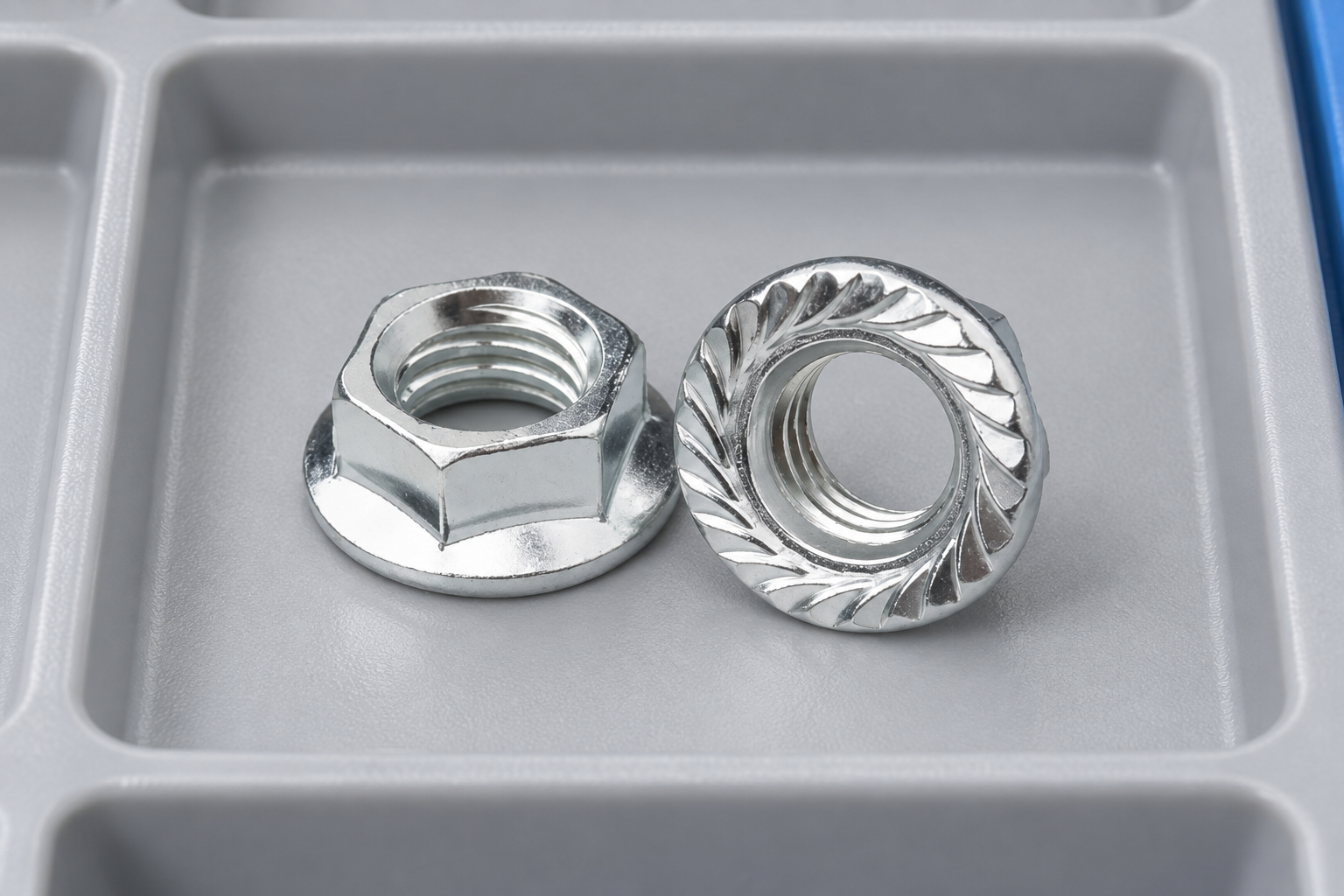
Visual inspection still matters, but its limits should be explicit. Inspectors can check identification, thread condition, finish appearance, damage, contamination, packaging, and dimensional characteristics required by the receiving plan. They cannot infer material condition, locking performance, heat treatment, or approval status from a photograph.
Preserve an auditable chain from designation to delivered lot
A robust receiving record links the full designation and purchase order to the manufacturer identity, lot or batch, quantity, applicable processes, inspection results, and supplied certificates. For NASM25027 procurement, the required depth is set by the controlled documents and contract, not by a generic checklist. Records should remain legible, internally consistent, and retrievable for the retention period defined by the buyer’s quality system.
Generic product pages can be useful for recognizing commercial geometry, but they must stay in that role. For example, Qiyi’s metric serrated flange-nut page lists M3 through M12 sizes and dimensions; those products are not presented here as aerospace self-locking nuts, and the page is not evidence of compliance with the aerospace standard.
Frequently Asked Questions
What is NASM25027?
It is an aerospace standard for self-locking nuts, with temperature classes named in its official title. Buyers should use the current controlled revision and its referenced documents rather than an informal summary to define an order.
What products does NASM25027 cover?
It concerns aerospace self-locking nuts within the configurations and requirements defined by the controlled standard and applicable detail or part documents. It is not blanket coverage for every nylon-insert, all-metal, flange, anchor, plate, prevailing-torque, or commercial locknut.
What temperature ratings are covered by NASM25027?
The official title expressly names 250 deg F, 450 deg F, and 800 deg F classes, approximately 121 deg C, 232 deg C, and 427 deg C. These values do not mean every covered nut is suitable for all three classes or that each value is a universal continuous-use rating; verify the applicable design and class in the controlled documents.
What materials are specified under NASM25027?
The standard should not be reduced to one universal alloy or a generic statement such as “steel” or “stainless steel.” Verify the exact material system, heat treatment, finish, lubricant or process requirements, and temperature applicability from the current standard, applicable design or detail standard, full part number, and supplier evidence.
What does a NASM25027 dash number mean?
A dash number identifies a specific configuration, size, and class combination as defined by controlled standard and referenced part or detail information. It is unsafe to decode it from memory or treat it as only a diameter or temperature code; procurement should verify the complete designation against the current revision.
References
- SAE NASM25027 official standard page – accepted aircraft inspection and maintenance practices; not product certification.
- NASA-STD-5020 – system-level requirements for threaded fastening systems in spaceflight hardware; not a substitute for the product standard.
- ISO 16047: Fasteners — Torque/clamp force testing – a test method for tightening behavior under an agreed test plan.
Qiyi Fastener supports industrial fastener and hardware sourcing discussions, including drawing review and documentation expectations, without implying qualification that has not been demonstrated. Buyers can review the broader product range and then contact Qiyi Fastener with the complete controlled designation, service conditions, quantity, and evidence requirements for a part-specific feasibility review.