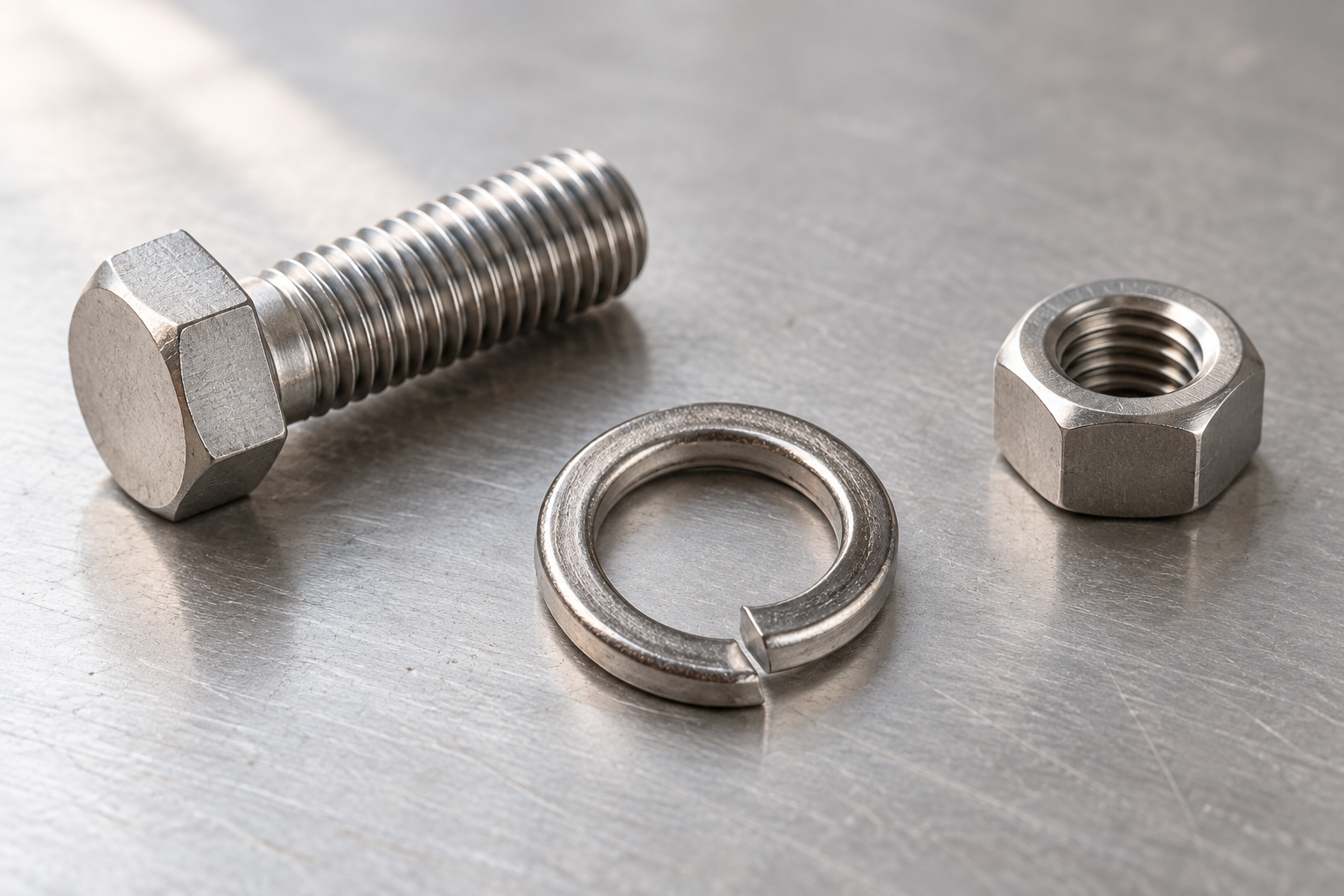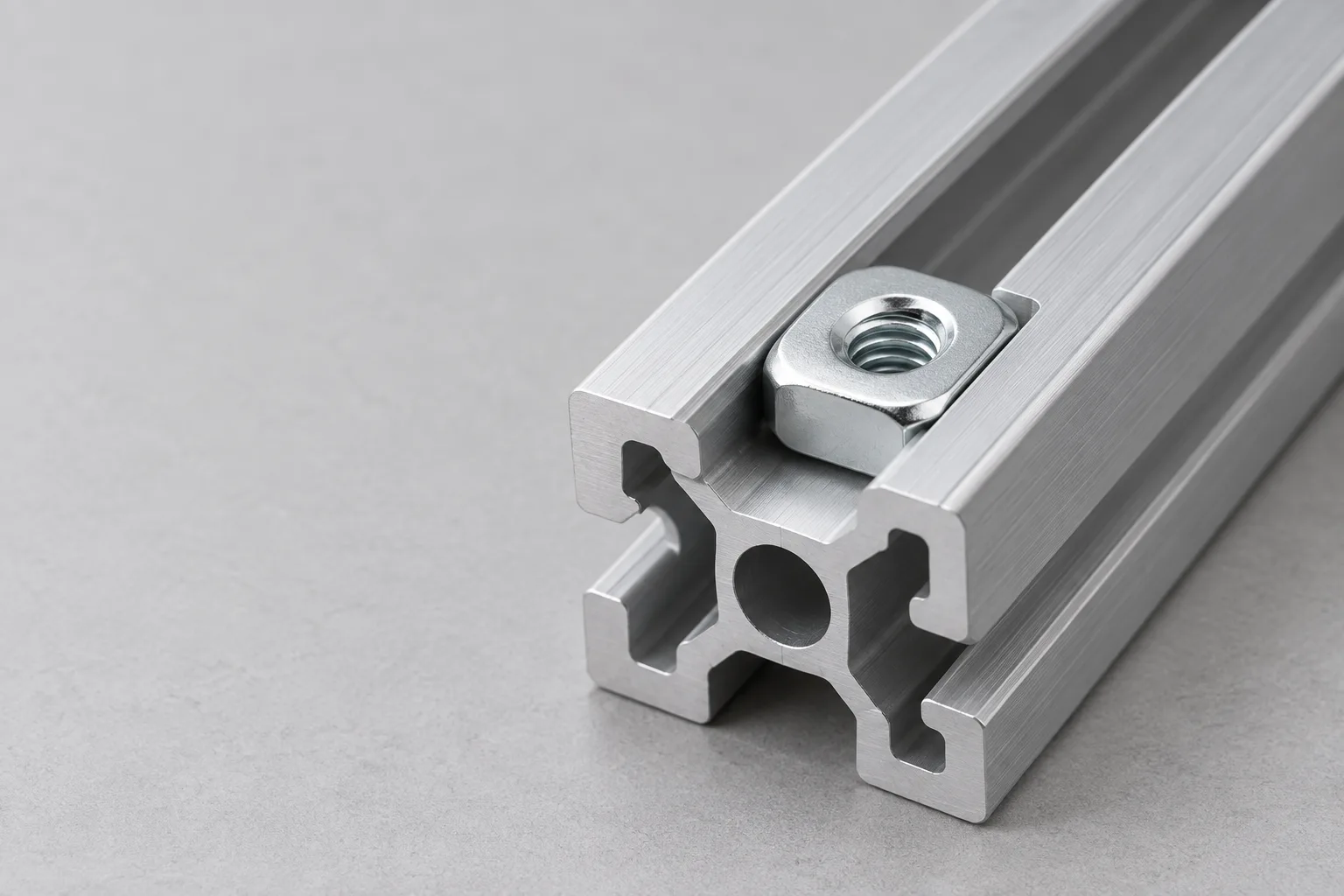
When Mei, a tooling engineer in Shenzhen, tightened a sensor bracket on a 2020 V-Slot frame, the bracket rotated during the first cable pull and the slot nut slid out of position. She rebuilt the joint with a correctly oriented hammer nut, checked the M5 screw engagement and repeated the pull test; the frame held. The failure was not a “bad” extrusion or fastener, but a mismatch between slot geometry, insertion method and clamp length.
Summary: For 20 mm V-Slot profiles, an M5 thread is a common design choice, but fit depends on the nut’s shoulder, spring or tooth detail, and the profile’s internal lip. Select by the actual 2020 profile drawing, keep at least two full threads engaged after the bracket is seated, and verify torque and slip with a representative assembly. A small incoming sample and a documented installation method usually cost less than reworking an assembled frame.
Choosing a hammer nut starts with the 2020 V-Slot profile
A 2020 extrusion has a nominal 20 mm outside dimension, yet slot openings and internal lips vary among manufacturers. A hammer nut must pass through the opening, rotate or snap under the lip, and present a flat bearing face for the bracket. Compare the supplier’s cross-section with your CAD model rather than relying on the word “2020” alone. Bosch Rexroth’s aluminum framing guidance illustrates why profile families and slot dimensions should be treated as system specifications, not interchangeable labels.
The thread callout is only one part of the interface. For an m5 2020 hammer nut v slot joint, confirm thread class, nut thickness, washer clearance and the screw’s under-head length. If the bracket is anodized or painted, include coating thickness in the stack-up. A short screw can bottom in the nut before clamping; a long screw can foul a hidden cable or the opposite wall.
Match the nut style to the assembly sequence
Drop-in versions let an operator insert a hammer nut through the open slot and turn it 90 degrees with a quarter-turn of the screw. Spring-ball or leaf-spring designs hold the nut near the work point while the frame is vertical. Slide-in nuts are useful when the end of the extrusion is accessible, but they force the build sequence to be planned before end caps are installed. For a retrofit, choose a captive or drop-in pattern and document the required orientation.
Installing m5 2020 hammer nut v slot hardware requires controlled orientation
Begin with clean slots and deburred bracket holes. Insert the m5 2020 hammer nut v slot piece at the opening, keep its long axis aligned with the slot, then rotate it until both bearing shoulders sit under the lips. Start the screw by hand for several turns; the nut should resist spinning as the screw head draws the bracket down. If it cants, back off, realign and inspect for burrs rather than forcing torque.
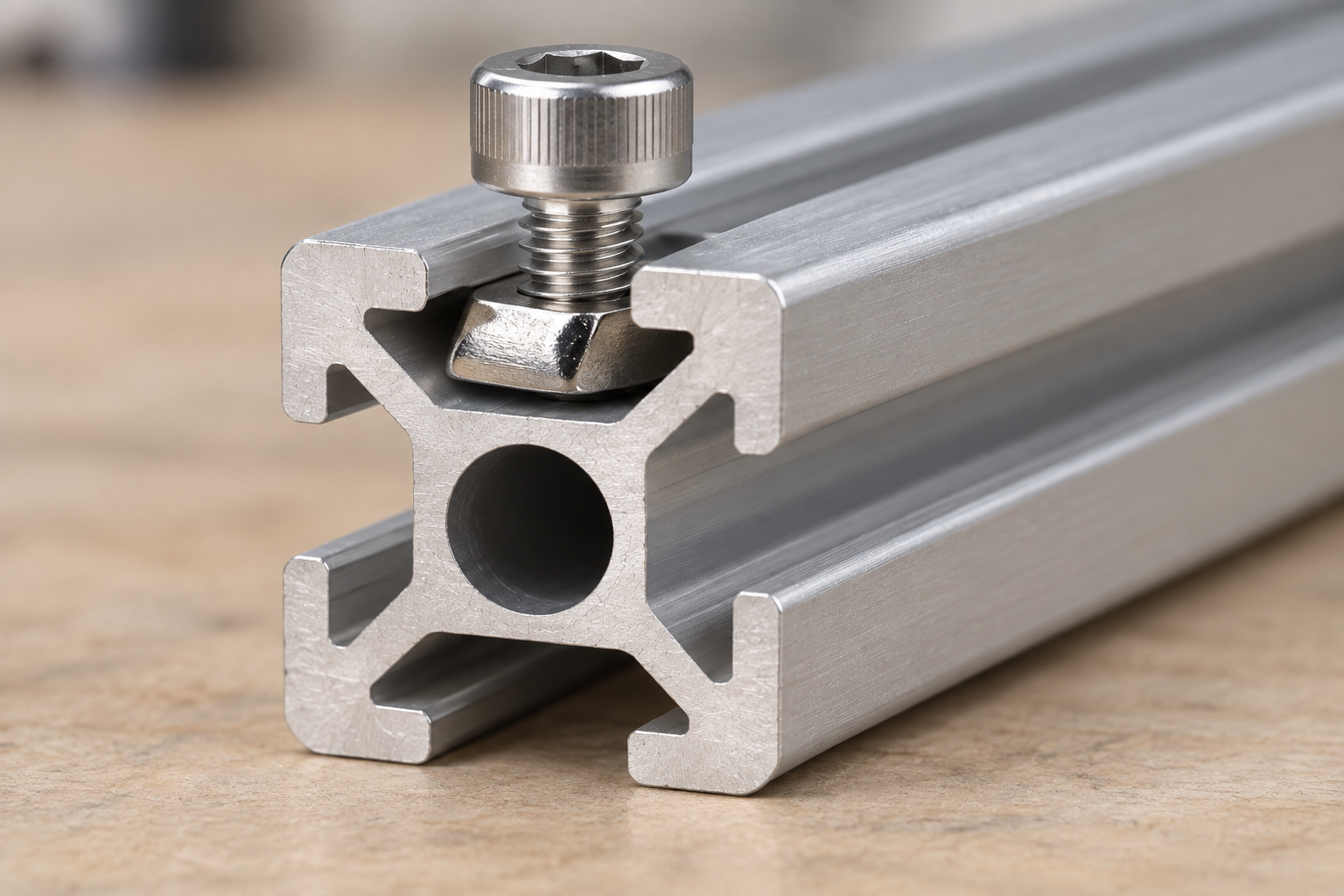
Use a calibrated torque tool appropriate to the screw grade and lubrication condition. Treat torque-and-clamp verification as a test method, not a universal torque table; record the chosen torque, tool ID and witness-mark result in the work instruction. On a prototype, repeat the joint after loosening and retightening to expose thread galling or loss of seating.
Check orientation before applying load
With the screw snug, mark the nut and profile with a paint pen. Apply a representative pull or vibration sequence, then inspect for rotation, slot-edge damage and witness-mark movement. This simple check does not replace a validated engineering test, but it catches an upside-down slot insert before production. For assemblies exposed to vibration, consider a prevailing-torque screw or thread-locking method compatible with the material and service temperature.
A hammer nut comparison clarifies performance and total cost
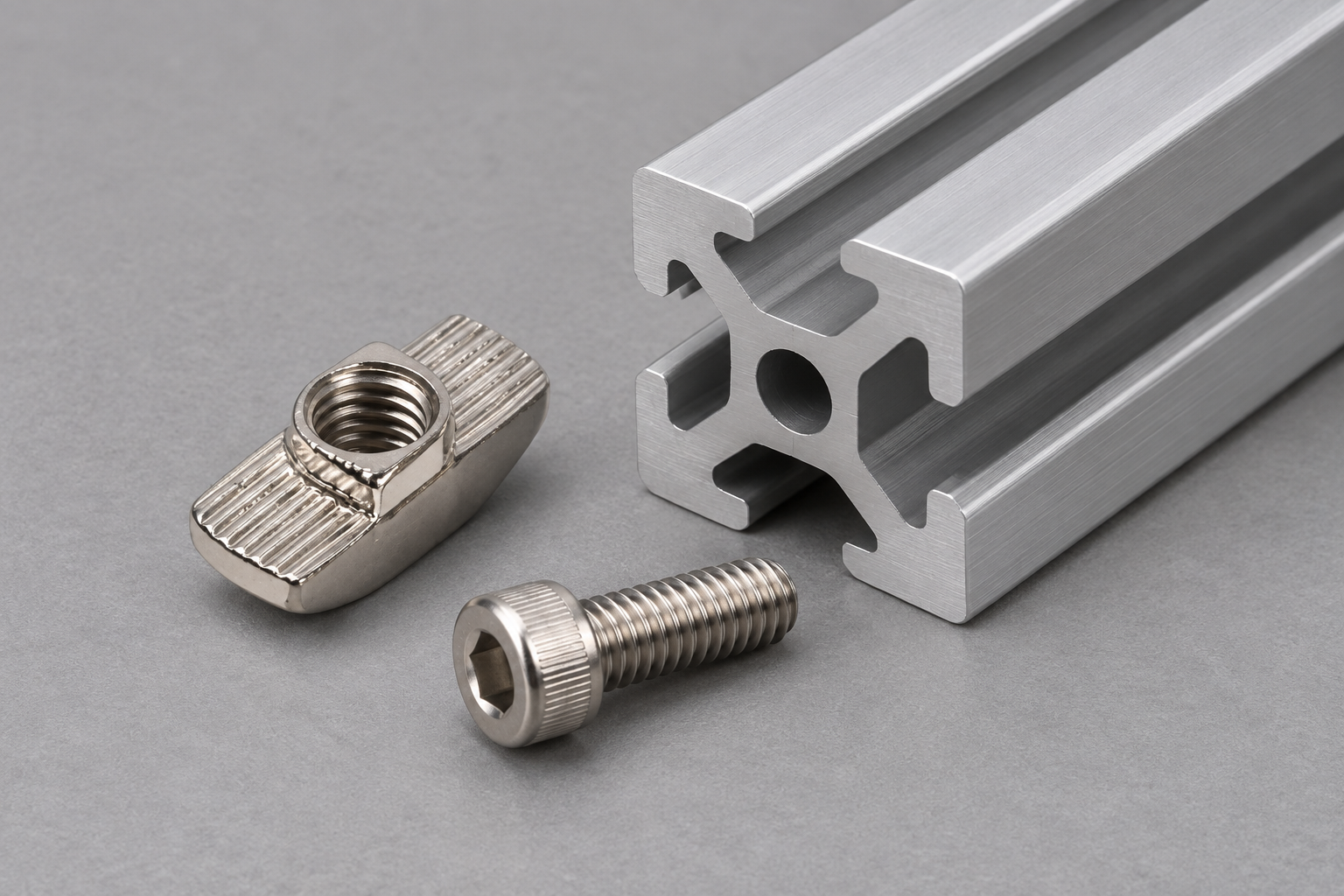
Different retention features trade assembly speed for positional security. The table below is a design-screening aid; actual capacity comes from supplier data and your test plan. Treat every hammer nuts selection as a system decision involving the extrusion, screw, washer and bracket.
| Option | Insertion | Position retention before tightening | Typical fit risk | TCO consideration |
|---|---|---|---|---|
| Drop-in quarter-turn | Insert and rotate in open slot | Medium | Wrong shoulder orientation | Fast retrofit; train operators |
| Spring-retained drop-in | Insert against spring and rotate | High during vertical assembly | Spring interference with narrow lip | Higher part complexity; fewer lost nuts |
| Slide-in T-nut | Feed from profile end | High after placement | End access blocked by caps | Low unit complexity; more planning labor |
| Toothed or serrated nut | Seat teeth under lip | High after preload | Surface marking or anodize damage | Useful for vibration; inspect cosmetic impact |
In a cost review, include operator seconds, dropped-part retrieval, rework after misalignment and field access. A seemingly inexpensive slot insert can create a high total cost if technicians must dismantle a frame to add one later. Conversely, a spring-retained design may pay back when hundreds of vertical joints are installed per shift.
Selecting an m5 2020 hammer nut v slot size protects thread engagement
Use the profile drawing and the real bracket stack to select the nut. The values below are dimensional checkpoints, not invented product specifications; confirm them against Qiyi’s controlled drawing before release. For an m5 2020 hammer nut v slot assembly, the M5 designation identifies the nominal internal thread, while the profile and shoulder dimensions determine whether the nut seats.
| Selection dimension | What to verify | Why it matters |
|---|---|---|
| Thread | M5 internal thread and stated tolerance | Prevents cross-threading and ensures screw engagement |
| Nut thickness | Clearance below slot lip and bracket | Avoids rocking or screw bottoming |
| Shoulder width | Both shoulders bear under the V-Slot lips | Transfers clamp load into the extrusion |
| Entry envelope | Nut passes the slot opening without scraping | Supports repeatable drop-in installation |
| Screw length | Bracket, washer and nut stack-up; leave thread clearance | Maintains preload without blind-hole contact |
For a quick fit study, model the worst-case lip spacing and bracket tolerance, then test a sample lot. Mark the approved orientation in the assembly drawing. If your design uses a hammer nuts assortment, segregate thread sizes and label bins; mixing M4 and M5 parts is a common line-side error.
Use a simple incoming and process checklist
- Check material, finish, thread gauge and lot traceability against the purchase specification.
- Measure critical shoulders and thickness on a sampling plan agreed with the supplier.
- Run a hand-fit check in the exact 2020 V-Slot extrusion, then a torque-and-slip check.
- Photograph the seated retainer orientation for the work instruction.
Standards and compliance put hammer nuts in the right design context
Aluminum framing fasteners do not gain a blanket safety certification simply by being called hammer nuts. ISO 16047 covers torque/clamp-force testing; ISO 898-1 addresses mechanical properties of carbon-steel bolts and screws, not the extrusion itself. NASA’s Fastener Design Manual (NASA-RP-1228) provides engineering principles for preload, joint design and inspection. OSHA’s machine-guarding rules and applicable eCFR requirements may govern the finished machine when a loose bracket creates a hazard. Confirm which rules apply in the destination market, document the rationale and avoid marketing claims that your evidence cannot support.
For an m5 2020 hammer nut v slot joint in a guarded machine, retain material certificates or supplier declarations when required by your quality system, and link the lot number to the assembly record. Standards are references for design and test scope; they are not proof that every configuration is compliant.
Sourcing hammer nuts from Qiyi works best with a documented specification
Send the supplier the extrusion profile drawing, thread size, expected load direction, finish, installation method and destination market. Ask for a controlled dimensional drawing, material/finish declaration and sample quantity for fit trials. Qiyi Fastener can discuss configurable insert details and related fastener category options for line use; request the evidence needed for your application instead of assuming a generic catalog part is interchangeable.
Specify whether the part must remain captive during vertical assembly, whether cosmetic marks are acceptable and how many re-installations are expected. Include the exact phrase m5 2020 hammer nut v slot in your internal purchase description so engineering, purchasing and production refer to the same interface. For mixed frames, list each slot family separately.
Frequently Asked Questions
What is a hammer nut?
A threaded insert of this type is shaped to enter an aluminum-extrusion slot and lock beneath the slot lips when turned or tightened. Its shoulders transfer clamp load to the profile. Geometry varies, so verify the exact extrusion drawing.
What is an M5 2020 hammer nut?
It is a hammer-style insert with a nominal M5 internal thread intended for a 20 mm profile family. The term does not guarantee a universal fit; shoulder width, thickness and entry shape still require a sample check.
Is an M5 2020 hammer nut compatible with V-Slot profiles?
An m5 2020 hammer nut v slot part can be compatible when its shoulders match the V-Slot opening and lips. Confirm by hand-fitting the nut in the actual extrusion and checking that the bracket bears flat before torqueing.
What bolt size is used with an M5 hammer nut?
Use an M5 machine screw or bolt with a compatible head and washer; choose length from the complete stack-up. Check the screw grade and torque specification in your joint design.
How does a hammer nut lock into the extrusion?
Insertion aligns the nut with the slot, then a quarter-turn or tightening brings its shoulders under the lips. Preload keeps the shoulders seated. If the nut spins, stop and correct orientation or inspect the slot.
Can a hammer nut be installed without sliding it in from the profile end?
Yes, drop-in and spring-retained hammer nuts are designed for installation through the slot opening. Slide-in T-nuts require end access, so select the style that matches your retrofit or build sequence.
References
- NASA Fastener Design Manual (NASA-RP-1228) — preload and joint-design principles.
- The Aluminum Association — authoritative aluminum industry and profile-material context.
- OSHA 29 CFR 1910.212 — general machine-guarding provisions.
Reliable frames come from repeatable interfaces: measure the slot, orient the nut, control preload and record the result.
Need help matching a hammer nut to your 2020 V-Slot extrusion? Contact Qiyi Fastener with your profile drawing and assembly requirements.