

When Mei Chen, a tooling engineer in Suzhou, slid a mounting bracket into a new aluminium profile frame, the fastener turned instead of seating and the sensor plate dropped during the first dry run. The team blamed a weak nut until inspection found a mismatch between the profile slot, thread, and bearing face. The failure was selection and installation, not proof of a bad product.
How does a sliding t nut work inside an extrusion profile?
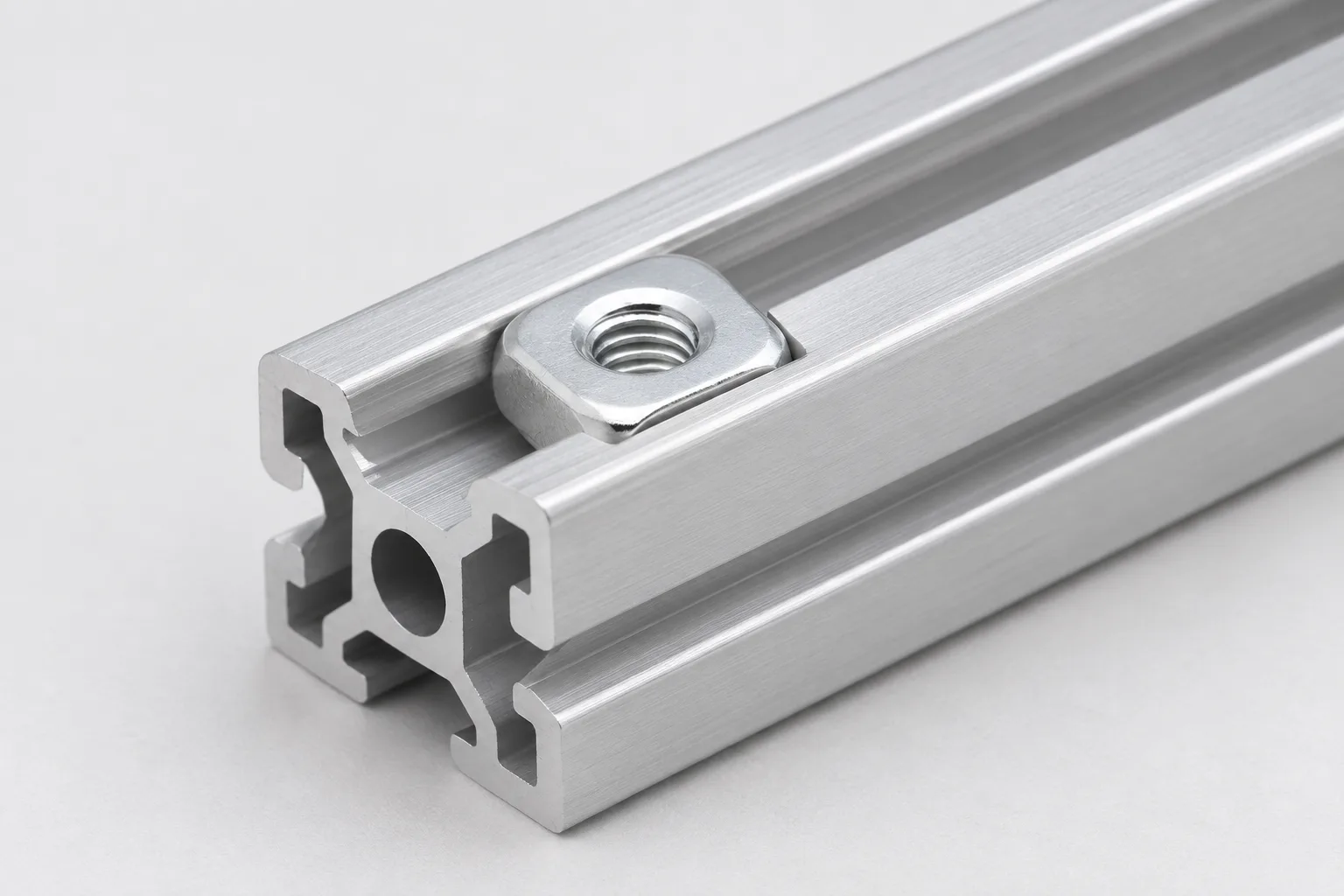
A Sliding Nut is a threaded block that sits inside an aluminium extrusion’s T-shaped channel. The sliding t nut sits under the slot lips while a bolt draws a bracket or panel onto the profile. Clamp force travels through the bearing faces, allowing a connection point to move without drilling the extrusion.
The joint has four interfaces: profile, nut, bolt, and attached component. Check slot fit, engagement, bolt length, and bearing contact; a compatible thread alone is not enough. Bosch Rexroth’s assembly-technology resource is a system reference, not a universal interchangeability claim.
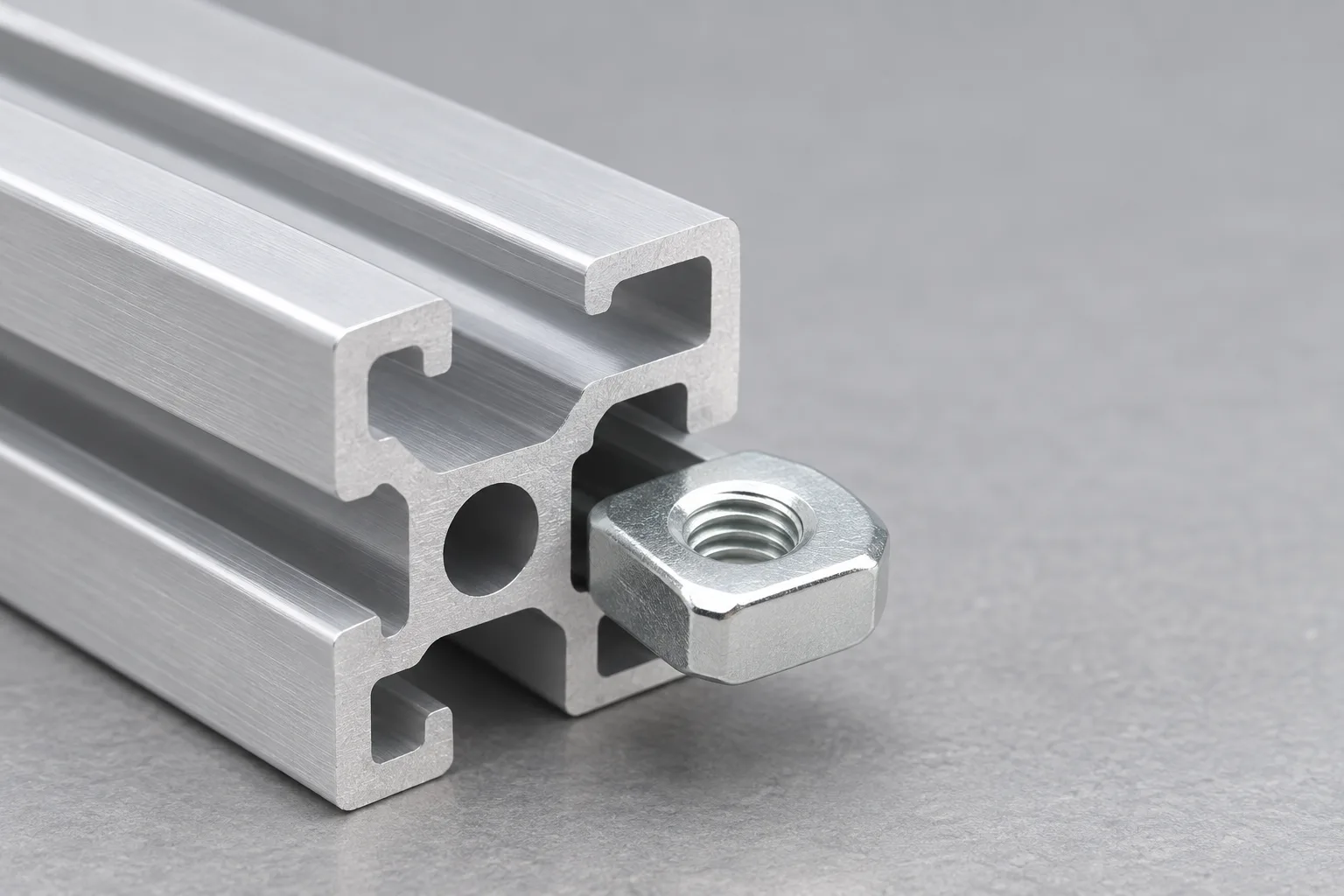
Which Sliding Nut geometry should engineers compare?
Compare the slot opening, thread, nut height, width, bearing length, and locating feature against the profile drawing. A Sliding Nut with the correct thread can still fail if its body cannot pass the slot or its bearing face does not sit flat.
| Nut approach | Access | Useful advantage | Risk to verify |
|---|---|---|---|
| Slide-in economy nut | Open profile end | Simple positioning | Slot fit and rotation |
| Spring-ball or roll-in nut | Selected slot point | Useful in closed frames | Seating and thread alignment |
| Hammer nut | Slot, then turn | Retrofit access on some profiles | Turn-in and bearing |
| Square nut or plate insert | Defined insertion path | Broad bearing area | Clearance and capture |
Qiyi’s sliding t nut product reference helps compare slide-in and square-nut forms. For a closed frame, a spring-ball T-nut or hammer nut may be more practical, subject to the profile.
How should sliding t nuts be installed and inspected?
Clean the channel and remove chips, burrs, anodising flakes, and packing debris. Confirm thread and dimensions against the drawing, then insert the sliding t nuts from the profile end or approved roll-in orientation. Position the nut before placing the bracket; forcing it under a lip can damage the extrusion.
Start the bolt by hand and tighten in the specified sequence and torque range. If no value is supplied, ask the profile or fastener supplier. Check for bottoming, rotation, full bearing, and squareness; a witness mark can reveal movement but cannot replace a joint test.
Record the profile series, thread and pitch, nut style, stated material or finish, and slot condition. On a representative assembly, check seating, alignment, engagement, and movement under the intended service load. Catalog values apply only within stated conditions.
Which standards and sourcing controls apply to Sliding Nut selection?
Authoritative guidance also needs a clear boundary. The NASA Fastener Design Manual discusses fastener and joint-design principles, while FAA AC 43.13-1B applies within its aircraft-maintenance scope. Neither document establishes a universal rating for an assembled extrusion joint. If a sliding t nuts specification cites either source, confirm the material, dimensions, thread, application, and test conditions are actually in scope.
For machinery frames or guarding, destination-market rules concern the complete machine and risk control. In the United States, 29 CFR 1910.212 addresses general machine guarding; it is not a T-slot-nut certification. Request drawings, material declarations, inspection evidence, and change-control expectations before repeating “certified” or “code compliant.”
Apply the same discipline to corrosion and temperature. Stainless steel, plated steel, the profile, washer, and bracket can interact in wet or chemical service. Select and verify the complete joint for the destination environment instead of relying on a material label.
How should buyers source sliding t nuts for repeatable builds?
For repeatable procurement, write the requirement around the assembly. Specify the profile cross-section, slot opening and depth, thread system, bolt length, material and finish, insertion method, load direction, environment, access limits, and inspection record.
| Parameter | What to compare | Cost impact |
|---|---|---|
| Slot opening and geometry | Drawing versus nut body and bearing face | Prevents rework and slot damage |
| Thread diameter and pitch | Nut, bolt, clearance, and engagement | Reduces cross-threading and substitutions |
| Nut height and length | Channel depth and contact area | Helps avoid rotation or bottoming |
| Insertion and service access | Slide-in, roll-in, hammer-turn, or captive | May avoid dismantling a closed frame |
| Material, finish, and evidence | Environment, standard scope, and records | Supports approval and traceability |
Qiyi Fastener can be considered for profile-fastener comparisons and documentation requests, without implying automatic suitability. Compare drawings and stated evidence first, then request samples or a representative assembly check where loosening has material consequences.
Frequently Asked Questions
What is a sliding T-nut?
A sliding T-nut is a threaded insert that sits inside a T-slot aluminium profile so a bolt can clamp a bracket or panel. Body shape, thread, and bearing surfaces depend on the profile system.
What is a sliding nut used for?
A Sliding Nut creates adjustable attachment points in extrusion frames without drilling. It suits brackets, panels, sensors, guards, and fixtures when specified for the intended load and environment.
How does a sliding T-nut work?
The sliding t nut sits beneath the slot lips and is pulled against the profile as the bolt tightens. Performance depends on bearing, engagement, alignment, and the supplier’s clamp conditions.
What does a sliding T-nut look like?
It commonly looks like a small metal block with an internal threaded hole and a body shaped to fit a T-slot. Some versions are plain slide-in blocks; others add a spring, ball, or turn-in feature for positioning or retrofit access.
How is a standard slide-in T-nut installed?
Slide the nut into the open end of a clean profile channel, position it under the bracket, start the bolt by hand, and tighten using the specified sequence and torque. Check that the nut has not rotated, the bolt has not bottomed, and the bracket is seated before releasing the assembly.
References
- NASA Fastener Design Manual – general fastener and joint-design guidance.
- Bosch Rexroth assembly technology – official profiles and accessory-system resource.
- FAA AC 43.13-1B – acceptable aircraft-maintenance methods within its stated applicability.
- 29 CFR 1910.212 – U.S. general machine-guarding requirements where applicable.
For a new extrusion-frame requirement, review the relevant Qiyi Fastener product categories and contact Qiyi Fastener with the profile drawing, thread details, environment, and evidence requirements.


