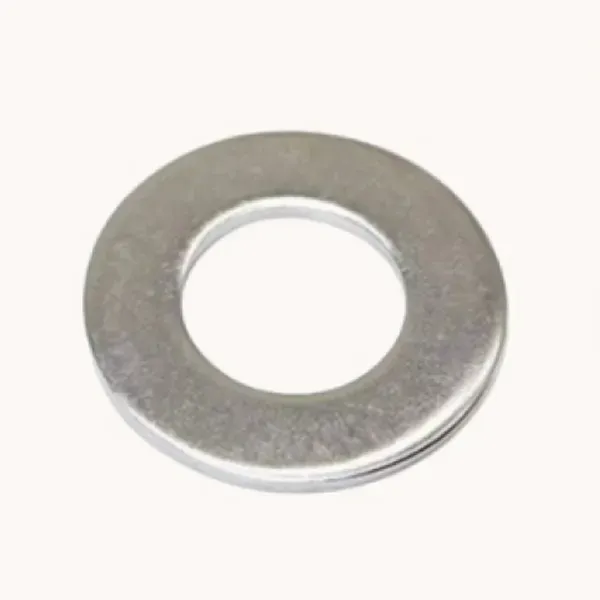
When a maintenance engineer in Rotterdam, Elena de Vries, replaced a valve actuator’s flattened washers during a night shift, the torque wrench reached its setting but the valve still leaked on the first pressure cycle. A quick visual check blamed “soft” parts; a stack calculation reversed that conclusion. The washers had been nested in the wrong direction, cutting travel and preload, so the failure was a selection and assembly problem rather than a bad product.
Summary: A belleville washer calculator is useful only when its inputs reflect the real joint: target load, working deflection, free height, thickness, diameter, friction, and temperature. As an engineering distinction, EN 16983 covers dimensions and quality requirements for disc springs, while ISO 16249 addresses testing terminology and methods; neither standard turns an unchecked spreadsheet into a certificate. Enter measured geometry, check the force–deflection curve at the operating point, verify stack direction, and request material and test records before release. The same workflow applies to a belleville spring calculator or disc spring calculator.
A belleville washer calculator turns spring geometry into a design decision
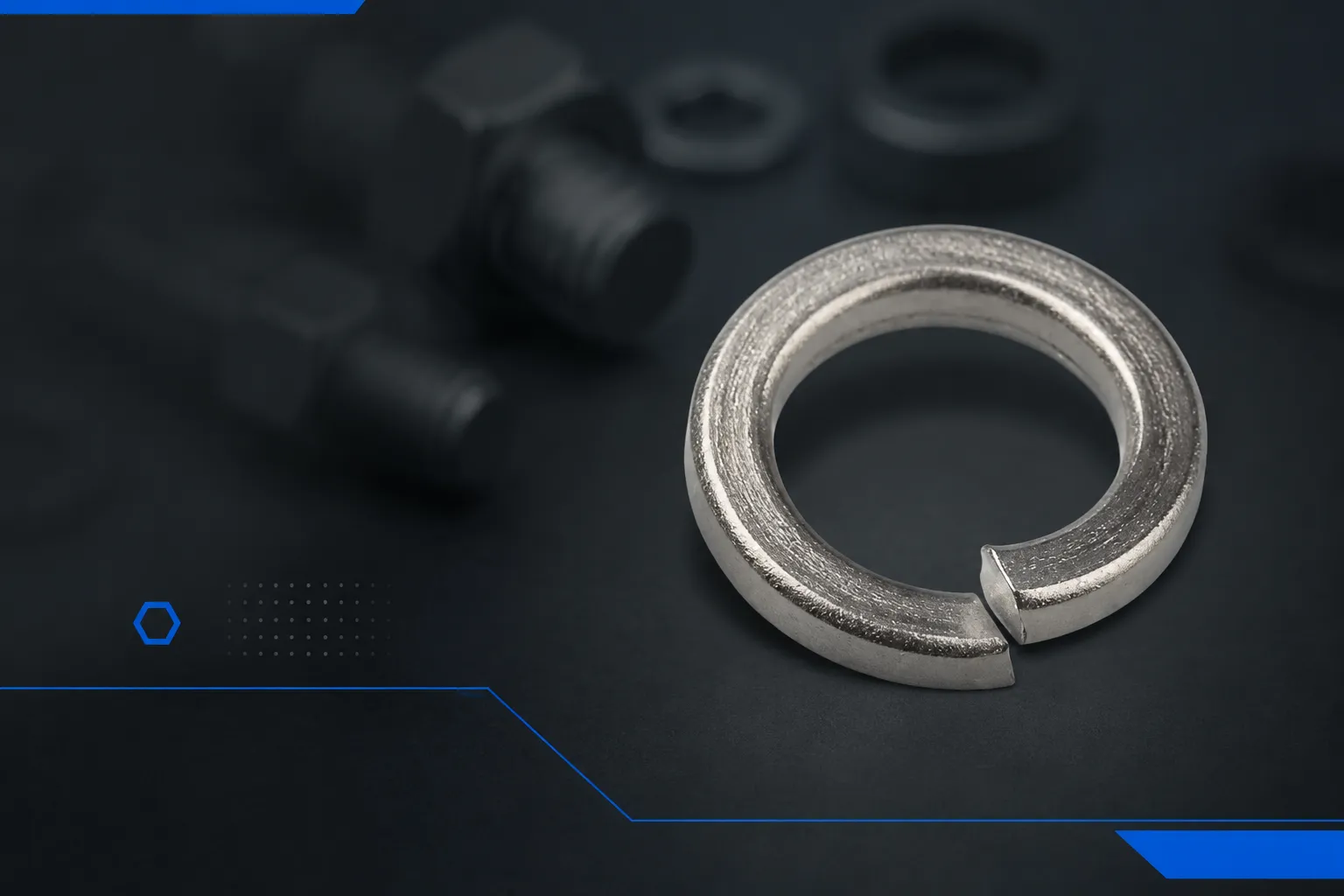
Conical spring washers store energy through axial flattening. Their force changes nonlinearly with deflection, which is why a flat-washer substitution can remove the intended preload. A calculator is a decision aid: it converts dimensions and material assumptions into a predicted force–deflection curve, then lets an engineer compare single discs, parallel packs, and series stacks. The result should be reviewed alongside the joint drawing, environmental limits, and the supplier’s inspection plan.
Start by defining the joint outcome rather than a part number. Record the minimum clamp load that prevents separation, the maximum load that protects threads or seals, and the permitted travel. For a bolted joint, include bolt stiffness and the expected embedment loss; for a valve or clutch, include the actuator stroke and any stop that limits deflection.
Enter outside diameter (De), inside diameter (Di), free height (h0), thickness (t), and material modulus. A common first check is the slenderness ratio h0/t. Ratios near one usually produce a steep curve; higher ratios provide more travel but can become sensitive to friction and geometric tolerances. Treat these as screening observations, not universal limits.
For an initial estimate, many engineering programs implement the Almen–Laszlo formulation from DIN EN 16984. The equation combines geometry with an elastic modulus and Poisson’s ratio, producing force F as a function of normalized deflection s/t. Because the equation assumes an ideal conical disc, use the manufacturer’s tested curve for final acceptance, especially when edges are radiused, surfaces are coated, or friction is high. A belleville washer calculator should therefore be treated as a screening model until those details are verified.
Repeat the belleville washer calculator check at the low and high tolerance limits, not just at nominal dimensions. That simple sensitivity run often exposes a preload margin that disappears after coating, temperature, or seating losses.
A belleville spring calculator needs load, travel, and temperature inputs
A reliable belleville spring calculator session has four input groups. First are geometry and quantity. Second are material data—modulus, yield strength, density, and thermal range. Third are operating conditions, including cycling rate, lubrication, corrosion exposure, and contact friction. Fourth are constraints such as guide diameter, bolt clearance, and the maximum stress or set allowed by the design authority.
Force–deflection behavior is the central output. Plot force on the vertical axis and deflection on the horizontal axis, then mark assembly preload, nominal working load, and the hard-stop position. A useful design window keeps the working point away from the curve’s sharp transition and away from full flattening. If a calculator reports stress, compare it with the material’s allowable value at temperature and with the supplier’s fatigue evidence; do not infer fatigue life from static force alone.
Use the vocabulary and loading terms from ISO 16249 when sharing the curve with a supplier, so “force,” “deflection,” and “set” mean the same thing in the quotation and test report.
Stacking changes the curve in predictable ways. Discs in parallel (same orientation) multiply force approximately by the number of discs while preserving travel. Groups in series (alternating orientation) multiply travel approximately by the number of groups while preserving group force. Real stacks lose some ideal performance because of friction between discs, guide contact, and tolerance accumulation, so apply a documented efficiency factor and validate it on a sample stack.
Illustrative example: four identical discs in two parallel pairs arranged in series may target about twice the single-disc travel and twice the single-disc force. The numbers are illustrative, not a guarantee; the calculator should show the actual curve for the selected dimensions and tolerances.
DIN EN 16984 calculation guidance is a useful baseline for comparing those stack options, but the assembled stack still needs a measured force–deflection check.
A disc spring calculator reveals when a stack is more efficient than a single disc
The disc spring calculator is most valuable when packaging is tight but the load is high. Compare a single dis with a stack at the same installed height. Note force at 25%, 50%, and 75% of available travel, plus the stress margin at the maximum point. This makes a hidden trade-off visible: a compact stack can reduce actuator size, yet contact friction and assembly time can raise total cost. Run the disc spring calculator again with the measured stack height after assembly, because seating can alter the working point.
| Approach | Performance | Efficiency | Durability | Compatibility | Maintenance and TCO |
|---|---|---|---|---|---|
| Single disc | Moderate force, short travel | High theoretical efficiency | Good when stress is controlled | Simple axial envelope | Few parts; easy inspection |
| Parallel group | Higher force at similar travel | Reduced by inter-disc friction | Depends on alignment and lubrication | Needs clean, guided faces | More parts and cleaning time |
| Series stack | More travel at similar force | Useful for long stroke | More interfaces to wear | Requires length and guide control | Higher assembly and replacement effort |
| Flat washer substitute | No predictable spring curve | Not a spring solution | Can lose preload rapidly | May fit, but function differs | Leakage and rework risk dominate TCO |
Use the table as a screening tool, not a ranking of every design. The lowest unit count is not automatically the lowest total cost of ownership (TCO): a stack that prevents seal rework or unplanned shutdown can be economically superior even when its purchase price is higher.
A disc spring calculator should be read by application and stacking pattern
Map the calculated curve to the application before choosing a catalog size. The second table organizes common cases by the load path and the stack pattern most often considered.
| Application | Typical objective | Starting stack pattern | Checks before release |
|---|---|---|---|
| Valve actuator | Stable preload through thermal cycles | Series groups for travel; guide each disc | Actuator stop, corrosion, spring set, leak test |
| Bolt tensioner | High clamp force in a short envelope | Parallel packs, symmetric around the bolt | Thread stress, seating faces, torque–tension correlation |
| Clutch or brake | Repeatable release force | Single discs or short series stack | Cycle test, friction coefficient, temperature rise |
| Vibration isolator | Controlled stiffness and damping | Series arrangement with travel reserve | Resonance, guide wear, lateral stability |
| Pressure-relief device | Defined opening threshold | Parallel pack with calibrated preload | Set pressure, tamper evidence, proof test |

When a flat washer is required under a disc spring, check its hardness, outside diameter, and bearing stress. The flat washer spreads contact pressure; the disc spring supplies elasticity. Keeping those roles separate avoids the common error of entering a flat washer’s dimensions into a spring model.
For outdoor or marine service, pair the application review with an agreed environmental test such as ISO 9227 salt-spray exposure; record that it is a comparative test rather than a direct service-life prediction.
A belleville washer calculator is only as credible as its standards and test plan
Use DIN EN 16983 for dimensional and quality requirements for disc springs, and DIN EN 16984 for calculation guidance. ISO 16249 provides vocabulary and test principles for disc springs; it is a test-method reference, not a blanket product certification. If the assembly is pressure equipment, machinery, or a safety-related device, also map the design to the destination market’s legal framework and sector standard.
Ask for material heat numbers, hardness method (for example, ISO 6508 Rockwell or ISO 6507 Vickers where applicable), dimensional inspection records, and a force–deflection test report. A test report should state specimen geometry, rate, conditioning, measurement uncertainty, and acceptance criteria. Salt-spray or corrosion results, such as ISO 9227 testing, describe a test exposure; they do not prove service life in every environment.
Unsupported compliance language creates commercial risk. “Conforms to EN 16983 dimensions” is narrower and more defensible than “certified for all applications.” Tie each claim to a drawing revision, batch record, and destination-market requirement, and have the responsible engineer approve deviations.
A belleville spring calculator supports a disciplined sourcing and selection guide
- Define the operating window. Write minimum, nominal, and maximum force, travel, temperature, cycle count, and available envelope on the request for quotation.
- Verify geometry. Measure production samples or drawing datums for De, Di, h0, and t; include edge radius and coating thickness where they affect seating.
- Model the stack. Run single, parallel, and series options; record the assumed friction or efficiency factor and mark the operating point on the curve.
- Plan validation. Specify static set, force–deflection, endurance, and environmental tests with sample size and acceptance limits before purchase.
- Control documents. Lock the approved drawing, material callout, inspection plan, packaging, and change-notification requirement to the purchase order.
QIYI Fastener can be considered when a buyer needs configurable spring-washer geometry, dimensional documentation, or a sourcing discussion; qualification still belongs to the buyer’s engineering process. Use a belleville spring calculator to send a clear load window, then ask for drawing and test alignment. Review the belleville washer calculator and spring washer range alongside the washer stacking design guide and the disc spring applications overview to prepare a focused inquiry.
What is the difference between a belleville washer calculator and a disc spring calculator?
In practice, the names often describe the same conical-disc model. A belleville washer calculator may emphasize fastening preload, while a disc spring calculator may emphasize actuator travel and stack behavior. Confirm the equation, geometry convention, material assumptions, and validation data rather than relying on the label. If the tool’s disc spring calculator uses a different sign convention for deflection, reconcile it before comparing curves.
Which measurements should I take before using a belleville spring calculator?
Measure outside and inside diameters, free height, thickness, and the installed height at a known load. Record surface finish, coating, guide dimensions, and temperature range. If parts are used, measure several samples because tolerance spread can shift the force curve. Feed those values into the belleville spring calculator with units stated explicitly.
Can I calculate fatigue life with a belleville washer calculator?
You can estimate alternating stress and compare it with qualified material data, but a static calculator does not establish fatigue life. Use a cycle test representative of the real frequency, mean load, temperature, and environment. Require the supplier to identify the test method and number of cycles behind any life claim.
How does stacking direction change disc spring force?
Parallel discs (nested in the same direction) raise force roughly in proportion to the disc count; series groups (alternating direction) raise travel. Friction, guide contact, and manufacturing tolerances reduce the ideal result. Mark the orientation on the assembly drawing and verify a sample stack.
Is a flat washer an acceptable replacement for a disc spring?
No, not when the design needs elastic preload or controlled travel. A flat washer distributes bearing load, while a disc spring supplies a defined force–deflection response. Use both only when the contact surface and spring function have been checked separately.
Authoritative references support every belleville spring calculator assumption
- ISO 19690-2, Disc springs — Technical specifications.
- Schnorr standard disc springs — dimensions and force guidance.
- Schnorr disc-spring engineering and calculation expertise.
- ISO 9227, Corrosion tests in artificial atmospheres — Salt spray tests.
Good spring design is a measured curve, a controlled stack, and a documented decision. If your next project needs help translating a load window into a manufacturable specification, contact QIYI Fastener with the drawing, operating conditions, and test target; we can discuss the appropriate spring-washer configuration and documentation path.