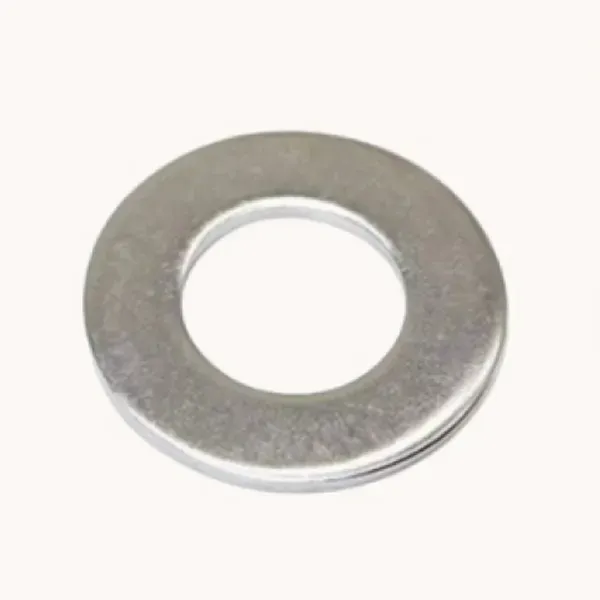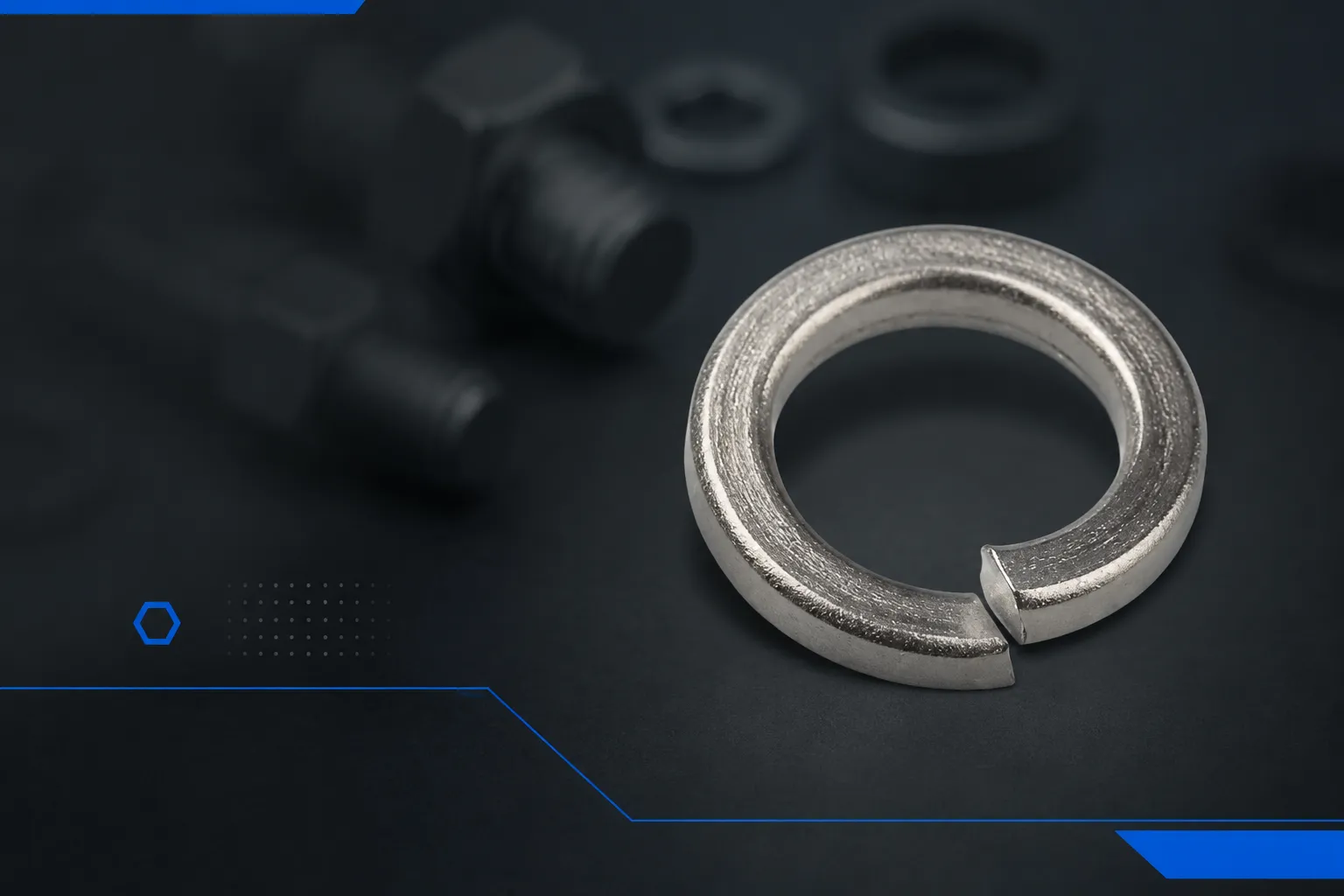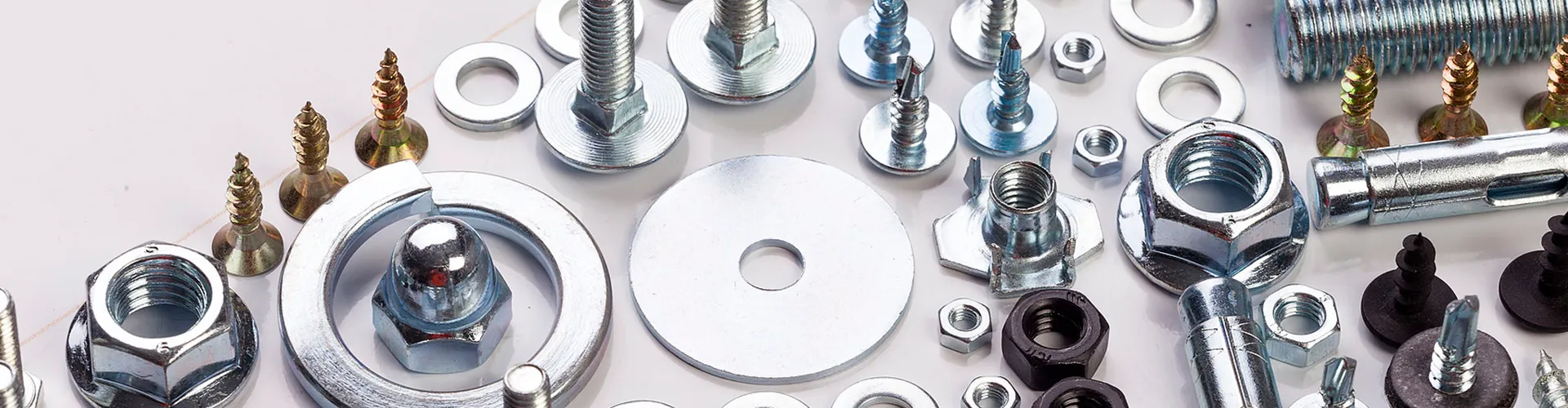
When a maintenance engineer in Busan encountered corrosion and preload loss on an outdoor pump flange, he replaced the hardware using a familiar washer description and expected the joint to recover. After exposure, clamp load fell again; the apparent failure was visible quickly, but inspection reversed the diagnosis: the parts were not necessarily defective—the material choice, disc-spring specification, and joint selection had not matched the environment or required working deflection.
Stainless steel belleville spring washers must be selected for the actual operating environment
A belleville disc spring washer is a conical elastic element that generates a high reaction force within a relatively compact axial space. Unlike a generic split lock washer, it is selected around a designed force-travel relationship. In corrosion-prone assemblies, stainless steel can be a sensible material family, but the final choice still depends on the medium, temperature, crevice conditions, installation practice, and the consequences of lost clamp force.
Stainless steel belleville spring washers are considered when the joint needs elastic response while facing moisture, washdown, atmospheric exposure, or a process medium. “Stainless” is not a universal corrosion rating: chloride-bearing deposits, stagnant liquid, galvanic contact, and cleaning chemicals can all change the outcome. A material callout should therefore state the intended service conditions rather than relying on a broad corrosion-resistant label.
Specify the material as part of the joint, not as a catalog shortcut
For belleville disc spring washers, ask the supplier to align material designation, heat treatment where applicable, surface condition, and traceability with the approved drawing. The buyer should also identify mating metals and coatings, because a washer does not operate in isolation. Where corrosion risk is consequential, a defined laboratory corrosion test such as ISO 9227 may be useful for comparing an agreed test condition; it is not, by itself, a guarantee of field life.
The practical cost question is not simply the unit price of stainless steel belleville spring washers. A low-cost material decision can create re-torque visits, unplanned shutdowns, damaged flange faces, or replacement logistics. Conversely, selecting a higher-suitability alloy without a clear duty cycle can add cost without resolving a geometry or installation problem. Treat material review as one input to total cost of ownership (TCO).

A belleville disc spring washer must be evaluated as part of the complete joint system
The defining question for a disc-spring element is where it will sit on its force-deflection curve after tightening, settling, thermal movement, and service vibration. DIN 2092 provides calculation methods for disc springs; calculations should use the actual disc geometry and material properties specified for the part, then be checked against the joint’s allowable movement. A nominal outside diameter alone cannot establish preload retention.
Use a force-deflection check before choosing stacks
Series arrangements increase available travel, while parallel arrangements increase force capacity; mixed arrangements require careful interpretation because tolerances and friction can affect how load is shared. For belleville disc spring washers, an illustrative—not design-approved—calculation might begin with the target working load, expected joint movement, and permitted assembly height, then compare those inputs with a supplier’s force-deflection inspection record. The inspection method should record force against deflection at agreed points, not only confirm overall dimensions.
Stainless steel choices also interact with mechanical behavior. A buyer should verify the requested spring condition and working range rather than assuming that a corrosion-oriented material will produce the same response as another grade. ISO 19690-2 defines technical specifications for disc springs and is a useful reference when turning these requirements into purchase documentation.
Stainless steel belleville spring washers should be compared by performance and total cost
The terms “disc-spring washer” and “spring washer” are often used loosely in maintenance stores, which is how a familiar description can displace a function-based specification. The comparison below separates concepts without treating one as universally superior. For further terminology, see the difference between a Belleville disc spring and a Belleville spring washer.
| Selection dimension | Disc spring / Belleville concept | Helical spring washer concept | Commercial implication |
|---|---|---|---|
| Primary behavior | Designed axial force-deflection response | Geometry-dependent elastic and installation behavior | Match the part to the joint function, not its familiar name. |
| Stacking | Series and parallel combinations can be engineered | Usually specified as a single washer form | Stack drawings and orientation instructions matter. |
| Compatibility review | Needs bolt, bearing surface, clearance, and travel review | Needs fit and contact review | Verify the assembly stack-up before release. |
| Maintenance/TCO | Can support controlled preload management when selected correctly | May be appropriate for simpler duties | Compare inspection, rework, and downtime risk—not unit price alone. |
For a deeper stacking discussion, consult this guide to Belleville spring-washer design and stacking principles. That review should still end with a joint-specific check, including the expected settlement and the load points used for acceptance.
| Application condition | Specification focus | Cost driver if missed | Useful acceptance evidence |
|---|---|---|---|
| Outdoor pump flange | Exposure, trapped moisture, working deflection | Re-torque visits and leakage investigation | Material callout, drawing, force-deflection record |
| Thermally changing assembly | Movement across the working range | Clamp-load drift and premature maintenance | Joint calculation and defined load points |
| High-volume assembly line | Orientation, dimensions, handling consistency | Assembly variation and sorting work | Dimensional inspection and packing instructions |
| Corrosion-sensitive equipment | Medium, mating metals, cleaning exposure | Field replacement and surface damage | Material traceability and agreed test plan |
Standards for belleville disc spring washers turn geometry and documentation into procurement controls
Standards make the purchase order more precise, but they do not eliminate engineering judgment. DIN EN 16983 addresses quality and dimensions for disc springs, while DIN 2092 covers calculation methods. ISO 19690-2 provides technical specifications for disc springs. Referencing the applicable document, edition, and any drawing exceptions helps both parties avoid substituting an item that merely looks similar.
Separate quality-system language from product conformity
ISO 9001 is a quality-management-system standard; it is not proof that an individual disc-spring element conforms to a particular material, force range, dimension, or standard. Procurement documents should instead state the part number or drawing, material requirement, quantity, inspection points, required records, packaging, and destination-market obligations. Unsupported conformity claims can lead to rejected goods, delayed commissioning, or inappropriate marketing statements.
Ask whether the intended installation imposes additional regulations—for example, pressure equipment, food-contact, marine, or customer-specific controls. Their applicability depends on destination market, use, and claims made about the assembled product. A dimensional check, material review, and force-deflection verification are different controls; none should be silently substituted for another.

Stainless steel belleville spring washers require a selection process that reduces joint risk and purchasing ambiguity
Use this short process when sourcing stainless steel belleville spring washers:
- Define the joint: bolt size, bearing diameters, target clamp load, available stack height, expected movement, and access for installation.
- Describe the environment: outdoor exposure, contaminants, moisture retention, cleaning regime, mating materials, and temperature range.
- Choose geometry and stacking from the required force-deflection window; record the intended orientation and whether sets are series, parallel, or mixed.
- Put material, applicable DIN or ISO reference, drawing revision, acceptance checks, and documentation requirements on the purchase order.
- Review samples or first-off data against the agreed specification before larger releases, especially for critical joints.
Make inspection evidence proportional to joint consequence
For critical service, buyers often compare belleville disc spring washers from more than one approved source against the same drawing, rather than comparing descriptions or photographs. A concise request can define the free height, thickness, outside and inside diameters, material condition, orientation, and the force-deflection points that must be reported. It should also identify whether the load values apply to an individual disc or an assembled stack.
The same request should identify whether belleville disc spring washers will be supplied loose, pre-stacked, or kitted with related hardware. Packaging can affect orientation control and receiving inspection, while handling instructions may matter when the assembly line must distinguish adjacent sizes. For a batch of stainless steel belleville spring washers, retain the records needed to connect the delivered lot with the approved part definition; this is more useful than a generic material statement when an issue needs investigation.
When receiving belleville disc spring washers, check identity and count first, then compare a sample against the agreed dimensions and documents. Where stainless steel belleville spring washers will operate in a demanding exposure, agree in advance which evidence is required, who reviews it, and what happens if it does not match the order. This disciplined front-end work normally costs less than responding to a preload-loss event after equipment is in service.
QIYI Fastener can support buyers with drawings and sourcing conversations for spring washers, disc springs, bolts, nuts, screws, and custom fastening components. Start from the joint data rather than a generic name; the belleville disc spring washers product category is a useful point for comparing the broader spring-washer scope. Engineers assessing use cases can also review disc spring uses and applications before finalizing a request.
Frequently asked questions explain how belleville disc spring washers should be specified
Are stainless steel Belleville spring washers automatically suitable outdoors?
No. Stainless steel belleville spring washers need to be assessed against the actual contaminants, water retention, mating materials, temperature, and required preload. An outdoor label is not a substitute for a material and joint review.
How do I select the correct disc-spring washer?
Begin with target clamp load, working deflection, installation height, bolt and bearing-surface geometry, and service movement. Then select the specified disc-spring washer through a documented force-deflection review using the applicable drawing and calculation method.
Can Belleville disc spring washers be stacked?
Yes, belleville disc spring washers can be arranged in series, parallel, or mixed stacks to obtain a required force-travel behavior. Stack orientation, tolerance accumulation, and inspection points must be specified because an incorrect stack can change the intended response.
Does ISO 9001 prove that a disc spring meets DIN requirements?
No. ISO 9001 addresses a supplier’s quality-management system, while DIN 2092, DIN EN 16983, and ISO 19690-2 address technical calculation, quality/dimensions, or technical specification in different ways. Request the actual part evidence required by the order.
What should a purchasing request include?
For stainless steel belleville spring washers, include drawing or dimensions, material requirement, intended environment, quantity, stack arrangement, applicable standards, and desired inspection records. This gives suppliers enough context to identify exceptions before production rather than after delivery.
These references support the selection of stainless steel belleville spring washers
- ISO 19690-2: Technical specifications for disc springs
- ISO: ISO 9001 quality management
- Schnorr: Standard disc springs
- Schnorr: Disc-spring expertise and technologies
A disc spring earns its place in the joint only when material, geometry, load path, and evidence agree. When your specification is ready for review, contact QIYI Fastener about the washer product range and provide the drawing, service conditions, and acceptance requirements for a focused sourcing discussion.