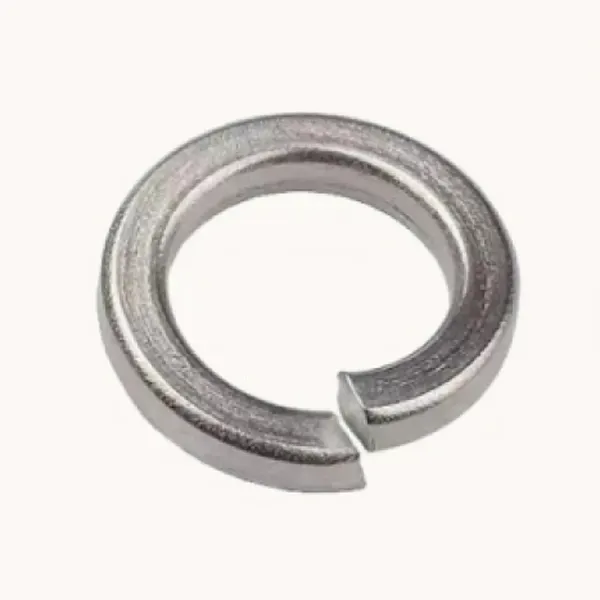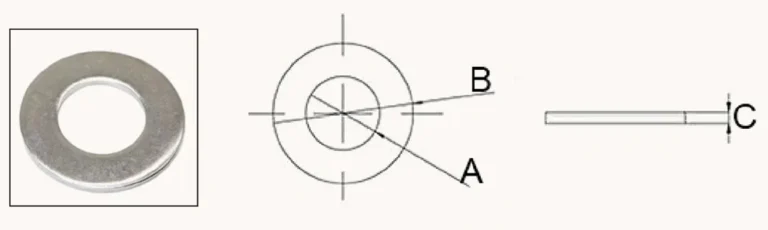
When a quality engineer in Detroit investigated a gearbox that repeatedly lost clamp load after thermal cycling, the team first tightened the assembly torque; a visible leak returned on the next acceptance run. The reversal came when the joint stack was measured: the selected conical spring element had too little working travel for embedment and temperature movement, so the issue was selection and specification—not simply a defective washer.
Summary: Belleville disc springs deliver high force in short axial space, but they only protect a joint when their load–deflection curve, stack orientation, and working travel are specified together. DIN 2093 addresses disc-spring geometry and characteristics, while DIN 6796 addresses conical spring washers for bolted joints; neither document is a product certification. Start by budgeting movement in millimetres, then validate load versus deflection on the finished stack before release.
Belleville disc spring applications protect bolted joints under changing load
A Belleville disc spring is a conical annular spring. Under axial compression, it converts a small amount of travel into a comparatively high reaction force; that makes belleville disc spring applications useful where a coil spring would consume too much height. The design value is not “extra torque.” It is reserve travel that can absorb settlement, thermal expansion differences, wear, or vibration while keeping enough clamp force on the joint.

For bolted joints, separate the fastener’s initial preload from the spring element’s usable deflection. A joint can lose preload through surface embedment even when installation torque was correct. A load–deflection verification is therefore the relevant named test: compress the actual disc or stack through its intended travel and record force at defined deflection points. The Schnorr standard disc springs reference is a useful industry source for dimensions, loading, and stacking.
There are four primary geometric inputs to put on a drawing—outside diameter, inside diameter, thickness, and free cone height—plus material, finish, and edge condition. In belleville disc spring applications, specify the installed height and permitted working range as well; a part number alone leaves the supplier and inspector to infer the function.
Belleville disc spring uses improve compact, high-force assemblies
Common belleville disc spring uses include maintaining bolt tension in flanged connections, controlling axial play in shafts and bearings, compensating for wear in clutches or brakes, and applying controlled force in fixtures. Those are functional categories, not proof that one disc spring fits every case. The same geometry that is helpful in a compact actuator can be unsuitable for a joint with large lateral movement or uncertain seating faces.
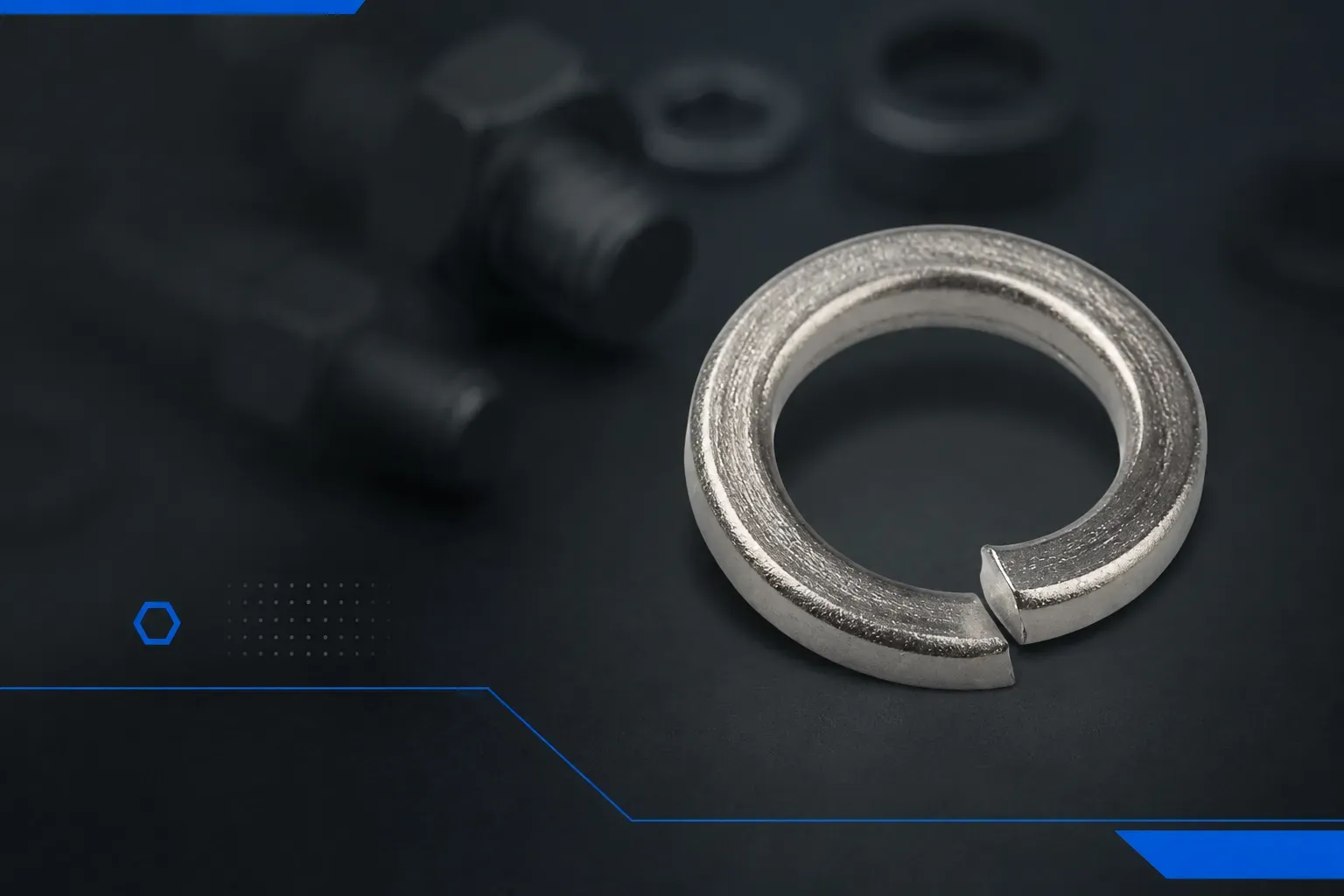
As an illustrative stack calculation, place n identical discs in series to increase available deflection by roughly n times while reducing spring rate; place i discs in parallel to increase force capacity by roughly i times while retaining similar travel. A series-parallel stack has n × i discs, so its package height, contact interfaces, and inspection plan grow with the arrangement. Confirm the estimate by a load–deflection test of the assembled stack rather than treating it as a catalogue guarantee.
| Approach | Space and force profile | Best-fit condition | Maintenance and TCO consideration |
|---|---|---|---|
| Disc spring | High axial force in a short envelope | Known axial movement and a guided bearing path | Higher specification effort can reduce rework from lost preload |
| Coil spring | More travel, usually more axial height | Longer stroke or lower force density | May simplify alignment, but can enlarge the assembly |
| Plain washer | Essentially no designed spring travel | Load distribution where preload retention is not the spring’s job | Low unit cost; does not replace a deflection reserve |
| Conical spring washer | Joint-focused conical compliance | Bolted joints designed to its stated application | Check its specified scope and evidence before substituting |
The hidden cost in belleville disc spring uses is often not the component price; it is the consequence of a vague callout. A stack that cannot be inspected consistently can create incoming variation, assembly adjustment, field retorque, and avoidable downtime. Compare alternatives by cost of maintaining the required preload across the service movement, not by a claimed unit-cost saving.
Document the force window, travel window, and seating conditions before requesting quotations. belleville disc spring uses that look interchangeable in a catalogue can require different guides, stack heights, and inspection fixtures in the finished assembly.
Disc spring applications should be selected, stacked, and specified systematically
Begin every belleville disc spring applications decision with the force required at the minimum and maximum operating heights. Then quantify the expected movement from settlement, tolerance accumulation, thermal change, and wear. If the budgeted movement exceeds the disc’s controlled working range, redesign the stack or joint; forcing travel to an extreme can create unstable force behaviour or unacceptable stress.
| Application | Primary requirement | Selection question | Verification record |
|---|---|---|---|
| Bolted flange | Retain clamp load after settlement | What axial movement must be accommodated? | Joint load–deflection test and installation-height check |
| Bearing preload | Controlled axial force in limited space | How will the disc be guided and seated? | Force at two or more defined heights |
| Fixture or tool | Repeatable applied force | What tolerance applies to work height? | Cycle plan and force-versus-height inspection |
| Wear compensation | Usable travel over expected wear | Is the stack arrangement series, parallel, or mixed? | Free height, stack order, and functional travel record |
Four actions make disc spring applications easier to source and approve:
- State the required force at named installed and operating heights, with units and tolerances.
- Show disc orientation and the exact number of series and parallel groups on the drawing.
- Define material, corrosion environment, lubrication assumptions, and contact-surface condition.
- Request dimensional and load–deflection evidence matched to the intended stack, not a generic product description.
Before finalizing belleville disc spring uses, review the full tolerance chain from the fastener bearing surface to the supporting structure. This is where a nominally correct disc can lose the travel reserve assumed in the calculation.
Engineers who need a dimensional starting point can review Belleville washer dimensions and specifications, then use a disc spring calculator guide to document assumptions. These tools support early sizing; they do not eliminate the need to test the actual configuration.
Procurement teams can control risk in disc spring applications
For belleville disc spring uses in a critical assembly, procurement should ask for the functional requirement before comparing quotations. Match drawing revision, material callout, stack count, free height, and inspection points to the purchase specification. QIYI Fastener can support a configurable sourcing discussion when buyers provide those inputs, but product suitability remains dependent on the confirmed joint and service conditions.
Standards language deserves particular care. The Schnorr disc spring technical overview describes DIN 2093 in connection with disc-spring dimensions and characteristics. DIN 6796 concerns conical spring washers for bolted joints. Neither reference by itself certifies a supplied item, proves fatigue life, or establishes fitness for every destination market. Treat a standards reference as a defined design or test basis, then request evidence for the marketed configuration and applicable customer or regulatory requirements.
A practical incoming plan checks identity, count, orientation, free height, and force at specified heights. The record should name the test fixture and load cell calibration status; a single visual inspection cannot demonstrate the force curve. For safety-sensitive, regulated, or export applications, have the design owner determine the destination-market rules and whether any additional material traceability, validation, or declarations are required.
For commercial evaluation, belleville disc spring uses should be tied to an agreed acceptance record rather than an assumed equivalent. That discipline makes supplier comparison clearer and limits the cost of late engineering changes in belleville disc spring applications.
Frequently Asked Questions
What are the most common belleville disc spring applications?
They include bolted-joint preload retention, bearing or shaft axial preload, compact clutches and brakes, fixtures, and wear compensation. The common thread is a need for controlled axial force over a limited movement range. Define that range before selecting a disc size or stack.
How do belleville disc spring uses differ from ordinary washers?
An ordinary washer primarily spreads bearing load; it is not normally chosen to deliver a designed force–deflection response. A Belleville disc spring is selected for its conical geometry and usable axial compliance. Where the choice is unclear, compare the joint function with this disc spring versus spring washer explanation.
Can a disc-spring stack use series and parallel arrangements?
Yes. Series stacking is used to extend travel, while parallel stacking is used to raise force capacity; mixed stacks combine both effects. Record the sequence and test the completed stack because friction, seating, and tolerance accumulation influence actual behaviour.
Does a DIN reference certify a disc spring?
No. A DIN reference can define a scope, geometry, characteristic, or application basis, but it is not a blanket product certification. Buyers should ask which requirement applies, what evidence is available, and whether it matches the intended joint and market.
References
- Schnorr Group: Standard Disc Springs — industry reference for standard disc-spring product and stacking context.
- Schnorr Group: Disc Springs — technical overview of disc-spring function and DIN 2093 context.
- NASA Technical Reports Server: Disc spring research report — primary technical report for further engineering review.
The durable principle is simple: specify force and travel together, then verify the assembled stack. When your team is ready to turn belleville disc spring applications into a documented sourcing requirement, QIYI Fastener can help review the product category; contact the team with the joint drawing, operating heights, and inspection needs.