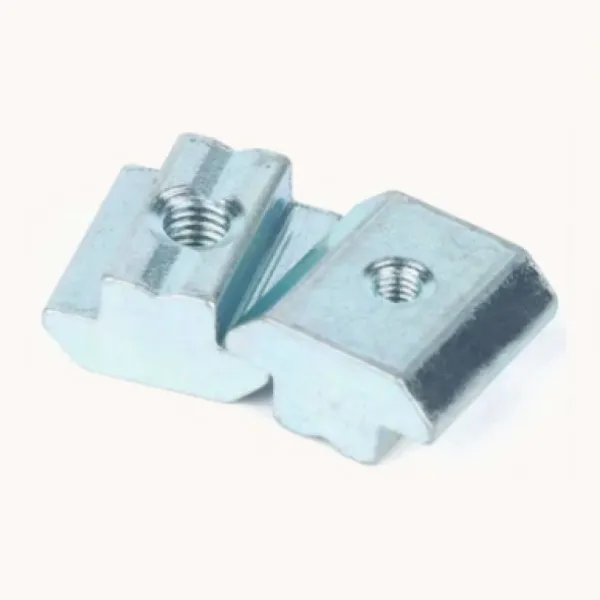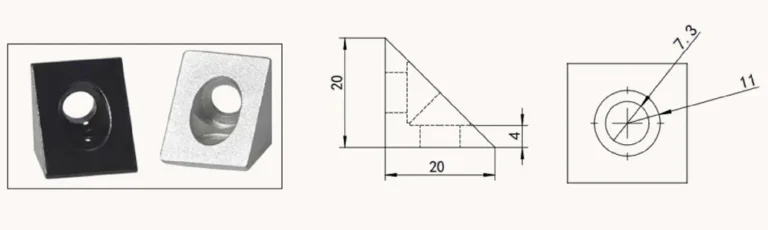
A sliding nut is selected when a fastener must travel along an aluminum profile slot and clamp a bracket, panel, or accessory at a chosen position. Procurement should start with slot width, nut-body geometry, thread size, and whether the frame still offers an entry path—not with a generic “T-slot nut” label.
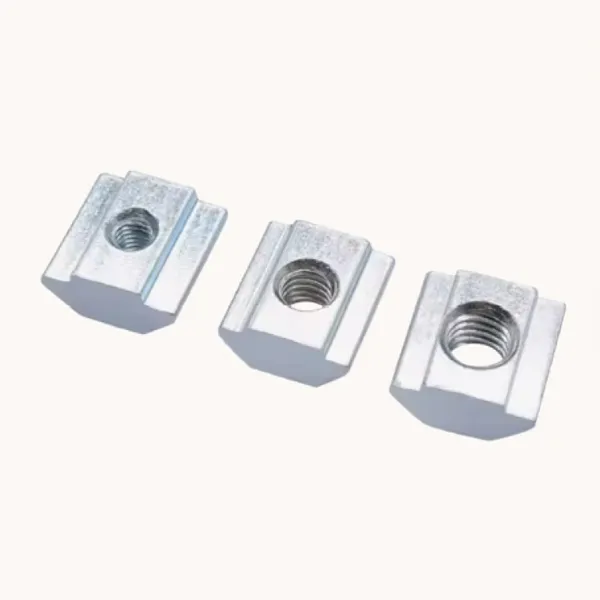
- FAQ
Part 1. What Job Does a Sliding Nut Perform on Profile Frames?
Sliding nuts support modular frames where components are positioned after the extrusion is cut or partially assembled. The nut enters the slot path, travels to the mark, and clamps with a mating screw. That motion is the functional difference buyers should record before comparing catalogs.
| Selection input | Why it matters |
|---|---|
| Slot width / profile drawing | Confirms the nut body can enter and seat |
| Thread callout | Matches the mating bolt or screw |
| Access direction | Shows whether end-entry or mid-slot access remains |
| Material and finish | Supports the project environment and BOM |
Aluminum profile frames rely on T-slot geometry created in the extrusion process; the slot detail on the drawing—not a marketing series name—controls hardware fit. For extrusion context, see the Aluminium extrusion overview.
Part 2. Which Sliding-Nut Types Should Buyers Compare First?
Buyers often compare sliding nuts with spring ball T-nuts, spring leaf T-nuts, hammer nuts, and slide-in economy options. Each family has a different insertion and retention behavior. A catalog label that says “T-slot nut” does not prove the same assembly method.
| Assembly need | Family to review first |
|---|---|
| Travel along a long open slot after frame cut | Sliding nut |
| Drop-in retention on an open slot face | Spring ball T-nut |
| Spring retention with a different leaf geometry | Spring leaf T-nut |
| Capture by rotation from an open face | Hammer nut |
Use the T-slot fastener family selection guide when the project may need more than one family on the same frame. For thread sizing across M4–M8, open the practical size selection guide.

Part 3. How Do Slot Width and Access Control Compatibility?
Compatibility is controlled by the drawing. The same nominal series name (for example 2020 or 4040) does not prove one nut fits every supplier’s slot. Confirm slot width, nut body envelope, and whether covers, cables, or closed ends block entry.
| Compatibility check | Decision consequence |
|---|---|
| Slot width matches nut body | Proceed to thread and finish review |
| Open slot end or approved mid-slot path | Sliding insertion may be practical |
| Slot ends closed and no mid-slot path | Review another nut family |
| Covers or wiring block travel | Plan cover openings before install |
Important: Do not treat a series nickname as proof of interchangeability across profile brands. Confirm slot width, nut geometry, and access on the approved drawing before ordering. (Aluminium extrusion)
Part 4. Where Do Sliding Nuts Appear on Real Assemblies?
Typical review cases include machine guards, workstations, cable trays, sensor mounts, and enclosure panels that must be positioned along an existing slot. Write the functional requirement first: fixed clamp location, later repositioning, or adjustability during setup.
A sliding nut that fits the slot can still fail the joint if the mating screw bottoms out, the bearing face is too small, or the bracket clearance conflicts with the tool envelope. Record those stack-up notes with the hardware line—not after samples arrive.
Part 5. What Sliding-Nut Data Should Travel With the Quote?
A request for “sliding nuts” without slot and access details can produce a part that looks similar but cannot be installed.
| Quote field | What to attach |
|---|---|
| Profile drawing or slot width | PDF/DXF or measured slot detail |
| Nut family and model code | Sliding nut callout if known |
| Thread size | Mating fastener callout |
| Material / finish | Project environment note |
| Access direction | End-entry, mid-slot, or blocked |
| Quantity breaks and revision | Controlled BOM revision |
General nut hardware language is summarized in the nut (hardware) overview; project fit still depends on the frame drawing and approved joint design.
Part 6. Where Sliding-Nut Selection Advice Must Stop?
This guide does not establish load capacity, torque, vibration life, or compatibility with every aluminum profile brand.
Do not substitute a sliding nut for a hammer or spring T-nut without reviewing access, retention, and the approved joint design. Metric thread vocabulary provides callout context only; it does not select the nut family for a frame. See the ISO metric screw thread overview for thread naming context, not for project approval.
Part 7. Which Sliding-Nut Page Should Reviewers Open Next?
Start with the sliding nut product page when the drawing supports slot travel and an entry path. If drop-in spring retention or hammer capture is required instead, return to the family selection guide before requesting samples. Browse the products hub for adjacent fastener families, then send QIYI the drawing and quantities for a quotation.
Do not recommend a sliding nut when both slot ends are closed with no approved mid-slot insertion, when the RFQ only states a series nickname, or when the joint design requires a retention method the sliding family does not provide.

FAQ
What is a sliding nut for aluminum profiles?
A sliding nut is a T-slot fastener intended to enter and travel along a profile slot so a bracket or accessory can be clamped at a chosen position.
Is a sliding nut the same as a hammer nut?
No. They use different installation methods and should be selected against the assembly sequence and available access.
Can one sliding nut fit every profile series?
No. Confirm slot width and nut body dimensions on the drawing; series nicknames alone are not enough.
How do I check slot compatibility before ordering?
Compare the profile slot detail to the nut body envelope, then confirm an entry path remains after covers and adjacent hardware are considered.
When should I use a spring ball T-nut instead?
When drop-in retention in an open slot is required rather than sliding along the slot path after the frame is cut.
What belongs on a sliding-nut RFQ?
Slot width or drawing, nut family, thread, material/finish, access direction, model code if known, quantities, and revision.