When Elena, a project engineer in Chicago, tightened the first bracket on a modular inspection fixture, the M6 receiver rotated inside the plywood cover and the bracket lifted away from the frame. Her team replaced the part and repeated the assembly, but the same failure appeared at the next station. The reversal came from the interface: the selected receiver, pilot hole, panel thickness, and tightening path had never been specified together. The visible failure was a loose joint; the root cause was selection and process control.
Summary: Use an M6 T-nut only after confirming the nominal metric thread, the exact body and flange geometry, the substrate, the part-specific hole requirement, and the approved seating method. “M6” indicates a nominal 6 mm metric thread; it does not set a universal hole size or prove holding performance in wood or an extrusion. ISO 898-2:2022 addresses defined steel-nut mechanical and physical properties, not the complete substrate joint. Start with the supplier drawing, run a representative fit and anti-rotation check, and release the assembly against the controlled interface.
How m6 t nuts establish a repeatable project assembly interface
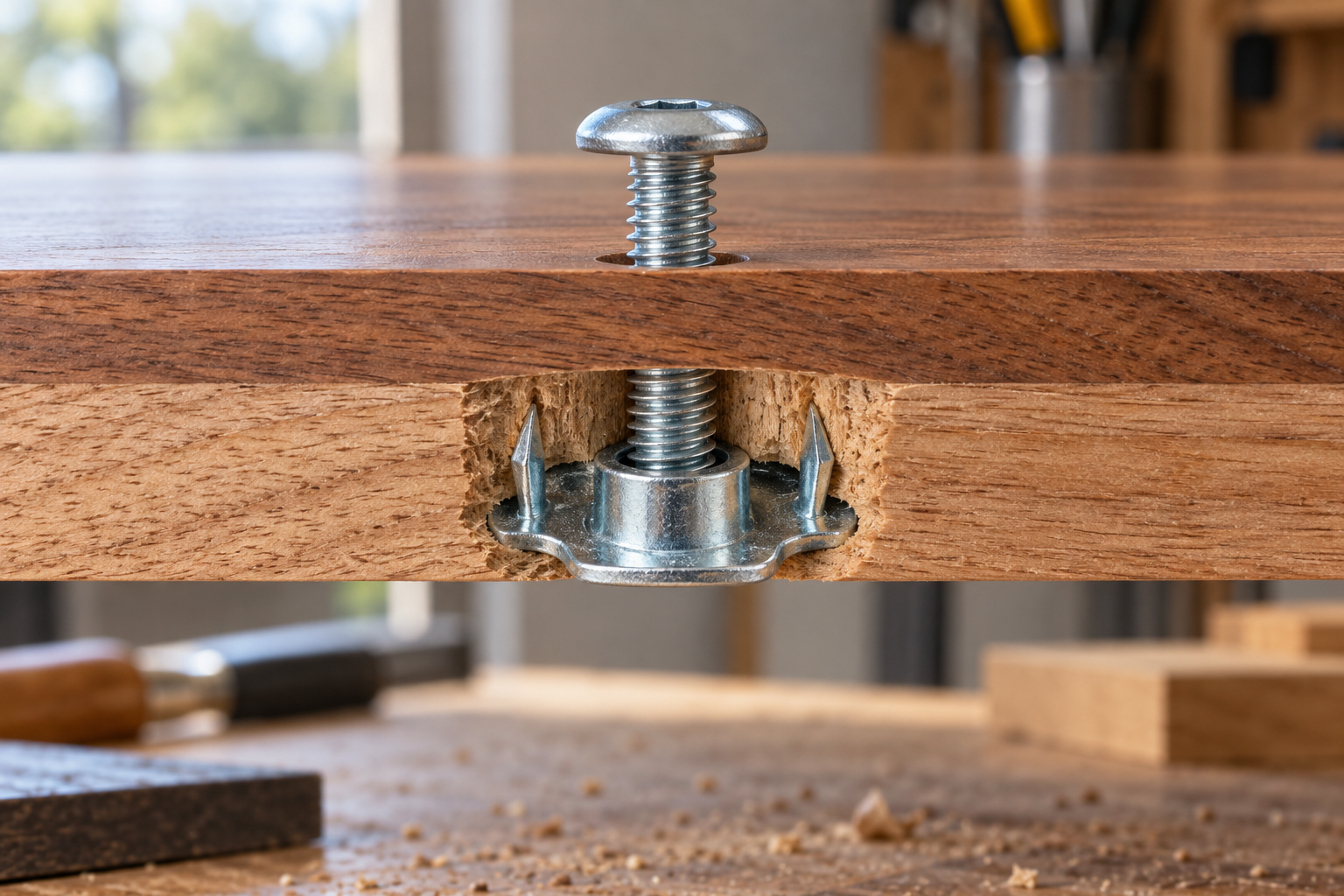
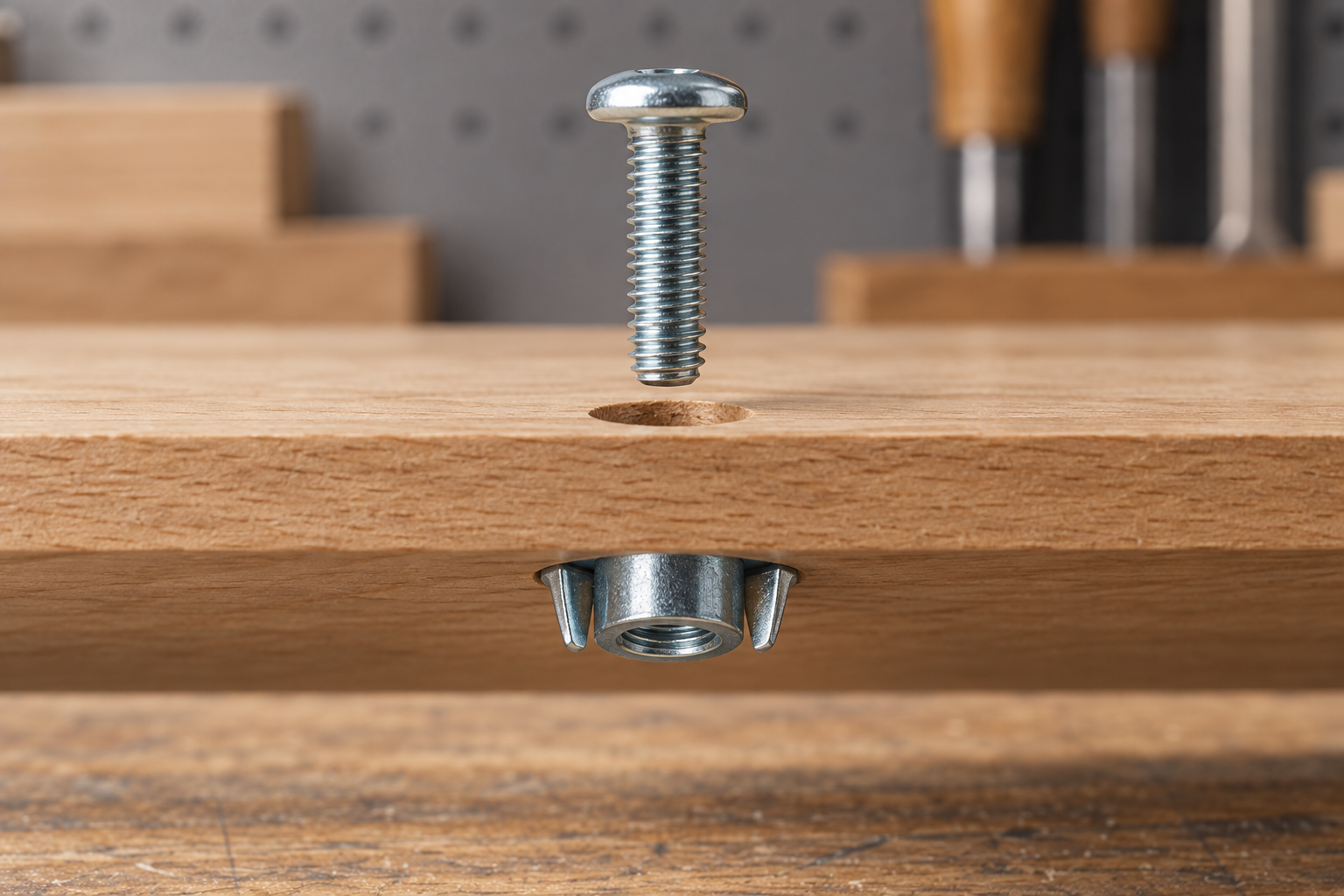
An M6 T-nut is a threaded receiver used to create a removable machine-screw connection in a suitable panel, fixture, or other prepared assembly. The M6 thread identifies the mating screw interface, while the flange, body length, anti-rotation feature, material, and finish determine whether the part suits the joint. For a category starting point, review Qiyi’s m6 t nuts, then compare the exact part drawing with the project requirement.
Begin with the joint and the load path
Record the base material, thickness, face access, edge distance, expected service or removal cycle, and direction of the joint force. A receiver installed in plywood does not behave like one installed in a metal profile, and a part that is easy to seat from the front may be impractical when the back face is inaccessible. The insert should give the screw a stable threaded point without forcing the surrounding material to perform beyond its intended role.
Thread compatibility is necessary but not sufficient. Confirm the thread form and pitch, usable engagement, screw length, washer or bearing hardware, and clearance through the joined parts. The nominal M6 label does not identify the flange diameter, barrel length, prong pattern, or hole tolerance; those fields belong on the controlled drawing or supplier data sheet.
Prepare and inspect the installation
- Verify the part. Match the received component to the approved drawing, including thread, body, flange, material, finish, and anti-rotation geometry.
- Prepare the substrate. Locate the hole or slot with the specified edge distance, keep the tool aligned, and support the work so drilling does not tear the face or enlarge the opening.
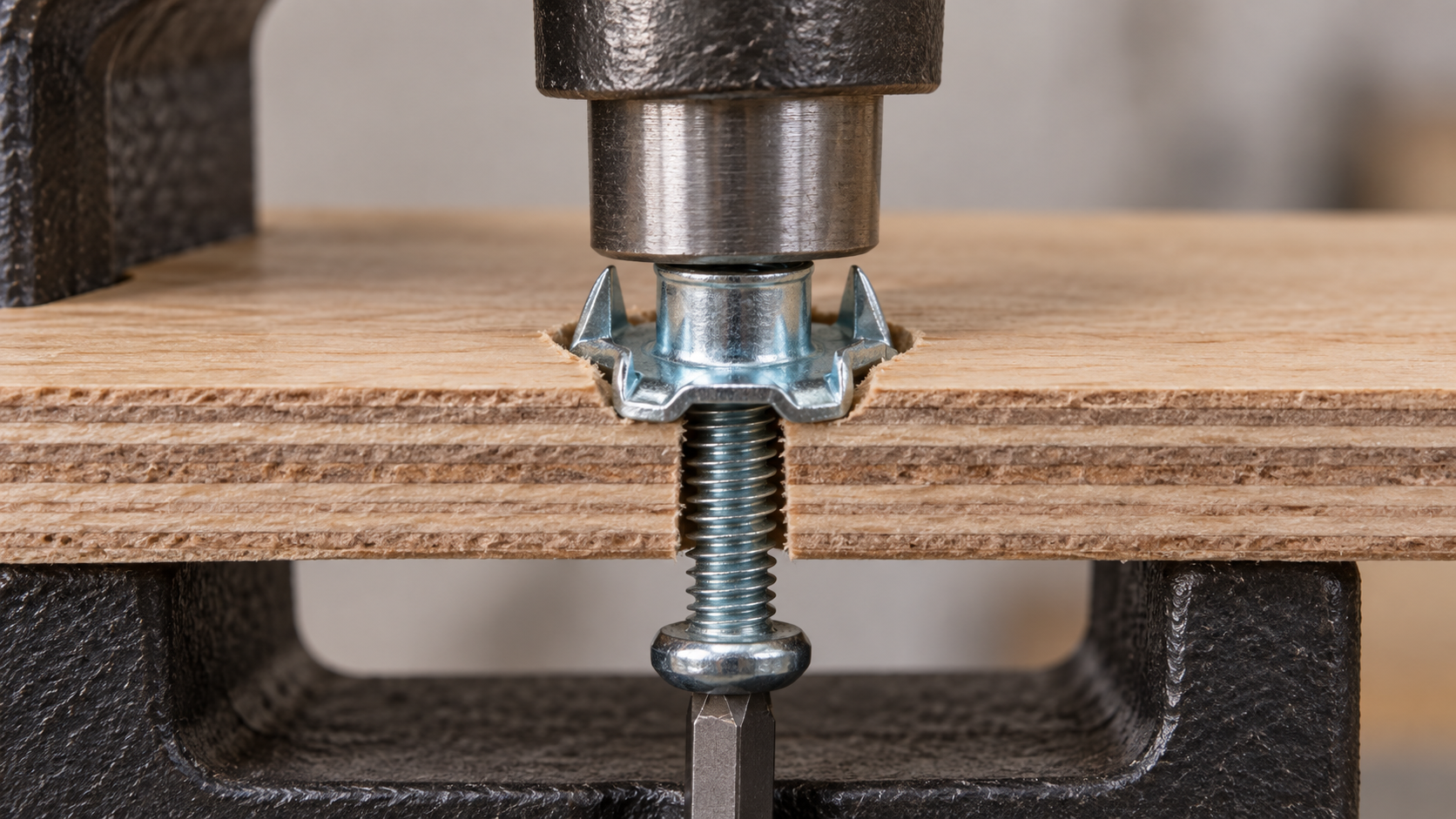
- Seat the receiver. Use the supplier-approved press, fixture, or controlled impact method. Keep the flange square and avoid bending, crushing, or partially engaging the retention feature.
- Check the interface. Confirm seating, alignment, substrate condition, and hand-start thread fit before applying the production tightening sequence.
A representative trial should use the actual screw, panel or profile, tool, support surface, and assembly sequence. Record the acceptance checks that matter to the joint, such as fit, rotation resistance, pull-out behavior, or service removal, rather than treating a catalogue name as a performance guarantee.
How m6 tee nuts compare with m6 t-bolts in project assembly
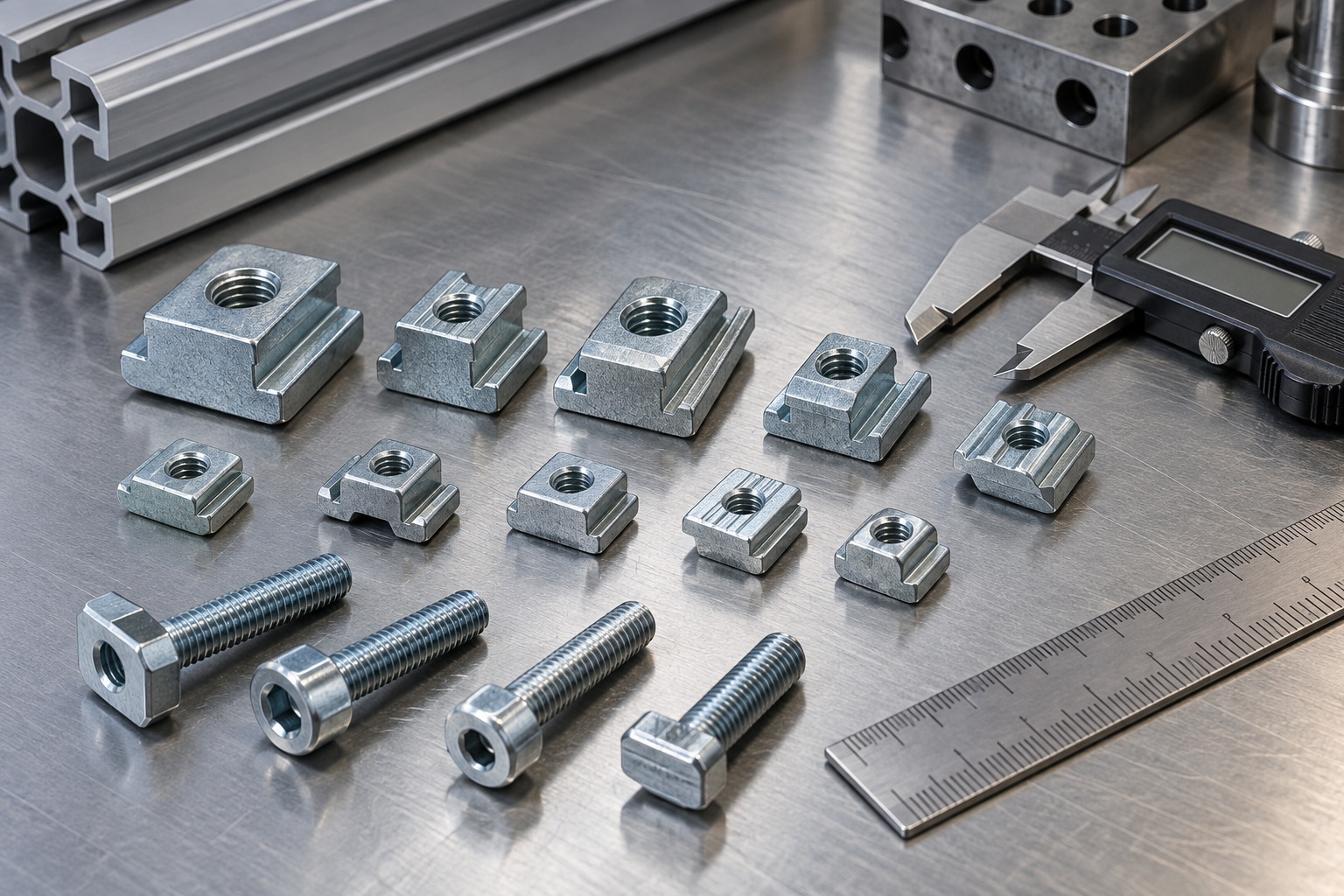
M6 tee nuts and m6 t-bolts can both appear in a project bill of materials, but they solve different interface problems. A tee nut normally provides internal threads in a prepared panel or similar material. A T-bolt normally presents a fixed bolt head or T-shaped anchor inside a matched slot, with the threaded shank extending outward for a nut or bracket. The correct choice follows the substrate and assembly path, not the shared “T” name.
| Approach | Typical interface | Placement and access | Primary compatibility check | Total-cost consideration |
|---|---|---|---|---|
| M6 tee nut | Internal metric thread in a prepared panel | Installed into a hole from the accessible face; serviceable when the substrate remains sound | Body, flange, anti-rotation feature, substrate, and approved hole | Stable drilling and seating can reduce rework; poor fit can damage panels |
| M6 T-bolt | Threaded shank anchored by a head in a matched T-slot | Placed through an open or accessible extrusion channel, depending on the design | Slot opening, head geometry, neck, thread, and insertion path | Useful when position adjustment matters; profile mismatch adds assembly time |
| Conventional tapped hole | Internal thread formed directly in a sufficiently thick metal section | No separate receiver, but access and remaining material must support tapping | Thread engagement, wall thickness, drill preparation, and repair allowance | Can simplify the part list where the metal section is suitable; redesign risk rises when it is not |
| Flange nut and bolt | External bolt with a nut that provides a bearing flange | Requires access to both sides or a captive nut arrangement | Clearance, bearing surface, thread match, and wrench access | May be efficient for open assemblies; it is not an automatic substitute for a panel insert |
Related bearing hardware can be reviewed in Qiyi’s flange nuts category, but the choice still depends on access, substrate, and the desired load path. Keep the receiver and mating hardware defined as one interface so a purchasing substitution does not silently change the assembly method.
How to select m6 t nuts for controlled project assembly
Use the following sequence before a purchase order or production release:
- Define the interface. State the substrate or extrusion profile, access direction, panel or section thickness, mating screw, service frequency, and consequence of loosening.
- Freeze the dimensions. Specify thread and pitch, body or head geometry, flange or anti-rotation feature, approved hole or slot, material, finish, and permitted tolerances.
- Control the process. Identify the drill or profile preparation, support surface, seating tool, tightening method, inspection points, and representative validation checks.
- Qualify the source. Request the exact drawing and relevant material or test evidence. Qiyi’s guide to industrial fastener manufacturers gives useful sourcing context, while the buyer remains responsible for approving the controlled requirement.
- Control substitutions. Do not change the thread, finish, geometry, substrate range, or installation method without documented deviation review and a representative re-check.
Frequently Asked Questions
What is the difference between an M6 T-nut and an M6 tee nut?
In ordinary fastener usage, “T-nut” and “tee nut” commonly describe the same family of flanged, internally threaded receivers, so the spelling does not by itself define a different part. Confirm the actual body, flange, prong or anti-rotation geometry, material, and drawing because supplier terminology can vary. The M6 designation identifies the metric thread interface, not the complete insert design.
What is an M6 T-bolt used for?
An M6 T-bolt is used to anchor a bracket, panel, or accessory to a matched T-slot or channel while presenting a threaded shank for a nut or other clamping hardware. Its head and neck must fit the profile, and its insertion path must suit the frame’s access condition. Verify the profile drawing and hand-start the mating nut or hardware before tightening.
Are M6 tee nuts suitable for wood furniture?
They can be suitable for wood furniture when the selected tee nut, panel construction, edge distance, hole, and seating method are compatible. Plywood, hardwood, MDF, and laminated panels can respond differently, so use a representative panel and inspect for splitting, rotation, and thread alignment. Do not assume that an M6 thread alone establishes the required holding performance.
What size hole is needed for an M6 T-nut?
There is no universal hole size for every M6 T-nut. Use the exact supplier drawing for the receiver’s body and retention geometry, then confirm the fit in the actual substrate or profile with the approved tool and process. A hole that is too tight can damage the part or material; one that is too loose can permit movement or rotation.
References
- Bossard drive-in tee nuts for wood and plastics
- ASME B1.1-2024 Unified Inch Screw Threads
- ISO 898-2:2022
- ISO 6410-2:1993
- McMaster T-nuts catalogue
When the interface is defined, share the drawing, mating screw, substrate or profile, and required installation method when you contact Qiyi Fastener. That gives the sourcing discussion a technical starting point and leaves the final fit to representative verification before production.