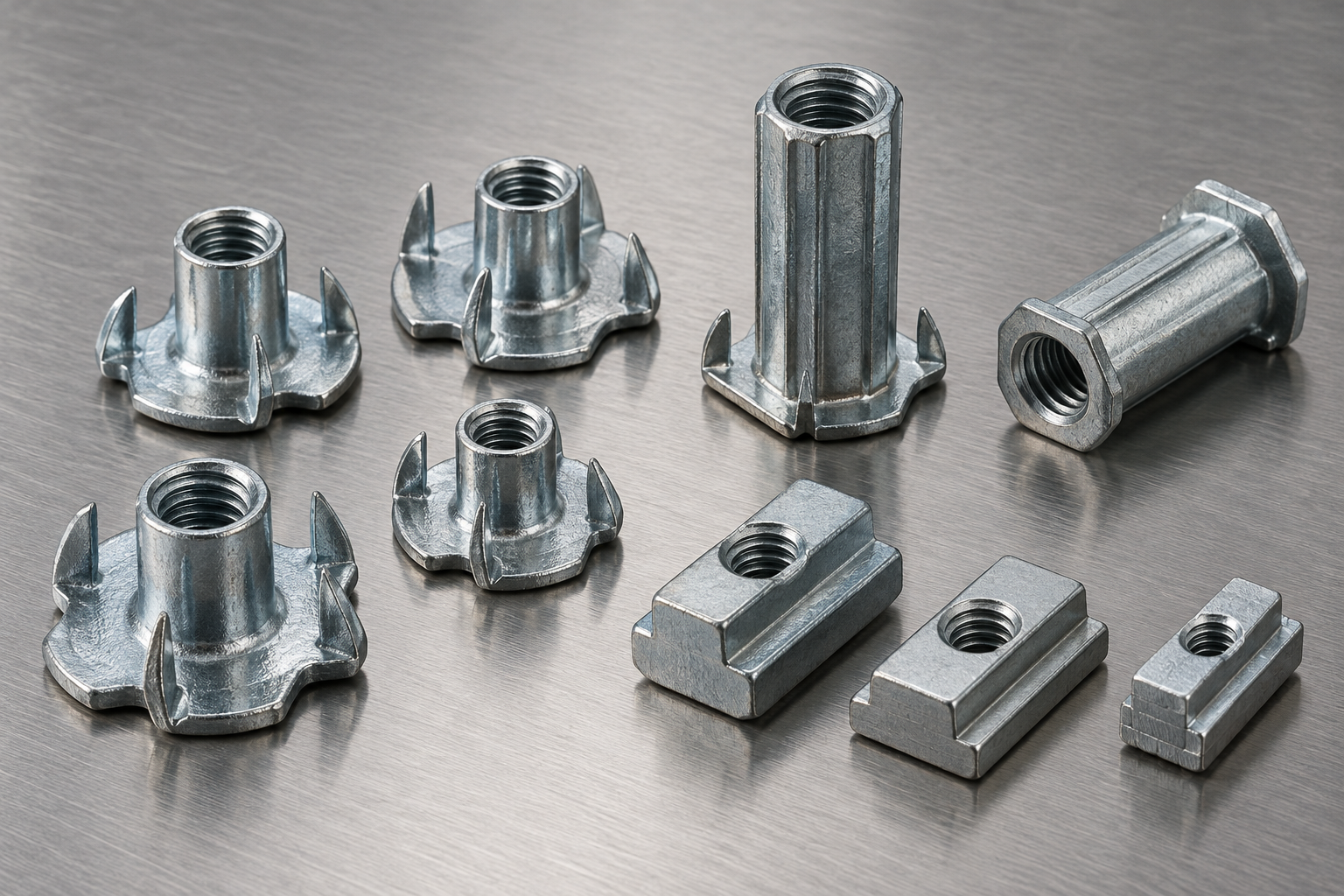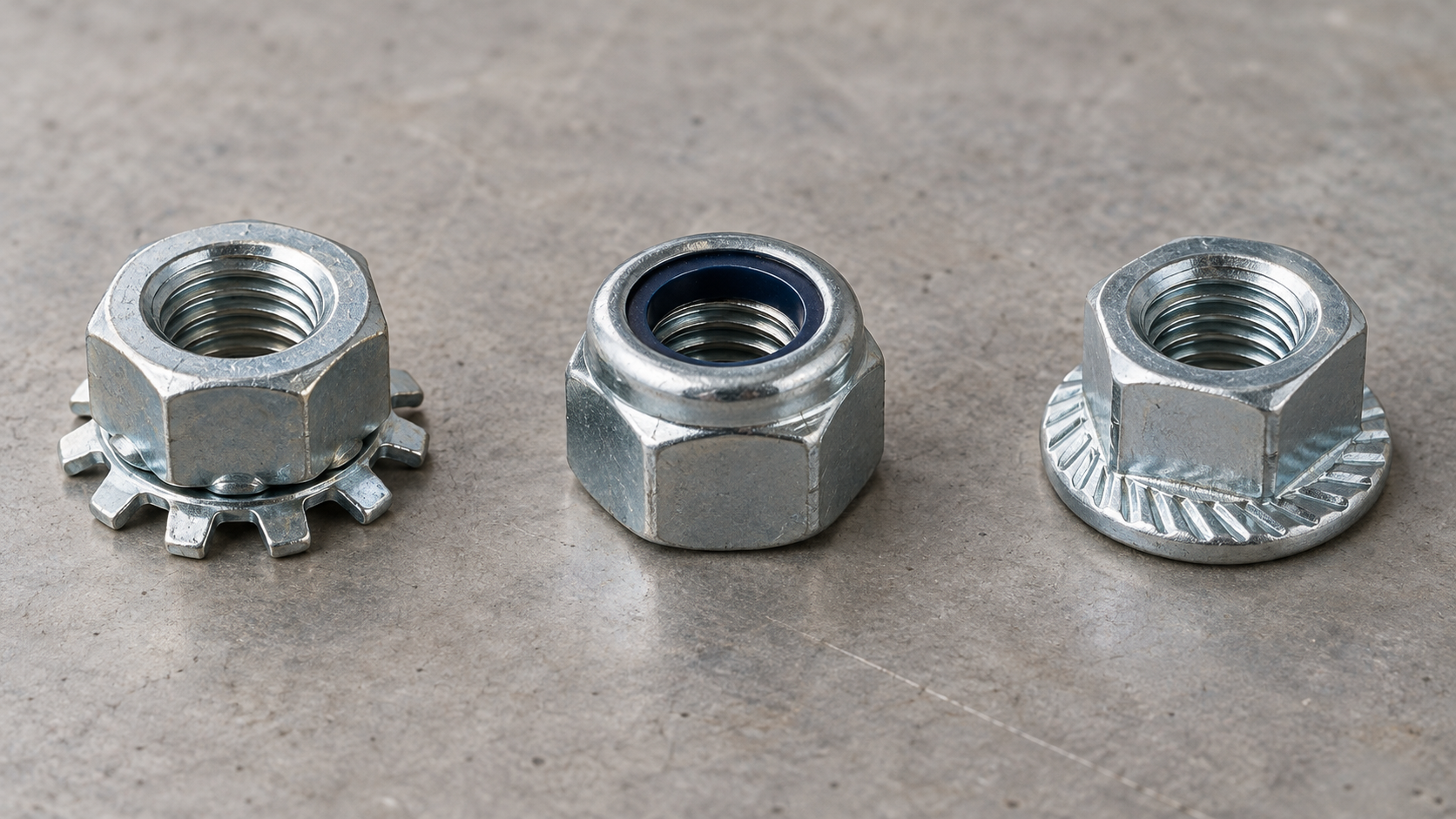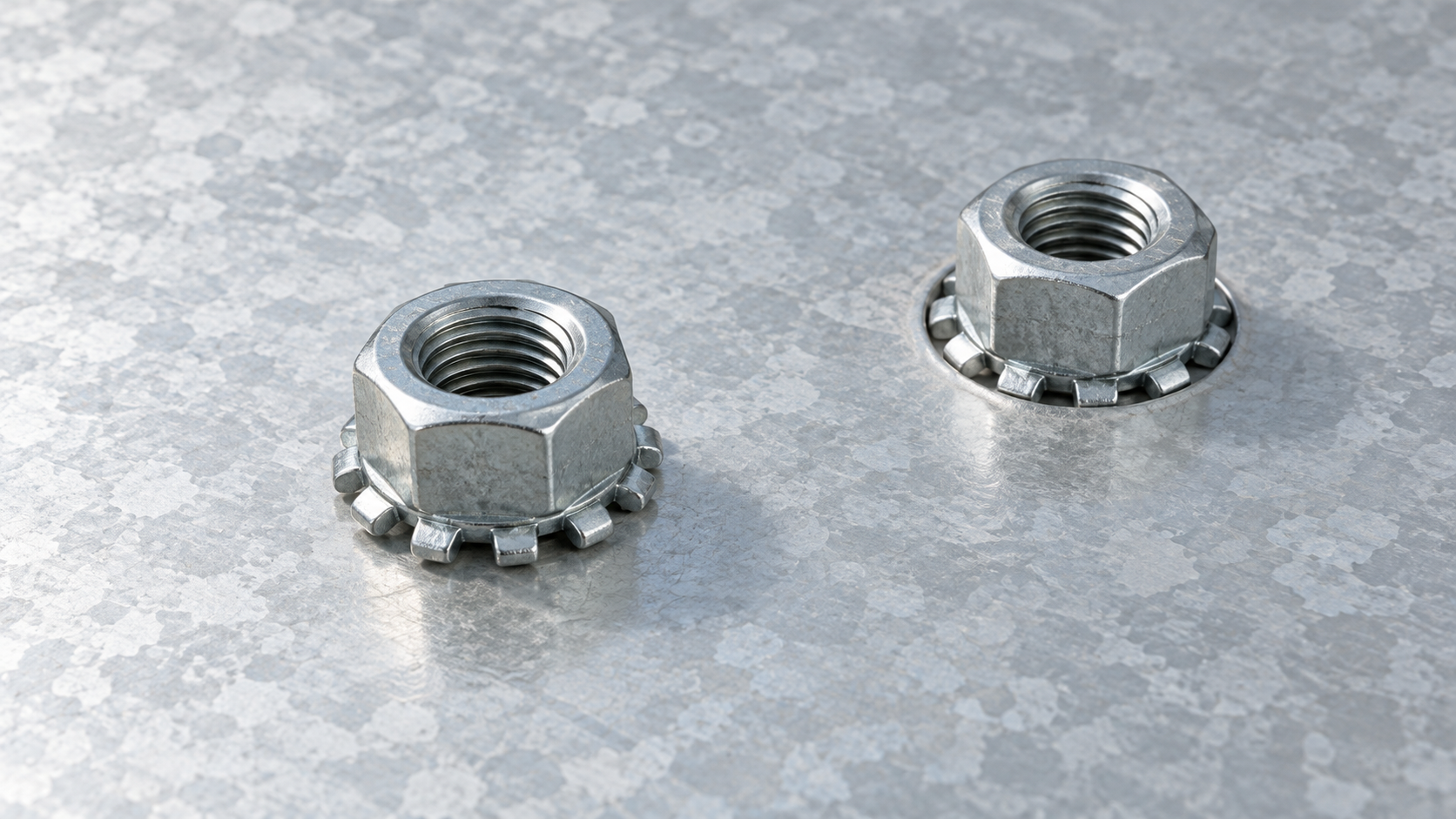
Summary: Measure the extrusion slot opening, the nut’s width and height, the thread, and the available engagement length before ordering. Record readings in millimetres (to 0.01 mm when the instrument allows), then confirm the fit with the intended bolt. ISO 898-2 addresses mechanical properties of certain steel nuts, but it does not replace a dimensional fit check. The recommended action is to compare a measured sample with the supplier drawing and approve a test fit before production.
How t slot nuts fit an extrusion slot
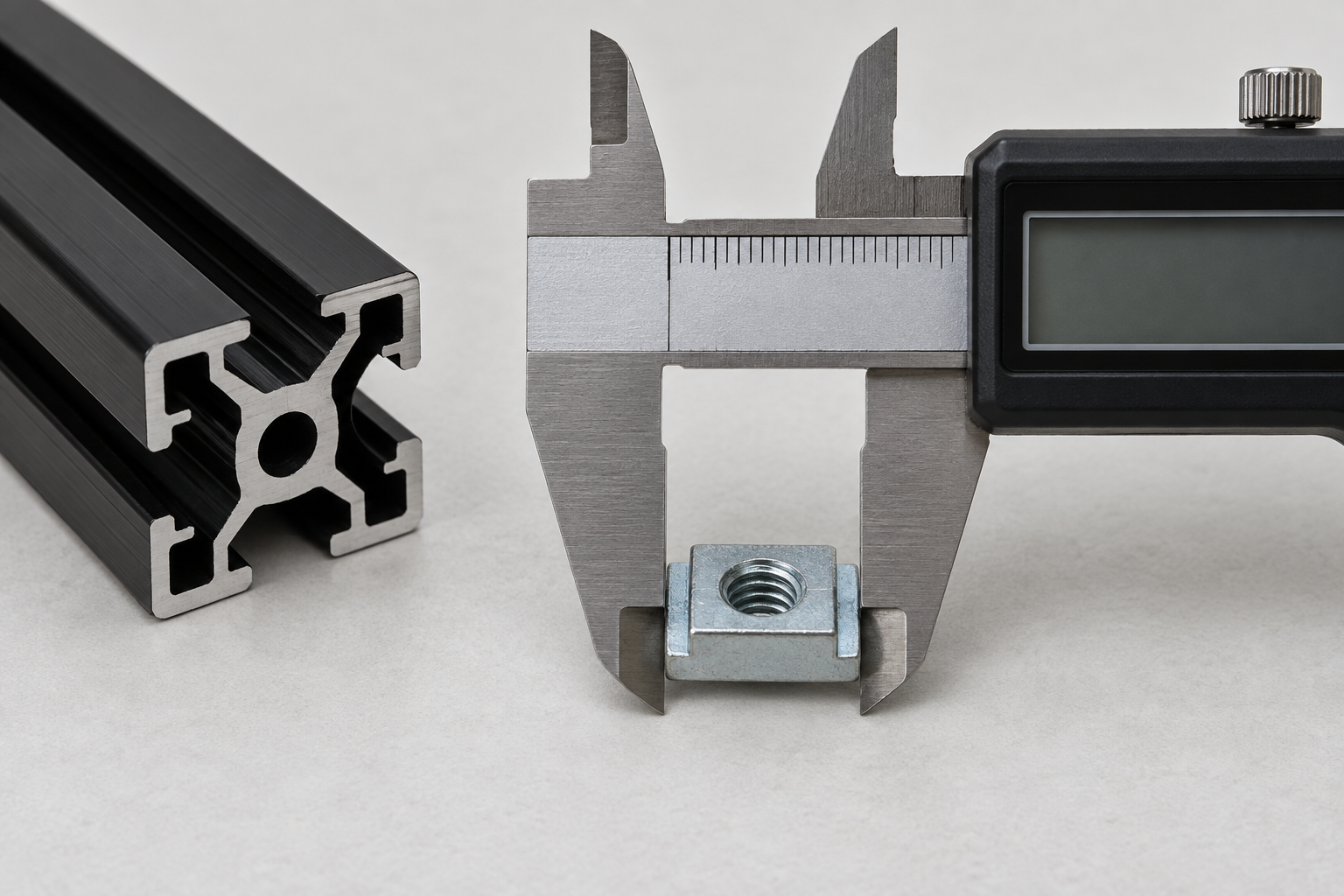
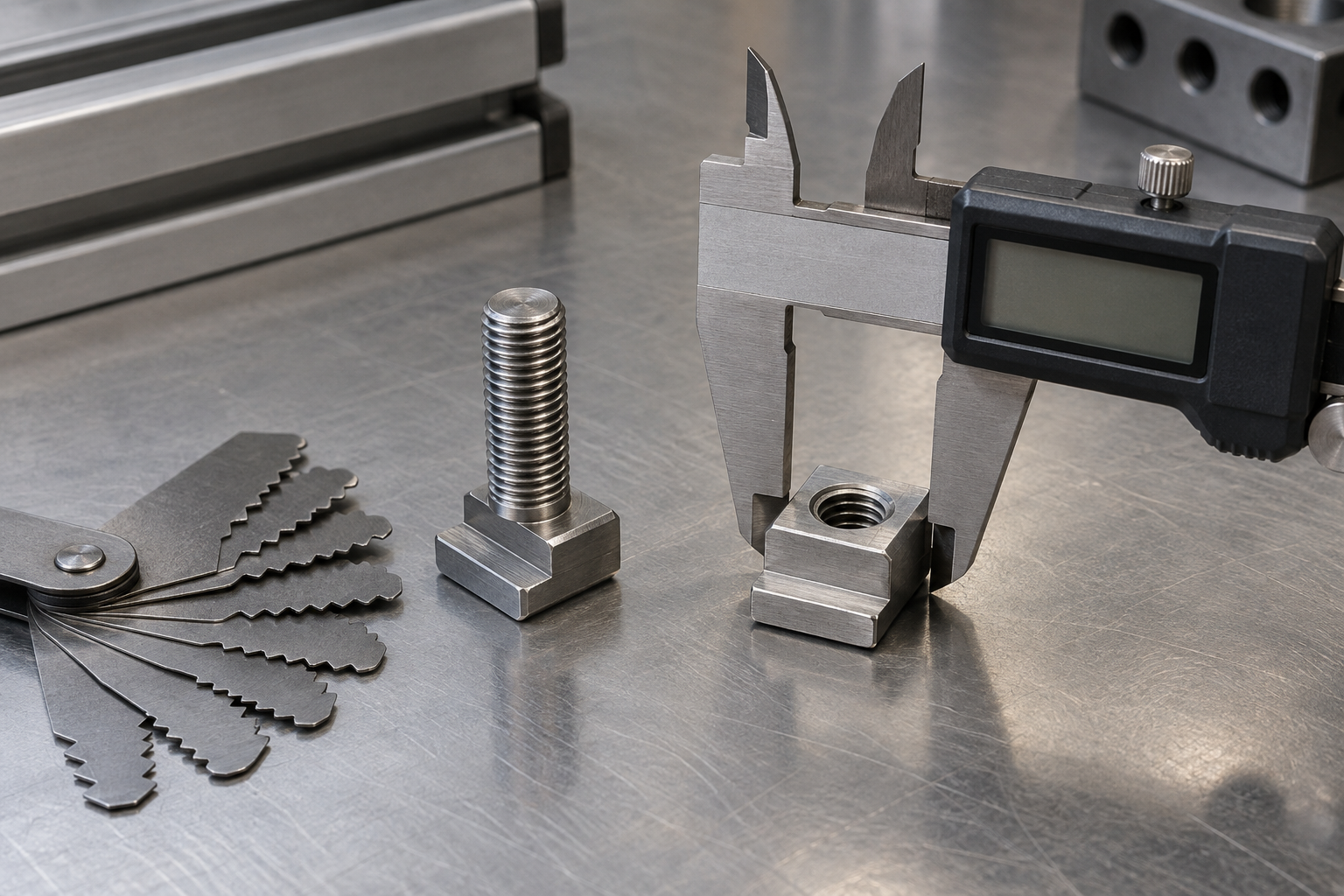
A T-slot nut must pass through or turn into the slot, present enough bearing area under the slot lips, and leave its threaded hole aligned with the assembly. Start with the slot, not the bolt: measure the opening at several points because anodizing, burrs, and extrusion variation can change the usable clearance. A digital caliper is suitable for this check; clean the jaws and keep them square to the surface.
Measure the four controlling dimensions
- Slot opening: measure the narrow entry width and note any chamfer or obstruction.
- Nut width and height: measure the body at its bearing surfaces, not across a chamfer or spring clip.
- Thread: identify nominal diameter and pitch with a thread gauge or a known matching bolt; do not infer pitch from diameter alone.
- Length and rotation: record the nut length and whether it must slide, drop in, or rotate into position.
Take at least three readings on a used extrusion and retain the largest obstruction and smallest clearance in the inspection record. That simple worst-case habit is more useful than a nominal catalogue value when a frame has been cut, coated, or handled in the field.
How t slot bolts should be measured with the matching nut
Bolts are the mating component, so measure the bolt’s nominal thread diameter and pitch, usable thread length, and head or washer clearance. A thread gauge provides a repeatable pitch check; a bolt that enters for only one or two turns is not proof of compatibility. Check the complete stack-up—bolt head, washer if used, nut thickness, and clamped parts—so the bolt does not bottom out before the joint is secure.
For a reusable frame, test the intended t slot bolts at hand-tight torque first. The nut should seat without rocking, and the bolt should advance smoothly through the full planned engagement. If a locking or spring feature is present, include it in the test because it can change insertion and rotation behaviour.
How t slotted nuts should be compared before purchase
Measurement adds value when it prevents rework, damaged profiles, and returns. Compare the inspection method—not just the unit-cost tendency—before approving a part. For a controlled replacement, t slotted nuts should be judged by the complete interface rather than by thread label alone.
| Approach | Fit confidence | Efficiency | Hidden cost risk | Best use |
|---|---|---|---|---|
| Order by thread only | Low; slot geometry is unverified | Fast initially | Rework, returns, or profile damage | Only when the mating drawing is controlled |
| Measure slot and nut | Good for dimensional fit | Moderate | Lower mismatch risk | Replacement parts and mixed profiles |
| Measure, thread-check, and test-fit | Highest practical confidence | Moderate before release | Small inspection cost; lower production disruption | Repeat builds and safety-critical fixtures |
Use the application record, not a guessed size
| Dimension to record | What it controls | Typical application question |
|---|---|---|
| Slot opening and depth | Entry and bearing clearance | Can the nut enter without scraping the lips? |
| Nut width, height, and length | Seat stability and rotation | Will it bear under the lips after tightening? |
| Thread diameter and pitch | Bolt compatibility | Does the specified bolt engage smoothly? |
| Material, finish, and feature type | Corrosion and installation behaviour | Is a spring, ball, or clip acceptable for the environment? |
How t slot nuts should be selected with standards in mind
Standards help define material or performance scope, but they do not make every extrusion nut interchangeable. ISO 898-2 covers mechanical properties of specified steel nuts; ISO 2320 covers prevailing-torque type steel nuts and their properties; and ASTM F563/F563M covers specified steel nuts in its stated scope. Treat these as standards references, not automatic product certifications. Ask for the applicable material, grade, finish, dimensional drawing, and test documentation for the exact part and destination market.
For procurement, we recommend four controls: preserve a measured sample or drawing; specify slot profile and thread separately; require a first-article fit check; and record any coating, spring, or corrosion requirement. For recurring builds, t slot nuts should carry a controlled drawing revision. When the application uses an uncommon profile, review hammer nuts for 2020 V-slot frames as a related installation reference. Qiyi Fastener can be considered when a buyer needs configurable fastener sourcing and product documentation, subject to confirmation of the requested specification.
Frequently Asked Questions
How does a T-slot nut work?
A T-slot nut captures the underside of an extrusion slot while its threaded hole accepts a bolt. Depending on its design, it may slide in from an open end, drop into the slot, or rotate after insertion. Confirm the insertion method and bearing surfaces on the drawing before assembly.
Are all T-slots the same size?
No. Slot opening, depth, lip geometry, and profile family vary between extrusions and manufacturers. Measure the actual profile or use its controlled drawing; matching thread size alone is insufficient.
What are the different types of T nuts?
Common types include sliding nuts, hammer or drop-in nuts, and versions with springs, balls, or clips to aid positioning. These features alter installation behaviour and may change the required clearance, so select by profile and installation method as well as thread.
What sizes are available for T-slot nuts?
Sizes are offered across different metric and imperial thread families, body dimensions, and extrusion profiles. Availability is supplier- and design-specific; request a dimensional drawing and state the thread system, pitch, profile, finish, and quantity rather than relying on a generic size label.
References
- Bossard BN 226 tee nuts — product information for tee-nut form, installation, and application fit.
- McMaster-Carr T-nuts — profile-specific T-nut forms and dimensional selection context.
- NASA Fastener Design Manual — public engineering guidance on threads, preload, and bolted-joint design.
For related installation context, see the guide to t slot nuts. A controlled measurement sheet turns a replacement request into a repeatable specification: slot, body, thread, material, finish, and fit test all stay visible. Review available fastener options at Qiyi Fastener products, then contact the team with your drawing or measured sample.