When Martin, a furniture engineer in Toronto, drove a tee nut into a plywood seat panel and started the mating screw, the insert spun before the joint clamped. A second panel split when the hole was enlarged. His team traced the failure to the substrate, pilot hole, flange, prongs, and installation direction: it was a selection and process problem, not proof that every tee nut was unsuitable for wood.
Summary: Confirm the substrate, supplier drawing, pilot-hole requirement, thread system, and seating method before installing a wood-panel tee nut. ASME B1.1-2024 gives Unified Inch Screw Threads designation context, but it does not set a universal hole size or panel holding performance. Run a representative fit and anti-rotation check, document the approved process, and release production against the controlled interface.
How to install t nuts for wood in a repeatable process?
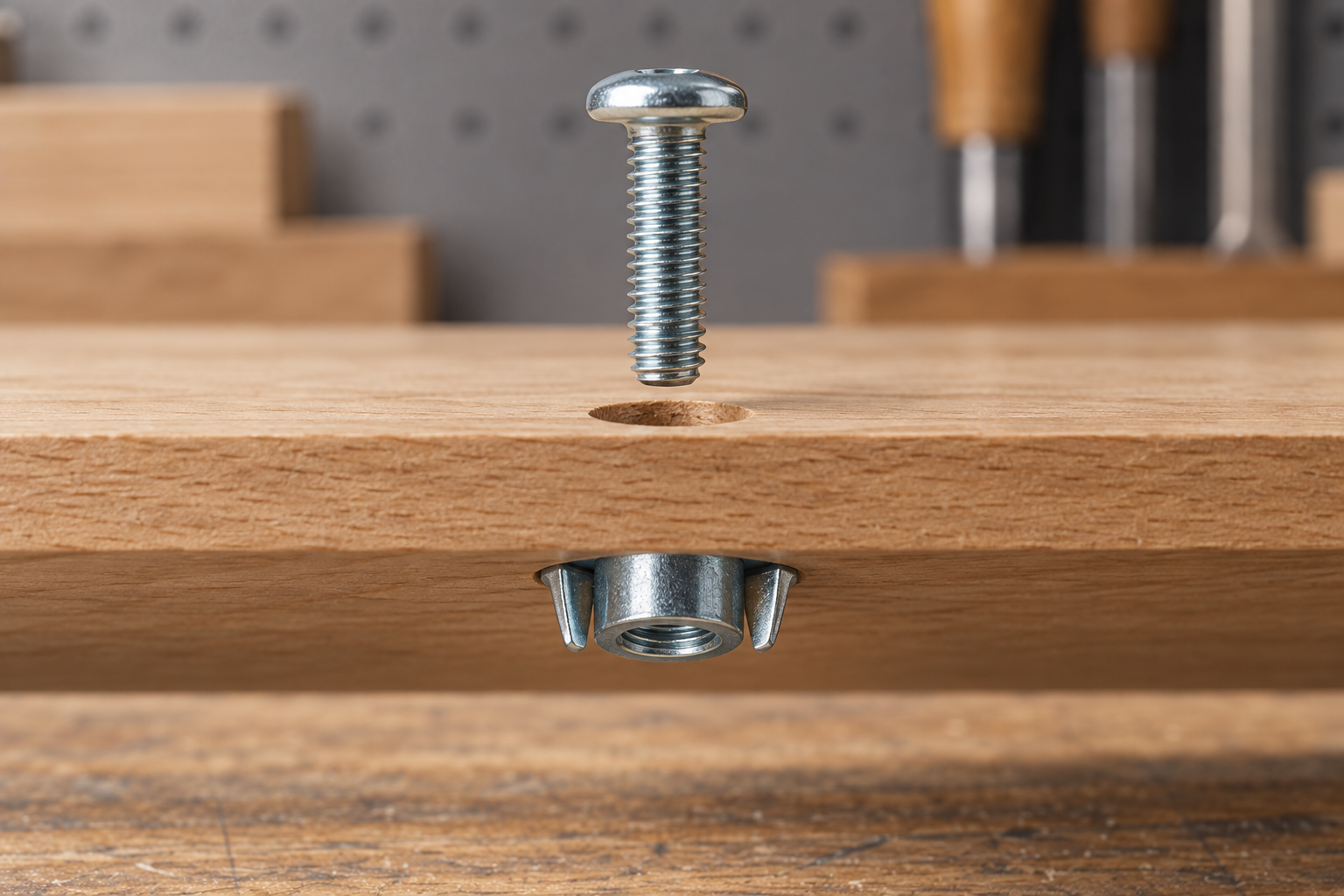
T nuts for wood create a removable machine-screw attachment point in a suitable panel. A flange spreads contact at the face and prongs or another anti-rotation feature engage the surrounding material. The connection is application-specific: plywood, solid wood, MDF, and soft-plastic panels can react differently to the same insert, so the nominal thread alone is not an installation specification.
Prepare the panel before seating the insert
- Confirm the interface. Read the supplier drawing for thread diameter and pitch, body length, flange geometry, prong layout, material, finish, and recommended hole. The approved hole depends on the insert and substrate; do not copy a generic diameter from a different part.
- Mark and drill squarely. Locate the hole away from weak edges where the design permits, support the back face, and keep the drill perpendicular to the panel. Use a sharp tool and remove loose chips without casually enlarging the opening.
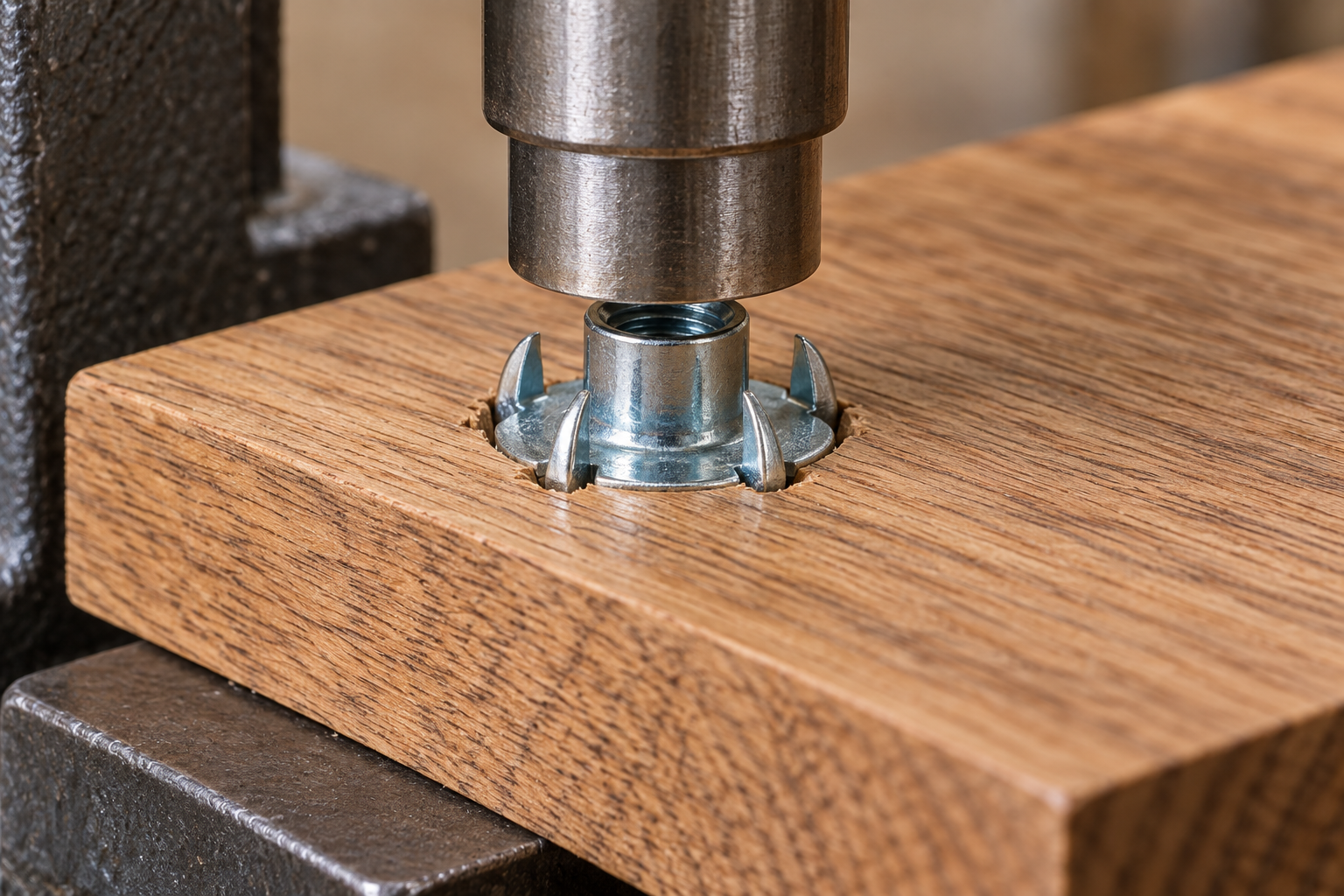
- Control the seating force. A press or guided fixture usually gives more repeatable alignment than an unsupported hammer blow. If impact is permitted by the process, use a centered protective tool and even blows so the flange does not bend and the prongs do not enter at an angle.
- Inspect the result. Check that the flange is seated as specified, the prongs are engaged evenly, the panel is not split, and the screw starts by hand without cross-threading or bottoming out.
Support matters because a panel can flex while the insert appears to seat. A crooked insert may still accept a screw for the first few turns, then rotate when the joint is tightened or serviced. For a production approval, use the actual panel construction, screw, washer if specified, and installation fixture. A simple visual inspection should be supplemented by the joint-specific pull-out, rotation, or fit check defined by the buyer’s validation plan; a catalogue drawing is not a complete performance guarantee.
How furniture connectors and threaded inserts for wood solve different joint problems?
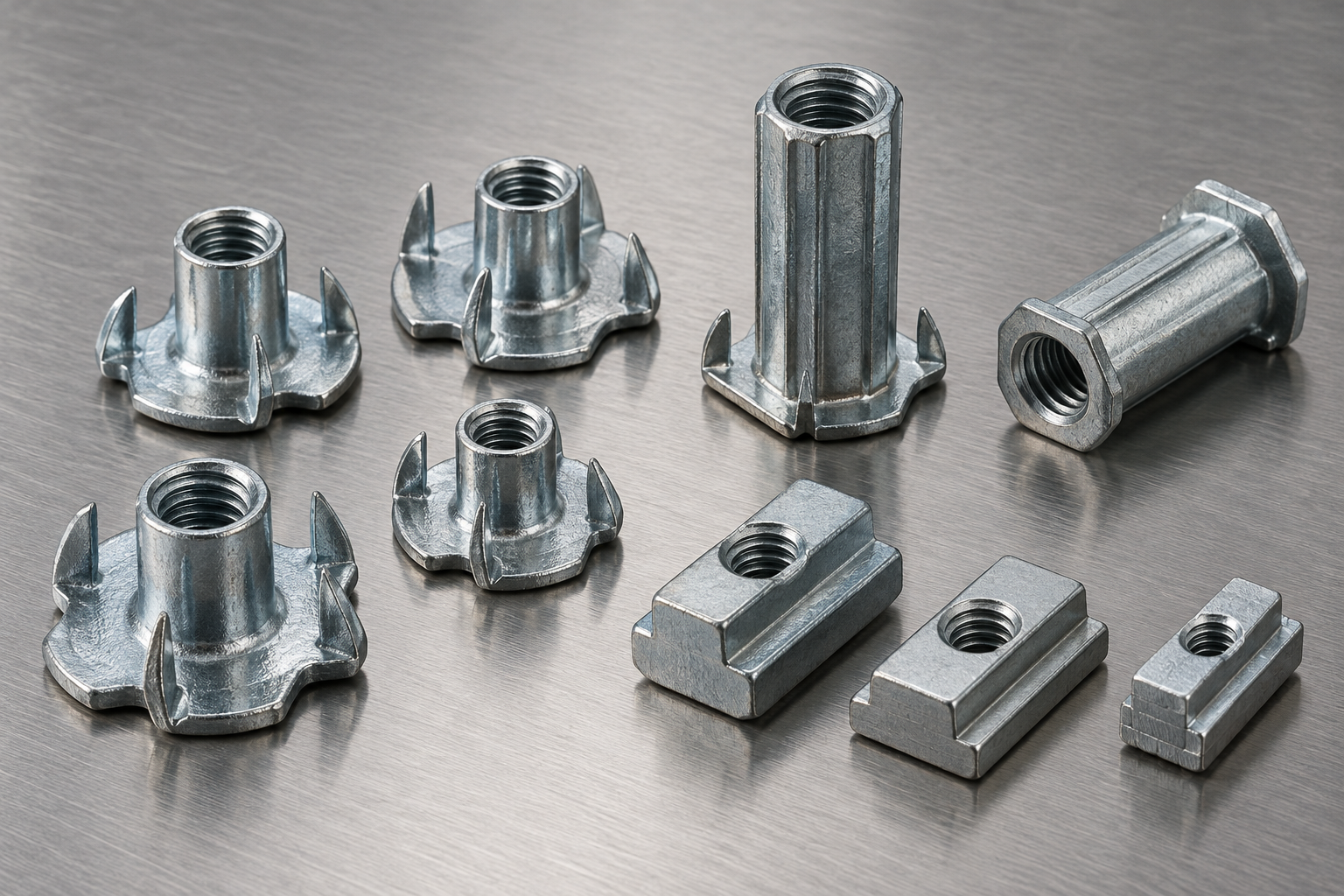
Furniture connectors are selected by the joint’s access direction, appearance, service needs, and drilling pattern. A face-installed tee nut can provide a removable threaded point from one side of a panel. A barrel nut or cross dowel can keep the receiver concealed, but its body axis and cross-hole must align with the mating screw. These are related solutions, not automatically interchangeable parts.
Threaded inserts for wood is a broad purchasing term that can include drive-in, press-in, screw-in, and other insert geometries. The Bossard drive-in tee-nut listing illustrates why a product drawing and application description matter: the listed product data and drawing are tied to a defined part, material, finish, and use context. A Woodstock Industrial prong-tee-nut specification page is likewise useful as manufacturer-specific reference material, but neither page should be treated as a universal rule for every supplier’s part.
A flange-style hardware option may spread contact at a fastener interface, but it does not provide the same anti-rotation or concealed-joint function as a pronged insert or cylindrical receiver. Compare the specified bearing surface and assembly path with Qiyi’s flange nuts only as a related hardware reference, not as an automatic substitute.
How dimensions and applications determine t nuts for wood selection?
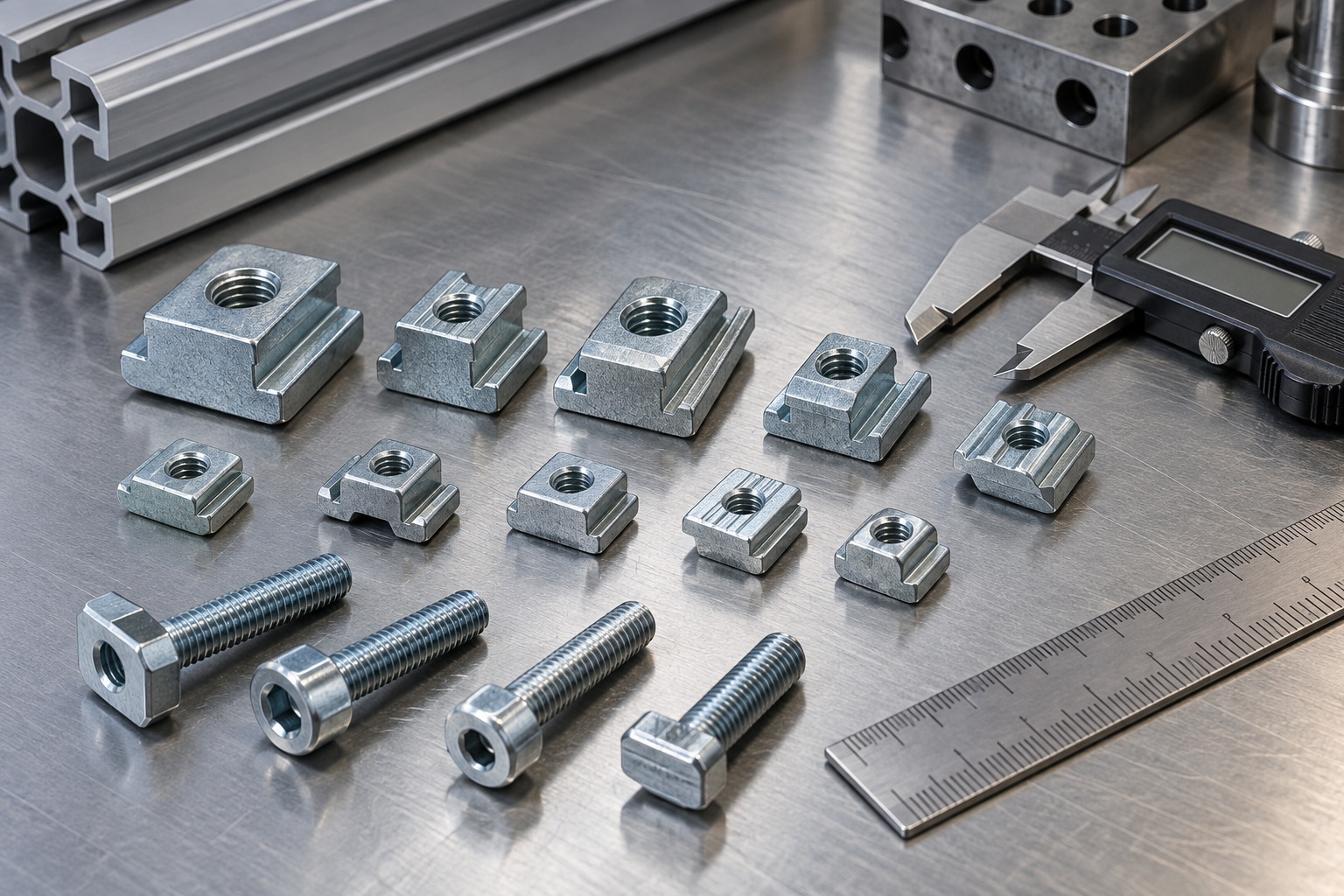
Selection starts with the joint rather than the product-name search. Record the panel material and thickness, face access, edge distance, required removability, screw thread system, visible-hardware limits, and likely service environment. The Jet Press page on cross dowels and barrel nuts provides a useful manufacturer context for concealed furniture hardware; it does not remove the need to check the complete drilling pattern and mating screw.
| Application | Dimensions and inputs to record | Acceptance question | Useful verification |
|---|---|---|---|
| Face-installed panel insert | Thread, body length, flange diameter, prong height, panel thickness, approved hole | Is the flange seated without splitting or crushing the panel? | Caliper or gauge check, seating inspection, rotation check |
| Thin plywood or soft wood | Layer construction, local density, edge distance, face access, support method | Can the insert engage without lifting veneers or breaking the edge? | Representative sample installation and visual review |
| Concealed barrel-nut joint | Body diameter, body length, thread, cross-hole location, bore depth | Does the receiver align with the screw through the full joint stack? | Trial assembly, hand-start thread check, alignment mark |
| Cross-dowel furniture joint | Cross-bore location, nut orientation, screw length, panel edge distance | Can the screw clamp the panels without binding or bottoming out? | Drilling-jig check and controlled trial assembly |
| Serviceable repeat assembly | Removal frequency, replacement access, finish, corrosion environment, deviation rules | Can the part be serviced without damaging the substrate or visible finish? | Representative removal and reinstallation check |
Hole size, thread engagement, and installation method should remain controlled fields on the drawing. Do not promise a particular load, torque, or service life from the insert name alone; those outcomes depend on the substrate, joint geometry, mating hardware, process, and validation evidence.
How standards and sourcing controls protect furniture connectors decisions?
Standards help define the scope of a claim, but they do not turn a general hardware term into a universal product specification. ASME B1.1-2024 gives Unified Inch Screw Threads designation and compatibility context. It is relevant when a buyer specifies an inch-thread screw and receiver, but it does not define wood hole preparation, anti-rotation behavior, or complete joint performance. Metric and inch thread systems should be stated separately on the drawing.
The McMaster threaded-inserts catalogue is useful industrial context for the range of insert categories available to buyers. A catalogue can help identify terminology and compare design families, but the exact part still requires a controlled drawing, material and finish information, application fit, and any test evidence required by the destination market or customer contract. Standards are not a substitute for product-specific evidence, and a reference page is not automatically a certification.
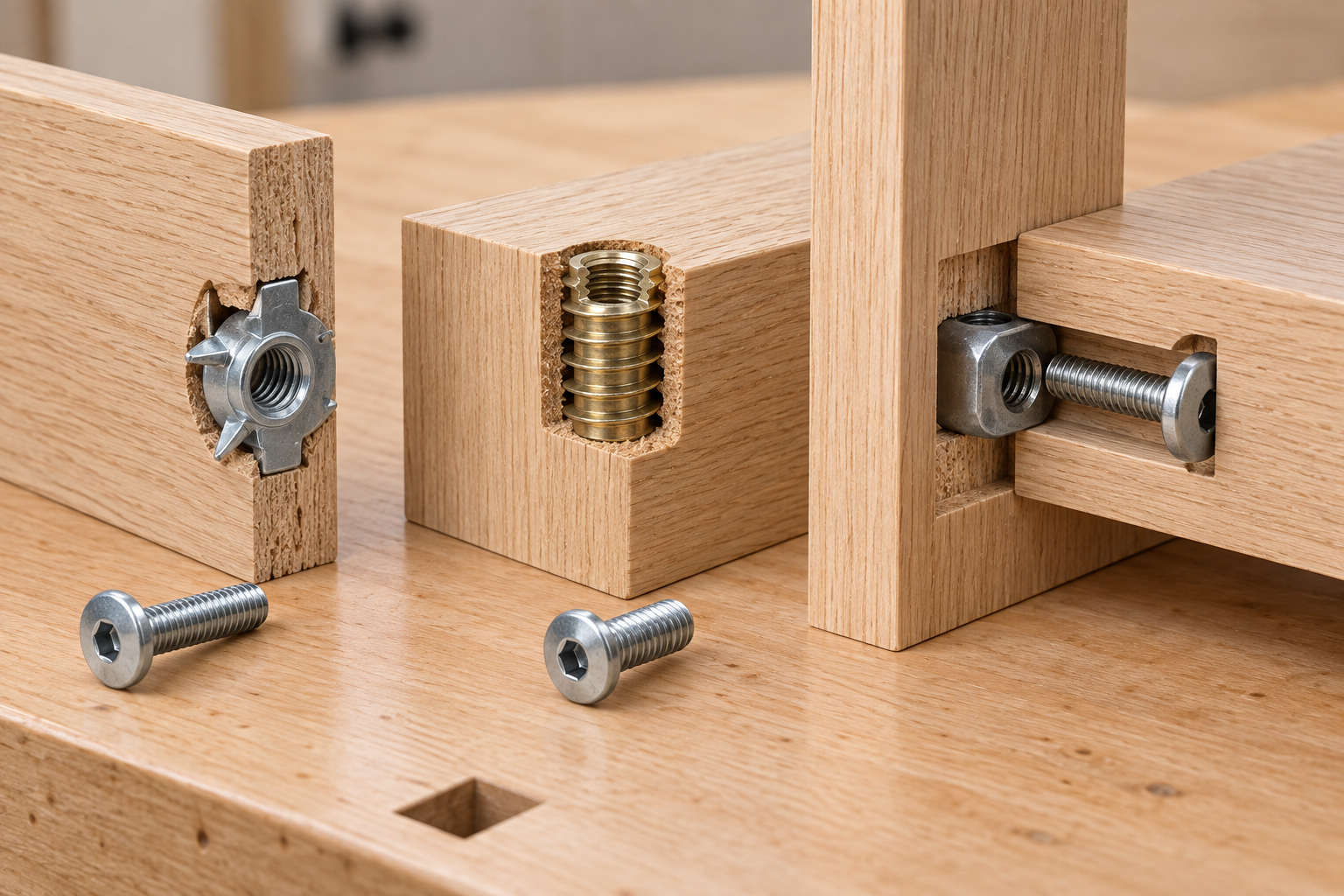
Application comparison: common threaded receivers and concealed furniture connectors shown beside wood panels; dimensions and installation methods remain supplier- and joint-specific.
Use this selection guide before issuing a purchase order
- Define the joint. State the substrate, panel thickness, access direction, service frequency, visible-hardware requirement, and consequence of loosening.
- Control the interface. Specify thread system and pitch, body and flange dimensions, approved hole, material, finish, and permitted tolerances.
- Specify the process. Identify the drill or jig, support surface, seating tool, inspection points, and the required fit, rotation, or pull-out check.
- Qualify the source. Request the exact drawing and applicable material or test evidence. Qiyi’s guide to industrial fastener manufacturers offers sourcing context, while the buyer remains responsible for approving the controlled requirement.
- Freeze substitutions. Do not replace the thread, finish, body geometry, or installation method without deviation approval and a representative re-test.
When the specification is ready, review Qiyi’s t nuts for wood category against the approved drawing. The category is a starting point; the documented interface and validation record are what make a selected part repeatable across a production order.
References
What is the difference between a threaded insert and a T nut?
A threaded insert is a broad category of component that creates internal threads in a substrate. A T nut is one specific style, commonly recognized by a flange and prongs or another anti-rotation feature for panel installation. Confirm the actual geometry, hole, and installation method because supplier terminology can vary.
What is the best type of threaded insert for wood?
There is no single best type for every wood application. Choose by substrate, panel thickness, access direction, removability, edge distance, mating thread, and the approved installation process; a pronged tee nut may suit one panel while a screw-in or press-in insert suits another. Validate the selected part in representative material before release.
How to insert T nuts in wood?
Prepare the approved hole square to the panel, support the work, align the T nut, and seat it with the specified press or controlled impact method. Check flange seating, anti-rotation engagement, panel condition, and hand-start thread fit before tightening. The exact hole and installation force are application-specific and should come from the supplier drawing or validated process.
References
- Bossard drive-in tee nuts for wood and plastics
- Woodstock Industrial prong tee-nut specifications
- Jet Press cross dowels and barrel nuts
- ASME B1.1-2024 Unified Inch Screw Threads
- McMaster threaded inserts catalogue
For a project that needs a controlled part selection, share the drawing, panel material, mating screw, and required installation method when you contact Qiyi Fastener. That gives the sourcing discussion a concrete technical starting point and leaves room to verify the final fit before production.