Choose adjustable leveling feet for machinery by checking the machine connection, installed height, base contact and documented load conditions together. A matching thread does not establish that a support is suitable for the equipment. Before comparing quotations, give each supplier the same mounting drawing and operating requirements so the offered configurations can be assessed on a common basis.
Start at the machine connection
The mounting interface determines which foot can be considered. Record the thread diameter, pitch, available engagement and the component receiving the stud. Identify whether the connection uses a tapped plate, nut or another specified mounting arrangement. A photograph of the existing foot is useful for identification, but should accompany a dimensioned interface drawing.
The buyer also needs to know which dimensions can change. If the mounting thread is fixed by an existing frame, state that constraint. If a new support is being specified, keep the thread, mounting component and foot selection together for the machine designer’s review. Treat a supplier’s alternative as a proposed configuration requiring approval, rather than an interchangeable part based on thread alone.
Separate stud length from usable adjustment
Stud length, installed height and allowable adjustment describe different things. Stud length describes the part; installed height describes the distance the machine needs above the floor. Usable adjustment depends on the offered assembly, its mounting and the engagement that must remain in service.
A long stud does not mean that all of its threaded length is available as a height adjustment. Ask the supplier to identify the permitted installed range on the model drawing, including the mounting and locking arrangement. Keep the required position and the allowed range as separate fields in the request for quotation.
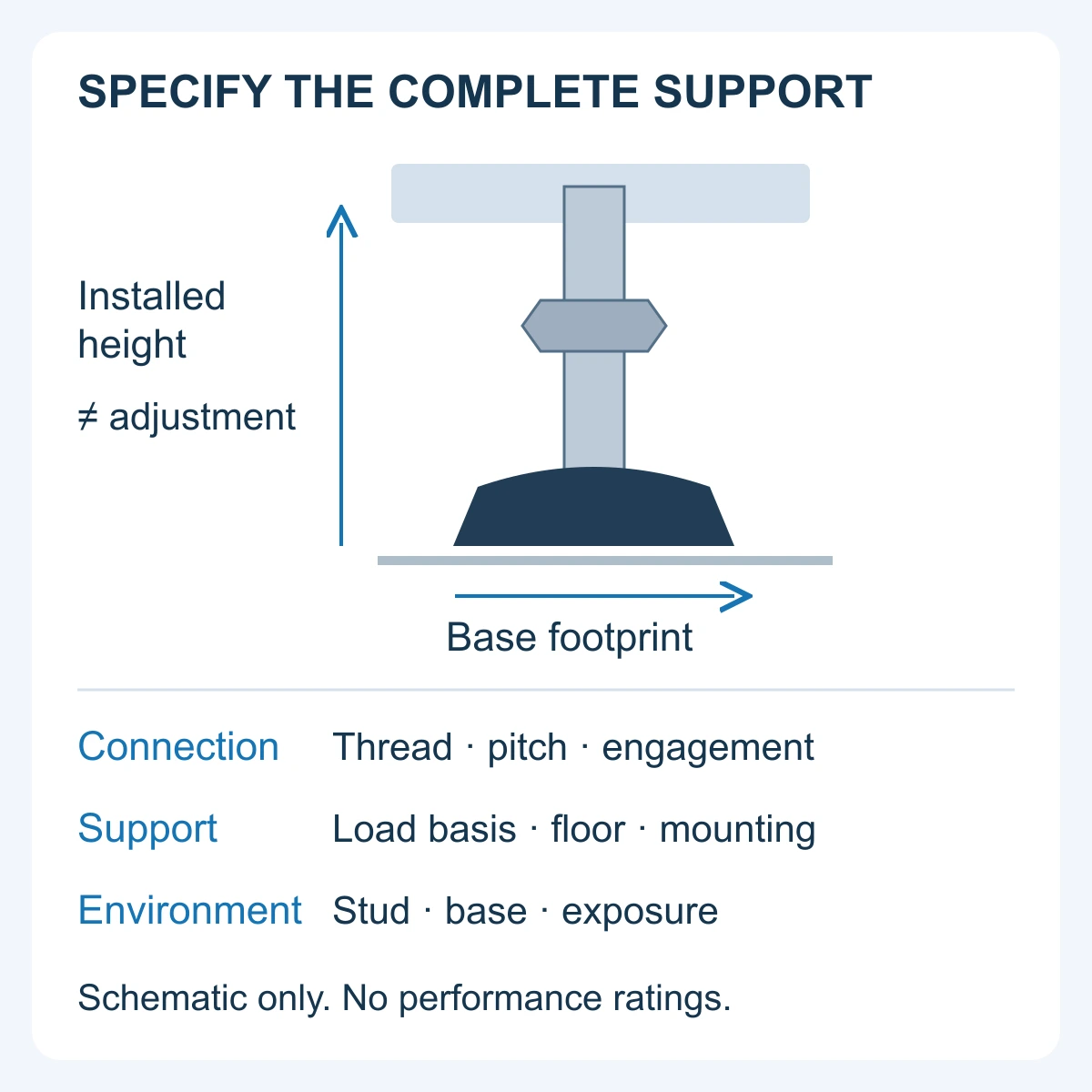
In a hypothetical frame order, “longer stem required” leaves the critical question unanswered: what installed height must the support achieve while retaining approved engagement? Supply that requirement before accepting a longer replacement.
Read the load rating before comparing prices
A load figure is useful only with its definition and applicable conditions. Establish whether the quoted value is a recommended service rating, a test result or a maximum-limit static value. Record the unit and the exact foot configuration to which it applies.
For example, the Elesa+Ganter LS.A technical sheet explains its maximum-limit static load in relation to possible plastic breakage under particular conditions. Its footnote calls for an application-dependent factor. That definition illustrates why a catalog maximum should not automatically become a machine’s working requirement; it does not define every manufacturer’s rating.
Support conditions matter too. Technical guidance for the GN 23 family identifies stem/base contact, bending and buckling as relevant limits. Send the equipment’s support layout, loading conditions and intended adjustment position for review. Do not assume equal loading between supports or turn a thread designation into a whole-machine capacity.
When comparing heavy duty adjustable leveling feet, request the basis of the rating before accepting “heavy duty” as a specification. Keep application approval with the person responsible for the equipment.
Match the base to the floor and environment
The base and stud configuration must suit the intended contact and exposure. Provide the floor condition, available footprint, cleaning method and relevant liquids or chemicals. Ask which base material, stud material and surface treatment are offered against those conditions.
Fixed and articulated versions are different choices. An optional rubber pad is another configuration detail, not a feature to infer from a black plastic base. A requirement for vibration isolation or special cleaning conditions needs its own supporting information.
QIYI’s Adjustable Leveling Foot page lists a nylon base with nickel-plated carbon-steel or stainless-steel stud options. Use the exact model and drawing to discuss your requirement. The catalog description alone does not establish a vibration-isolation rating, hygienic approval or suitability for a particular machine.
Specify adjustable leveling feet with requirements and evidence
The following purchasing record separates what the machine needs from what the supplier must identify. It helps reveal missing inputs before a batch order is released.
| Buyer requirement | Information to send | Evidence to request |
|---|---|---|
| Mounting compatibility | Thread, pitch and mounting drawing | Model drawing and engagement conditions |
| Installed position | Required height and adjustment needs | Permitted range and locking arrangement |
| Support duty | Support layout and operating loads | Rating definition, conditions and unit |
| Floor and exposure | Contact surface, footprint and cleaning conditions | Base, stud and finish specification |
| Order identification | Quantity and approved drawing revision | Quoted model and agreed inspection records |
If the supplier can confirm the thread but cannot yet confirm the permitted installed height, leave that field unresolved. If the quoted load uses a different unit or test basis, request clarification before comparing it with another offer. Neither gap is resolved by matching an overall photograph.
Release the order against one agreed configuration. Preserve its model number, drawing revision, material description and any application conditions with the purchase record. Those details let purchasing and receiving inspection check the same item, while avoiding a substitution based only on the words “adjustable feet.”
References
Elesa+Ganter LS.A: definition of maximum-limit static load
Elesa+Ganter GN 23: loading and stem/base conditions
AMC Mecanocaucho: fixed, articulated and base configuration distinctions