A 307A bolt is identified with ASTM A307 Grade A, a carbon-steel fastener specification for general applications. The public A307-21 scope gives Grade A a minimum tensile strength of 60 ksi, or 60,000 psi. That is a material-performance requirement, not an allowable working load for a complete joint.
The 307A bolt grade mark also differs from the manufacturer’s identifier. Bolt Science explains these as separate forms of identification. A receiver should record both when present, then compare the fastener and its documents with the actual purchase requirement.
What a 307A bolt requirement establishes
ASTM’s public scope covers A307 bolts and studs from 1/4 through 4 inches in nominal diameter. The selected grade matters: Grade A and Grade B have different tensile requirements and intended uses.
| A307 grade | Tensile requirement in public scope | Intended use described there |
|---|---|---|
| A | 60 ksi minimum | General applications |
| B | 60–100 ksi | Flanged piping joints with cast-iron flanges |
Grade C appears in historical references, but the public scope states that F1554 Grade 36 replaced it. It should not be treated as another current A307 choice simply because an older chart lists it.
Portland Bolt’s A307 summary leaves the yield-minimum field blank for Grades A and B. A blank field is not a measured yield value of zero. It also supplies no basis for inventing a universal proof load, tightening torque or joint capacity. Those decisions require the applicable requirements and the actual assembly.
A matching outline is only the start of substitution
A substitute can match the original bolt’s visible outline while changing another requirement. The drawing below keeps the silhouette simple to emphasize four separate comparisons. None is established by the fact that a nut can be started on the thread.
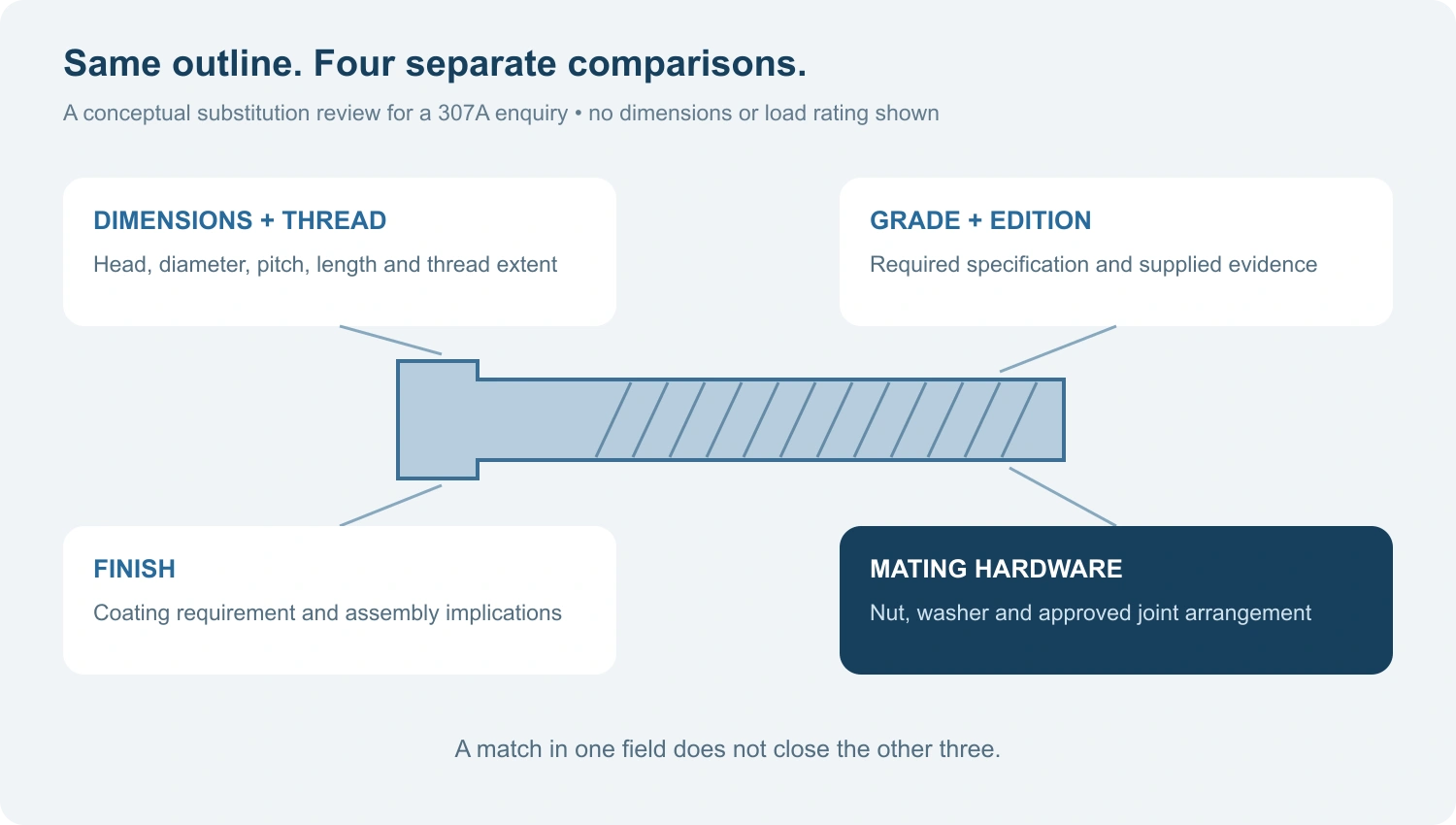
The dimensional comparison should reference the required head form, diameter, thread, length and threaded extent. The grade comparison should identify the specified standard and edition, together with the evidence offered for the replacement. “Same size” describes only part of that review.
The finish and mating-hardware comparisons should be explicit as well. A supplier’s proposal should identify what will change, including any change to the nut or washer arrangement. Purchasing can then route a defined proposal to the person responsible for approval, rather than infer acceptance from a familiar grade name.
Example: replacing a plain-finish delivery with a coated bolt
Suppose a hypothetical maintenance order calls for a particular 307A bolt with a plain finish. The supplier offers a silver-finished alternative with the same nominal diameter and length. The buyer has not yet confirmed the coating specification, the required thread details or whether the existing assembly instructions apply.
The useful response is a comparison request, not a conclusion that the alternative is better because it looks protected. Ask the supplier to identify the proposed finish, provide the selected part drawing and state which order requirements it meets. Include the mating nut and washer description so the reviewer sees the whole proposed arrangement.
No installation value follows from the proposed finish description alone. The buyer should obtain the required assembly conditions from the applicable project documents or responsible engineer. A generic torque table selected only by the words “307A” would leave the actual joint assumptions unresolved.
A clear proposal record could say: “Original finish: plain. Proposed finish: supplier to identify specification. Nominal size: unchanged. Thread details, mating hardware and installation requirements: compare with attached drawing before approval.” This is an illustrative communication format, not a tested coating combination or permission to change a released assembly.
If the supplier instead offers another grade, add that change to the same record. A shared tensile minimum or a claim that the replacement is “stronger” does not demonstrate all other requirements. The appropriate reviewer needs a complete specification comparison before approving the substitution.
Write the order so the receiver can check it
A usable order line connects the standard and grade to a drawing or complete dimensional description. Add the required finish, quantity, mating hardware and delivery documentation. If a particular standard edition is contractual, identify it rather than leaving the supplier and receiver to choose different references.
Keep the product form explicit. For example, QIYI’s T Bolt page lists metric variants and material/finish options for a different hardware form. That listing does not establish ASTM A307 Grade A compliance or interchangeability with an inch-series hex bolt. A required A307 supply needs its own confirmed specification.
The receiving record can then answer concrete questions: Does this part match the ordered geometry? Is the specified grade identified? Is the finish the approved one? Are the required documents connected to the delivery? Unresolved answers should stay visible until they are closed through the buyer’s acceptance process.