The practical difference in bolt vs screw selection is how the fastener engages the joint. A bolt normally passes through clearance holes and clamps parts with a nut. A screw normally turns into a prepared female thread or forms its own thread in the receiving material. These descriptions are useful starting points, but they do not classify every catalog part.
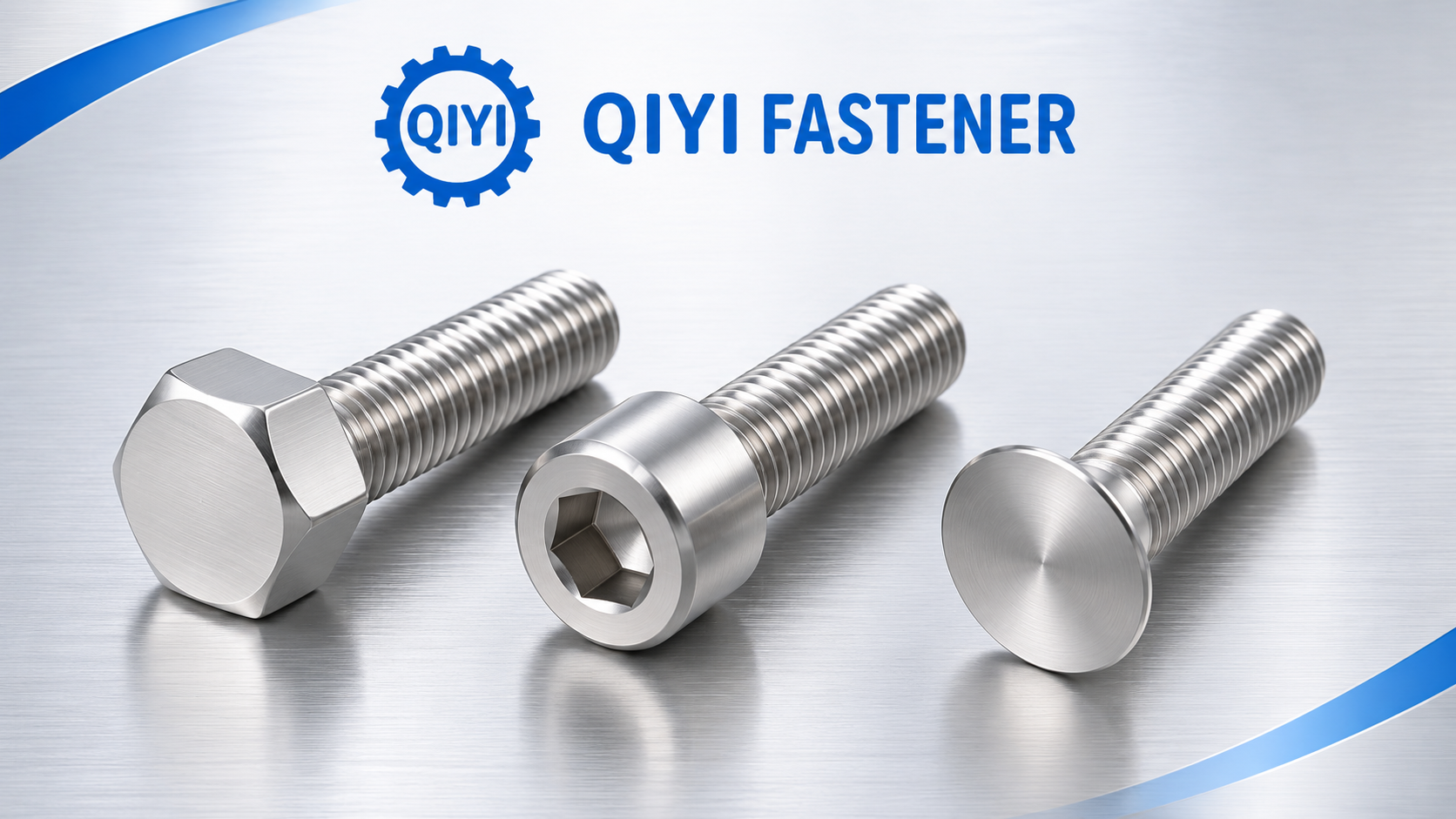
Machine screws and cap screws can also work with nuts. A hexagonal head does not automatically make a part a bolt, and a fully threaded shank does not automatically make it a screw. For purchasing, retain the specified part name and standard. For joint design, identify where the female thread sits and how the assembly will be tightened.
Bolt vs screw: the useful distinctions
The engineering definitions reproduced in CBP’s 2012 identification guide emphasize intended assembly and design features. They also recognize screws that can accept nuts. The comparison below uses that qualified distinction; it is not a customs-classification rule.
| Question | Typical bolt arrangement | Typical screw arrangement |
|---|---|---|
| Where is the female thread? | In a separate nut | In a tapped part, insert or thread-forming substrate |
| What normally turns? | The nut, with the bolt restrained | The screw head |
| What access matters? | Space for the nut and restraint tool | Driver access and adequate receiving thread |
| What needs separate confirmation? | Nut compatibility and joint specification | Receiving material and thread specification |
Choose among three joint routes
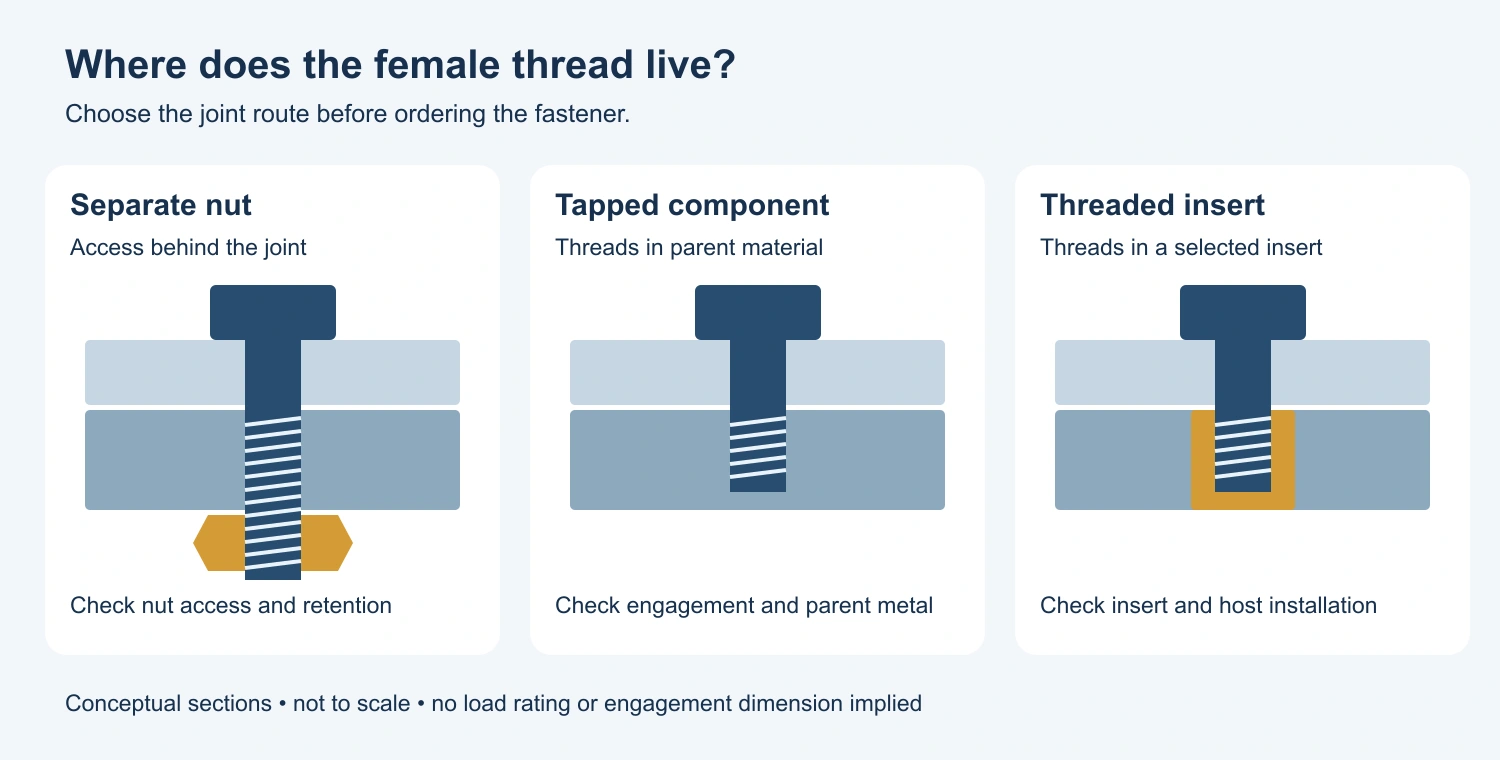
A separate nut when both sides are accessible
A through-fastened joint can place the female thread in a replaceable nut. The assembly still needs room for the nut, washer if specified, and tightening tool. The bolt head must also be restrained unless the joint provides an anti-rotation feature.
This route is a useful candidate for removable brackets and open frames. During maintenance, check whether a loosened nut can be reached and recovered. A joint that is easy to assemble before surrounding equipment is installed may become awkward to service afterward.
A tapped component when the receiving part carries the thread
A tapped hole removes the need for a separate loose nut. The receiving component now supplies the female thread, so its material, usable thread depth and condition become part of the design. A stronger screw does not, by itself, prevent the parent thread from stripping.
For a blind hole, the specification must distinguish usable engagement from total drilled depth. The assembly also needs clearance that prevents the screw from bottoming before the parts clamp. Those dimensions belong on the approved joint drawing; a generic bolt-versus-screw comparison cannot supply them.
An insert when the receiving thread needs its own component
An insert separates the screw’s mating thread from the surrounding host material. That can be useful in a plastic housing that will be opened repeatedly. The insert-to-host connection remains an additional interface to specify and verify.
Tappex’s guidance distinguishes insert installation routes such as heat, ultrasonic, press-in and molded-in installation. Plastic type and hole geometry affect selection. A metal thread alone does not prove that an insert will resist pullout or rotation in a particular housing.
Strength comes from the specification and the whole joint
Neither “bolt” nor “screw” is a strength grade. NASA’s Fastener Design Manual treats material, corrosion, preload, vibration and fatigue as separate selection concerns. Its design discussion also considers tapped-hole pullout and grip length. These are more informative questions than which name sounds stronger.
A useful comparison therefore keeps the actual material grade, dimensions and service conditions visible. Changing from a nut to a tapped hole changes the receiving member. Changing to an insert adds a host interface. A purchasing substitution should preserve the approved joint requirements, rather than merely match diameter and length.
A removable-cover example
Consider a hypothetical machine cover that must open during routine servicing. If the rear side stays accessible, a nut-and-fastener arrangement may be practical. If the rear side becomes enclosed, loose nuts may create a maintenance problem even though the original assembly was straightforward.
A tapped metal housing offers another route, provided its thread and engagement are suitable. A plastic housing may instead call for a selected insert and installation process. The cover’s purpose has not changed, but access and receiving material lead to different candidate joints.
Before choosing one, record who can reach the mating component, what carries the female thread, and what must survive repeated removal. The example narrows the options; it does not establish a load rating or approve any particular fastener.
Turn the choice into an orderable part
For a socket-drive arrangement, QIYI’s socket-head cap screw listing provides variants to discuss against the selected drawing. The order should identify the complete thread, length reference, head clearance, material grade, finish and mating component. A photograph or generic stainless-steel description cannot settle every field.
Keep the specified product name when requesting a quotation. If a supplier proposes an alternative, compare its drawing and material documentation with the approved requirements. That creates a clear substitution decision instead of an argument over whether the part should be called a bolt or a screw.
Can a screw use a nut?
Yes. Machine screws and cap screws may be assembled with nuts. Adding a nut does not automatically change the part’s specified product identity.
Are all screws self-tapping?
No. A machine screw normally engages an existing female thread. A self-tapping design creates its mating thread under specified material and hole conditions.
Does a socket head mean higher strength?
No. The recess describes the drive arrangement. Strength must come from the identified material and fastener specification, with the receiving joint checked separately.
References
- CBP: Distinguishing Bolts from Screws — 2012 guide reproducing engineering definitions.
- NASA: Fastener Design Manual — 1990 reference for joint-design considerations.
- Tappex: Threaded Inserts for Plastics — material and installation guidance.