Summary: A torque prevailing nut adds controlled resistance to rotation so a clamped joint is less likely to loosen before the nut reaches the bolt’s clamp interface. The useful distinction is between installation torque, prevailing torque, and tightening torque: ISO 2320 and related test practices measure the first-turn resistance separately from the torque used to create preload. Specify the thread, material, temperature, reuse expectation, and test method together, then validate the finished joint with a calibrated torque process rather than choosing by name alone.
What does a torque prevailing nut do in a joint?
A torque prevailing nut is designed to keep a defined resistance to rotation when it is turned on a clean, unloaded thread. That resistance can come from a non-metallic insert, a distorted thread area, or another engineered feature. It acts before the nut is fully clamped; after the bearing face contacts the joint, the installer must add the prevailing component to the torque needed for the target preload.
The distinction matters because a torque wrench reads the sum of thread friction, bearing friction, and the nut’s prevailing resistance. A production instruction that states only “tighten to 40 N-m” can produce different clamp loads when plating, lubricant, temperature, or nut type changes. Record the test setup, bolt grade, lubricant state, and measurement direction so a supplier and assembly team can reproduce the result.
How does a prevailing torque nut create reusable resistance?
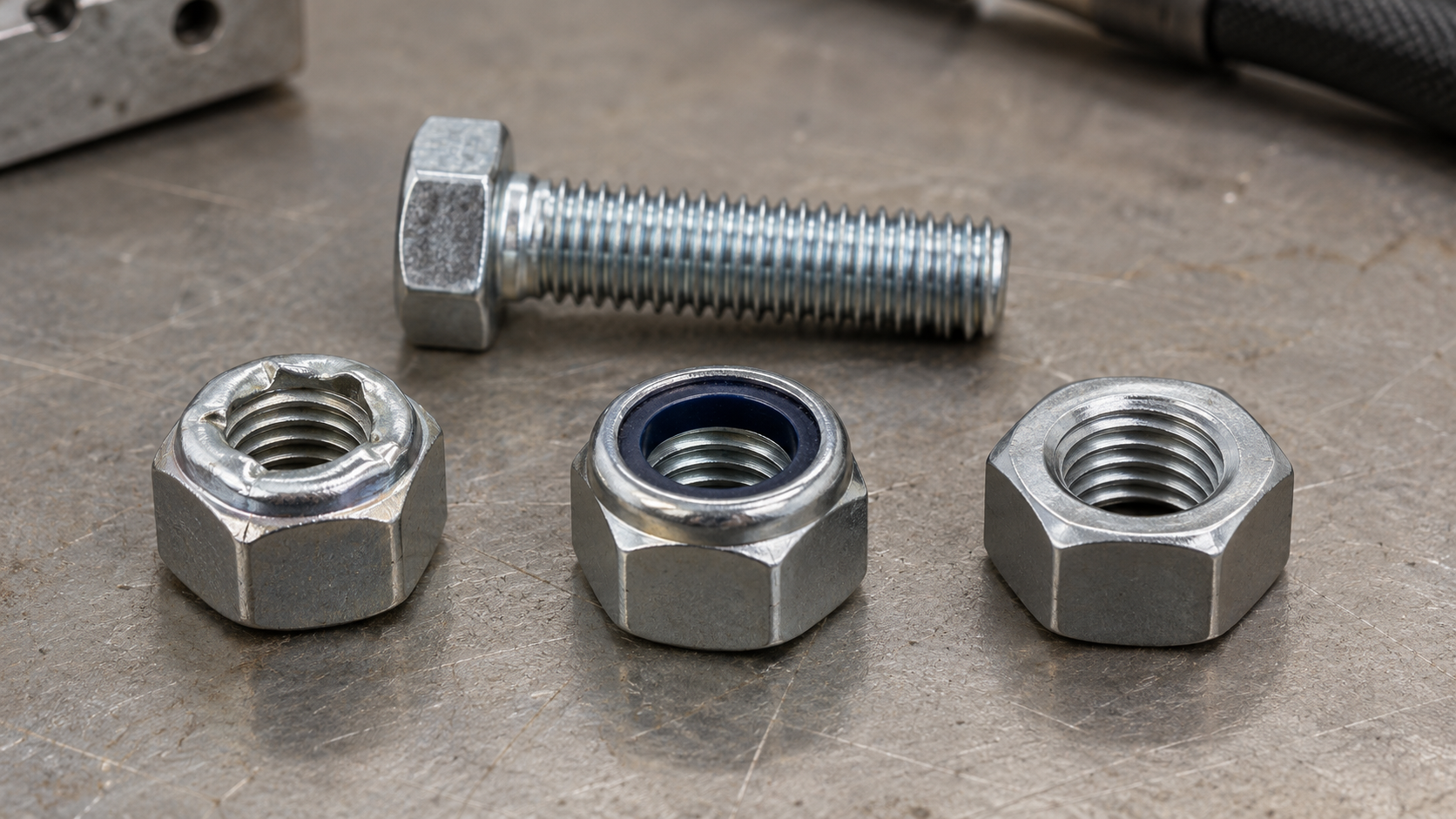
A prevailing torque nut may use a polymer collar, a deformed top thread, or a metal insert. A polymer-collar design is often called a nyloc nut; its insert grips the bolt thread and can be useful where the service temperature and chemical exposure remain within the insert material’s limits. An all-metal design avoids a polymer insert and can suit hotter assemblies, but its performance depends on the deformation geometry, hardness, and surface finish.
“Reusable” should never be assumed from the appearance of the nut. ISO 2320 describes prevailing-torque requirements and test logic, including run-on and run-off measurements, while the purchaser’s specification should state whether one-time installation or a defined reuse count is allowed. Test a removed nut under the same thread, speed, and temperature conditions; a nut that no longer meets the minimum resistance should be discarded.
Where does a nyloc nut fit in selection and service?
A nyloc nut is attractive for general machinery, panels, brackets, and moderate-temperature equipment because the insert provides consistent drag without a separate locking washer. Its limits are equally important: the insert can soften, swell, or lose grip when exposed to heat, solvents, sterilization cycles, or repeated removal. Confirm the insert polymer and the supplier’s temperature and chemical guidance for the actual service, rather than treating “nyloc” as a universal specification.
Compare four practical questions before approval: Does the joint need an all-metal lock at elevated temperature? Is the bolt coated or lubricated? Will operators remove the nut during routine service? Does the locking feature fit the available wrench and clearance? A flange or washer may still be needed to distribute bearing load; locking action does not replace correct joint geometry.
How should engineers size a torque prevailing nut by application?
Start with the bolt’s nominal diameter and thread pitch, then check the nut height, wrench size, thread class, material, and joint stack. The required torque is not a universal number: preload targets, friction coefficients, lubrication, and prevailing resistance all change the reading. A torque-tension test on production-intent parts is more useful than copying a catalog value from a different finish.
| Dimension | Polymer-insert design | All-metal design | Plain nut with separate locking feature |
|---|---|---|---|
| Loosening resistance | Consistent drag within insert limits | Mechanical resistance at higher temperatures | Depends on washer, threadlocker, or joint design |
| Installation efficiency | One-piece installation; add drag to torque setting | One-piece installation; inspect thread deformation | More components and process steps |
| Durability | Limited by polymer heat and chemical exposure | Limited by material, coating, and deformation wear | Varies with the separate locking method |
| Compatibility | Good for compatible steel and stainless assemblies | Useful where inserts are unsuitable | Requires space and compatibility for the added feature |
| Unit-cost tendency | Moderate; integrated insert can simplify kitting | Moderate to higher, depending on material and process | May be lower per nut but higher as a complete joint |
| Maintenance | Inspect insert after removal; replacement is often prudent | Check prevailing torque after service | Service the nut and the separate locking component |
| Returns and TCO | Lower rework when temperature is controlled | Can reduce heat-related replacement | More inventory and assembly opportunities for error |
What is a practical selection workflow for a prevailing torque nut?
- Describe the joint: load direction, vibration, temperature, chemicals, access, and service frequency.
- Freeze geometry: nominal diameter, pitch, height, wrench envelope, material pair, and thread engagement.
- Choose the locking mechanism: polymer insert, all-metal deformation, or a plain nut with a separate locking method.
- Define the process: lubricant state, prevailing-torque range, tightening torque or angle, tool calibration, and sampling frequency.
- Approve supply: drawing, sample, lot traceability, replacement policy, and an alternate source before production launch.
Qiyi Fastener can support a buyer comparing configurable dimensions, materials, and documentation; the approved drawing and application evidence should remain the decision authority. Teams also planning the bearing interface can review flange nuts, while broader sourcing questions are covered in this prevailing torque nut selection guide.
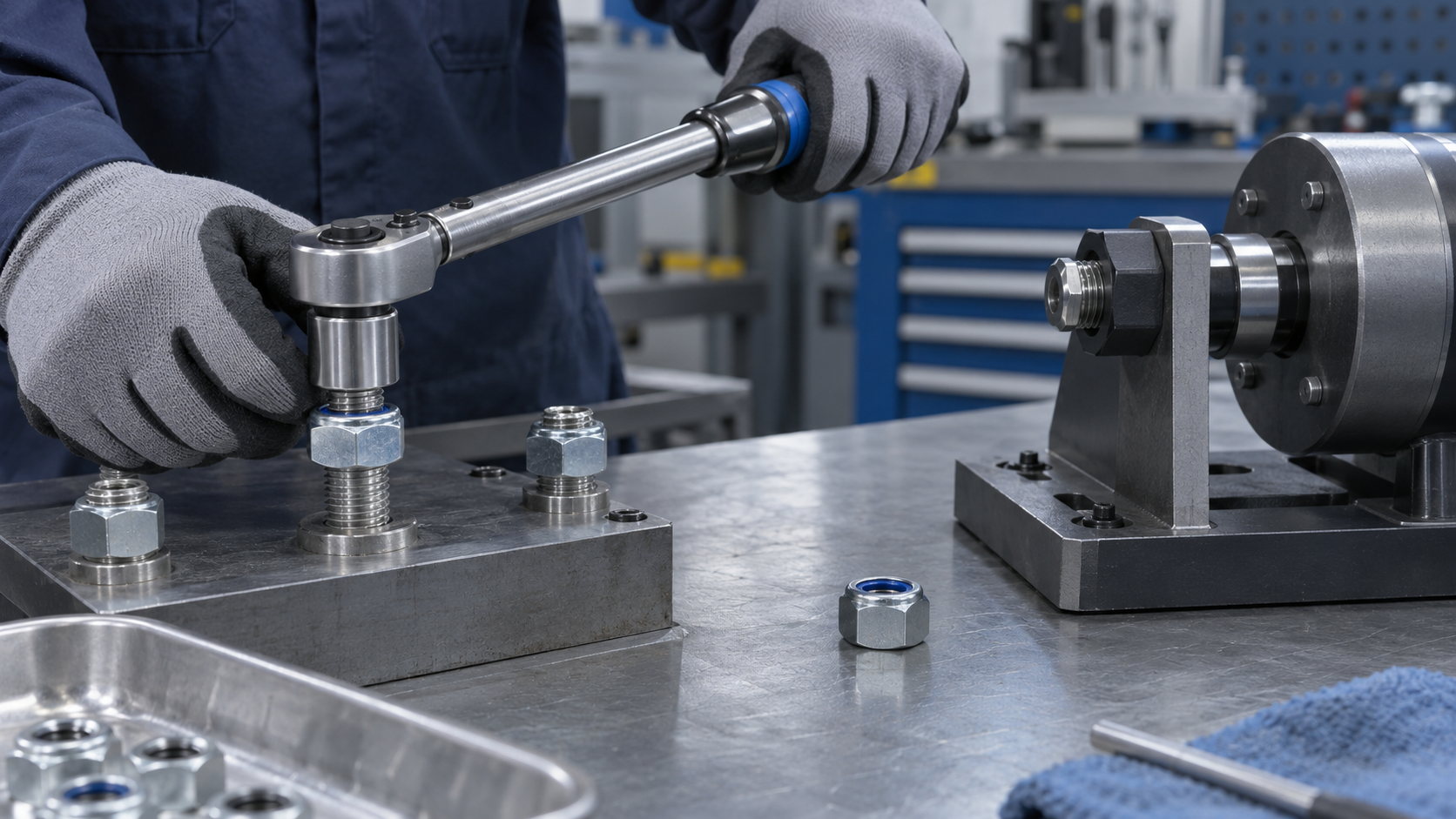
Torque test setup separating prevailing resistance from the torque used to produce joint preload.
Frequently Asked Questions
What is the difference between a prevailing torque nut and a nylock nut?
“Prevailing torque nut” is the broader functional category: it describes a nut that maintains resistance to rotation before clamping. “Nylock nut” is a common trade name for a polymer-insert version, so it is one type within that category. Confirm the insert material, temperature range, test method, and reuse policy instead of treating the names as interchangeable specifications.
What is a torque prevailing nut?
A torque prevailing nut is a nut engineered to resist turning on the bolt thread even before the bearing face is clamped. The resistance may come from a polymer insert or controlled metal deformation. During installation, that resistance contributes to the torque reading and must be included in the joint’s validated tightening process.
What is the correct torque for Nylock nuts?
There is no single correct torque for all Nylock nuts. The value depends on bolt size and grade, lubrication, surface finish, target preload, insert design, and the measured prevailing resistance. Use the supplier’s data as a starting point, then confirm the production combination with a torque-tension test and a calibrated tool.
How to determine prevailing torque?
Measure the torque needed to run the nut along a clean, unloaded thread before the nut’s bearing face contacts the joint, following the specified speed, direction, and temperature. Record run-on and, where required, run-off values against the applicable standard and lot requirement. Do not infer prevailing torque from the final tightening torque because clamp load and friction are then included.
For supplier due diligence, the industrial fastener manufacturers guide lists practical drawing, testing, and traceability questions.
References
When the specification is ready, contact Qiyi Fastener to review the application, documentation, and supply plan before release.