Summary: stainless steel a2 vs a4 is a material-selection decision, not a visual comparison. A2 and A4 are EN/ISO-style stainless fastener designations; the associated property class, such as A2-70 or A4-80, describes mechanical requirements separately from corrosion behavior. A2 is often selected for general indoor and mild outdoor service, while A4 is commonly considered for chloride-bearing or more aggressive environments, subject to the exact grade and exposure. Confirm the applicable EN ISO 3506 requirements, joint materials, cleaning chemistry, and test evidence before ordering; do not treat either designation as a product certification.
How should buyers compare stainless steel a2 vs a4 in a real joint?
The A2/A4 letters identify stainless fastener material families in the EN/ISO designation system. They are not a reliable visual code: surface finish, passivation, machining marks, and supplier packaging can look the same. A2 is commonly associated with austenitic grades used for general service, while A4 is commonly associated with a higher molybdenum-bearing family used where chloride or process chemicals raise corrosion risk; the purchase order should state the exact standard and grade rather than relying on a trade nickname.
Mechanical property classes remain a separate decision. A2-70 and A4-70, for example, use the same nominal class number but do not make the two materials interchangeable in every environment. Check tensile and proof requirements in the applicable edition of EN ISO 3506-1, then check thread engagement, preload, and galvanic compatibility in the finished assembly. A torque-tension test on production-intent parts is more informative than copying a torque value from a different finish or lubricant.
When does a2 stainless steel provide a sensible service margin?
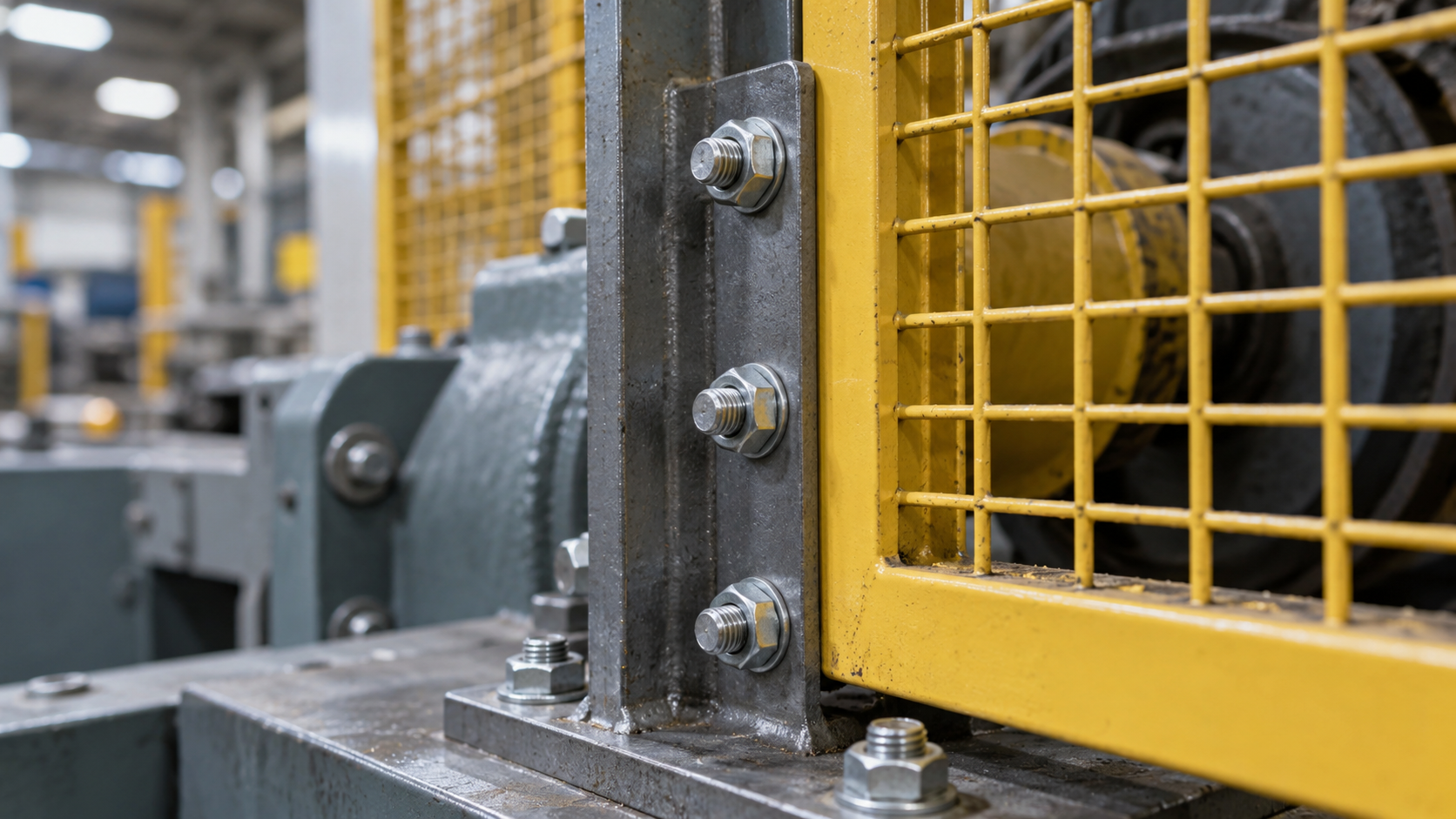
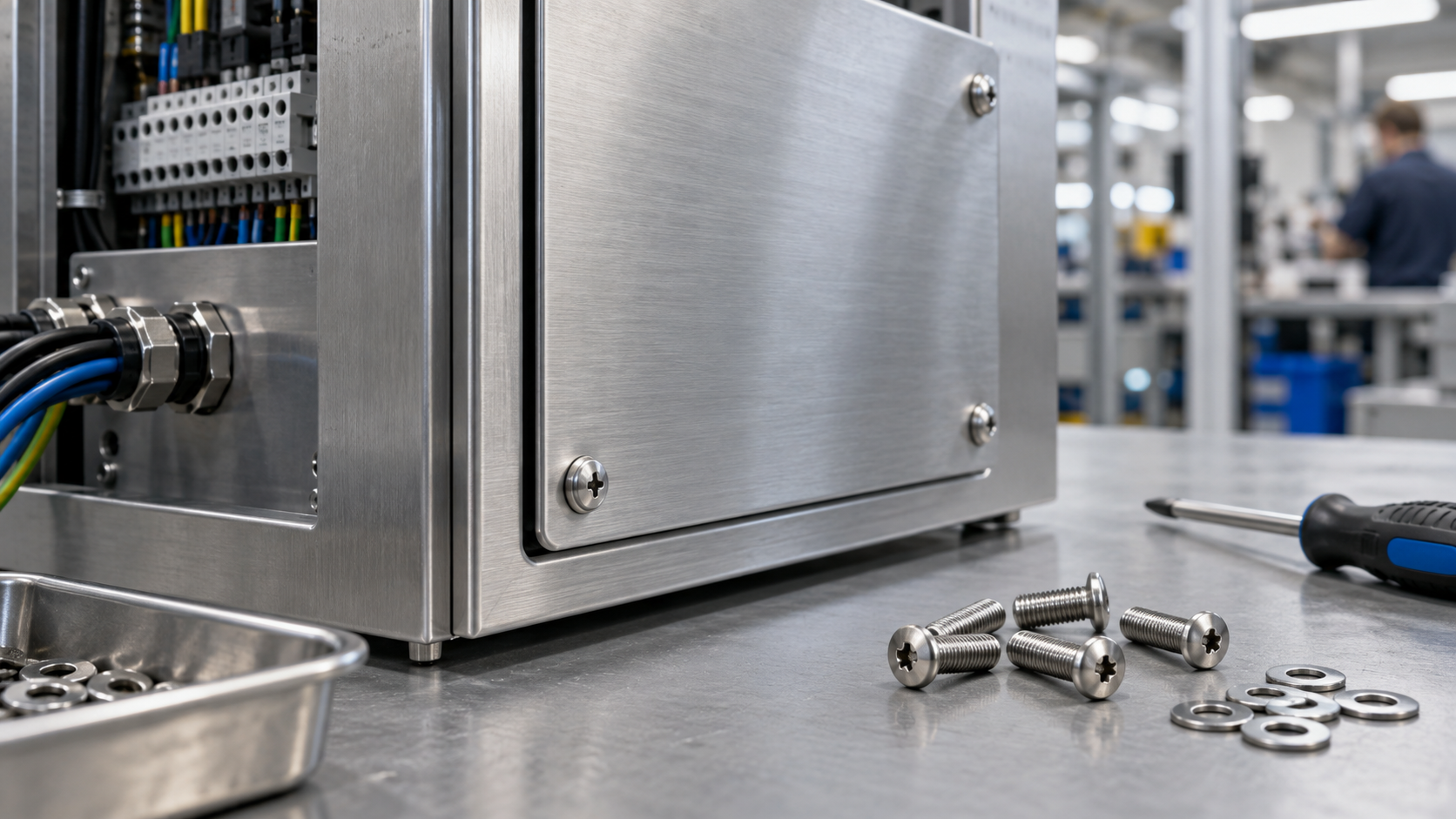
A2 stainless steel is often a practical choice for indoor machinery, electrical enclosures, dry architectural hardware, and outdoor joints that are protected from persistent salt or process contamination. The honest boundary is exposure, not geography: a sheltered coastal cabinet may be less demanding than an indoor plant that uses chlorides every shift. Review wet-dry cycling, deposits, temperature, and cleaning agents before deciding that a lower material tier is sufficient.
Use a test plan that matches the risk. A visual inspection can identify staining or red rust, but it cannot quantify pitting susceptibility. Where the application warrants it, specify a recognized corrosion test such as ASTM G48 or a project-defined cyclic exposure, and record the specimen finish, cleaning, and acceptance criteria. The test result describes that method and specimen; it is not a blanket field-life guarantee.
Why is a4 stainless steel considered for chloride and chemical exposure?
A4 stainless steel is commonly evaluated for marine-adjacent equipment, food and beverage washdown zones, wastewater hardware, and process areas where chloride deposits are credible. It is not automatically immune to corrosion: crevices, stagnant deposits, weld contamination, low-oxygen conditions, and incompatible cleaners can still attack a stainless joint. Specify drainage, cleaning concentration, rinsing, and inspection access alongside the fastener material.
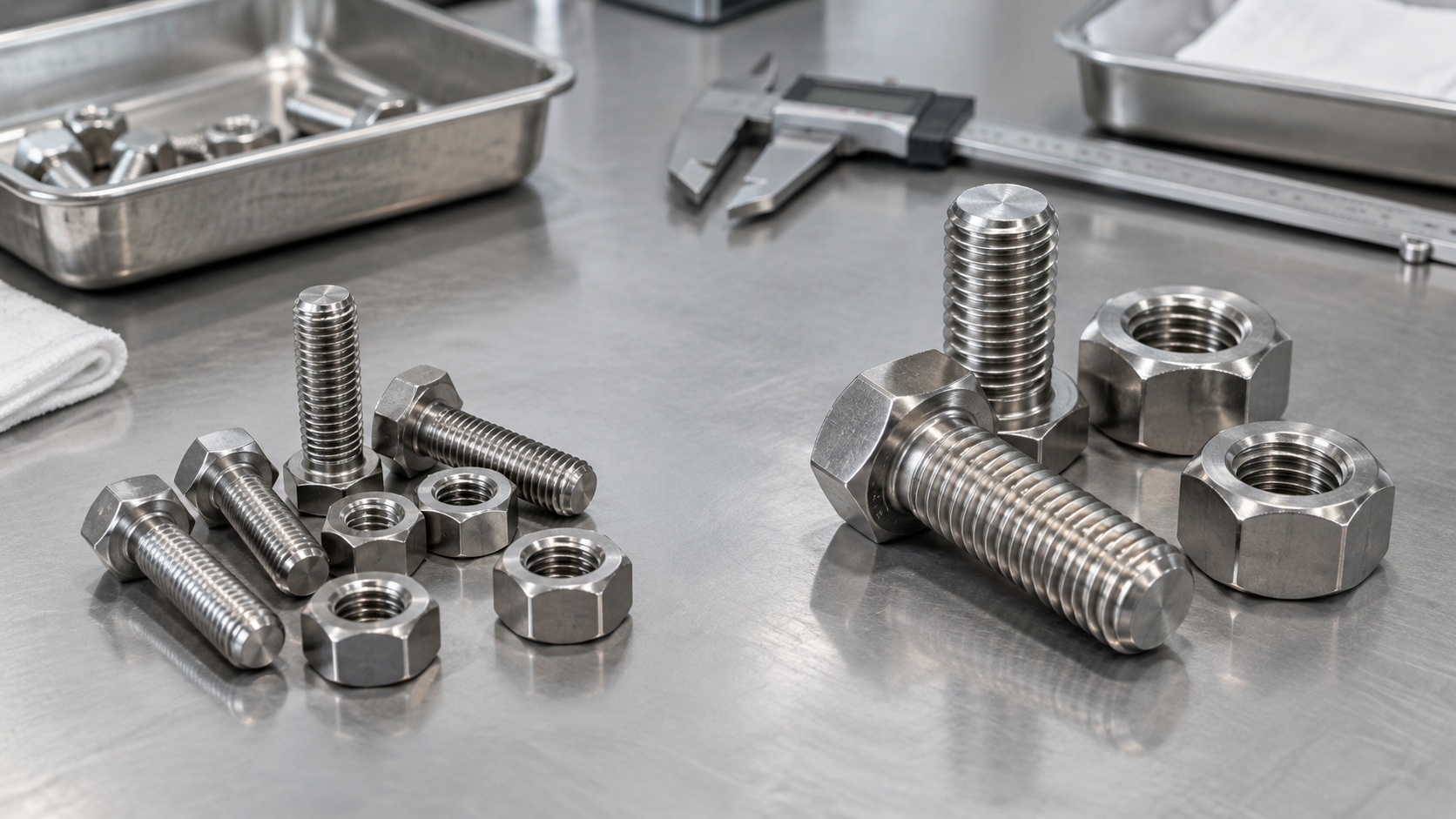
Product form also matters. A4 bolts, nuts, washers, and threaded inserts should be treated as a matched joint, because a carbon-steel washer or zinc-plated mating part can create a galvanic or staining problem even when the bolt is A4. Check the washer diameter, bearing stress on the parent material, and anti-seize or lubricant compatibility. NASA fastener guidance highlights how friction and preload variation affect clamp load; an installer should validate the complete stack rather than infer performance from the material designation alone.
Do not substitute a visual or magnetic check for documentation. Austenitic stainless components may be weakly magnetic after cold working, and a polished surface can hide handling contamination. Require the material designation, lot identification, and any agreed inspection report; use a PMI or laboratory check only when the risk and specification justify it.
Which performance and cost dimensions matter in stainless steel a2 vs a4 decisions?
Unit cost is only one part of the decision. A more corrosion-resistant material can reduce cleaning interruptions, seized-thread extraction, and replacement inventory, while an unnecessary upgrade can add cost without improving the joint. Compare the complete assembly and its maintenance route, and label any internal cost model as illustrative until it is supported by site data.
| Dimension | A2-oriented choice | A4-oriented choice | Decision check |
|---|---|---|---|
| Corrosion exposure | Dry, sheltered, or mildly wet service | Persistent chloride or process-chemical exposure | Map deposits, wet-dry cycles, and cleaner chemistry |
| Mechanical property class | A2-50, A2-70, or another specified class | A4-70, A4-80, or another specified class | Verify EN ISO 3506 requirements for the exact product |
| Efficiency | Often adequate without a material upgrade | May reduce corrosion-related service work | Compare installation and planned maintenance hours |
| Compatibility | Check carbon steel, aluminum, and coatings | Check the whole stainless stack and galvanic couples | Specify washers, inserts, lubricant, and parent metal |
| Unit-cost tendency | Usually lower when the exposure is modest | Often higher, depending on grade and finish | Use supplier quotations; do not assume a fixed premium |
| Maintenance | Inspect staining and thread condition | Inspect deposits, crevices, and galling risk | Set a documented inspection interval and cleaning method |
| Total cost of ownership | Strong when corrosion risk is low and supply is stable | Strong when avoided shutdowns justify the material choice | Include rework, downtime, and replacement stock |
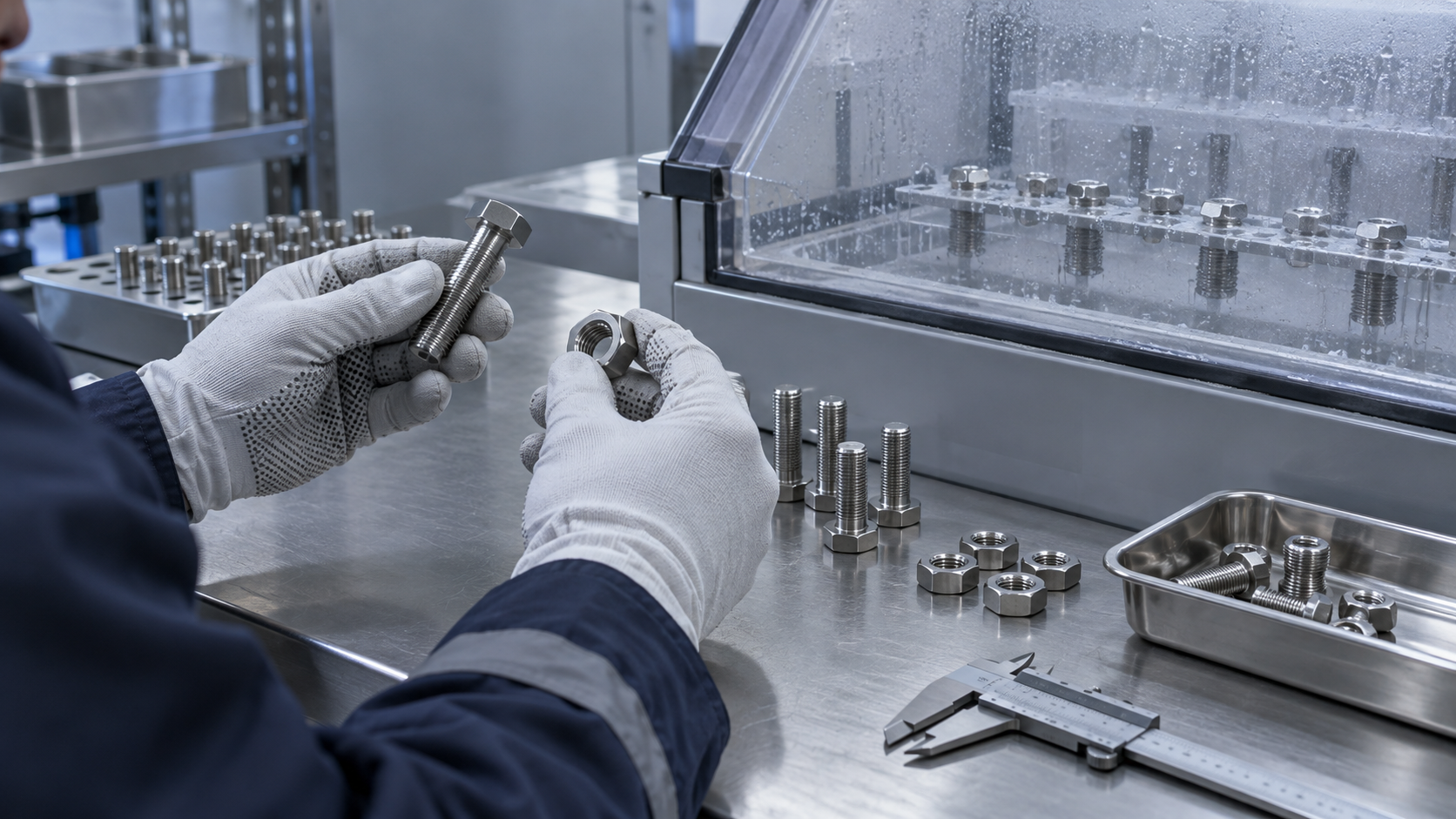 Incoming inspection links the material designation, property class, lot record, and surface condition to the approved drawing.
What is a practical selection workflow for stainless steel a2 vs a4?
- Map the environment: chlorides, chemicals, temperature, wet-dry cycles, deposits, cleaning, and service access.
- Freeze the joint geometry: thread series, nominal size, length, head, washer, engagement, parent metal, and clearance.
- Choose the material family and property class together, then verify the relevant EN ISO 3506 designation and lot documentation.
- Validate the process with a torque-tension check or installation audit that names the lubricant, tooling, and acceptance method.
- Approve supply using a drawing and representative sample; keep an alternate source qualified and document the replacement rule after service.
For buyers comparing configurable dimensions, materials, and documentation, Qiyi Fastener can provide a starting point alongside this stainless steel a2 vs a4 selection discussion. The brand mention is advisory: the engineering decision should remain tied to the joint drawing, exposure review, and evidence requested on the purchase order. When a flange is needed to spread bearing load, review the relevant flange nut options; for nonstandard geometry, compare the custom fastener specification workflow.
Frequently Asked Questions
Which is better, A2 or A4 stainless?
Neither is universally better. A2 can be the proportionate choice for dry or mildly wet service, while A4 is often evaluated when chlorides or process chemicals make corrosion risk more significant. Select by the actual exposure, joint stack, property class, and documentation rather than by the label alone.
What is the difference between A2 and A4?
A2 and A4 are EN/ISO-style stainless fastener material designations, with A4 commonly associated with a molybdenum-bearing austenitic family and A2 with a general-purpose austenitic family. The exact chemistry, property class, finish, and product standard still need to be stated and verified. A visual inspection cannot reliably distinguish them.
What is A4 in stainless steel?
A4 is a designation used for certain corrosion-resistant stainless steel fasteners in the EN/ISO system. It is commonly considered for chloride-bearing or chemically demanding service, but performance depends on the exact grade, surface condition, joint design, and environment. Confirm the applicable EN ISO 3506 documentation and any project test requirement.
What is A2 grade stainless steel?
A2 is a designation used for certain general-purpose corrosion-resistant stainless steel fasteners in the EN/ISO system. It is often suitable for indoor and moderate outdoor assemblies when exposure and cleaning are controlled. Verify the property class, dimensional standard, lot traceability, and compatibility with the mating materials before release.
References
Qiyi Fastener can help turn that decision into a traceable sourcing specification. Contact Qiyi Fastener with the environment, dimensions, and documentation requirements for the next review.