When Elena, a furniture-project engineer in Chicago, encountered a headboard panel that opened during a two-minute shake test, she tightened the machine screw and returned the assembly to the bench. Within seconds, the insert rotated in the plywood and the joint loosened again. The reversal came when her team mapped the hole, flange, thread, and installation path: the fastener was not simply defective; the insert type and seating process were wrong for the panel.
Summary: Use a three-point check before installation: match the insert to the substrate, match the thread to the mating screw, and control the seating method. ISO 898-2 covers mechanical and physical properties for specified property-class steel nuts, but it does not establish corrosion resistance, prevailing-torque behavior, or complete joint performance. The recommended action is to confirm the supplier drawing, run a representative fit and rotation check, and document the approved hole, tool, and inspection limits.
How tee nuts should be installed in wood?
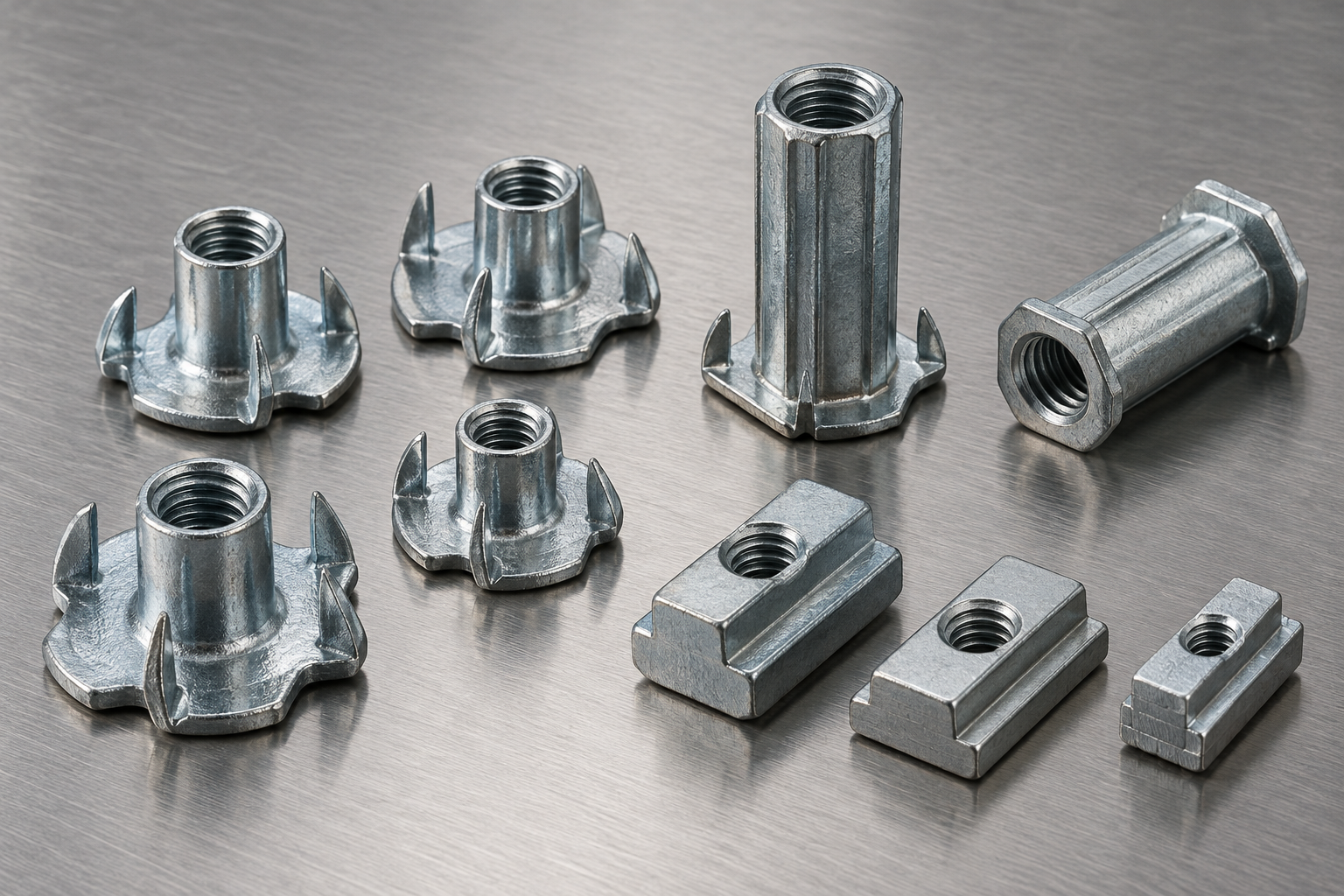
Tee nuts create a removable machine-screw connection in wood, plywood, and other suitable panel materials. A flange or prongs resist rotation while the internal thread receives the screw. The insert does not correct a weak panel or an oversized hole, so installation starts with the substrate and the controlled drawing rather than with the nominal thread alone.
Prepare the hole and support the panel
- Confirm the interface. Check the thread size and pitch, body length, flange diameter, prong geometry, panel thickness, and the supplier’s recommended hole size.
- Drill squarely. Use a sharp tool and a backing surface where possible. Keep the hole perpendicular to the panel face and remove loose chips without enlarging the opening.
- Seat the insert. Support the back face and press the flange squarely with an arbor press or controlled fixture. If impact is permitted, use a centered protective tool and light, even blows.
- Verify the result. Confirm that the flange is seated, the prongs are engaged evenly, and the screw advances without cross-threading or bottoming out.
Pressing is usually easier to repeat than uncontrolled hammering, especially in thin plywood or soft wood. A bent flange can look seated while the insert remains vulnerable to rotation. For production approval, use the actual panel batch, screw, washer if specified, and tightening process; record a pull-out or rotation check as a joint validation rather than treating a catalogue dimension as a complete performance guarantee.
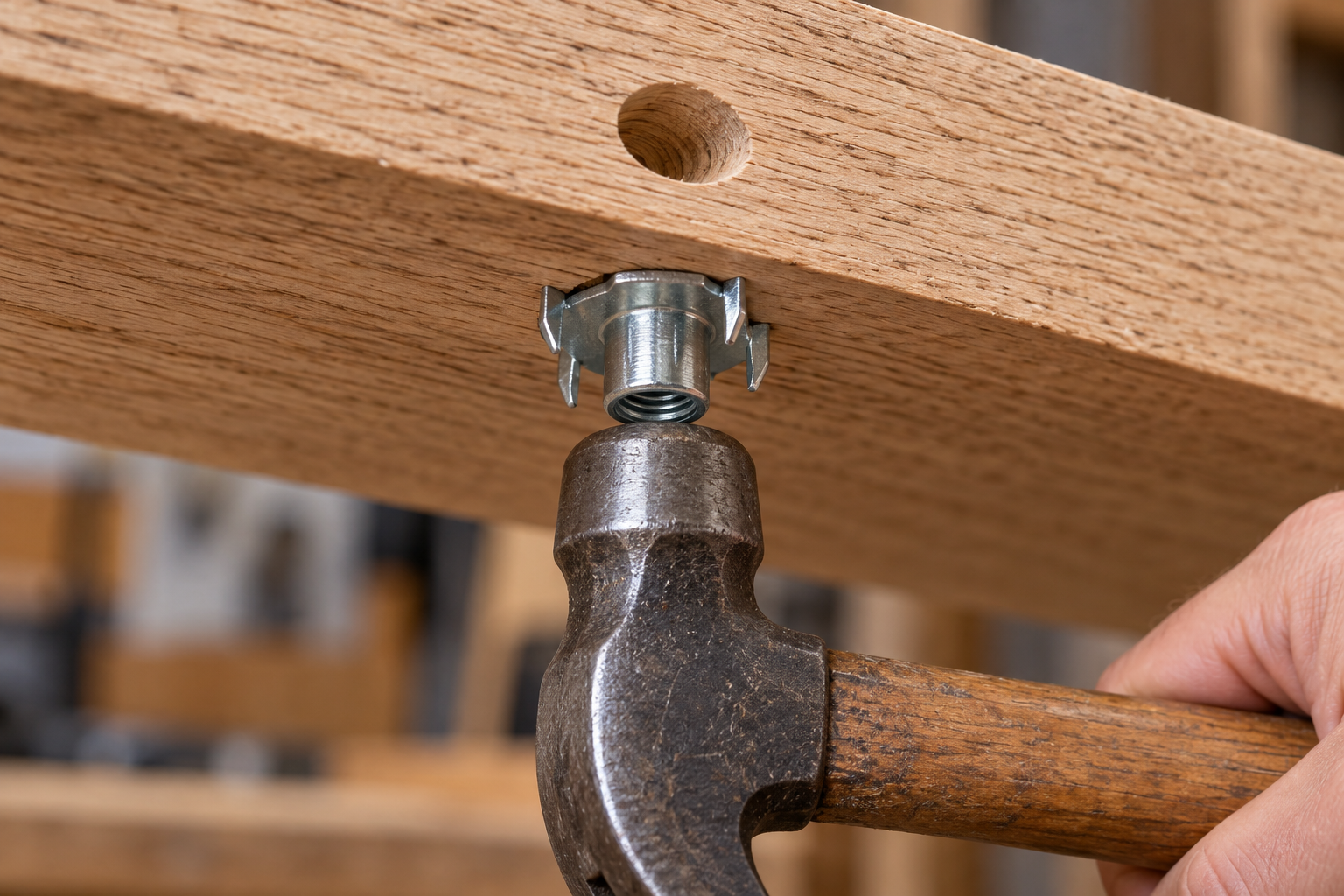
Installation detail: the insert is shown seated flush in the panel, with the prongs engaged evenly and the face supported during installation.
Bossard’s BN 226 product listing illustrates why the product drawing matters: drive-in inserts for wood and plastics are described with a defined steel construction and blue-zinc finish, alongside product data and a drawing. Treat those details as part of the specified product, not as assumptions that apply to every insert sold under the same general name.
How barrel nuts and cross dowels work in a concealed joint?
Barrel nuts are cylindrical threaded components used with a mating screw or bolt, often where the joint needs a concealed or compact connection.Cross dowels are commonly used for a similar furniture-joint concept: a cross-drilled cylindrical nut receives the screw from a perpendicular direction. The body axis, cross-hole position, driver feature, and thread must all align with the panel drilling pattern.
Alignment matters more than the name on the bag
Install the receiving component so its threaded hole faces the screw path before tightening. A simple alignment pin, a temporary screw, or a marked reference face can prevent a hidden nut from turning out of position. Tighten gradually and stop if the screw becomes hard to turn before the clamped faces meet; forcing the fastener can damage the thread, split the panel, or pull a concealed nut out of alignment.
In commercial purchasing, “barrel nut” and “cross dowel” are sometimes used interchangeably, but supplier terminology is not a dimensional standard. Confirm the controlled drawing, thread system, body diameter, body length, cross-hole location, and driver style. ASME B1.1 is useful for Unified Inch Screw Thread designation and compatibility context, but it does not define the full geometry or performance of a furniture joint.
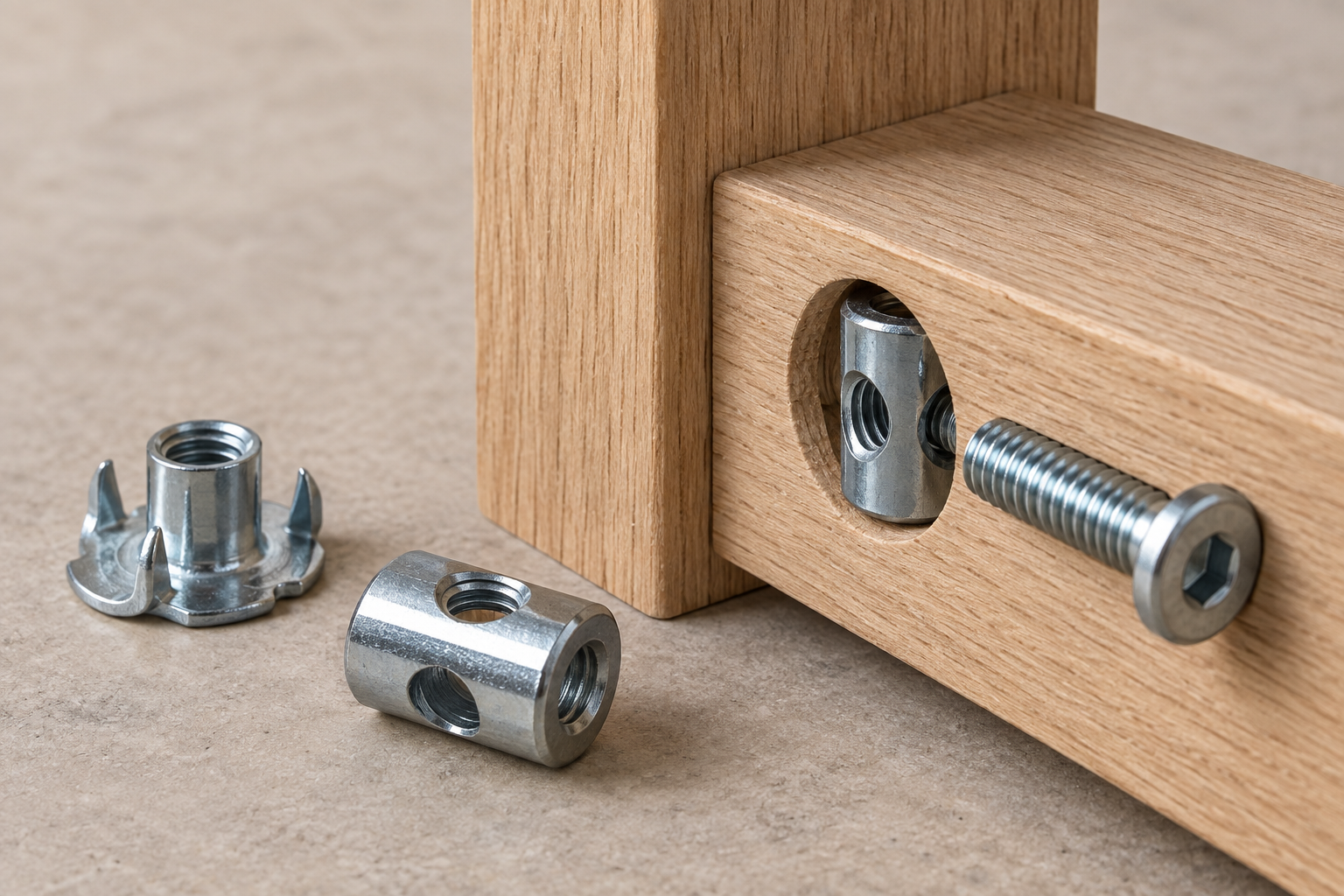
Which tee nuts, barrel nuts, and cross dowels fit each application?
Selection should follow the load path, access direction, substrate, and service plan. A removable wood-panel connection may favor a pronged insert that can be installed from one face, while a concealed furniture joint may favor a cylindrical nut that accepts a screw from the panel edge or a perpendicular bore. In both cases, the joint must be checked as an assembly.
| Approach | Primary function | Installation and service | Compatibility risk | Total-cost consideration |
|---|---|---|---|---|
| Pronged wood insert | Removable machine-screw anchor in a prepared panel hole | Installed from the panel face; serviceable when the substrate remains sound | Hole size, panel thickness, and prong seating must match | Low rework when drilling and pressing are controlled |
| Barrel nut | Concealed cylindrical threaded receiver | Requires alignment with the mating screw; useful in compact assemblies | Body diameter, cross-hole position, and thread must suit the joint | Can reduce visible hardware; misalignment creates assembly labor |
| Cross dowel | Perpendicular concealed receiver for a furniture-style joint | Often installed into a cross-bore and serviced with the mating screw | Drilling angle, bore depth, and driver access are critical | Efficient for repeat panel designs when the drilling jig is stable |
| Flange-style bearing solution | Spreads bearing load at the fastener interface | One-piece geometry can simplify placement, subject to the drawing | Flange diameter and surface contact may not suit a concealed joint | Compare part count, surface coverage, and rework exposure |
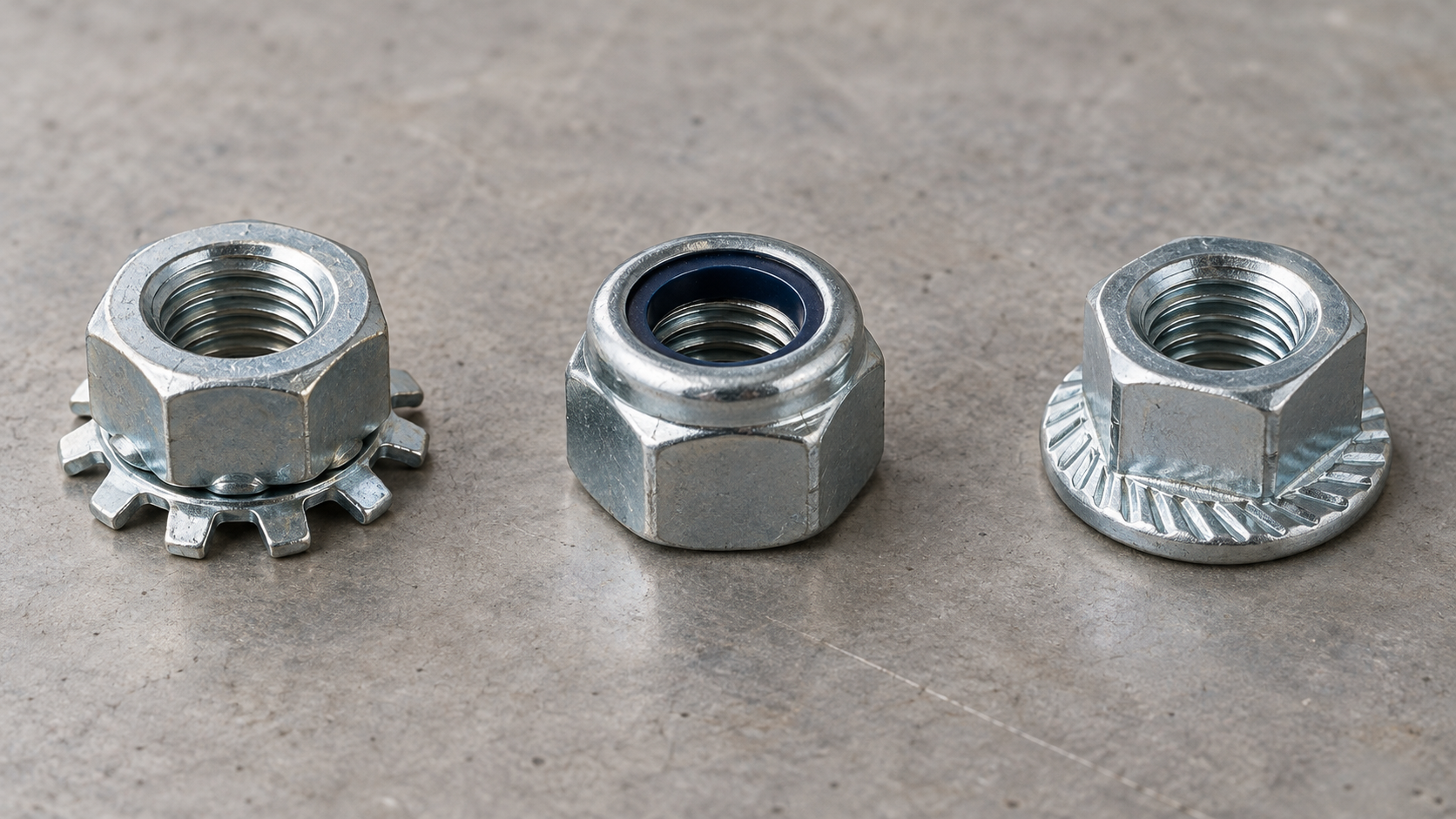
For a related bearing-surface option, compare the specified application with Qiyi’s flange nuts. A flange can spread contact area, but it should not be assumed to provide the same anti-rotation or concealed-joint function as a pronged insert or a cylindrical receiver.
| Application | Dimensions to record | Acceptance question | Useful verification |
|---|---|---|---|
| Wood panel with a pronged insert | Thread, body length, flange diameter, prong height, panel thickness, pilot-hole diameter | Is the flange flush without splitting the panel? | Caliper and hole-gauge check, seating inspection, rotation check |
| Concealed barrel-nut joint | Body diameter, body length, thread, cross-hole position, bore depth | Does the receiver align with the screw through the full joint stack? | Assembly trial, thread engagement check, visual alignment mark |
| Cross-dowel furniture joint | Cross-bore location, nut orientation, screw length, edge distance | Can the screw clamp the panels without bottoming out? | Drilling-jig check, hand-start test, controlled tightening |
| Flange-style alternative | Flange diameter, underside profile, thread, material and finish | Does the bearing surface fit without interfering with adjacent parts? | Stack-up review and representative fit test |
How standards shape tee nuts, barrel nuts, and cross dowels selection?
Standards are useful only when their scope matches the claim. ISO 898-2 addresses mechanical and physical properties for specified property-class steel nuts; it does not cover prevailing-torque behavior, corrosion resistance, or complete joint performance. That distinction matters when a buyer is evaluating a wood insert or concealed receiver, because substrate holding power and drilling accuracy remain assembly-specific.
ISO 6410-2:1993 concerns the technical drawing representation, designation, and dimensioning of screw thread inserts. It can help teams communicate a controlled drawing, but it is not a blanket approval for any insert geometry. ASME B1.1-2024 provides Unified Inch Screw Threads context for designation and compatibility; metric and inch thread systems must not be mixed on the assumption that similar nominal sizes will engage.
Use this selection guide before issuing a purchase order
- Define the joint. State the substrate, load direction, access direction, service environment, removal frequency, and consequence of loosening.
- Control the drawing. Record thread system and pitch, body or flange dimensions, hole locations, material, finish, and permitted tolerances.
- Specify the process. Identify the drill or jig, seating tool, tightening method, inspection points, and whether a pull-out, rotation, or fit check is required.
- Qualify the supplier. Ask for the exact product drawing and applicable material or test evidence. Qiyi’s guide to industrial fastener manufacturers provides useful sourcing context, but the buyer should still approve the part against the controlled requirement.
- Release the replacement rule. Do not substitute thread, finish, body geometry, or installation method without deviation approval and a representative re-test.
When the specification is ready, review Qiyi’s tee nuts and related fastener options against the drawing. The product category is a starting point; the approved interface and validation record are what make the selection repeatable.
Frequemtly Asked Questions
What are tee nuts used for?
Tee nuts are used to create removable threaded attachment points in wood, plywood, and other suitable panel materials. Their flange or prongs help resist rotation while a machine screw is tightened. Confirm the hole, panel thickness, and installation method for the specific design.
How do tee nuts work in wood?
A tee nut sits in a prepared hole, and its prongs or flange engage the surrounding material while the internal thread receives the mating screw. The connection works only when the insert is seated squarely and the substrate can carry the applied load. Validate the actual panel and screw combination before production.
Are barrel nuts and cross dowels the same?
They are often used to describe closely related cylindrical, concealed threaded receivers, but the terms do not guarantee identical dimensions or features. Body size, cross-hole position, drive style, thread, and intended drilling pattern may differ by supplier. Use the controlled drawing and joint layout to confirm interchangeability.
How do you install a cross dowel nut?
Drill the receiving bore and cross-hole to the approved dimensions, insert the nut with its threaded opening aligned to the mating screw, and start the screw by hand before tightening. Keep the panels supported and stop if the screw binds or bottoms out. A trial assembly with the actual jig and hardware is the best check for alignment.
References
- Bossard BN 226 drive-in tee nuts for wood and plastics, including listed material, finish, product data, and drawing context.
- ISO 898-2:2022, mechanical and physical properties for specified property-class steel nuts and its stated exclusions.
- ISO 6410-2:1993, technical drawing representation, designation, and dimensioning of screw thread inserts.
- ASME B1.1-2024, Unified Inch Screw Threads for designation and compatibility context.
The dependable installation is the one whose geometry, process, and evidence are specified together. When a project needs help narrowing thread, panel, concealed-joint, or finish requirements, contact Qiyi Fastener with the controlled drawing and intended use so the sourcing discussion starts with the joint, not only the part name.