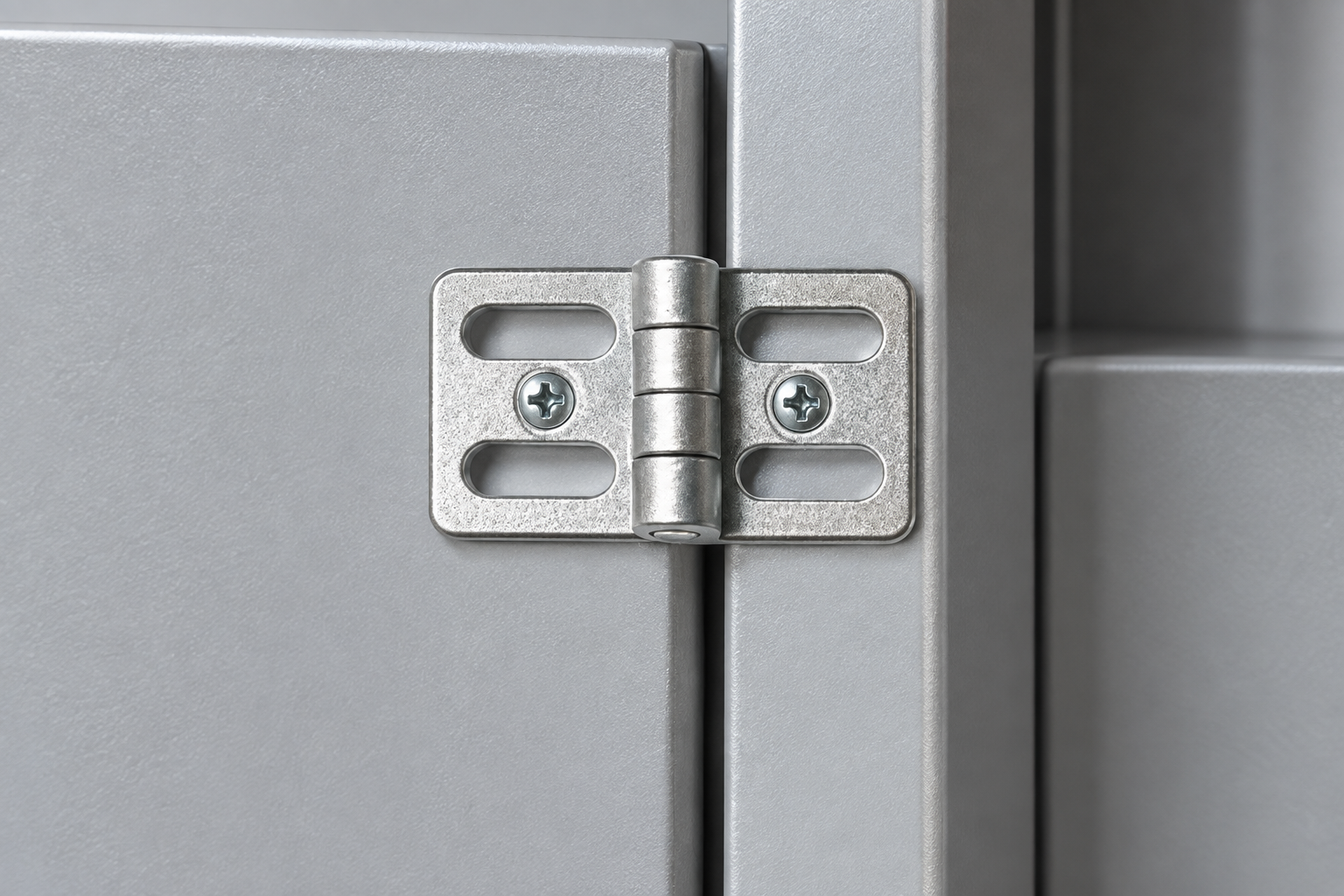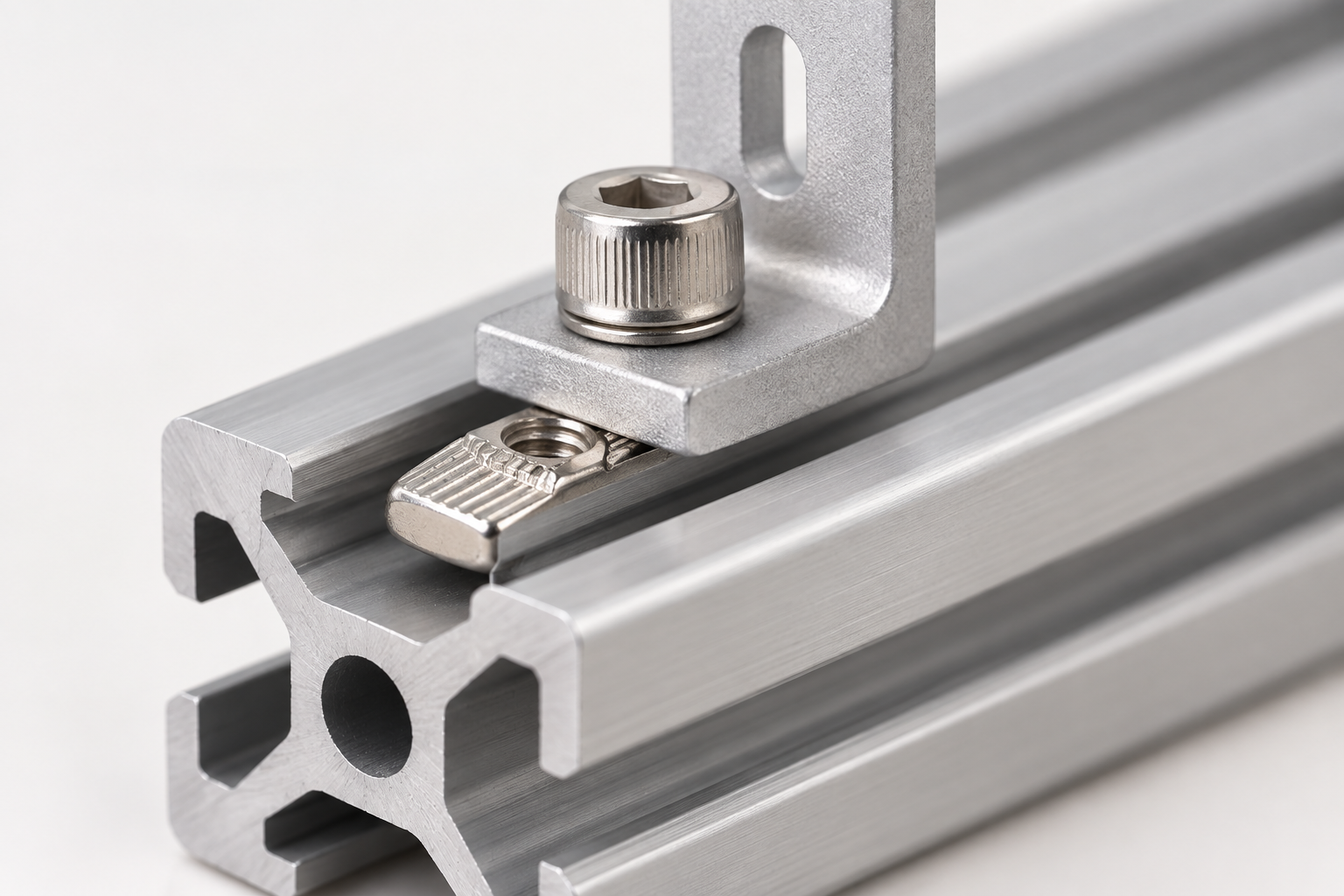
Summary: A lockable hinge should be selected by the motion it must control, not by its label. For an illustrative 18 kg panel whose center of gravity is 0.30 m from the hinge axis, the static gravitational moment is about 53 N.m before dynamic effects or a safety margin. Define the required positions, separate holding from security locking, and validate the chosen mechanism on the complete door assembly.
What does a lockable hinge actually control?
Supplier terminology is not uniform. A catalog may use lockable hinge for a detent that locates a panel at set angles, a friction or constant-torque mechanism that resists motion, a lever-release device, a spring-assisted design, or a pin-and-stop arrangement. These functions solve different problems. A detent provides discrete positions, friction provides resistance across a range, and a positive stop carries motion to a defined limit.
None of those mechanisms automatically provides access control. Security normally depends on a separate latch, lock body, frame, fasteners, and release logic. A position-holding feature also does not make an assembly a fire-door hinge, safety interlock, or certified opening. Specify whether the panel must be held open, prevented from drifting, released by an operator, latched, or access-locked.
The first engineering checkpoint is moment rather than door mass alone. For a horizontal panel, an initial static estimate is mass multiplied by gravitational acceleration and the perpendicular center-of-gravity distance from the hinge axis. The 18 kg example above gives 18 x 9.81 x 0.30 = 52.97 N.m. This is an illustrative calculation, not a product rating; acceleration, vibration, seal force, misuse, hinge sharing, mounting flexibility, and orientation can all change the actual demand.
ANSI/BHMA A156.1 is relevant when butt hinges and project-specified tests are in scope, but it does not certify an unspecified part. Request the test setup, orientation, load point, cycle rate, failure criteria, and post-test inspection. Laboratory fixtures may not reproduce a flexible sheet-metal door.
How do lockable door hinges compare by mechanism?
Mechanism choice begins with how the operator should experience the door. These are relative tendencies, not universal ratings; results depend on geometry, material, size, installation, and test method.
| Mechanism | Position behavior | Best-fit use | Maintenance and durability questions | Unit-cost and TCO tendency |
|---|---|---|---|---|
| Detent | Indexes at one or more defined angles | Access panels needing repeatable service positions | Ask how detent force changes after the stated cycle target and with contamination | Moderate complexity; may reduce separate prop hardware |
| Friction or torque | Resists movement through part or all of the travel | Displays, covers, and panels needing adjustable positioning | Check torque tolerance, temperature drift, wear direction, and adjustment method | Higher than a plain pivot; can reduce operator adjustment time |
| Lever-release | Holds positively until a lever is operated | Service access where deliberate release is acceptable | Evaluate pinch points, release reach, accidental actuation, and debris | More parts and installation steps; clear operation may reduce misuse |
| Pin or stop | Limits travel or holds at a mechanically defined position | Simple fixtures and infrequently repositioned panels | Inspect bearing stress, pin retention, stop impact, and hole elongation | Often economical, but manual handling can add service time |
| Spring-assisted | Offsets part of the panel load or biases travel | Panels needing reduced opening effort or controlled return | Confirm spring travel, fatigue method, stored-energy hazards, and end stops | Higher mechanism cost; may improve handling when correctly matched |
When comparing lockable door hinges, procurement teams should normalize quotations against the same drawing and test plan. Illustratively, 25,000-cycle and 100,000-cycle statements are not comparable unless load, angle, speed, environment, adjustment, and failure criteria are aligned. Set the target from the duty profile, then verify it with a defined procedure such as a project-applicable ANSI/BHMA A156.1 test.
Which application factors change the lockable hinge decision?
Operating context is the second selection dimension. A mechanism stable on a small cover can be difficult to release on a wide panel, while dust or washdown can alter its interfaces. For guards, OSHA 29 CFR 1910.212 informs the system-level review but does not rate the hinge.
| Application context | Primary design inputs | Validation checkpoint | Typical hidden cost if missed |
|---|---|---|---|
| Electrical enclosure | Panel mass, gasket compression, opening angle, conductivity and corrosion needs | Measure clearance, retention, closing alignment, and seal compression after cycling | Water-ingress rework, door twist, and field adjustment |
| Machine guard | Hazard assessment, access frequency, safe release, and separate interlock architecture | Validate the full guarding system under the risk-assessment procedure | Commissioning delay and safety redesign |
| Outdoor cabinet | Temperature range, moisture, contaminants, material pairing, and finish | Use a project-defined exposure and functional inspection protocol | Seizure, corrosion, replacement visits, and damaged coatings |
| Frequently serviced panel | Daily cycles, operator reach, gloves, release force, and pinch clearance | Run representative users through opening, holding, release, and closing states | Longer service time, workarounds, and repetitive adjustments |
| Public-facing door or gate | Accessibility, egress, opening force, clear width, and access-control plan | Review the adopted code and complete opening with the responsible authority | Approval delays and costly hardware substitution |
Total cost includes mounting preparation, adjustment, service labor, downtime, returns, and replacement access. Illustratively, six extra alignment minutes on 300 panels creates 1,800 minutes, or 30 labor hours, before travel or rework. Low unit cost can therefore produce high installed cost when tolerances or adjustment access are poorly controlled.
Which standards may affect lockable door hinges?
Applicability follows the complete opening, destination market, intended use, and claims – not a catalog category. Four sources are particularly useful for scoping questions:
- ANSI/BHMA A156.1: a standard reference for butts and hinges. Confirm the edition, product scope, test conditions, and whether project documents require it; citation alone is not certification.
- NFPA 80: addresses fire doors and other opening protectives. It matters only when the opening is within scope, and the required listed or approved assembly cannot be inferred from a position-holding feature.
- OSHA 29 CFR 1910.212: establishes general U.S. machine-guarding requirements. It is not a hinge certification, and a holding mechanism does not replace risk assessment or a required interlock.
- US Access Board ADA Chapter 4: covers accessible routes, doors, doorways, and gates. Teams must verify adopted requirements and project conditions, including the complete opening rather than one component.
Unsupported words such as “rated,” “fire compliant,” “secure,” or “safety approved” can create bid disputes, rejected submittals, and liability exposure. Procurement records should preserve the drawing revision, supplier evidence, stated test method, exceptions, and the authority’s decision. Where a regulated opening is involved, the responsible designer or authority having jurisdiction should confirm the assembly.
How should a team specify and validate a lockable hinge?
A useful request for quotation begins with nine fields: panel mass, center of gravity, hinge spacing, required positions, applied moment, mounting substrate and interface, cycle target, environment, and any separate latch or access-control need. Also state orientation, envelope, fastener access, acceptable operating force, stop location, and expected misuse. These inputs replace guesswork with documented requirements.
- Define each state. Describe closed, latched, access-locked if applicable, opening, held, released, and fully open conditions.
- Calculate the load path. Record mass, center-of-gravity offset, hinge axis, spacing, stop impact, gasket force, and dynamic effects; label estimates and assumptions.
- Request comparable evidence. Ask for drawings, materials, tolerances, installation guidance, test method, load orientation, cycle conditions, and end-of-test criteria.
- Prototype the complete assembly. Use production-representative substrates and fasteners, then inspect alignment, holding behavior, release force, clearance, wear, and latch engagement before and after cycling.
- Control the approved configuration. Link the chosen part number, drawing revision, mounting instructions, validation record, and any separate safety or security device.
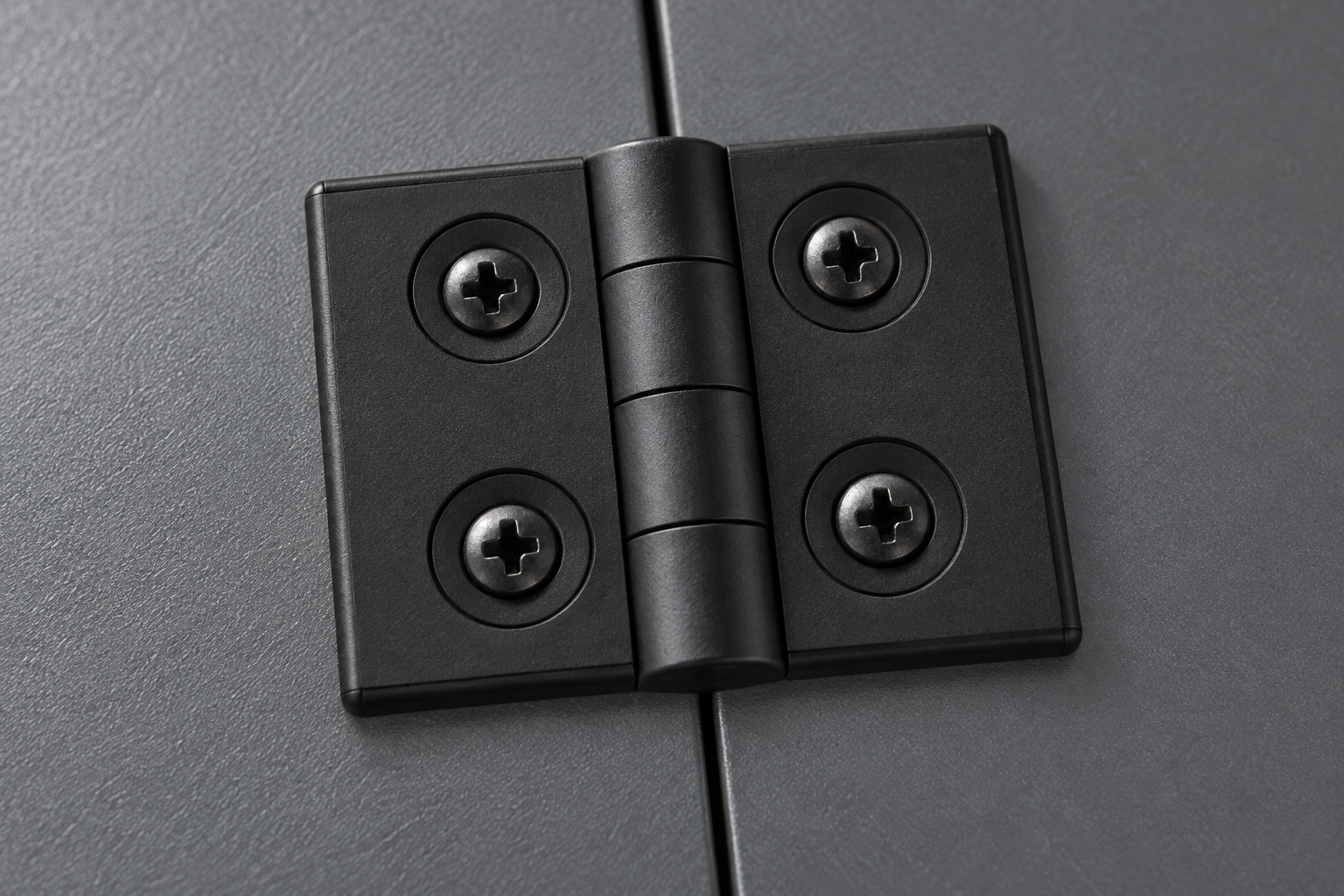
Qiyi Fastener can support a documented sourcing discussion with product dimensions and application information. Its PH plastic hinge family provides useful form-factor references: listed variants include 30 x 30 mm PH-52-30-30 at 26.3 g, 40 x 40 mm PH-60-40-40 at 45 g, and 45 x 45 mm PH-73-45-45 at 52.3 g. The official description positions these plastic hinges for quiet, light- to medium-duty cabinet, enclosure, access-panel, and electrical-box use, with moisture and corrosion resistance and low maintenance; they are plain reference hinges, not claimed here as locking products.
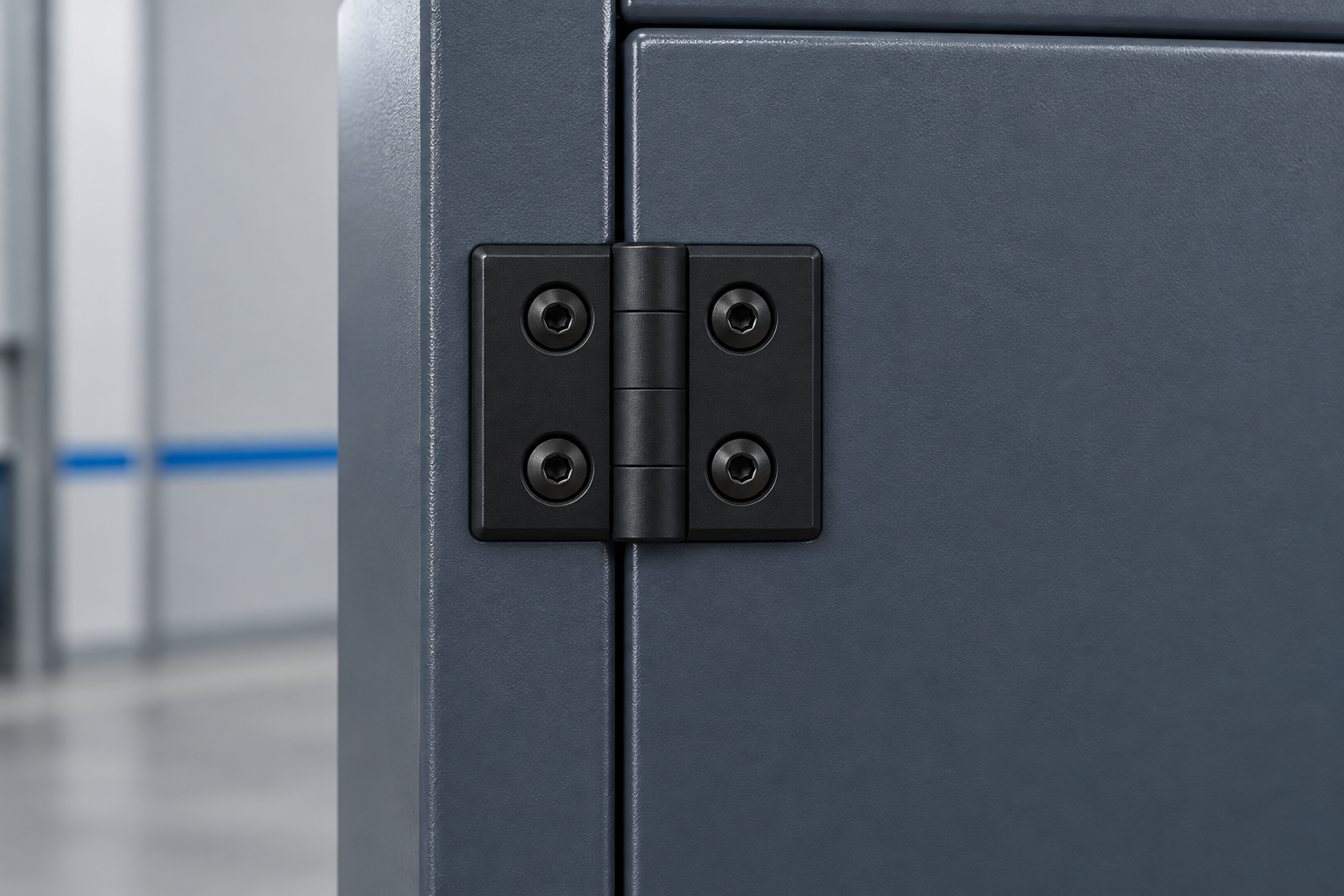
For additional mechanism context, Qiyi’s guide to a lockable hinge can help buyers frame questions, while the broader industrial hardware range can support form-factor comparisons. Neither replaces project-specific validation. Final approval should follow a representative build under the actual load, interface, environment, and operating sequence.
Frequently Asked Questions
Is there such a thing as a locking hinge?
Yes, but the term covers several functions rather than one standardized mechanism. A locking hinge may hold a position with friction, index at detents, stop on a pin, or remain fixed until a lever is released. Buyers should state the required behavior and should not assume that the hinge also provides security access control.
What are common problems with locking hinges?
Common problems include drift, excessive release force, backlash, fastener loosening, mounting distortion, wear, corrosion, and misalignment with the latch. Many arise from an incorrect moment calculation or a flexible substrate rather than from the hinge alone. Testing on the completed door is the most reliable way to expose these interactions.
What is a hinge with a locking lever?
It is generally a hinge or articulated mechanism that holds a defined position until an operator moves a lever to release it. The lever may provide a positive mechanical release, but its exact action varies by design. Clearance, actuation force, pinch points, accidental release, and safe handling should be checked in the installed position.
What are the different types of locking hinges?
Common types include detent, friction or torque, lever-release, spring-assisted, and pin-or-stop designs. Some hold discrete angles, some resist motion continuously, and others provide a positive service position. None should be treated as a security lock or safety interlock unless the complete product and assembly are specifically designed and validated for that role.
References
- Builders Hardware Manufacturers Association, ANSI/BHMA A156.1 – standard scope information for butts and hinges.
- NFPA 80 – fire doors and other opening protectives.
- OSHA 29 CFR 1910.212 – general requirements for machine guarding.
- US Access Board, ADA Chapter 4 – accessible routes, doors, doorways, and gates.
- When the requirement is ready for supplier review, contact Qiyi Fastener with the door drawing, operating states, load geometry, environment, and validation target. The team can then discuss suitable hardware references and the evidence needed for an informed procurement decision.