How to Select Reliable Belleville Washer Suppliers
When a maintenance engineer in Pune encountered repeated joint loosening on a packaging line, she ordered replacement disc springs against the previous purchase description and installed them during a short shutdown. Within days, clamp load became visibly inconsistent and the line needed another intervention. The reversal came when the team compared the drawing, stack arrangement, and material condition: the root cause was an incomplete selection and specification process, not simply a bad product.
Summary: Choosing belleville washer suppliers is a verification exercise: match force and deflection to the actual assembly, define material and environment, and require traceable dimensional and load evidence before release. DIN 2093 is widely used for disc springs of specified geometry and load ranges, but it is not a blanket approval for every application. Start with a controlled drawing and acceptance plan, then compare at least two capable sources on the same technical basis.
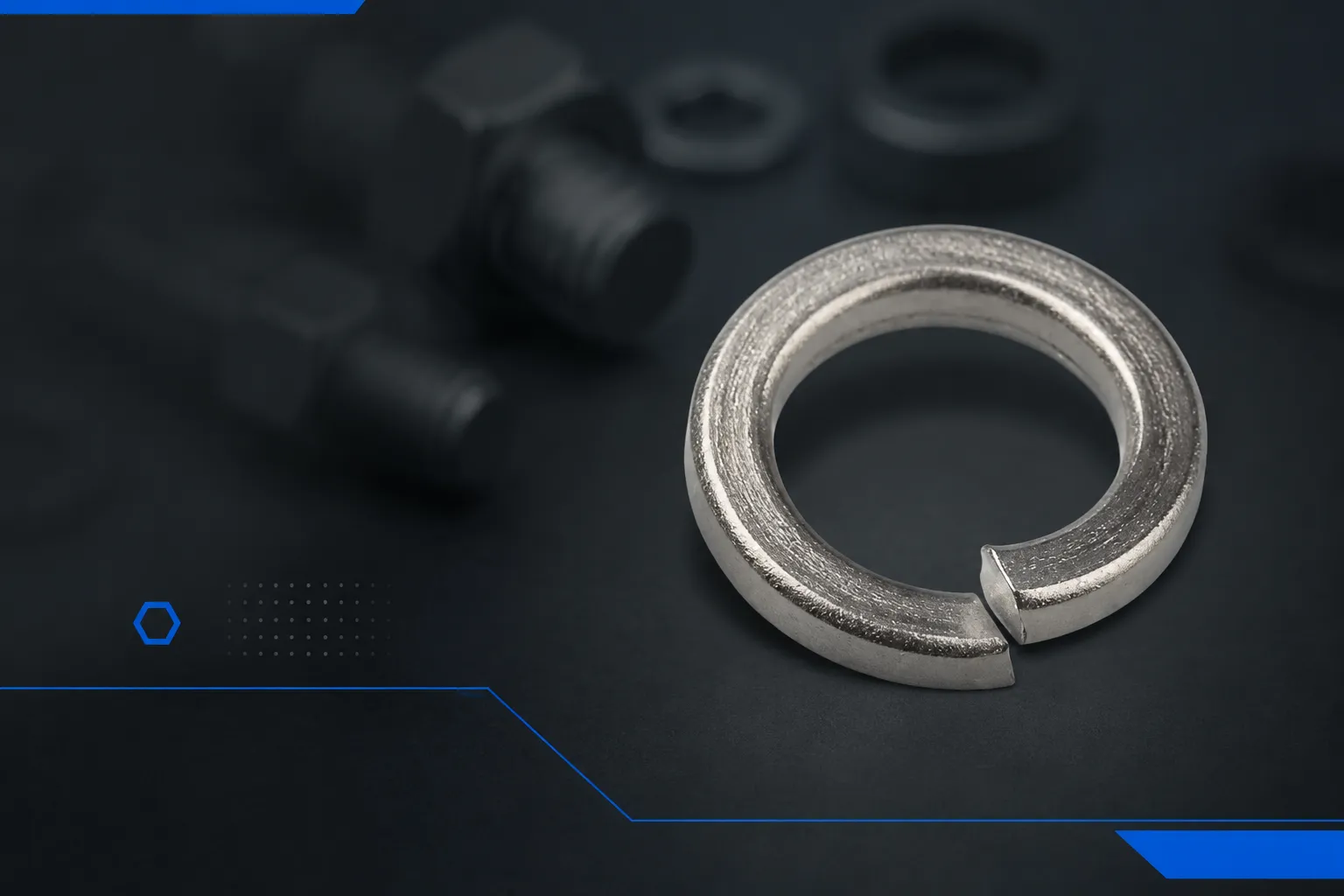
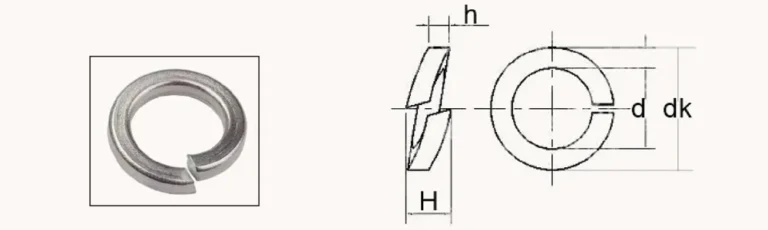
A Belleville washer, also called a disc spring, delivers a high spring force in a short axial space. It can be used singly or in series and parallel stacks to tune travel and force. This makes procurement consequential: a small change in thickness, free height, contact geometry, heat treatment, or stack orientation can change the joint behavior. The practical goal is to choose a belleville washer supplier that can convert the application requirement into a controlled, inspectable part rather than merely match an outside diameter.
Reliable belleville washer suppliers verify engineering inputs before quoting.
Send suppliers a drawing whenever possible, along with the working deflection, target load range, required quantity, mating surfaces, operating temperature, corrosion exposure, and stack arrangement. For a conical disc spring, the force-deflection relationship is nonlinear; the material’s modulus and the ratio of free cone height to thickness both matter. The Schnorr disc-spring technical overview explains why series stacking increases available travel while parallel stacking increases force capacity.
Ask each candidate to identify the revision being quoted and any assumption it made. A capable belleville washer supplier should distinguish a standard geometry from a custom design, flag an impractical load point, and state whether the requested deflection approaches a stress-sensitive range. For fatigue-critical assemblies, request a defined load test at stated heights and agree on sampling before production; this is more useful than an unqualified statement that a part is “heavy duty.”

Start with the application window, not the catalogue line.
Define the installed height and the allowable travel, then calculate or validate the operating force window at those points. Catalogue data can be a starting point, but the buyer should also state if the spring is being used for bolt preload retention, vibration compensation, a valve mechanism, or another function. The NASA Fastener Design Manual is useful for a first orientation to fastener-joint behavior; final selection still needs the supplier’s documented assumptions.
A capable belleville washer supplier controls material, geometry, and inspection.
Material selection is tied to temperature, corrosion, magnetic requirements, and fatigue duty. Carbon or alloy spring steel may suit dry, controlled environments when the specified protection is appropriate; stainless options may be considered where corrosion resistance is needed, but their mechanical behavior and temperature limits must be reviewed for the grade and condition. Do not treat a material family name as a full specification: require the agreed grade, condition, finish, and any coating or passivation requirement on the purchase document.
Geometry deserves equal attention. Outside and inside diameter affect fit and bearing surfaces, while thickness, free height, and edge/contact details influence the load curve. DIN 2093 provides dimensional and quality requirements for specified disc springs; suppliers should clarify whether a quoted item conforms to that standard’s applicable size and series provisions or is simply similar in form. A drawing review and dimensional inspection report are meaningful evidence; a standard reference alone is not a product certification.
| Technical dimension | What to ask for | Why it matters |
|---|---|---|
| Load at stated height | Nominal value, tolerance, and test height | Confirms usable force rather than an ambiguous maximum. |
| Free height and thickness | Drawing values and inspection method | These inputs strongly affect the force curve. |
| Material and condition | Grade, heat-treatment condition, and finish | Supports suitability for environment and duty cycle. |
| Traceability | Lot identification and supplied records | Enables containment if incoming checks find a deviation. |
| Stack configuration | Orientation sketch and quantity per stack | Prevents an assembly from delivering the wrong force or travel. |
Comparing belleville washer suppliers reveals total-cost differences.
A low unit quotation can conceal engineering time, incoming-inspection burden, unplanned line stops, and rework risk. Compare the same drawing, delivery basis, and document package, then evaluate which source reduces uncertainty before the parts reach assembly. The following comparison is qualitative; it is not a price or performance guarantee.
| Selection route | Typical strength | Common risk to check | Total-cost implication |
|---|---|---|---|
| Catalogue-only purchase | Fast for established, noncritical sizes | Application assumptions may be unstated | Can be efficient when the design and acceptance criteria are already fixed. |
| Drawing-based specialist source | Closer review of geometry and load points | Lead time for samples or validation | Often lowers change-control and inspection uncertainty for engineered assemblies. |
| Custom development source | Can address constrained envelope or unusual duty | Specification drift if requirements are incomplete | Initial validation effort may be justified when a mismatch would disrupt production. |
For example, an illustrative sourcing comparison can include the unit price plus incoming sampling time, cost of expedited replacement, and expected rework exposure. Keep the calculation transparent and vary the assumptions for annual volume and failure consequence; it should support a decision, not create a false precision. This is where belleville washer suppliers with clear technical communication may offer value even when their initial quotation is not the lowest.
The right belleville washer supplier supports a controlled approval process.
Use a short approval workflow: first, freeze the drawing and application conditions; second, request a technical review and sample plan; third, verify critical dimensions and load at agreed heights; fourth, record the approved stack orientation, lot identification, and incoming criteria. For a repeat programme, agree which changes require notice, such as material source, coating, tooling, or heat-treatment route. A qualified belleville washer supplier should be able to support each control with a clear response. These controls give procurement, engineering, and quality teams a common basis for release.
QIYI Fastener can be considered during that review when your team needs a responsive source for disc-spring and fastener requirements. Its guide to choosing manufacturers for custom Belleville washers is a useful internal starting point; the final part selection should always remain tied to your drawing, operating conditions, and validation plan.

How do I compare belleville washer suppliers for a new project?
Issue one controlled request package to every candidate, including drawing revision, target force at defined height, environment, quantity, and required documents. Compare answers for assumptions and testability as well as commercial terms. If answers use different material conditions or stack interpretations, normalize them before awarding.
What documents should a belleville washer supplier provide?
The documents depend on the contract and application, but a drawing confirmation, material declaration where requested, dimensional results, and load-test record at agreed test heights are common practical controls. Confirm format, lot linkage, and acceptance limits before the order. Avoid demanding records that cannot be meaningfully tied to the supplied production lot.
Are DIN 2093 disc springs suitable for every bolted joint?
No. DIN 2093 concerns defined disc-spring dimensions and technical requirements; joint design must still account for bolt, clamped materials, seating losses, temperature, and required preload. A spring’s nominal load does not independently prove the complete joint will maintain clamp force. Validate the spring in the assembly’s real operating window.
When should I use a custom Belleville washer instead of a standard size?
Consider a custom design when the required force, travel, envelope, material, or contact surfaces cannot be met responsibly by a standard geometry. Custom work should begin with measurable application inputs and an agreed validation plan. A specialist belleville washer supplier can then explain the design trade-offs rather than substituting the nearest catalogue part.
Qualified belleville washer suppliers make sourcing more predictable.
Before approving a source, confirm the selected geometry against the stated load point, verify material suitability for the environment, and make inspection evidence part of the order. The Schnorr standard disc-spring page provides a useful reference when reviewing standard series, while the belleville washer supplier remains accountable for the agreed product specification.
References
- Schnorr Group — Standard Disc Springs
- Schnorr Group — Disc Springs: expertise and technology
- NASA — Fastener Design Manual
The dependable choice is the one whose force, fit, and evidence all survive the same review. When you are ready to compare specifications, explore QIYI Fastener’s belleville washer suppliers product/category options and contact the team with your drawing and application details.