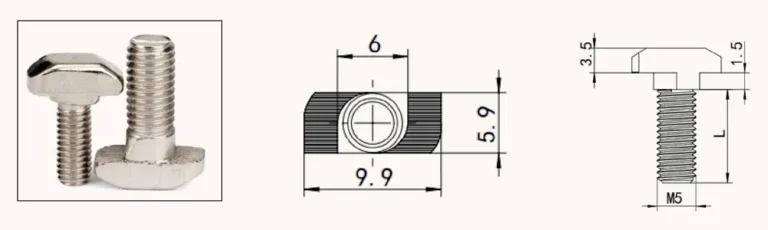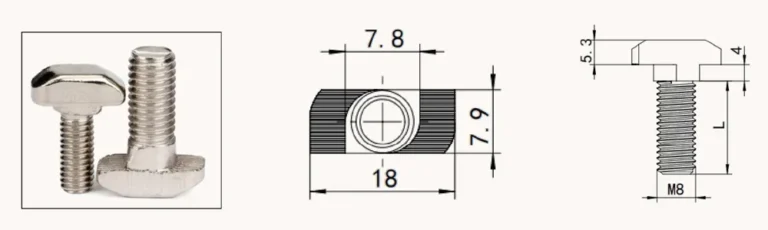
T-bolt vs hammer nut is a procurement and assembly decision, not a product-name shortcut. Industrial buyers should keep the profile interface, mating hardware, access sequence, and approved drawing together when defining a fastener line item.
Direct answer
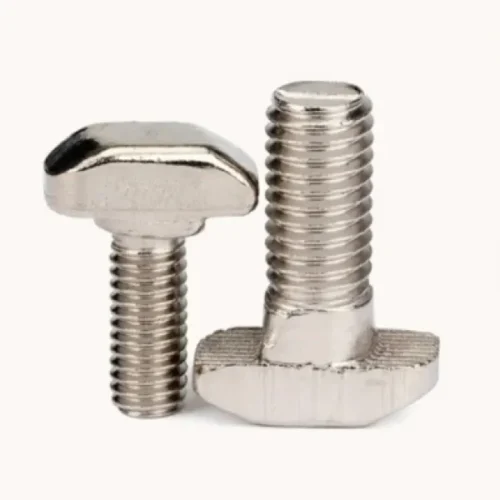
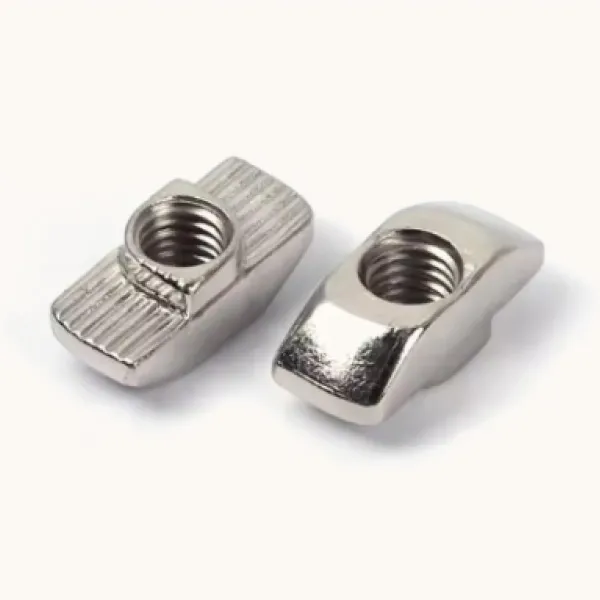
Use a T-bolt or a hammer nut according to the approved joint architecture, not as direct substitutes. A T-bolt is evaluated with its mating nut or threaded feature, while a hammer nut is evaluated with its mating screw or bolt and its in-slot installation method. The profile interface, access direction, and drawing determine which assembly is appropriate.
Decision table
| Decision point | T-bolt review | Hammer-nut review |
|---|---|---|
| Mating hardware | Confirm the nut or threaded feature and full stack-up | Confirm the mating screw or bolt and thread |
| Installation method | Confirm head/interface placement from the joint drawing | Confirm insertion, rotation/capture method, and slot access |
| Frame state | Check whether the joint can be assembled in the planned sequence | Check whether the nut can be inserted and positioned at that stage |
| Purchase definition | State head/interface, thread, and mating hardware | State nut family, thread, slot/profile interface, and mating hardware |
How to review the joint before ordering
- Identify whether the controlled joint calls for a male T-bolt assembly or a nut-in-slot assembly.
- Check the exact profile interface and the permitted installation direction.
- Match the selected item to its actual mating hardware and bracket geometry.
- Review frame-closure timing, later adjustment, and tool access at the joint location.
- Keep the product family and full joint stack-up together in the RFQ and BOM.
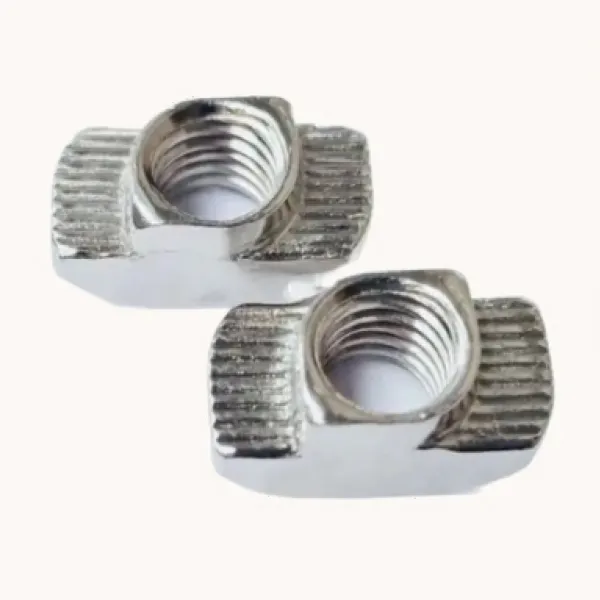
Use the QIYI hammer nut product page to identify the relevant product family and use the QIYI products overview when the assembly uses more than one fastening method. Product imagery and family names are useful starting points, but the approved drawing and BOM control the purchase definition.
RFQ checklist
| Include with the RFQ | Reason |
|---|---|
| Controlled frame or joint drawing | Shows the actual interface, location, and assembly orientation. |
| Product family and mating hardware | Connects the requested fastener to the complete joint. |
| Thread and interface details | Allows the requested configuration to be checked against the drawing. |
| Material or finish note, if specified | Keeps the quotation aligned with the current BOM. |
| Quantity, destination, and revision | Makes the commercial request traceable. |
Fit boundary
This guide is a selection and RFQ aid. It does not establish load capacity, torque, vibration behavior, corrosion life, certification, material grade, or cross-brand compatibility. Final design, component selection, and joint acceptance remain subject to the approved drawing, project requirements, and confirmation for the exact part.
FAQs
Can a hammer nut replace a T-bolt because both work with aluminum profiles?
No. They use different mating-hardware and installation arrangements; substitution requires confirmation against the controlled joint design.
Does a hammer nut comparison also cover slide-in T-nuts?
No. Slide-in T-nuts are a separate family with their own insertion and positioning behavior.
What should buyers send for a joint comparison?
Send the joint drawing, profile/interface details, mating hardware, access constraints, quantities, and revision.
Request a QIYI review
For a quotation or product-family review, send QIYI the drawing, complete joint stack-up, quantities, and current revision. Clear RFQ inputs help prevent avoidable clarification before procurement.