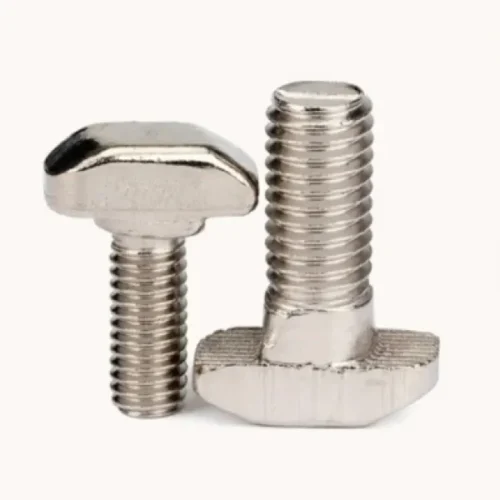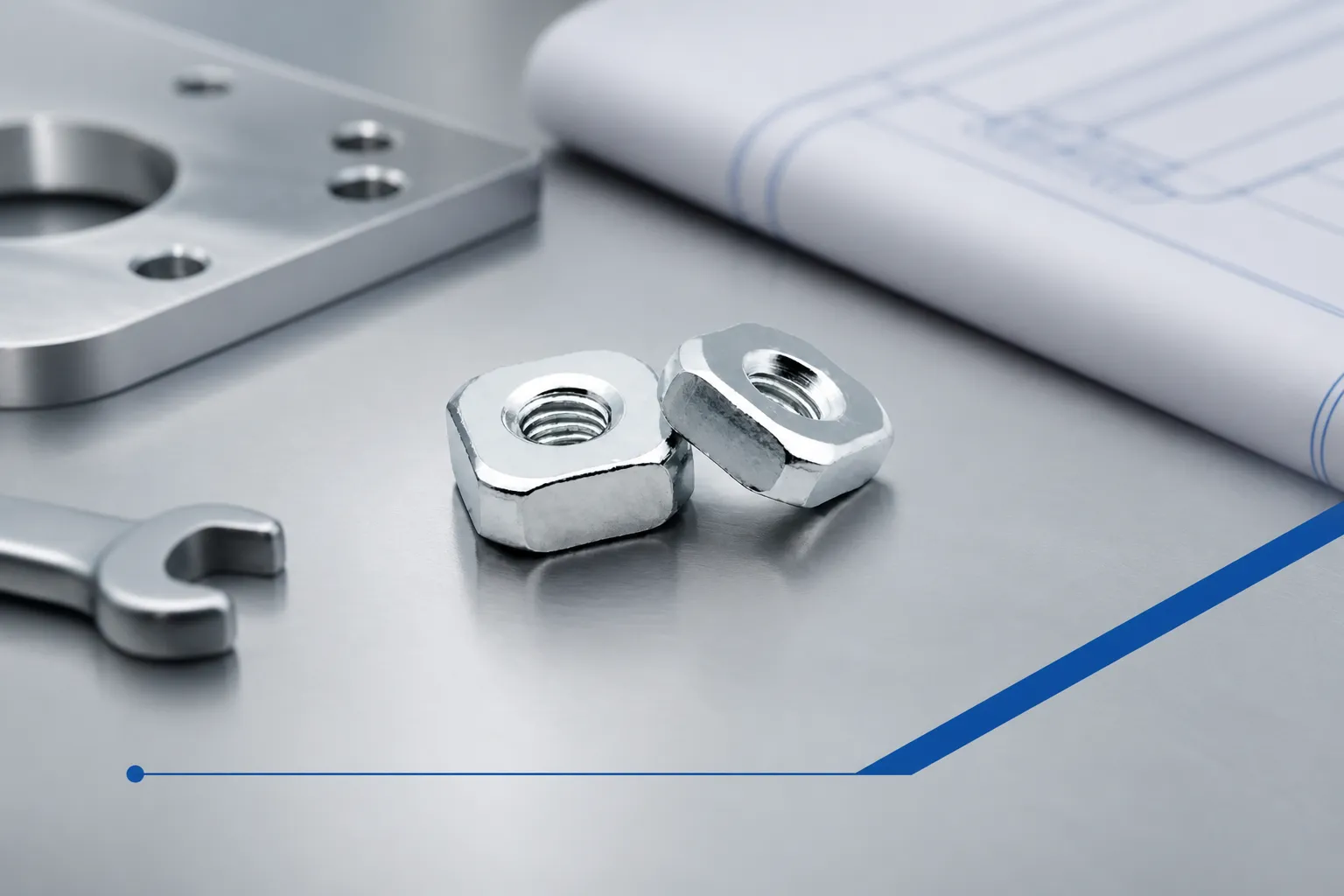
M6 T nuts are among the most common requests in aluminum profile assemblies, but thread size alone does not define a usable T-slot nut. Buyers selecting M4, M5, M6, or M8 T-slot nuts still need to confirm slot width, nut family, material, and installation access before releasing a purchase order.
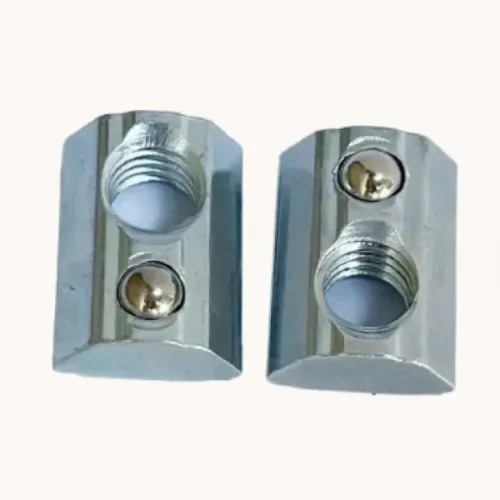
Part 1. Why is thread size not enough?
A T-slot nut must fit the profile slot, stay positioned during assembly, and accept the mating bolt or screw. Thread size is only one line on that checklist.
| Input | Why it matters |
|---|---|
| Thread designation | Defines the mating fastener |
| Slot width / nut body | Determines whether the nut fits the profile |
| Nut family | Affects insertion method and repositioning |
| Material and finish | Supports the intended environment |
| Access direction | Confirms the nut can be installed where needed |
If the frame drawing only says “M6 T nut,” engineering should still identify the slot series, nut type, and installation sequence before procurement releases the line item.
Part 2. How do M4, M5, M6, and M8 differ in practice?
| Thread | Typical use in profile assemblies | Review caution |
|---|---|---|
| M4 | Light brackets, small panels, compact fixtures | Verify head clearance and engagement length |
| M5 | Common size on smaller modular frames | Do not assume every profile series uses M5 by default |
| M6 | Widely requested on workstations and guards | Confirm slot width and nut family, not only the thread |
| M8 | Heavier brackets and larger connection plates | Check bearing area, access, and thread engagement |
These are selection starting points, not universal rules. The controlled drawing should define the exact callout for each location on the frame.
Part 3. Which T-slot nut family fits the assembly?
| Nut family | Useful when | Review link |
|---|---|---|
| Spring ball T-nut | Repositioning or drop-in installation is needed | T-nut with spring ball |
| Spring leaf T-nut | Spring-loaded retention in the slot is preferred | T-nut with spring leaf |
| Hammer nut | Nut is inserted and rotated into capture | hammer nut matching guide |
| Sliding nut | Hardware must move along an existing slot | sliding nut product page |

For a deeper comparison of the two spring-loaded families, review spring ball vs spring leaf T-nuts for aluminum profiles.
Part 4. What else must match the drawing?
Confirm these items on every line item, not only on the first bracket in the BOM:
- Profile series or slot width
- Thread size and required engagement
- Nut family and model code if already approved
- Material and finish requirement
- Quantity by location and revision number
A common procurement mistake is to quote “M6 T nuts” without identifying whether the project needs spring ball, spring leaf, hammer, or sliding hardware.
Part 5. What belongs on the RFQ?
| RFQ field | Example of useful detail |
|---|---|
| Thread size | M4, M5, M6, or M8 |
| Nut family | Spring ball, spring leaf, hammer, or sliding |
| Profile / slot information | Series name or slot width from the drawing |
| Material / finish | Carbon steel, stainless, zinc, nickel, etc. |
| Model code | Supplier model or internal part number |
| Quantity breaks | By frame, project phase, or spare-part need |
Include the assembly revision so the supplier can confirm whether the requested size changed between prototype and production.
Part 6. Fit Boundary
This guide does not prove that every M4, M5, M6, or M8 T-slot nut fits every aluminum profile. It also does not publish torque values, load ratings, or compliance with customer standards.
Do not mix thread sizes in one joint unless the drawing explicitly allows it. Do not substitute nut families without an engineering review of access, retention, and clamp requirements.
Part 7. Product recommendation and next step
Start with the T-nut with spring leaf product page when spring-loaded retention is part of the specification, or compare the T-nut with spring ball range if repositioning matters. Send the drawing details through the contact form for a quotation.

FAQs
Can I choose T-slot nuts by thread size alone?
No. Slot width, nut family, material, and access direction must also be confirmed.
Is M6 the default for profile frames?
M6 is commonly requested, but the drawing should define the callout for each joint.
What is the difference between spring ball and spring leaf T-nuts?
They use different retention mechanisms and installation behavior. Compare both against the assembly requirement.
When should I use a hammer nut instead?
Use a hammer nut when the assembly method relies on insertion and rotation into the slot rather than spring-loaded drop-in retention.
Do metric thread sizes mix in one frame?
Only when the approved drawing allows different callouts by location.
What should I send with an M6 T-nut RFQ?
Send thread size, nut family, slot width, material, model code if known, quantities, and drawing revision.