Knowing what size of a fastener you need is essential no matter what project you are working on. Whether it’s a do-it-yourself home improvement project, assembling furniture, or managing large-scale industrial projects, selecting the wrong fastener size can lead to structural weaknesses, failed connections, and wasted time and money fixing avoidable issues. This guide will provide the tools needed to correctly determine fastener sizes by exploring key aspects and answering frequently asked questions such as “What do M8, M10, M12 mean?” or “How do I measure the diameter and length of a bolt?”
Basic Information About Fastener Sizes
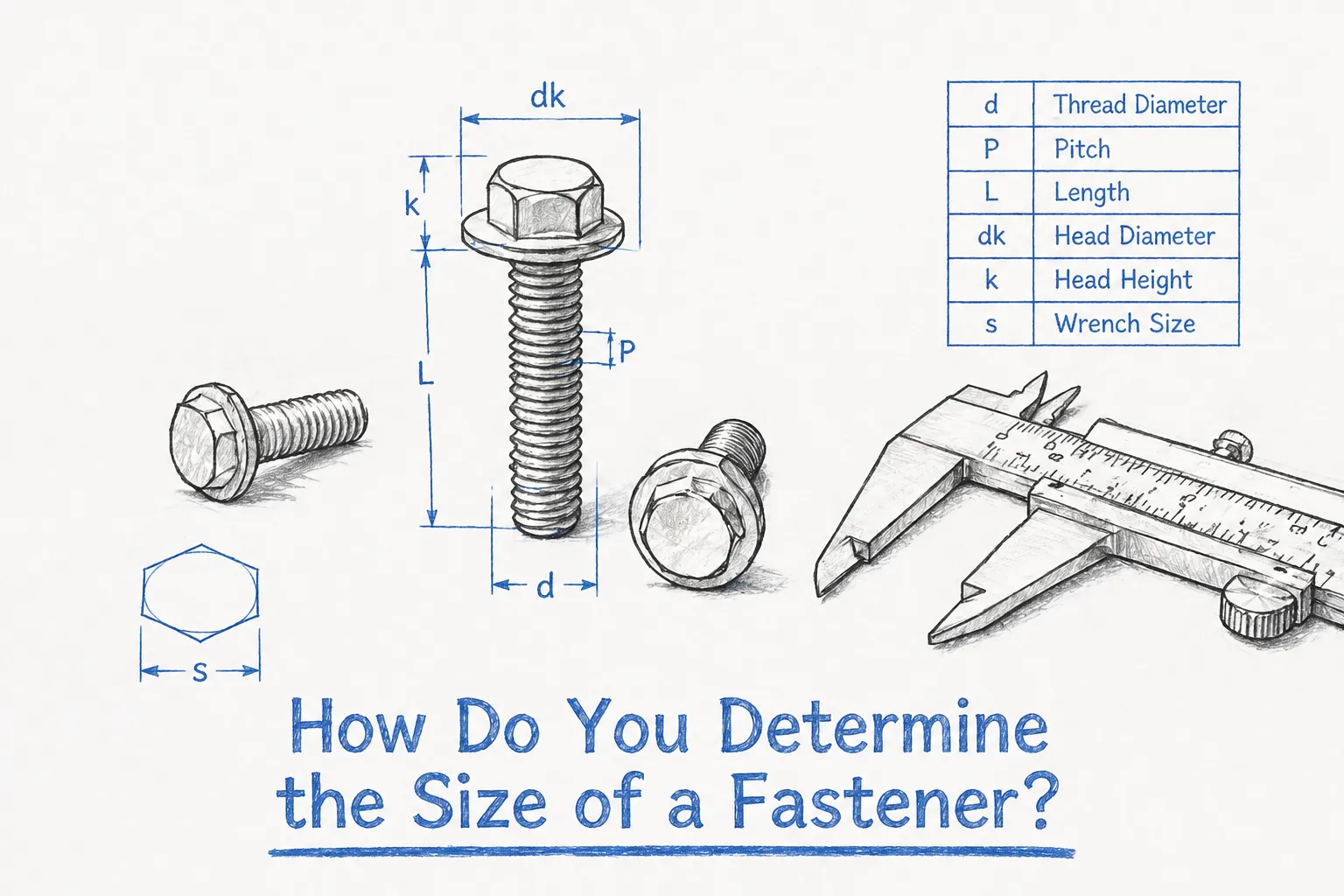
Fastener components normally include several important dimensions: diameter, length, and thread pitch. Thread pitch refers to the distance between threads and is typically measured in metric units.
In the metric system, fasteners are labeled with an “M” followed by a number (e.g., M8, M10). Here is what these labels mean:
M8, M10, M12:
- M8: The “M” indicates a metric fastener, and the number represents its nominal diameter in millimeters. For example, M8 means it has an 8mm diameter.
- M10: Similar to M8, M10 has a diameter of 10mm. Commonly used in construction and fabrication projects, it offers a balance of strength and size.
- M12: Refers to a 12mm diameter, often suitable for heavy-duty applications.
You may also encounter notations like “M8 x 1.25 x 50.” This means:
- The diameter is 8mm.
- The thread pitch (distance between threads) is 1.25mm.
- The length of the bolt is 50mm, measured from the tip of the threads to the base of the bolt head.
How to Measure Bolt Diameter and Length
If you’re uncertain about the size of your fastener, measuring it is the first step. Here’s how you can measure:
To Measure Diameter: Use a caliper or ruler to measure the outer diameter of the screw threads. This is the widest part of the fastener.
To Measure Length: For flat-headed fasteners, measure the length from the flat surface of the head to the tip of the threads. For rounded or countersunk heads, the entire length, including the head, should be measured.
Choosing the Right Size of Fasteners
The size of the fastener you select will depend on several factors, including the materials being joined, the application, and the load it will bear. Follow these steps to choose the correct size:
1. Know the Material Types
Different materials require different fastener types and sizes. For example, fastening metal to metal, wood to wood, or metal to wood may necessitate different thread types and diameters.
2. Load Requirements
Higher load applications typically require larger diameters and possibly longer fasteners for adequate strength. Consult a fastener size chart to ensure you’re selecting a size that meets your load requirements.
3. Consult Industry Standards
Standards such as ANSI and ISO offer guidelines for matching fasteners to specific applications. Compliance is crucial, especially in industrial or mechanical projects.
4. Refer to Manufacturer’s Specifications
Always review the specifications of the components you are assembling. Manufacturers often recommend appropriate fastener sizes for their products.

Other Tips for Finding Fastener Sizes
Here are some additional tips to simplify your fastener selection process:
Use a Fastener Size Guide: These guides help you compare fasteners and select an appropriate size. They are available online or at hardware stores.
Maintain a Fastener Sizes List: Keep a record of commonly used fasteners for future reference, noting the correct sizes for the materials and tasks you frequently encounter.
Organize Fasteners: Use a compartmentalized storage container to keep fasteners organized. Label each section with fastener sizes (e.g., M8 bolts, M10 fasteners) for easy access.
FAQs About Fastener Sizes
What does M8, M10, M12 mean?
These are metric fastener diameters measured in millimeters. M8 has an 8mm diameter, M10 is 10mm, and M12 is 12mm.
How do I find the right fastener size?
Consider factors like material type, load requirements, industry standards, and manufacturer specifications to select the proper size fastener.
How do I measure the diameter and length of a bolt?
Measure the diameter using a caliper or ruler at the widest part of the threads. For length, measure from the underside of the head to the tip for flat-headed fasteners, or include the head for rounded/countersunk fasteners.
What is a fastener size chart?
A fastener size chart is a table or guide listing dimensions, thread pitches, and load capacities of various fasteners, helping you make accurate selections.
Determining the right fastener size may initially seem challenging, but with the proper tools and resources, the process is straightforward. By correctly measuring your fasteners, consulting a fastener size guide, and considering your project’s specific needs, you can ensure reliable and effective connections. From an M10 fastener size for heavy-duty applications to an M6 for delicate furniture, selecting the appropriate size saves time, money, and frustration.