Summary: Wing nuts feature tabs for hand tightening, suited for tool-less scenarios and moderate loads. ASME B18.6.9 covers 9 wing-nut types and dimensions, but does not certify all hand-tight assemblies. Specify access, load, thread, material and adjustment frequency first, then choose a standard fastener or matching slot system.
How does a wing nut create hand-tightened clamping force?
The tabs on a wing nut increase the operator’s moment arm, so fingers can rotate the nut on a mating screw or stud without a wrench. The clamp load still comes from thread pitch, friction, bearing area, and the elastic response of the joined parts; the wings only change how torque is applied. That distinction matters in procurement: a larger tab does not prove higher holding capacity.
For a metric thread, the nominal diameter and pitch identify fit, while the mating screw length determines usable engagement. A practical assembly check is to inspect full thread contact, confirm that the nut seats squarely, and verify that the joint does not bottom out before the parts are clamped. Torque is sensitive to lubrication and surface condition, so values should come from the fastener or equipment specification rather than a generic chart.
In an illustrative fixture change, an operator may save seconds per adjustment by hand tightening, yet lose that saving if the joint must be repeatedly rechecked for movement. Total cost includes adjustment time, inspection, replacement, and any downtime caused by a loose interface.
When should a butterfly nut or wing screw be specified instead?
A butterfly nut is commonly used as a synonym for a two-lobed hand nut, although supplier catalogs may reserve the term for a particular profile. A wing screw combines a threaded screw with a head or wings for hand driving, so it supplies the male threaded element instead of the female nut. The correct choice depends on which side of the joint is accessible and whether the threaded member is fixed, removable, or captive.
Specify a nut when a stud or screw already passes through the parts; specify a wing screw when the operator needs to insert and remove the threaded member from the accessible side. In either case, record the mating thread and under-head or bearing geometry. Mixing inch and metric threads, or relying on a visually similar pitch, can produce partial engagement and rapid damage.
For frequent adjustments, consider whether the operator can maintain consistent seating by hand. If repeatability matters more than speed, a controlled tool, a captive fastener, or a guided profile connection may deliver a lower total cost even when its unit price is higher.
How does a wing screw compare with aluminum-profile slot hardware?
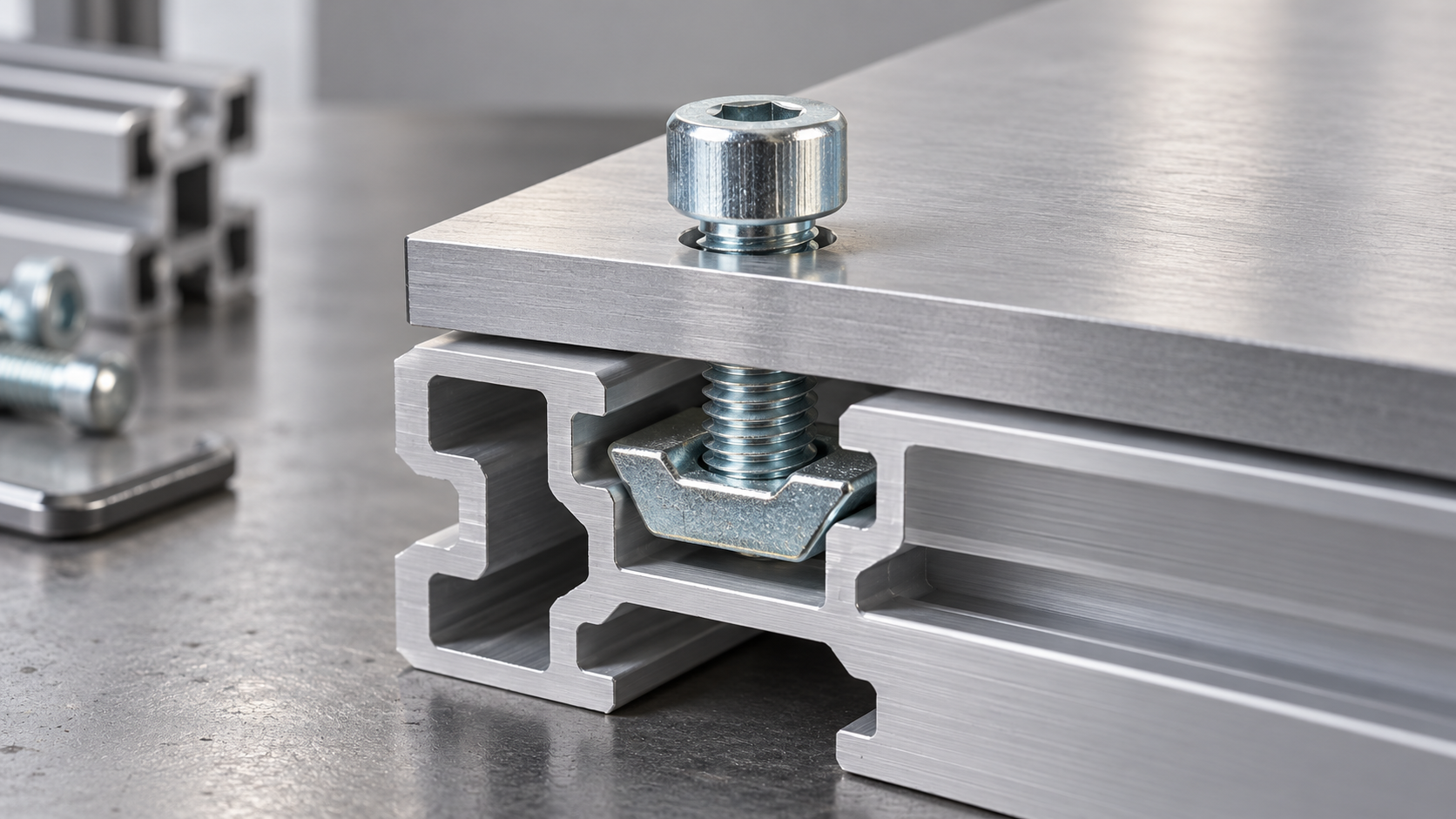
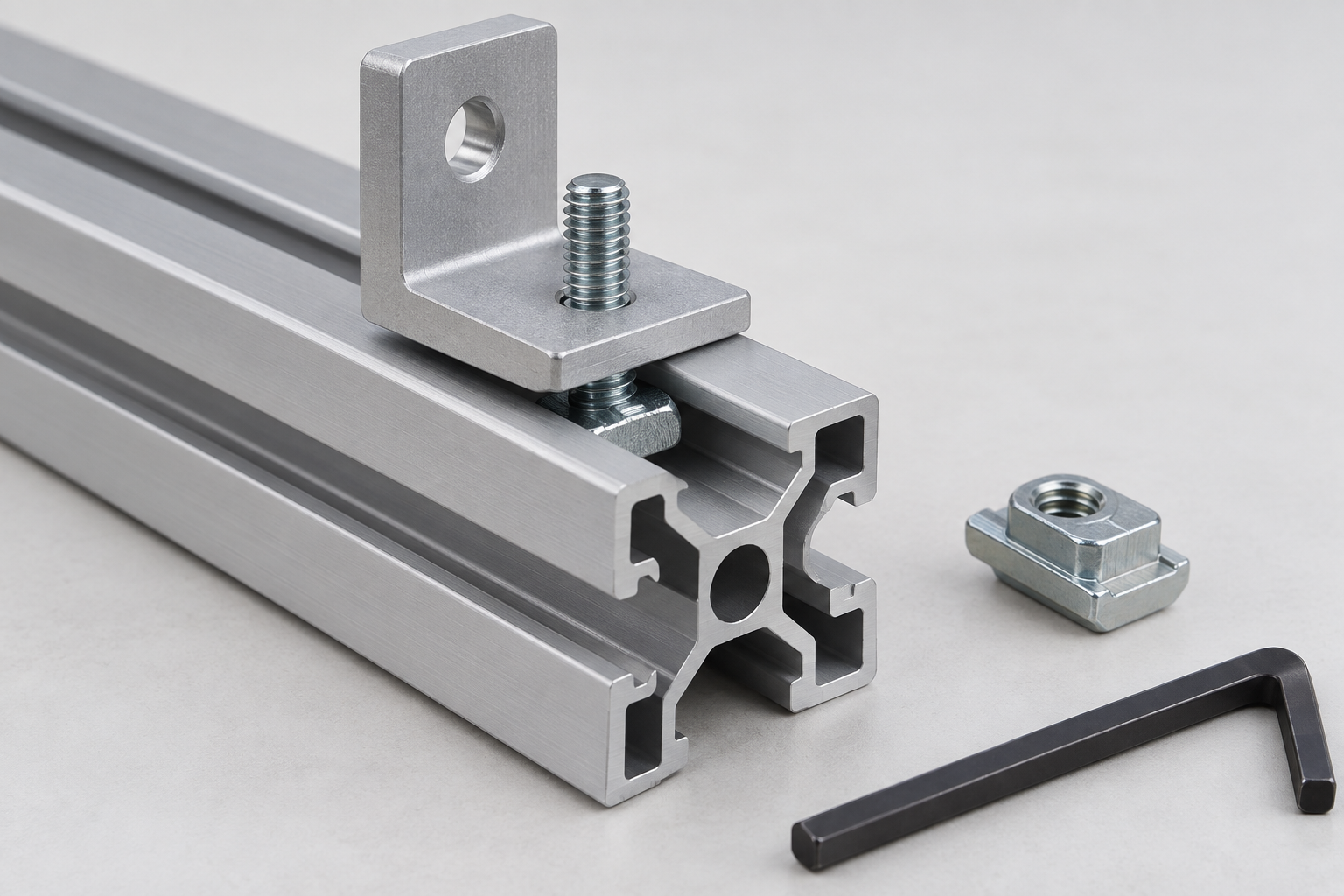
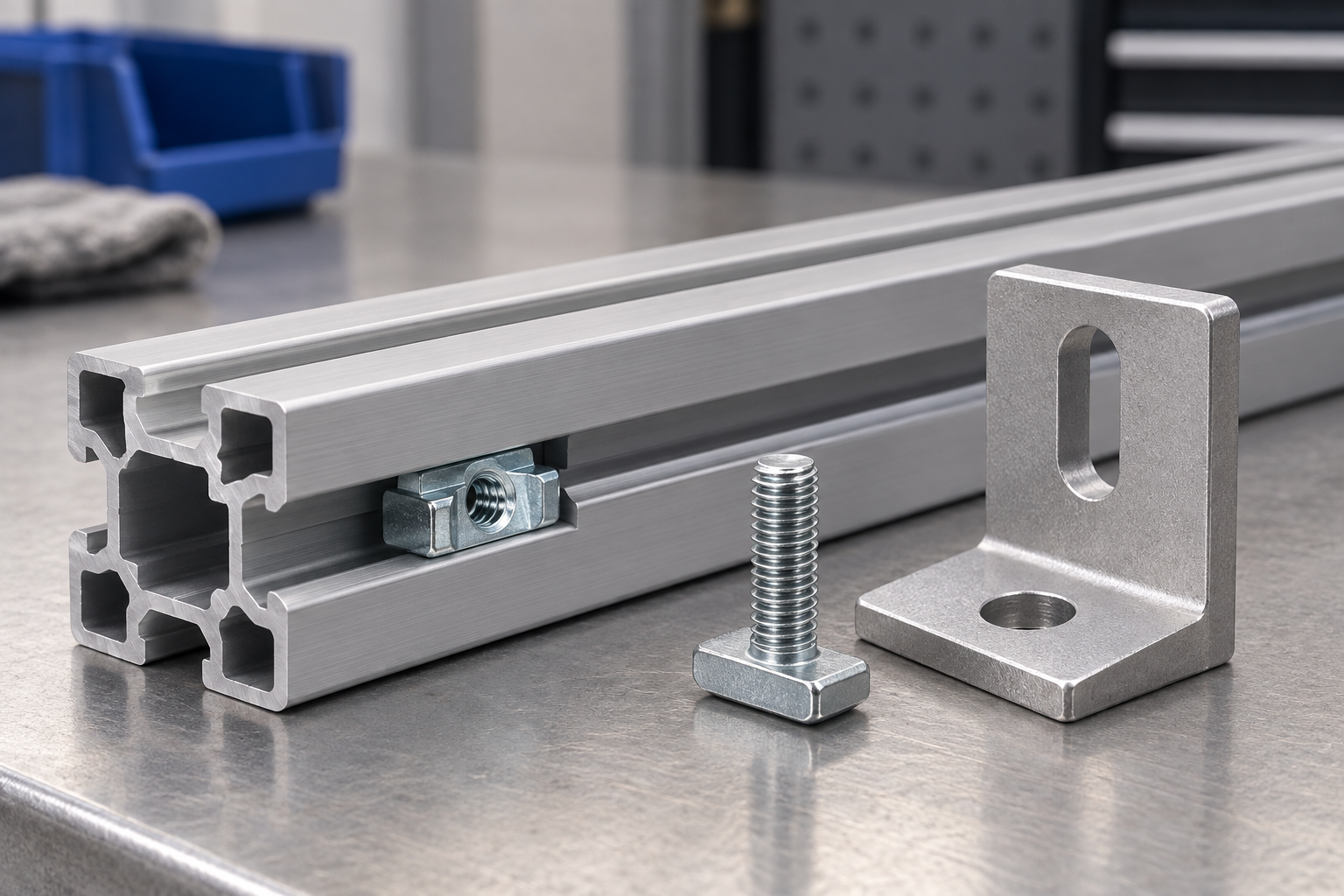
A hand nut on a through-bolt clamps two surfaces directly. Aluminum extrusion systems instead use a threaded element that enters the profile slot and bears against the slot lips, allowing components to be positioned without drilling a through-hole. The load path, access, and adjustment sequence are different, so neither interface should be treated as a universal replacement for the other.
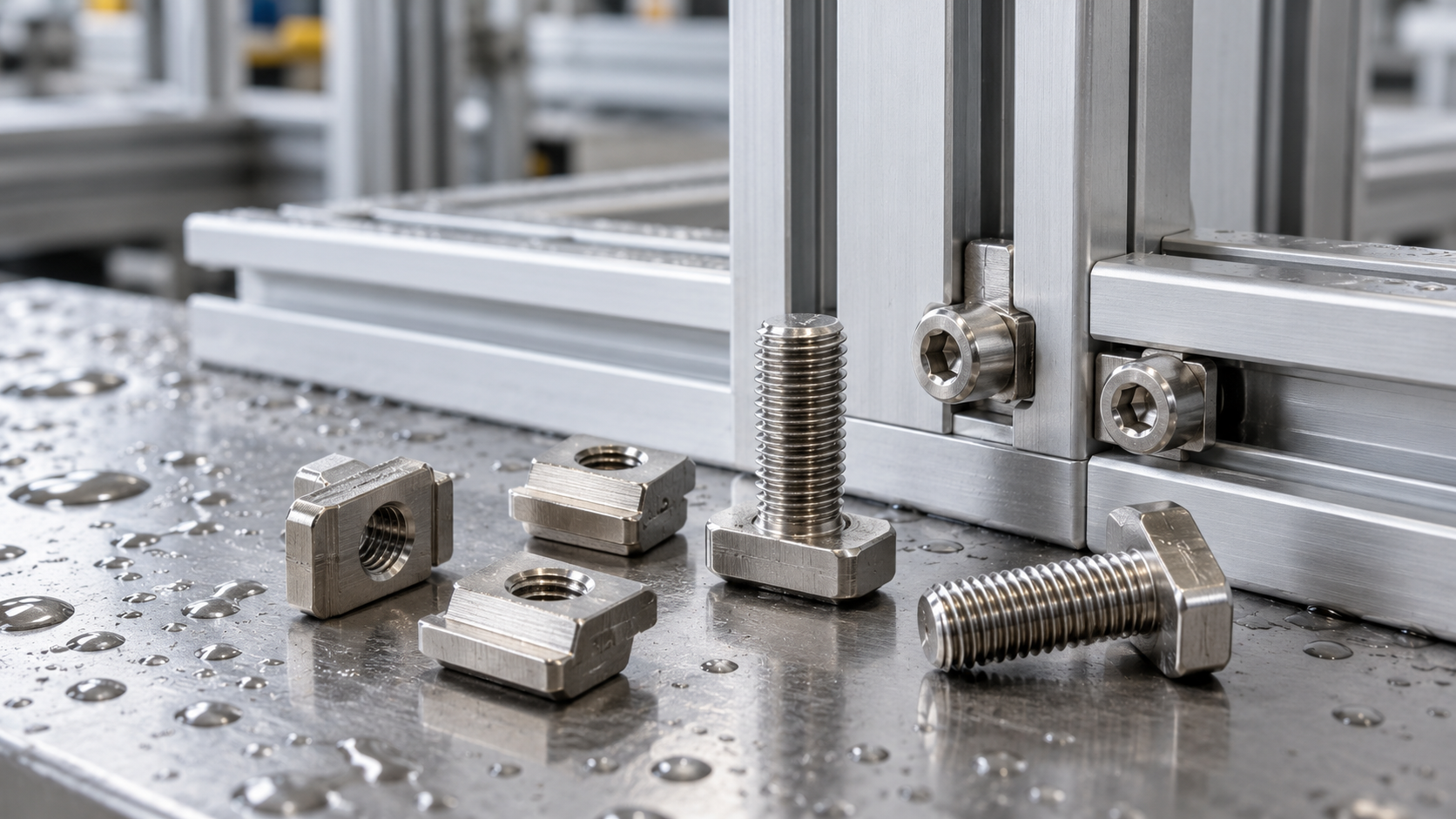
For a frame that is assembled and reconfigured often, slot hardware can reduce drilling and preserve a continuous profile. A hand nut may remain the better option for a removable cover, a low-load fixture, or a temporary setup where the stud is already available. Review the manufacturer’s profile dimensions, slot opening, and fastener engagement before selecting either system. This guide to sliding T-nuts for extrusion profiles explains why slot entry and alignment affect installation effort.
Illustrative TCO logic: if a profile connection saves one drilling operation on each of 40 frames, its labor benefit can outweigh a higher component price. That is a calculation to validate with the buyer’s cycle time, not a guaranteed saving.
Which butterfly nut standards and compliance checks apply to the purchase?
ASME B18.6.9 covers wing nuts and provides dimensional information for nine types and styles. ASME B18.6.8 addresses thumb screws and wing screws, which helps distinguish the male threaded hardware from a female hand nut. These are product standards, not blanket certifications for every supplier or finished assembly.
Ask the supplier to identify the standard edition, thread system, material designation, finish, and inspection basis on the quotation or drawing. For a wing nut, the selected dimensions should be traceable to that drawing rather than inferred from a product photo. In regulated or safety-sensitive markets, add destination-market requirements, traceability expectations, and any customer-specific validation. A marketing statement that implies compliance without a matching specification can create rejection, rework, and liability exposure.
Where torque, friction, and washer behavior affect the joint, use an engineering reference and the equipment owner’s procedure. A standard test method or fastener guideline does not replace a design authority’s load case, installation instruction, or risk assessment.
How should a buyer select a wing screw or profile-slot alternative?
- Define the joint: identify the clamped materials, access side, adjustment frequency, environment, and whether the threaded member is fixed or removable.
- Lock the interface dimensions: record thread diameter and pitch, engagement length, bearing surface, tab clearance, and any profile slot geometry.
- Set verification requirements: specify incoming dimensional checks, finish documentation, and a functional or proof test when the application risk requires one.
- Compare total cost: include operator time, reinspection, modification work, replacement access, and downtime rather than comparing unit prices alone.
For aluminum-profile framing, Qiyi’s relevant product context is a spring-ball T-nut for profile slots, available in M3-M5 with carbon-steel or stainless-steel options and zinc or nickel plating as listed for the product. It is not this hand nut or wing screw; it is a profile-slot component for a different load path and assembly workflow. Review the spring-ball T-nut product details against the profile and thread specification before requesting supply.
Frequently Asked Questions
What is a butterfly nut?
Butterfly nuts: two-lobed hand-tight nuts, often interchangeable with wing nuts in catalogs. Confirm lobe shape, thread, material and standard via drawing/datasheet. Use dimension-matching catalog designation.
What are the different types of wingnuts?
Types vary by tab shape, manufacturing method, material, and thread system; ASME B18.6.9 groups nine wing-nut types and styles. Names such as stamped, forged, or butterfly can describe form rather than load capability. Select by the dimensional standard and application conditions, not by the label alone.
What are screws with wings called?
They are generally called wing screws, although some catalogs use thumb screw for a broader family of tool-free heads. A wing screw has a male threaded shank, while a female nut is the threaded counterpart. Verify the mating thread and bearing geometry before substituting one for the other.
How to unscrew a wing nut?
Release load, grip tabs evenly, turn counterclockwise, keep nut square to thread. If seized, don’t bend tabs; use approved penetrant/tools per safety rules. Replace damaged parts; check cross-threading, corrosion, overload before reassembly.
References
When the project uses aluminum profiles, compare the slot interface and documentation before choosing a hand nut. For application review or sourcing questions, contact Qiyi with the profile, thread, material, finish, and adjustment requirements.