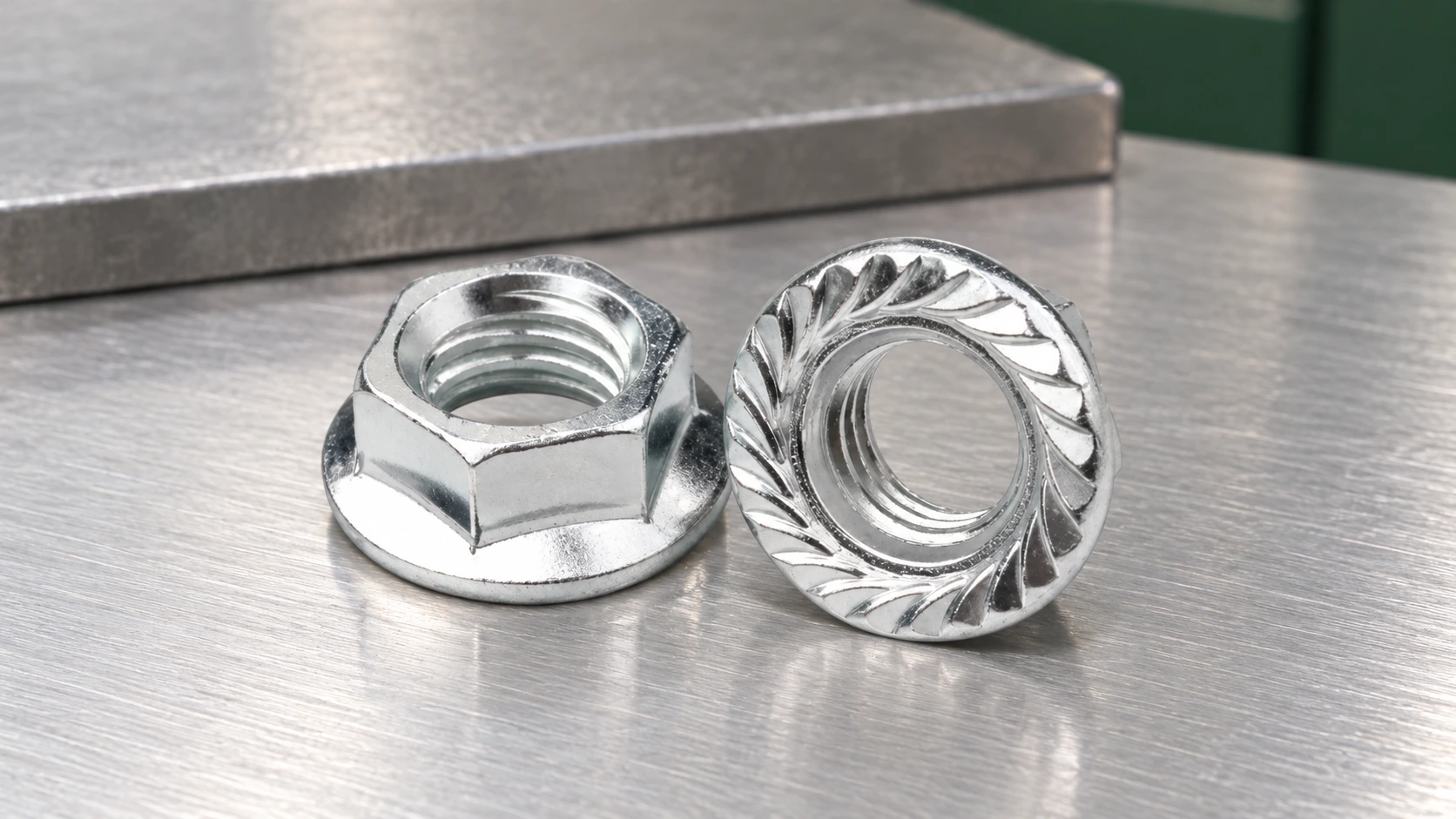
Summary: An M5 T-nut works when its M5 thread, 0.8 mm pitch, shoulder geometry and slot profile all match the extrusion. Treat thread/pitch and slot dimensions as separate specs, then use a compatible M5 T-bolt and controlled tightening. ISO 261 defines metric threads—not T-slot shape. Measure the slot, verify engagement and test the joint before release.
An m5 t nut transfers clamp load through the slot and thread
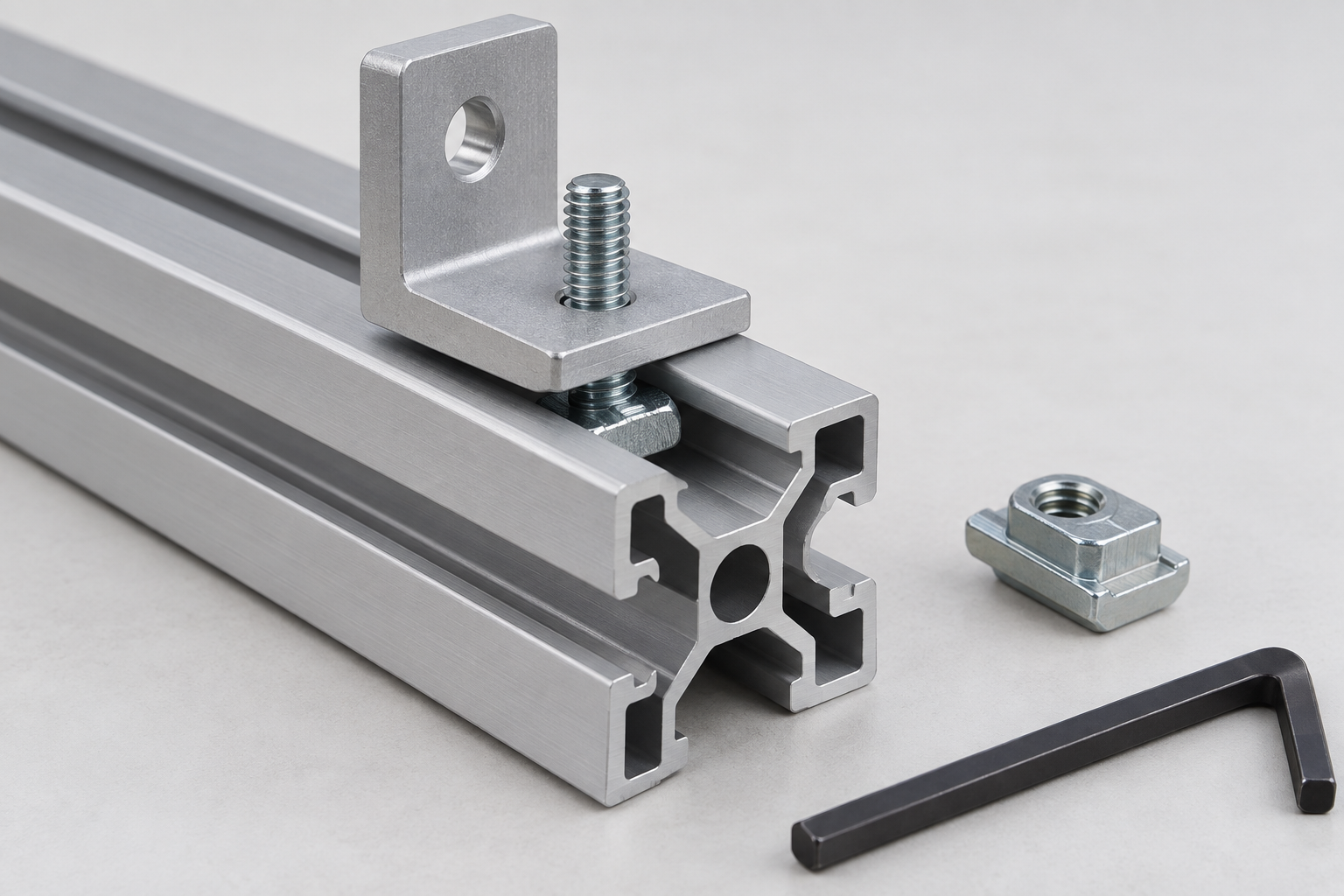
A T nut is a captive or slide-in nut that presents a threaded hole through an extrusion wall. The “M5” designation identifies a nominal 5 mm metric thread; for the usual coarse series, pitch is 0.8 mm, meaning adjacent thread crests are 0.8 mm apart. The pitch controls bolt compatibility and thread engagement. The nut’s width, height, and anti-rotation feature control whether it enters and remains captured in the slot. A 0.8 mm pitch therefore cannot tell you whether a nut fits a 6 mm or 8 mm slot.
Start with the assembly drawing: record slot opening, internal neck width, cavity depth, and the required bearing face. Select the nut from those dimensions, not from the thread label alone. A practical first check is at least four full engaged threads for a lightly loaded steel joint, with the final requirement set by load, material, and design code. Use a thread gauge or a known-good bolt to check the thread, and use calipers to check the slot envelope.
Verify the interface before installing an M5 tee nut
“Tee nut” is often used for a flanged or pronged insert in wood, while “T-slot nut” usually refers to a nut captured in an aluminum profile. Suppliers may use the names interchangeably, so drawings should call out the actual interface. For a profile assembly, insert the m5 tee nut or T-slot style nut from the open end unless its spring, ball, or leaf feature is designed for drop-in insertion. Keep the threaded hole centered under the access hole and confirm that the flange is flat against the profile.
Clean chips from the slot, start the bolt by hand, and make sure it turns freely for several revolutions before applying torque. A cross-threaded start can damage a small M5 thread before the clamp ever reaches its design load. In a pilot build, mark the nut orientation and record insertion direction so operators do not mix similar-looking profiles.
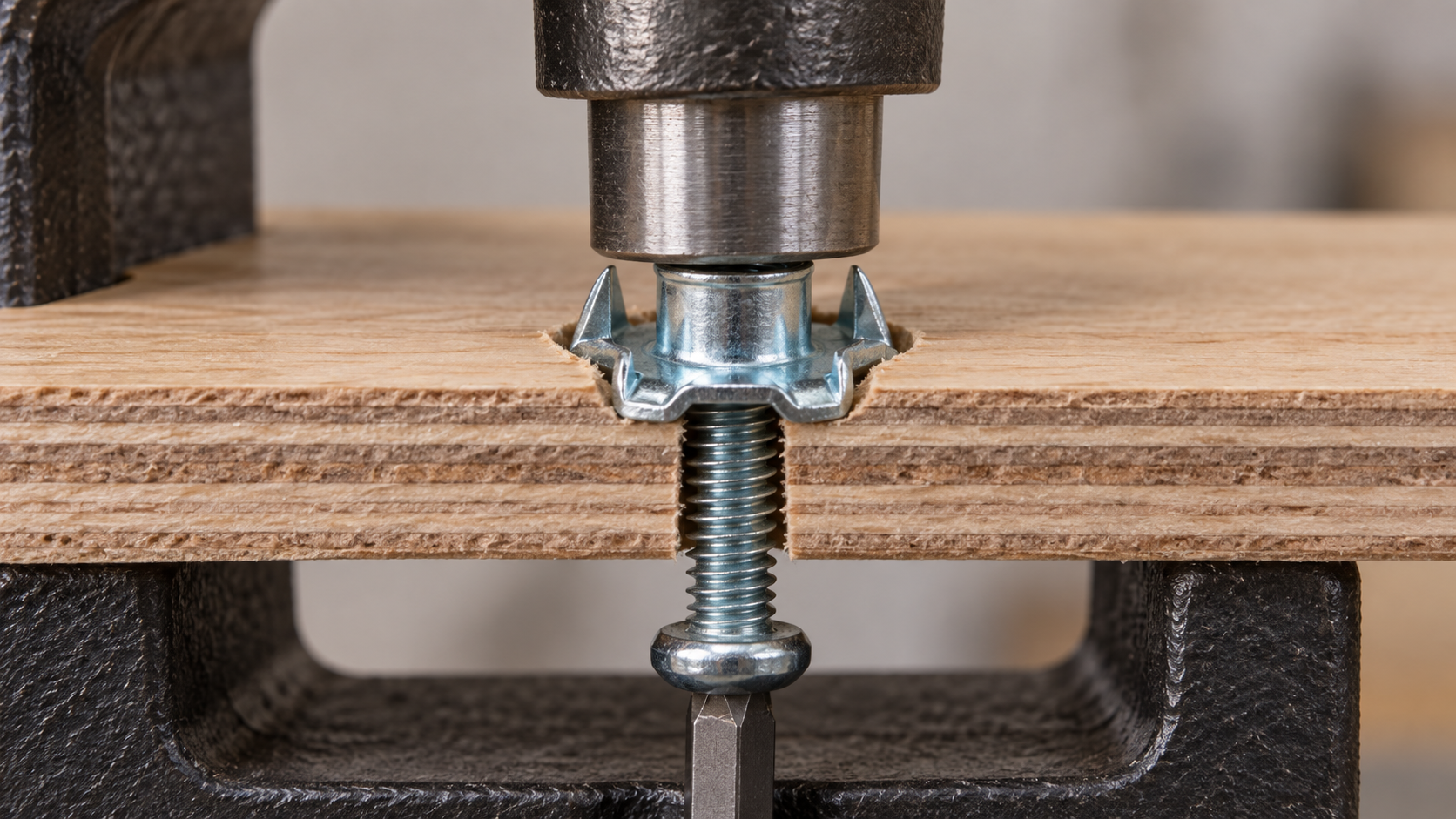
Tighten an M5 T-bolt only after the nut is captured
Pair the nut with an m5 t bolt, socket-head screw, or other bolt whose thread is M5 × 0.8 and whose length leaves useful engagement without bottoming in the nut. Check the stack-up: clamp plate, washer if required, profile wall, and nut shoulder. A bolt that is too short strips threads; one that is too long can bottom out and create a false torque reading.
Use a calibrated torque tool when the joint is safety- or accuracy-critical. Torque is not a universal preload value: friction, coating, lubrication, bolt grade, and nut material change the result. ASTM F606/F606M provides mechanical test methods for externally and internally threaded fasteners; it is a test-method context, not a blanket torque certificate. After tightening, apply the expected service load and inspect for nut rotation, slot pull-through, and loss of alignment.
An m5 t nut comparison should include fit, service life, and total cost
| Option | Installation | Retention under handling | Typical compatibility | Cost and maintenance tendency |
|---|---|---|---|---|
| Standard slide-in T nut | Slides from profile end | Good after bolt preload | Defined slot envelope | Low unit cost; plan end access |
| Spring-ball drop-in nut | Drops into an accessible slot | Convenient during repositioning | Profile-specific neck and spring | Moderate unit cost; fewer disassembly steps |
| Hammer nut | Insert and rotate to capture | Good when fully turned | Compatible hammer-slot geometry | Moderate; verify orientation at service |
| Wood-style tee nut | Presses or prongs into a panel | Depends on panel material | Wood or composite, not every extrusion | Low unit cost; repair risk if panel tears |
For a frequently reconfigured workstation, the spring-ball T-nut option can reduce labor even if its unit cost is higher. For a fixed rail, a standard nut may minimize inventory complexity. The right comparison is installed cost: access time, dropped hardware, retorque labor, and the cost of an alignment error.
Qiyi Fastener can help buyers compare configurable slot-nut geometries and documentation against a drawing. Review the hammer nut range when the assembly needs rotational capture, and use the slide-in economy T-nut and square-nut options when end access and inventory cost are the main constraints.
Frequently Asked Questions
What thread does an m5 t-nut use?
Most M5 T-nuts use the ISO metric coarse thread M5 × 0.8, where 0.8 mm is the pitch. Confirm the drawing, gauge the nut, and match the bolt; a different pitch or a damaged thread will not be corrected by a matching slot.
What types of m5 t-nuts are available?
Common types include standard slide-in nuts, spring-ball drop-in nuts, hammer nuts, and panel or wood-style tee nuts. Their insertion method and capture geometry differ, so select by slot and panel interface rather than by the M5 label alone.
Where are m5 t-nuts and t-bolts used?
They are used in aluminum extrusion frames, machine guarding, workstations, robotics fixtures, display structures, and adjustable instrumentation mounts. The service load, vibration, access direction, and corrosion exposure determine the suitable style.
What materials are common for m5 t-nuts and t-bolts?
Carbon steel, alloy steel, zinc-plated steel, stainless steel, and selected aluminum or zinc alloys are common, depending on strength and environment. Verify grade, finish, and test evidence for the actual part; material labels alone are not certification claims.
References
- ASTM Committee F16.
- worldstainless.
- ASTM F606/F606M fastener mechanical test methods.
- ISO 261 metric screw-thread standard.
At the sourcing decision, Qiyi Fastener can review your profile drawing and help identify a suitable m5 t nut and m5 tee nut configuration. Contact Qiyi Fastener with the slot dimensions, material preference, and required quantity for a practical recommendation.