Summary: T-nuts anchor in wood, aluminum extrusions or slotted fixtures, with bolts providing clamping force. Reliable assemblies depend on slot dimensions, thread size, nut retention, material compatibility, preload and inspection access.
Choose the T-nut style first, match bolt and washer to its thread, then validate the joint under real load and environment.
T nuts and bolts form a captured joint when the slot and thread are matched
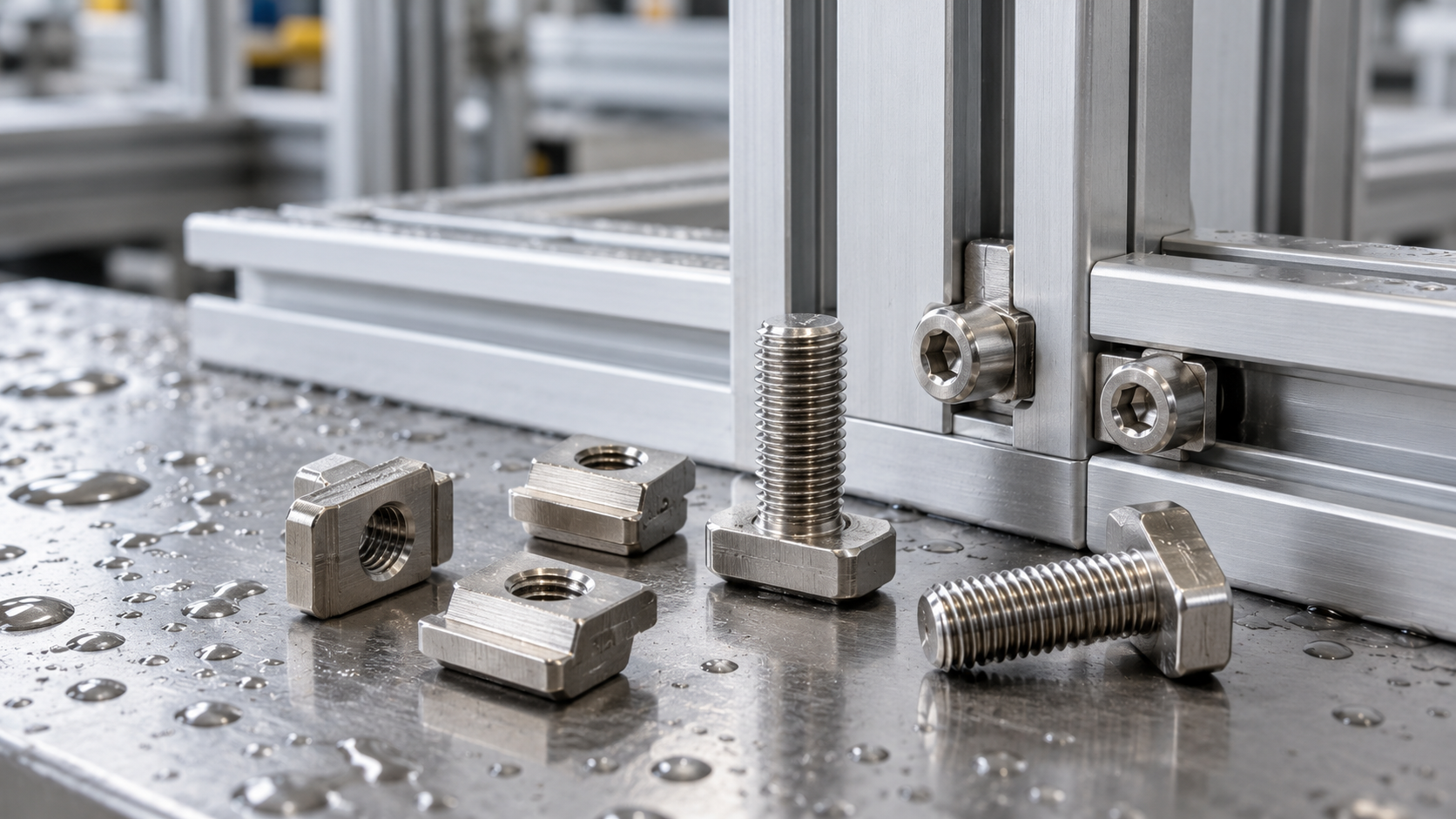
A T-nut is a threaded block or flange designed to sit inside a channel, panel, or predrilled hole. The bolt passes through the component being secured and engages the nut. Once tightened, the nut bears against the slot shoulders or the rear face of the panel, allowing the bolt to generate clamp force without requiring a spanner on the hidden side.
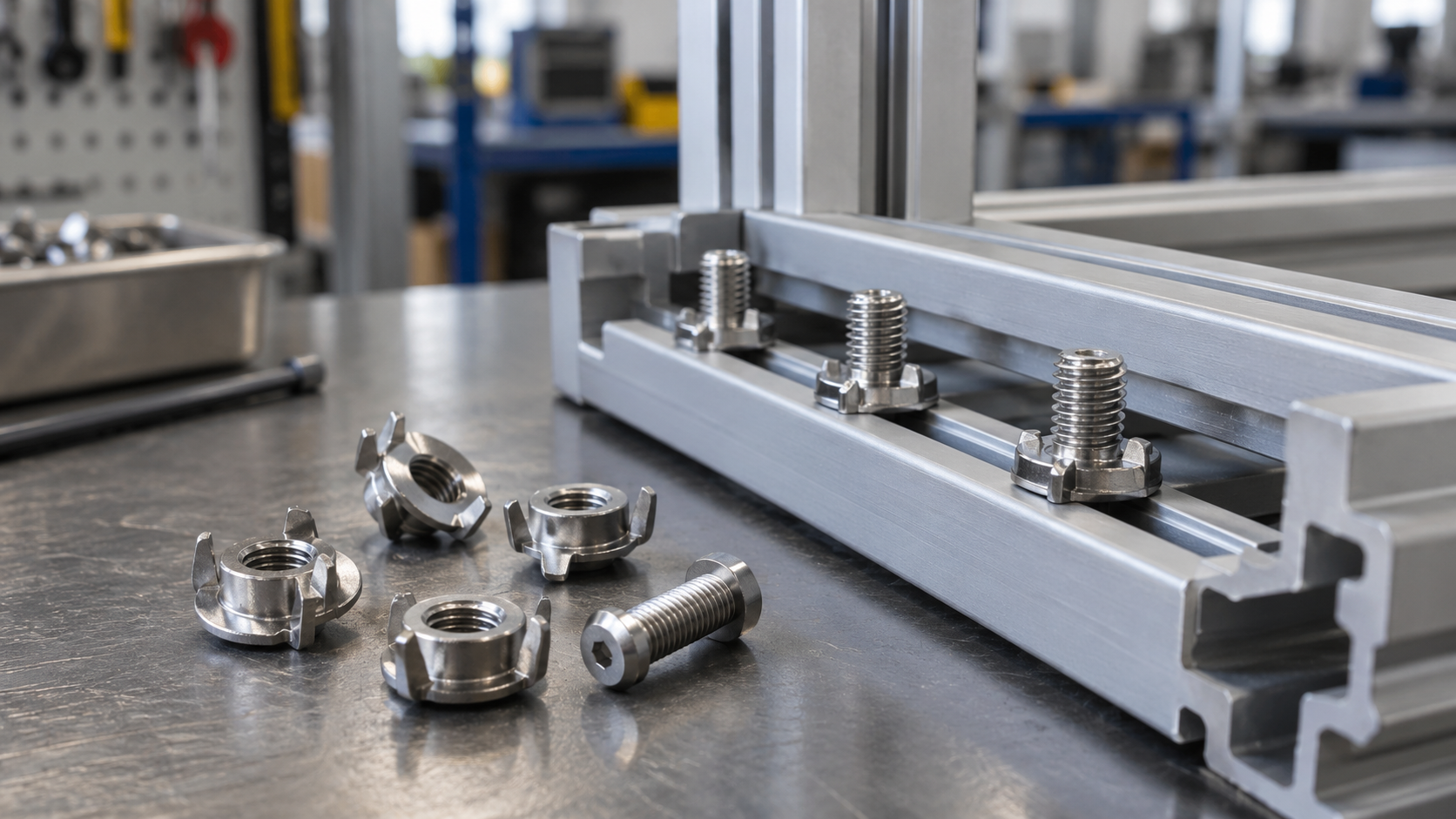
In an extrusion, the nut must fit the slot width and internal lip while still presenting enough bearing area to resist pull-out and rotation. In wood, a pronged or flanged nut relies on the panel material and installation method rather than a slot. These details explain why a bolt with the correct nominal thread can still fail to produce a stable joint if the T-nut style is wrong.
Clamp force comes from the complete load path
For preliminary torque planning, engineers may use T = KFd, where T is torque, K is an estimated nut factor, F is target preload, and d is nominal diameter. Lubricant, coating, thread condition, and tool variation can change K significantly. Production release should therefore correlate torque with tension on representative parts and record the tool, lot, and installation condition.
T slot nuts and bolts require profile dimensions and retention features to agree
T slot nuts and bolts are common in modular machine frames, guards, workholding fixtures, and automation rails. The nut may slide into the channel from an open end, drop in through an access point, or rotate into place after the bolt is started. Spring-ball, leaf-spring, hammer, and economy slide-in designs each address a different assembly need.
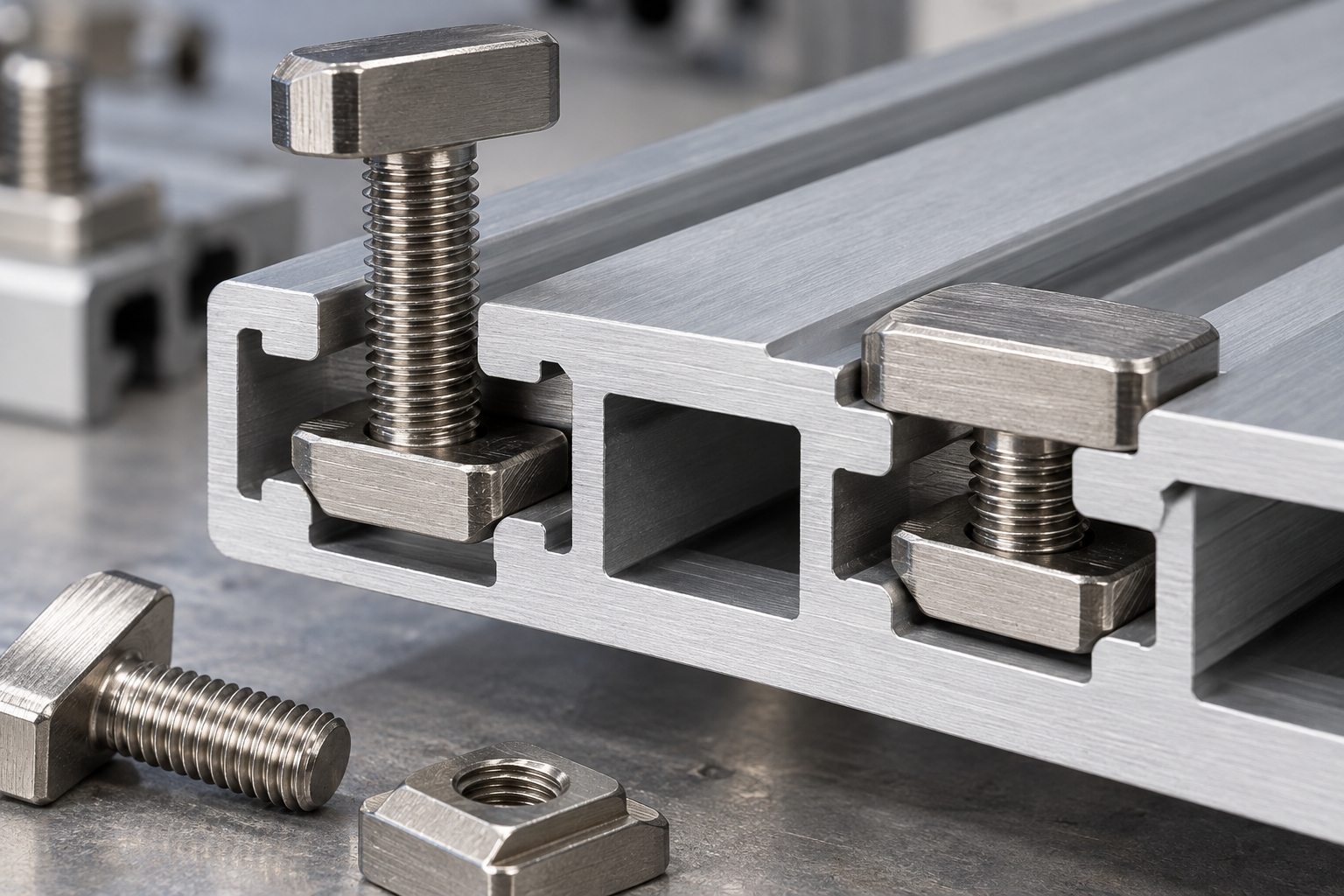
Record the slot opening, internal neck width, lip thickness, and channel depth. Confirm whether the nut can be inserted after adjacent panels are installed and whether it must remain captive during repositioning. A spring-loaded nut can simplify vertical assembly, while a plain sliding nut may be preferred where low friction and unrestricted positioning matter. Qiyi’s spring-ball T-nut range illustrates one captive positioning approach.
Stainless steel T nuts help when corrosion resistance is part of the joint requirement
Stainless steel T nuts are useful in washdown equipment, outdoor fixtures, food-processing frames, and applications where zinc-coated steel could discolor or lose protection. Austenitic stainless grades generally provide good atmospheric and moisture resistance, but “stainless” is not a complete specification. Grade, surface condition, mating metal, chloride exposure, and crevice geometry all affect service life.
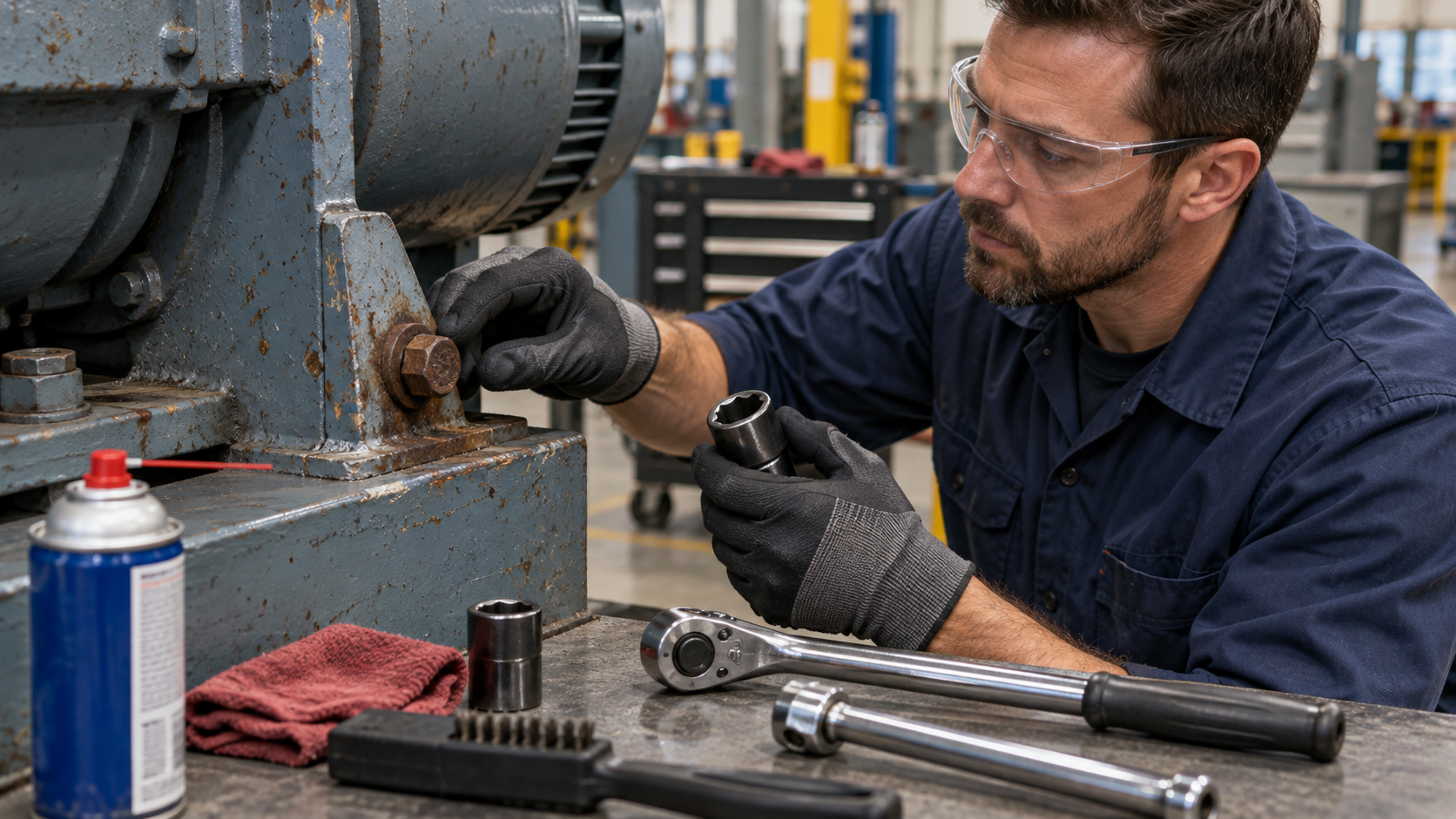
Stainless threads can gall when high contact pressure, dry surfaces, and fast installation combine. Use a compatible lubricant when permitted, keep threads clean, and control tool speed. If the T-nut sits in an aluminum extrusion, assess galvanic exposure and provide drainage or isolation where the environment warrants it. A stainless nut cannot compensate for a trapped-water joint or a damaged extrusion finish.
For ordinary indoor frames, zinc-plated or black-oxide steel may provide adequate strength and lower cost. For corrosive service, specify the stainless grade and inspection criteria rather than relying on a generic “corrosion resistant” claim. Material certificates and lot traceability are especially important when the assembly is customer-facing or difficult to replace.
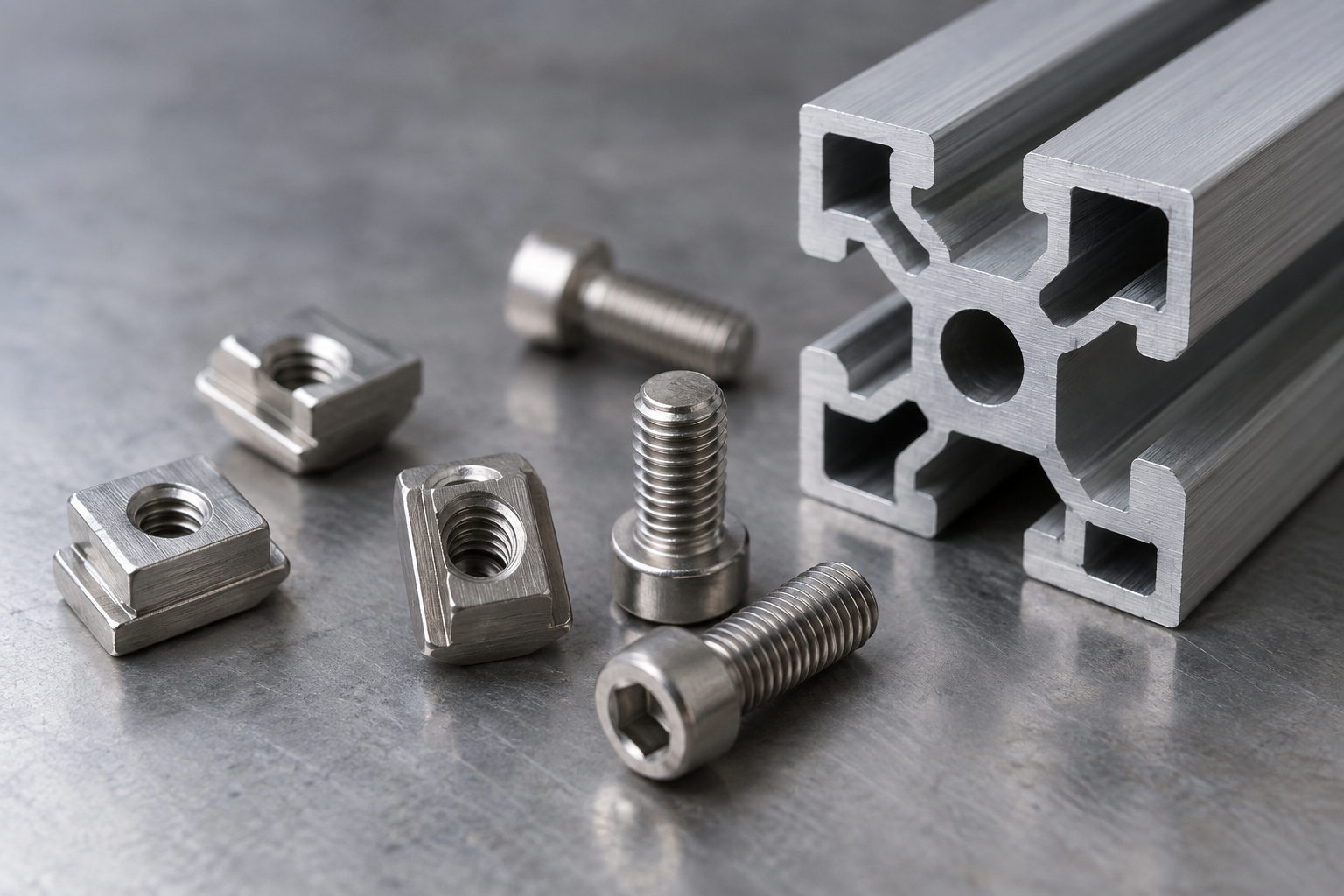
T nuts and bolts should be compared by installation behavior as well as strength
The table below separates common T-nut designs by how they enter and stay in the joint. Strength values depend on the exact grade, dimensions, substrate, and load direction, so use supplier data and testing for final design.
| Nut style | Typical installation | Retention behavior | Best-fit applications | Primary checks |
|---|---|---|---|---|
| Plain sliding T-nut | Slides from an open extrusion end | Free to reposition before tightening | Accessible modular frames and jigs | Slot width, end access, anti-rotation |
| Spring-ball T-nut | Slides or drops into the channel | Spring ball holds position during assembly | Vertical frames and frequent adjustment | Spring force, ball clearance, thread engagement |
| Hammer or quarter-turn nut | Rotates into a closed slot | Captures under the extrusion lips | Retrofit brackets and confined access | Correct orientation, rotation clearance, seating |
| Pronged panel T-nut | Pressed or tapped into a drilled wood hole | Prongs resist rotation in the substrate | Furniture, fixtures, and removable panels | Hole diameter, panel thickness, pull-out resistance |
For a retrofit where the extrusion is already assembled, a hammer nut may be faster than dismantling the frame. For a new frame that must be reconfigured repeatedly, a sliding or spring-ball nut can reduce installation time. Qiyi’s slide-in economy T-nuts show the type of design used when free positioning is more important than captive spring retention.
Frequently asked questions
What are T-slot nuts used for?
T-slot nuts provide a movable threaded anchor inside an aluminum extrusion or slotted rail. They are used for machine frames, guards, workholding fixtures, automation equipment, and adjustable brackets where a bolt must be installed without access to the rear of the profile.
Pronged T-nuts vs. T-slot nuts?
Pronged T-nuts are driven into a drilled hole in wood or another panel and use their prongs to resist rotation. T-slot nuts sit inside an extrusion channel and bear under the slot lips. They are not interchangeable because their retention method, dimensions, and load path are different.
Are stainless steel T-nuts corrosion resistant?
Stainless steel T-nuts resist atmospheric moisture better than bare carbon steel, but resistance depends on grade, finish, chlorides, crevices and mating hardware.Specify the grade and inspect the full joint; “stainless” is no service-life guarantee.
What types of T-nuts are available?
Common types include plain sliding nuts, spring-ball nuts, hammer or quarter-turn nuts, serrated or flanged nuts, and pronged panel T-nuts. Select by slot or hole geometry, insertion access, anti-rotation requirement, material, load, and whether the joint must remain captive during repositioning.
References
- NASA, Fastener Design Manual (NASA Reference Publication 1228)
- ASTM International, Committee F16 on Fasteners
- McMaster-Carr, T-Nuts
For a project review of t nuts and bolts, contact Qiyi Fastener through the contact page with the profile drawing, thread callout, material and finish requirements, estimated quantity, and validation expectations.