Why thread size matters for hammer nuts
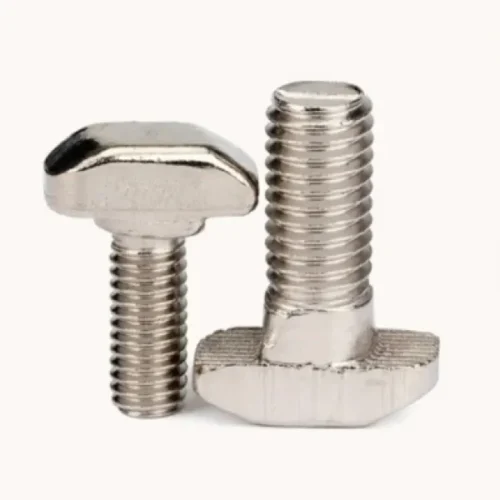
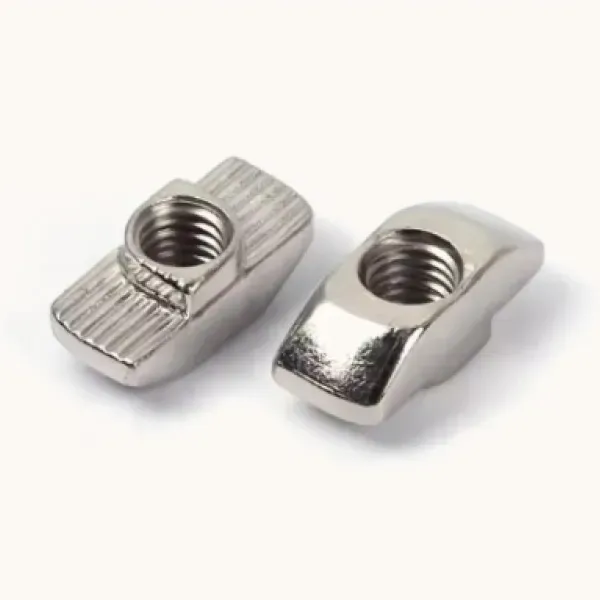
Hammer nuts provide a threaded connection point inside compatible aluminum profile slots. Selecting the correct thread size is essential because the thread must match the mating bolt, suit the profile system and provide the required joint strength. Common hammer-nut thread sizes include M3, M4, M5, M6 and M8, but availability must always be confirmed against the required profile series and product drawing.
QIYI FASTENER supplies hammer nuts in carbon steel or stainless steel with zinc or nickel-plated options. The final selection should be based on the complete assembly requirement, not thread size alone.
M3 and M4 hammer nuts
M3 and M4 threads are often selected for lighter accessories, small covers, cable-management components and compact aluminum profile systems. The smaller thread can be useful where space is limited, but it must still be paired with a suitable bolt length and compatible slot geometry. Check the component load and the manufacturer’s installation requirements before using small-thread fasteners in structural connections.
M5 hammer nuts
M5 is widely used in many aluminum extrusion applications because it can balance compact dimensions with practical holding capacity. It may be specified for brackets, guards, small machine frames and modular fixtures. Buyers should confirm the profile series and slot size rather than assuming every M5 hammer nut fits every aluminum profile.
M6 and M8 hammer nuts
M6 and M8 threads are generally chosen for larger brackets, heavier accessories and applications that require a larger mating bolt. A larger thread does not automatically make the connection suitable for every load: the strength of the profile, bracket, bolt, engagement length and installation torque must all be considered together. For demanding assemblies, provide the load case and connection drawing during the quotation stage.
Thread-size selection checklist
- Match the hammer-nut thread to the mating bolt or screw.
- Confirm compatibility with the aluminum profile slot and series.
- Check the required material and coating for corrosion conditions.
- Consider the bracket thickness and required bolt engagement length.
- Review load, vibration and safety requirements with the project engineer.
Information to include in an RFQ
For an accurate hammer-nut quotation, provide the profile cross-section or slot dimensions, thread size, material and finish, quantity, target application and any required drawing or sample. This allows the supplier to confirm technical compatibility before production.