If you’re doing a project where you want to hang something on the wall like shelves, mirrors, curtain rods or other items, you’ve probably asked yourself what is the best hollow wall fastener to use. There are a variety of different types of hollow wall fasteners to choose from, and the right one will greatly improve the reliability, safety and effectiveness of your installation. This article provides a description and guide to 10 different types of hollow wall fasteners along with how to choose the one that will meet your needs.

1. Plastic Expansion Anchors
Plastic expansion anchors are the most common fastener for light-duty applications. When a screw is inserted into the anchor, the anchor expands and thus tightens upon the wall. These work well for hanging lightweight objects such as small picture frames or lightweight kitchen utensils on either drywall or plaster walls. However, they do not work well with heavy items, as they do not have much holding power.
2. Toggle Bolt Hollow Wall Anchors
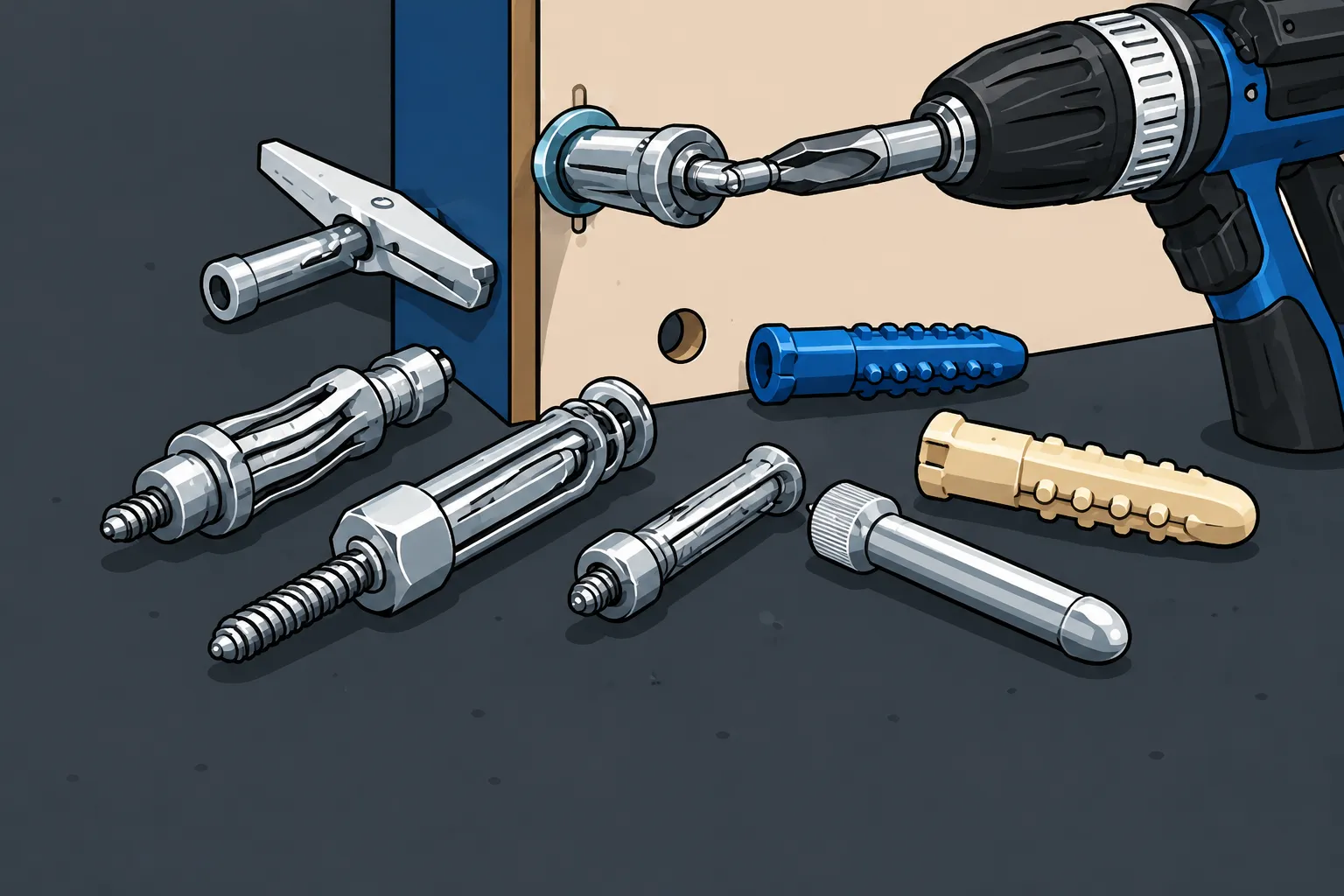
Toggle bolts are also a type of hollow wall anchor and are used for heavy-duty applications. A toggle bolt consists of a screw attached to two spring-loaded wings. When the toggle bolt is inserted into a pre-drilled hole and pushed into the wall, the wings expand and press against the backside of the wall, thus providing an extremely strong attachment point. These work well for shelving units, televisions, or large mirrors — especially in drywall or plaster. Toggle bolts are dependable; however, they may take a little bit longer to install than other types of wall anchors.
3. Molly Bolts
Molly bolts are hollow wall anchors that provide both a good degree of holding power and ease of installation and are considered medium to heavy-duty. Like plastic expansion anchors, molly bolts are made from metal and have wings that expand when the screw is tightened. Molly bolts are an excellent option for securing curtain rods, artwork, and heavier decorative items to hollow-core doors or walls of drywall or plaster.
4. Self-Drilling Drywall Anchors
Self-drilling drywall anchors are a great way to easily install lightweight or medium-weight items on a wall. Self-drilling drywall anchors have sharp tips that do not require a pre-drilled hole in the wall, so you just need to place them, tap gently if needed, and then screw them securely in. These are ideal for small hooks, small shelves, or light fixtures on drywall.
5. Threaded Drywall Anchors (Screw-In Anchors)
Threaded drywall anchors, also known as screw-in anchors, are similar to self-drilling anchors but offer additional weight-bearing capacity by gripping drywall more securely due to their larger flutes and deeper threads. These anchors are a reliable choice for heavier items like storage racks or clocks but are not recommended for plaster walls.
6. Snap-Toggle Bolts
Snap-Toggle Bolts are advanced hollow wall anchors combining the advantages of toggle bolts with newer designs. They consist of a threaded rod and a pivoting toggle bar that locks securely behind the wall. These are ideal for securely fastening heavy items like TVs, cabinets, or large furniture pieces to drywall.
7. Hollow Wall Drive Anchors
Hollow Wall Drive Anchors are simple and effective for lightweight items. They are hammered into the drywall and then expanded when a screw is turned into the anchor. These are one of the most cost-effective options but not suitable for heavy or high-stress applications.
8. Metal Cavity Anchors
Metal cavity anchors are excellent for medium-weight loads. They function like molly bolts but offer enhanced strength thanks to their all-metal construction. These anchors are particularly suitable for mounting mid-weight furniture or decorative elements.
9. Adhesive Anchors
Adhesive anchors, combining glue or epoxy with a threaded socket, are ideal for surfaces where drilling isn’t possible. They adhere to surfaces like drywall, tile, or concrete. Though useful, they are better suited for light objects, as heavy items may cause the adhesive to fail.
10. Plastic Toggle Anchors
Plastic toggle anchors work in a similar fashion to traditional toggle bolts but are geared toward lighter loads. These anchors are a good choice for temporary or seasonal installations, like hanging small decorations or holiday accessories, as they are simple to install and remove.
FAQs About Hollow Wall Fasteners
How do you use hollow wall fasteners?
Using hollow wall fasteners is easy when you follow these steps:
- Select the right fastener: Make sure the fastener’s weight capacity matches the item you’re hanging.
- Mark the spot: Use a pencil to note where the fastener will go.
- Drill a hole (if needed): For certain types of anchors, pre-drilling is necessary. Check the product instructions for guidance on drill bit size.
- Insert the anchor: Secure the fastener into the wall. Depending on the type, you may need to screw it in or tap it gently before tightening.
- Secure the fixture: Mount the item firmly by screwing it into the wall anchor. Ensure everything is tightened securely.
How can you remove hollow wall fasteners?
Removing hollow wall fasteners will depend on their type:
- For screw-in or threaded anchors: Unscrew the anchor using a screwdriver. If stuck, twist back and forth gently while pulling outward.
- For toggle bolts: Unscrew the bolt and allow the toggle wings to drop behind the wall.
- For molly bolts: Snap the anchor head off with pliers and push the remaining casing into the wall cavity, then patch the hole afterward.
What’s the difference between heavy-duty and light-duty hollow wall anchors?
Heavy-duty hollow wall anchors are made for supporting larger, heavier items like shelves or fixtures. They are typically metal-based and include toggle bolts or snap-toggle bolts. Light-duty anchors, such as plastic expansion anchors, are suited for lighter decorations or items and have lower weight capacities.
Can hollow wall anchors be reused?
Most hollow wall anchors are designed for single use. Anchors like toggle bolts lose their retaining function after removal, as the wings fall behind the wall. Always review the manufacturer’s guidelines if considering reusing an anchor.
Choosing the right hollow wall fasteners means understanding the strengths, limitations, and applications of each type. From lightweight plastic expansion anchors to heavy-duty toggle bolts, there’s a solution for every project. Consider the weight of the object, the wall material, and installation methods for the best choice. Following manufacturer instructions carefully will ensure safe and durable results, giving you peace of mind with your installation.