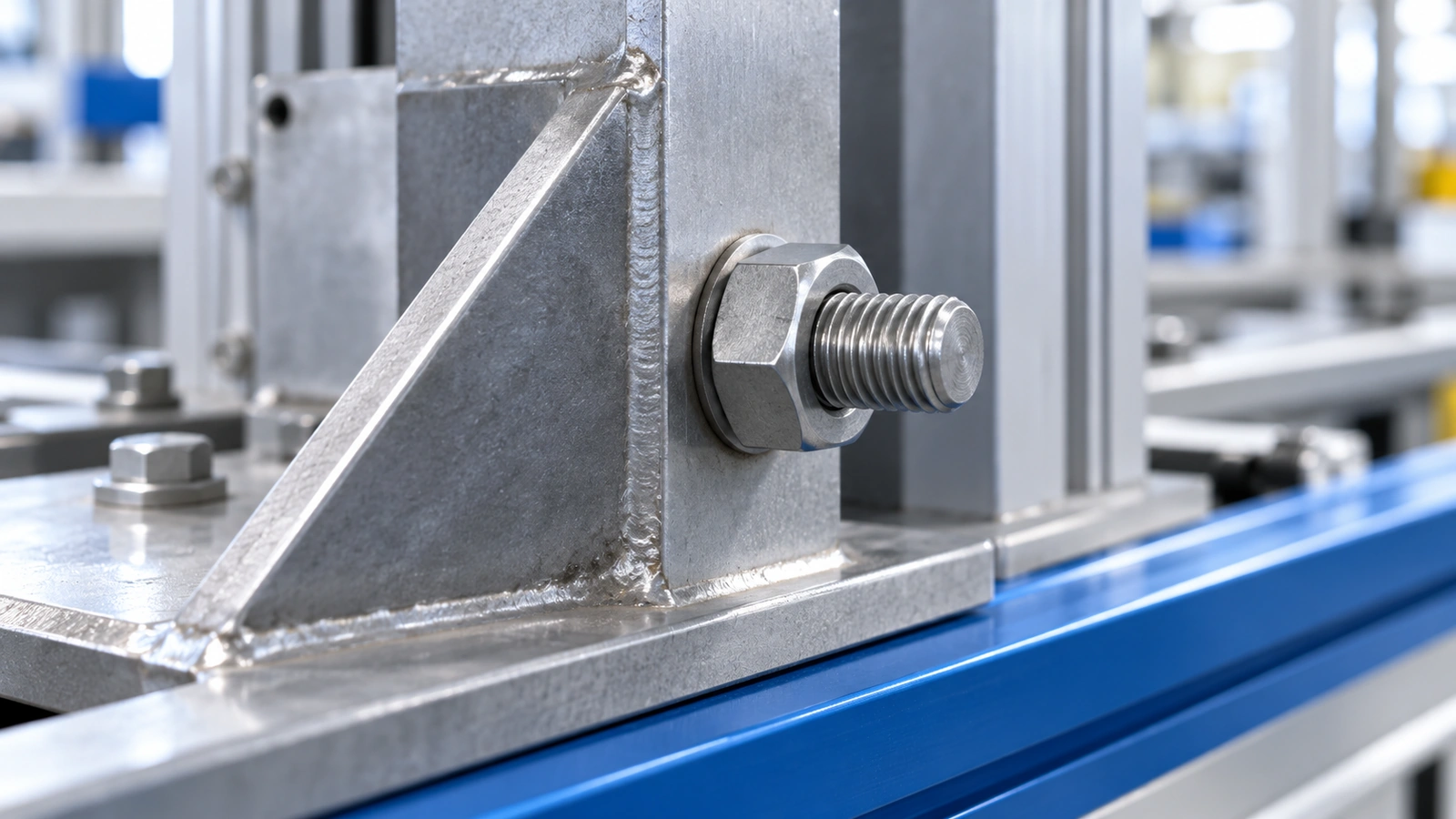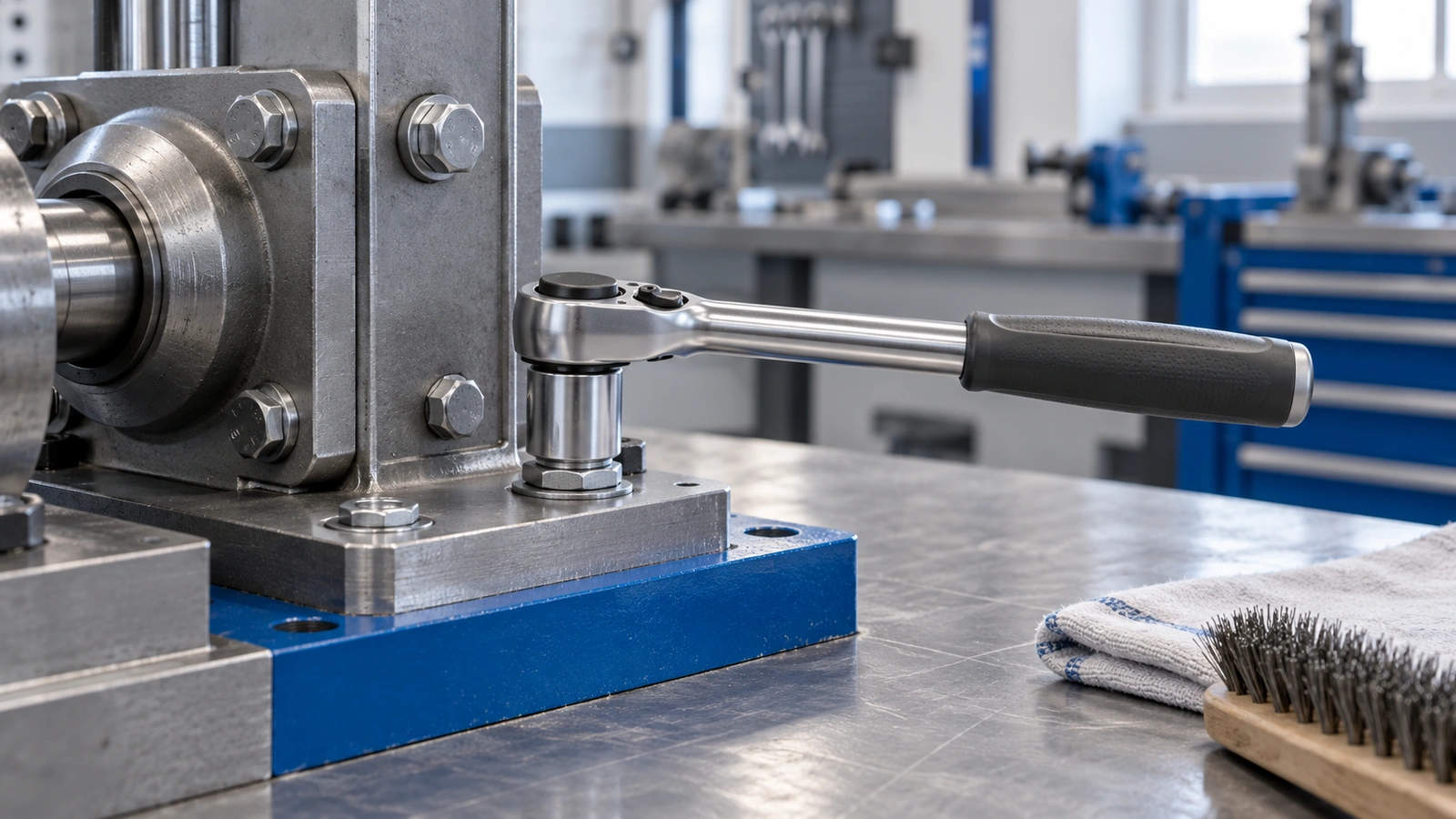
Illustrative scenario: When Marta, a maintenance engineer in Suzhou, replaced a washer in a pump bracket, the new part would not seat evenly and the assembly check stopped. One face had a formed seating feature that the replacement instruction did not identify. The lesson in this hypothetical example is to check the drawing and contact surfaces before assigning an orientation. A visual difference alone does not prove why a joint loosened.
Summary: A plain flat washer with two equivalent bearing faces is generally reversible. A countersink, designed chamfer, serration, curvature or bonded face may require a defined orientation. A coating or identification mark alone does not establish a mandatory contact side. Check the drawing, washer geometry and intended bearing surfaces before assembly; ISO 7089 defines a particular plain-washer family rather than every washer design.
Are plain flat washers reversible?
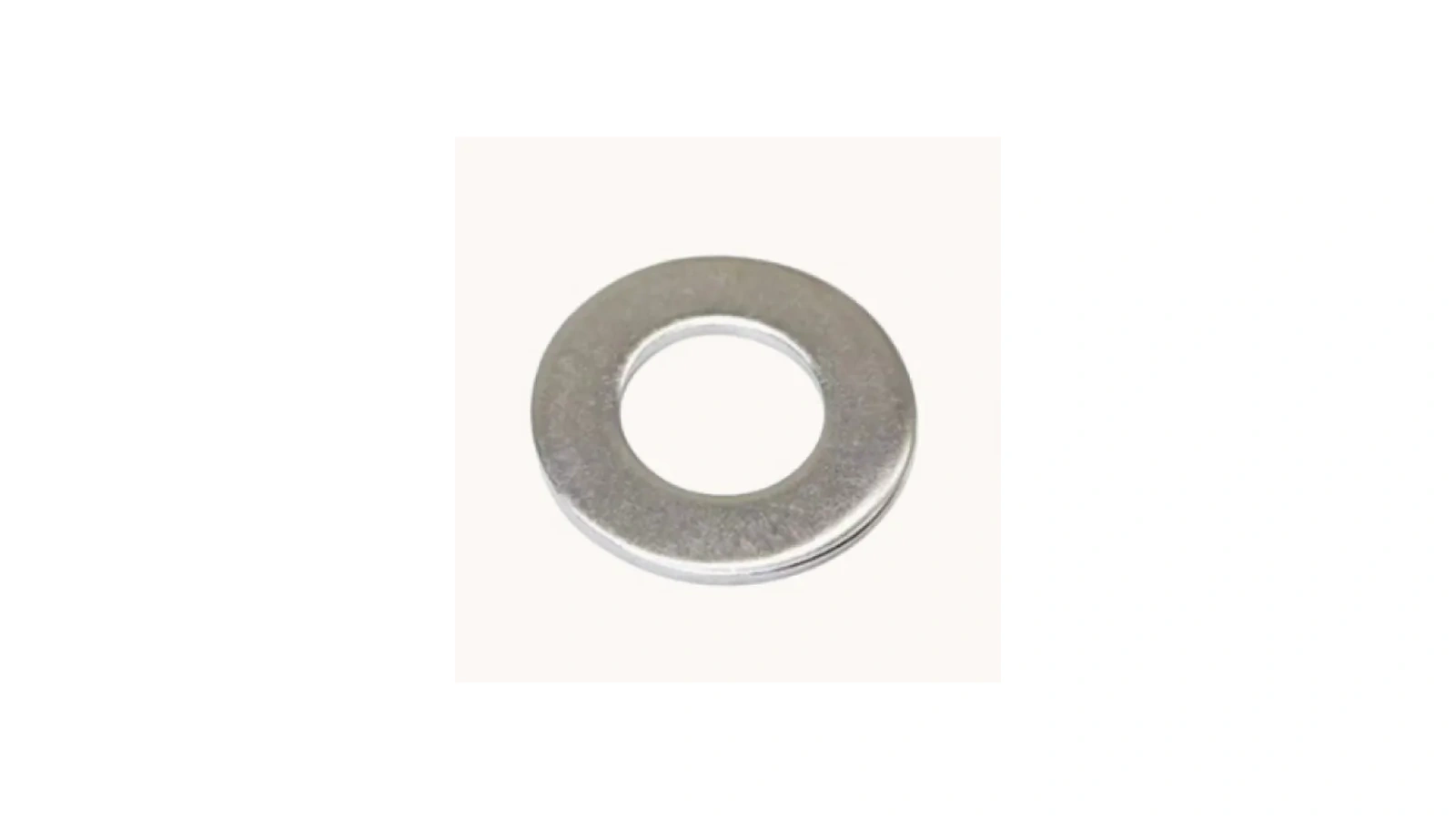
For a conventional plain flat washer, the answer is usually no. Its job is to spread the nut or bolt-head load, protect the clamped surface, and provide a predictable bearing diameter. When the inside, outside, thickness, material, and surface finish are symmetrical, turning the washer over does not change those functions.
Direction matters when a designed feature requires a particular contact surface. A countersunk washer has a seating side, while some chamfers provide clearance for the under-head fillet. A bonded face or formed washer may also need a specified orientation. A normal identification mark or uniform plating is not enough to establish direction. Serrated and conical designs require their own seating instructions rather than a rule inferred from a plain washer.
How should you inspect both washer faces?
Before assembly, compare both faces under good light and inspect the bore and outside edge without running an unprotected finger over a possible burr. Check these four questions:
- Is one face chamfered, crowned, dished, serrated, or toothed?
- Does the drawing call out a coated, bonded, or marked side?
- Will a raised feature contact the bolt head, nut, joint part, or spacer?
- Could the feature damage a soft surface or reduce the effective bearing area?
Do not infer direction from a minor burr alone. A burr is a manufacturing condition to remove or reject according to the inspection plan; it is not a locking feature. For a critical joint, retain a first-article photo and the washer callout so the next shift can repeat the intended orientation.
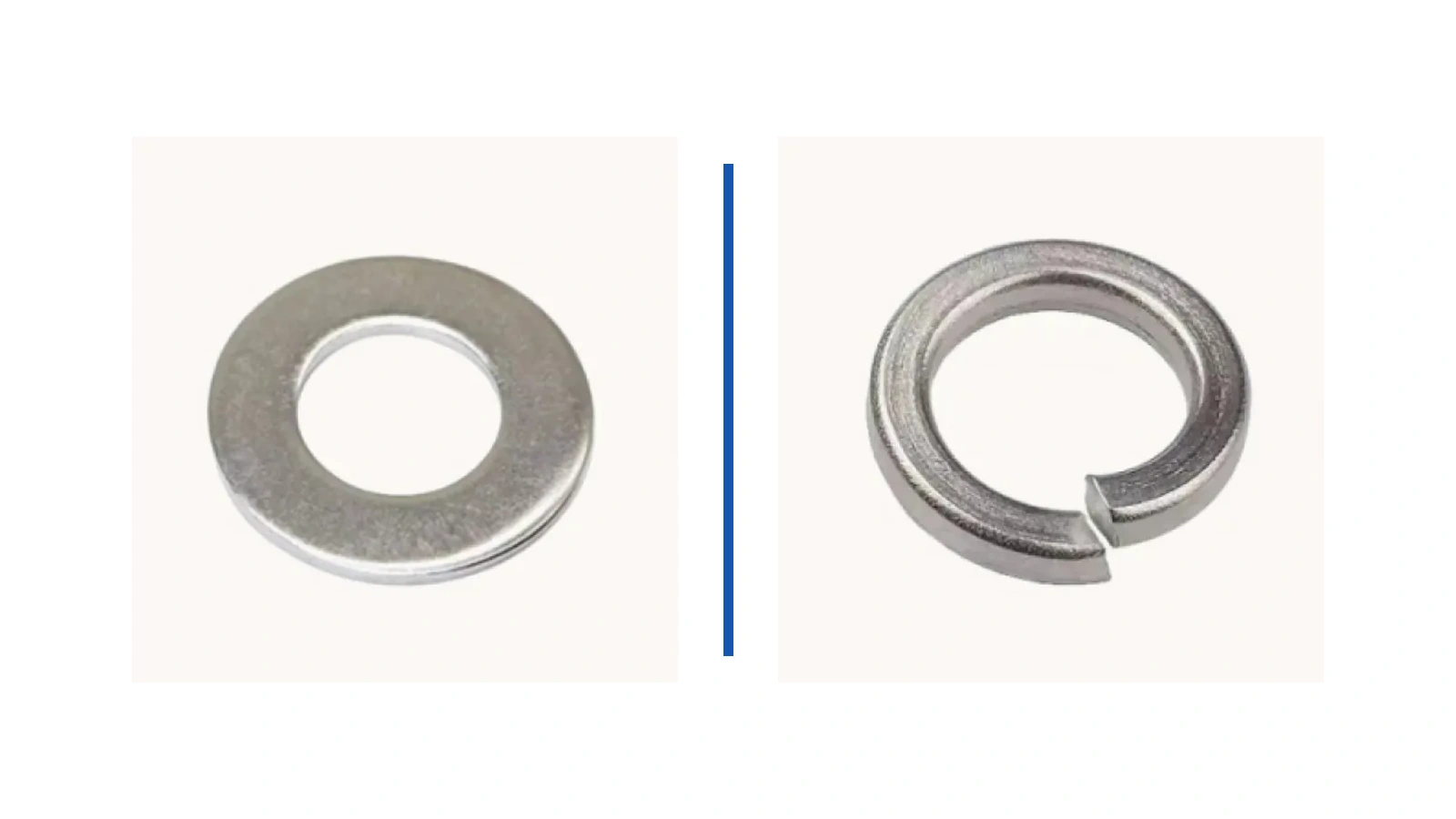
How does a spring washer differ from a flat washer?
A spring washer has formed geometry; a plain flat washer mainly spreads bearing load. Different spring-washer families have different purposes. A conventional split lock washer typically becomes flat under bolt preload, and NASA’s Fastener Design Manual cautions against relying on it for locking once flattened. A disc spring used for controlled elastic deflection is a different design task, and a wedge-lock pair is another distinct mechanism. Do not treat those categories as interchangeable.
Use a spring washer only when the joint design identifies the mechanism it needs. If vibration is the concern, validate the assembled joint with the specified preload and a suitable loosening test, such as a Junker-style transverse-vibration test. A test result belongs to a defined fastener stack and process; it is not a universal rating for every spring washer.
Which washer stacking order should you follow?
There is no universal stacking order that makes a spring washer a reliable locking device. Use a split spring washer only where the approved drawing calls for it, and follow the bearing-surface and stack requirements for that assembly. A flat washer may protect a soft substrate, but adding one changes stack height and friction and can defeat the intended interface of another locking design. Obtain approval before changing the parts or order.
Draw the stack as a cross-section and identify every interface. Confirm the bolt head or nut bearing diameter, hole clearance, washer hardness, surface coating, and tightening method. If adding a second washer reduces thread engagement or changes the grip length, the stack needs engineering approval even when the parts appear to fit.
| Choice | Primary function | Direction sensitivity | Typical compatibility question | Total-cost consideration |
|---|---|---|---|---|
| Plain flat washer | Load distribution and surface protection | Low when both faces are equivalent | Does the outside diameter cover the slot or hole without interfering? | Low part cost, but wrong size can cause embedding or rework |
| Spring washer | Formed geometry; function depends on the specific washer family | Usually defined by its geometry and seating surfaces | Do not assume a flattened split washer prevents loosening | May add assembly complexity and requires process control |
| Serrated or toothed washer | Mechanical engagement with a mating surface | Follow the actual tooth geometry and drawing; not every toothed washer is one-sided | Will teeth damage coating or violate the surface-finish requirement? | Potentially higher inspection and corrosion-maintenance cost |
| Curved or conical washer | Deflection, take-up, or spring support | High; concave/convex seating is functional | Does the available deflection match the joint movement? | Requires controlled stack height and replacement criteria |
What should procurement specify for flat washers?
Procurement should specify more than “washer” or even “flat washer.” Use the drawing or purchase specification to identify nominal size, inside and outside diameter, thickness, material, hardness or property class where required, finish, edge condition, and applicable standard. Different flat washers can share a casual name while differing in bearing area or material. ISO 7089 is a useful reference for plain washer dimensions, but the engineer still needs to confirm hole geometry, bearing stress, corrosion environment, and the bolt system.
| Application | Dimension to confirm | Orientation check | Evidence to retain |
|---|---|---|---|
| Through-hole joint | Inside diameter clears the shank; outside diameter covers the bearing land | Usually reversible for a symmetric plain washer | Drawing revision and incoming inspection record |
| Slotted or oversized hole | Outside diameter and thickness resist pull-through | Check any chamfer or anti-rotation feature | Slot direction, washer callout, and fit sample |
| Soft material or coated panel | Bearing area, hardness, and finish compatibility | Protective or bonded face may be specified | Surface-finish requirement and tightening procedure |
| Vibration-sensitive joint | Grip length, preload window, and stack height | Follow the locking element’s seating instruction | Validated assembly record and, where required, vibration-test report |
Which washer standards and documents apply?
Use standards for the part or test they actually cover. ISO 7089 addresses plain washer dimensions and tolerances. ASME B18.21.1 provides a U.S. standard framework for washers, including recognized product types and dimensional designations. The NASA Fastener Design Manual is engineering guidance on fastener and joint design; it is not a washer certification or a substitute for the customer’s drawing.
Record the standard edition, nominal size system, material, finish, and inspection method on the purchase order. A supplier’s statement that a washer is “standard” does not prove chemical composition, hardness, coating thickness, or lot traceability. Unsupported compliance language can create rejection, warranty, and export-documentation risk, especially when the joint is safety-related or sold into a regulated market.
How can teams repeat the approved washer stack?
Use this short selection sequence with design, maintenance, and purchasing together:
- Define the joint objective: bearing-area protection, load distribution, spacing, spring action, or locking.
- Inspect the part and drawing for one-sided features; mark the contact face in the work instruction.
- Check dimensions, materials, coating compatibility, and thread engagement as one stack.
- Set the tightening method and verify the assembled joint with the relevant inspection or test plan.
- Order by a controlled callout and retain a sample or image for receiving inspection.
Qiyi Fastener provides a fastener product catalogue and a spring washer product page. Compare the specific supplied part with the drawing and request dimensions, material and finish confirmation. A category listing does not validate the locking performance of the assembled joint.
Frequently asked questions about washer orientation
What is the difference between a spring washer and a flat washer?
A flat washer mainly distributes bearing load and protects a surface. Spring-washer families use formed geometry, but their functions differ: a conventional split lock washer is not equivalent to a disc spring or wedge-lock pair. NASA cautions that an ordinary helical split washer has no useful locking ability once flattened. Select the actual washer type from the joint drawing, not from the generic word spring.
What comes first, spring washer or flat washer?
There is no universal order. Put each washer against the surface it is designed to bear on, then confirm that the stack preserves preload, grip length, and surface protection. Follow the assembly drawing or obtain engineering approval before changing the sequence.
Can I use a spring washer and a flat washer together?
Yes, when the joint design supports both functions and the combined stack fits the bolt engagement and bearing limits. A flat washer may protect a soft surface or provide a stable seat for the spring washer, but it can also change height and friction. Validate the complete stack under the specified tightening and service conditions.
What are the different types of flat washers?
Plain washer families include normal, narrow and large outside-diameter patterns, with material, hardness and dimensional requirements specified separately. Hardened describes a material condition, not a unique shape. Countersunk, shoulder, bonded and conical washers are distinct designs and may have a defined face. Check the drawing and governing product standard before treating them as reversible plain washers.
References
- NASA Fastener Design Manual — Engineering guidance on threads, preload, washers and joint design.
- ASME codes and standards catalogue — Look up the named B1 and B18 standard and specify the required edition; the catalogue is not a product certificate.
- NASA-STD-5020, Requirements for Threaded Fastening Systems in Spaceflight Hardware — Spaceflight-specific design and analysis requirements; contextual engineering reference, not a requirement for ordinary industrial fasteners.
The reliable rule is simple: a symmetrical plain washer can usually face either way; a washer with a designed seating feature follows the drawing; a mark alone does not establish orientation. If the drawing leaves the direction unclear, pause the build, document the stack, and ask for a controlled answer. For a drawing review or sourcing question, contact Qiyi Fastener with the joint details and required documentation.