Summary: Remove a stripped hex bolt: isolate equipment, confirm the joint is unloaded/unpressurized, clean the head, and use the least invasive method that restores tool engagement. NASA RP-1228 shows preload and friction govern threaded joints; a rounded head under uncontrolled torque can damage surrounding parts. Escalate before heat, drilling, or extractors near safety-critical, sealed, high-strength, or inaccessible assemblies, then replace the fastener and fix the cause.
Stripped hex bolts should be assessed before removal starts
A stripped head is a condition, not a removal method. Before touching the bolt, isolate hazardous energy under the site’s lockout procedure, support any component that the fastener restrains, and confirm that no pressure, stored energy, electrical exposure, or suspended load remains. Photograph the condition and record the fastener size, head style, corrosion evidence, and access limits; these observations help prevent the same failure on the next service interval.
Clean loose rust, coating debris, and paint from the six flats with a brush or non-damaging pick, then measure the remaining across-flats size. A correctly sized six-point socket or box wrench should contact the flats rather than the corners. If more than one flat is visibly deformed, or the socket rocks under hand pressure, stop before applying removal torque. The practical boundary is simple: do not use impact loading, extensions, or improvised gripping methods when they could break the bolt, damage a casting, or put a worker in the line of force.
Start with the least invasive controlled method
For an accessible head with limited rounding, seat a quality six-point socket fully and apply slow, square torque with the tool aligned to the bolt axis. A penetrating fluid may help only where its safety data sheet, equipment cleanliness rules, and ignition controls permit it; allow the stated dwell time and wipe away excess before work resumes. A small back-and-forth movement can sometimes free corrosion products, but stop immediately if the head continues to deform or the joint moves unexpectedly.
Torque is an indirect measure of clamp load because thread and bearing friction consume much of the applied energy. NASA’s Fastener Design Manual describes this interaction and is useful context for maintenance teams deciding why a previously overtightened or corroded joint may resist removal. It does not turn a general torque value into a safe removal limit; the correct limit depends on diameter, grade, finish, lubrication, and the surrounding component.
Hex cap screws need full drive engagement during troubleshooting
Although shop language varies, a hex-head part threaded into a tapped hole is often called a cap screw, while a bolt commonly works with a nut. The removal priority is the same: establish whether the tool can transmit force through intact geometry. For hex cap screws, check that the socket, wrench, or crowfoot is not oversized, worn, tilted by nearby hardware, or blocked from seating to full depth.
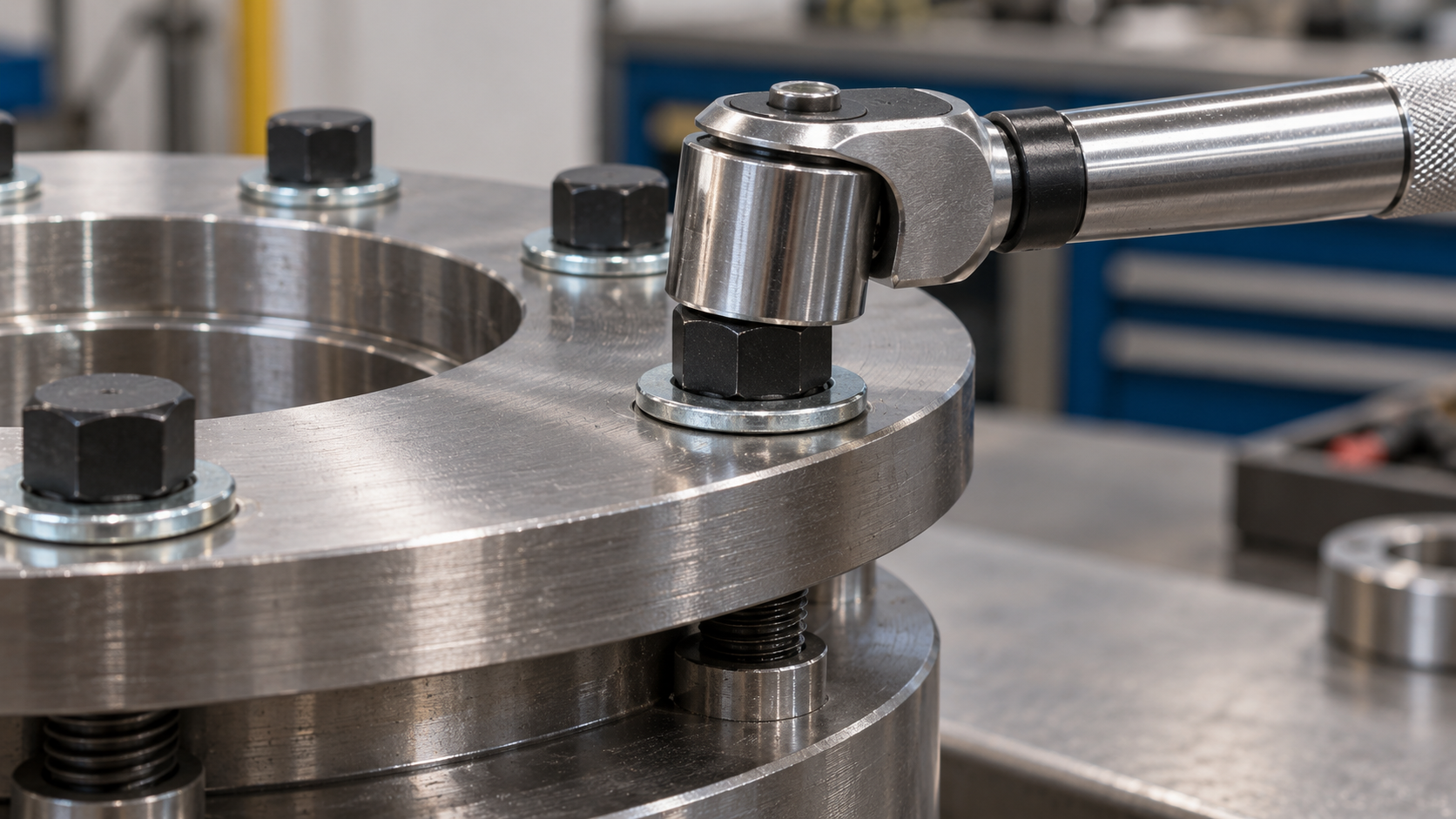 Full engagement on clean flats reduces corner loading and tool slip.
Know where routine maintenance ends
Do not heat a joint casually. Heat can damage coatings, seals, lubricants, nearby wiring, or heat-treated properties, and it can create ignition hazards. It is appropriate only under an approved hot-work process with the assembly material, adjacent components, fire controls, and cooling effects assessed. In a pressure boundary, food-contact zone, hazardous location, or critical load path, engineering or the equipment manufacturer should define the repair method before any heat is applied.
Drilling and extractors also have narrow operating limits. They require positive access, a verified centerline, shielding to keep chips out of the equipment, and a plan for protecting the parent threads. Stop and escalate when a broken extractor, eccentric drilling, or hardened bolt could compromise a threaded hole, structural member, or machined surface. A specialist may use guided drilling, welding-based removal, or a thread repair system, but those are controlled repairs rather than a default field technique.
For planned replacement work, specify the correct driving interface and access space in the design review. ASTM F606/F606M is a mechanical test-method standard for threaded fasteners, not a blanket approval of a removal technique. The named material, geometry, installation torque or tension method, and maintenance access must all be suitable for the application.
Heavy hex bolts require extra attention to joint and head condition
Heavy hex bolts have a larger head and nut bearing area than standard hex patterns of the same nominal diameter in the standards that define them. They are commonly associated with structural or heavy-duty joints, but the label alone does not establish grade, preload, or installation procedure. On a joint that may be carrying structural load, use the approved maintenance or engineering procedure before loosening any fastener.
Inspect the joint after the bolt is out
Removal is only half the job. Inspect the nut or tapped threads, washer, hole edge, mating faces, and adjacent coating for distortion, fretting, cracks, or heat damage. Replace a rounded, stretched, cracked, visibly corroded, or otherwise suspect fastener rather than dressing it for reuse. If a replacement is specified for a structural joint, use the designated assembly components and installation process; mixing components can invalidate the intended preload relationship. Where the drawing needs an integrated bearing surface, the compatible flange nut range should be selected with the bolt and joint finish, not as an afterthought.
ASTM Committee F16 develops specifications and test methods for fasteners, while ASTM F3125/F3125M covers high-strength structural bolts, assemblies, and related components. Their scope matters commercially: a grade name or a head shape is not evidence that an installed assembly meets a project requirement. Request the applicable product standard, lot identification, and installation documentation rather than relying on appearance.
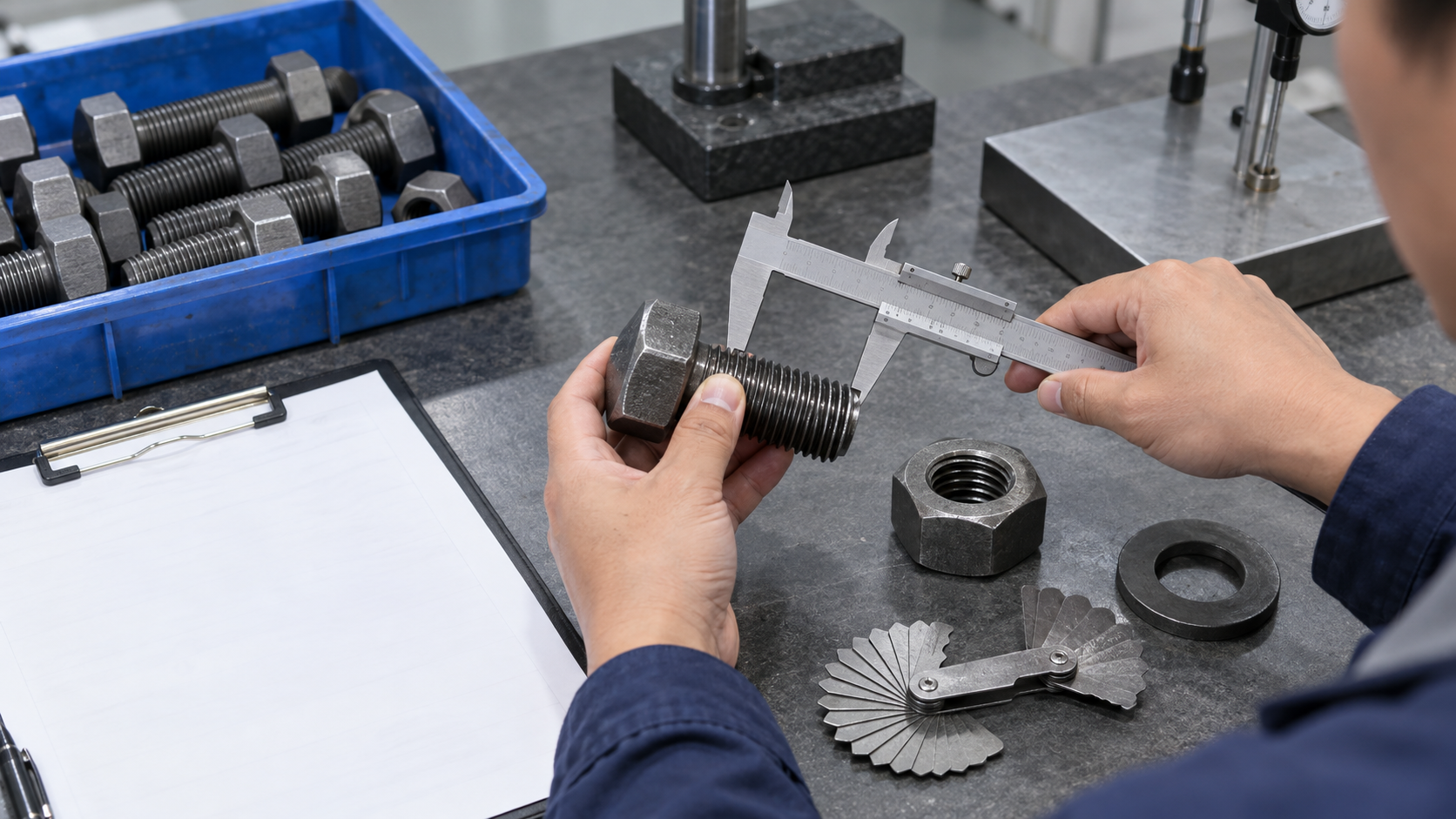
Inspect head damage, washer condition, corrosion, and bearing surfaces before replacing a heavy-duty joint.
Frequently asked questions
What are heavy hex bolts?
Heavy hex bolts are bolts with a larger hex head and typically a larger nut bearing area than standard hex patterns at the same nominal diameter, as defined by the applicable standard. They are often used in heavy-duty or structural applications, but their head pattern alone does not identify the grade or installation requirement. Confirm the governing standard and assembly specification before selection or replacement.
What is the difference between hex cap screws and hex bolts?
In common industrial usage, a hex cap screw is often installed into a tapped hole, while a hex bolt commonly passes through clearance holes and is tightened with a nut. Terminology can vary by drawing, standard, and supplier catalog. The purchase specification should define thread length, head style, grade, and mating hardware instead of relying on the name alone.
What is the difference between a standard hex bolt and a heavy hex bolt?
A heavy hex bolt uses larger hex dimensions and a greater bearing surface than a standard hex bolt of the same nominal diameter under the relevant dimensional standard. That difference can affect wrench size, clearance, washer selection, and bearing pressure. It does not automatically mean the heavy pattern has a higher strength grade; verify both geometry and mechanical requirements.
What is the difference between a cap screw and an Allen bolt?
A cap screw describes a threaded fastener category, while an Allen bolt is informal wording usually used for a fastener with an internal hex socket driven by a hex key. A socket-head cap screw is a common example. For maintenance planning, specify the exact drive style and access space because an internal socket that rounds needs a different controlled removal approach from an external hex head.
References
- NASA, Fastener Design Manual (NASA Reference Publication 1228)
- ASTM International, Committee F16 on Fasteners
- McMaster-Carr, Hex Bolts
For replacement hex bolts and a requirement-led sourcing discussion, review Qiyi Fastener’s product range, then send the drawing, application, quantity, material, finish, and documentation needs through the contact page.