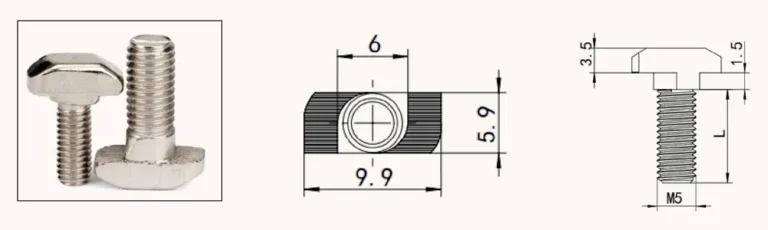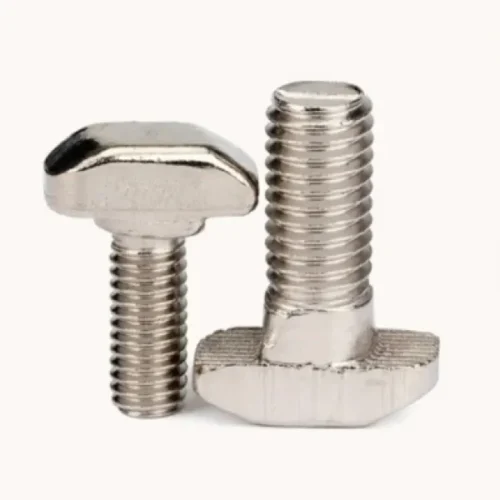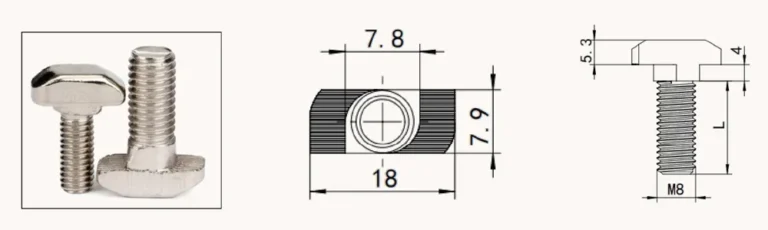
Anti-rotation T-nut performance starts with selecting the correct nut family and slot geometry. A nut that turns while a bolt is tightened is usually a fit, sequence, access, or hardware-selection issue—not a problem that should be solved by forcing the joint.
Identify why the T-slot nut rotates
Rotation can happen when the nut body is too loose for the slot, when it has not reached its captured position, when the bolt is tightened before alignment is confirmed, or when the wrong nut family is used for the assembly sequence.
| Observed problem | First check |
|---|---|
| Nut turns immediately | Confirm slot width and nut geometry. |
| Nut turns after partial tightening | Check insertion and seating sequence. |
| Nut moves along the slot | Review whether a sliding nut is intended. |
| Joint will not clamp flat | Confirm bracket, thread engagement, and access. |

Match retention method to the job
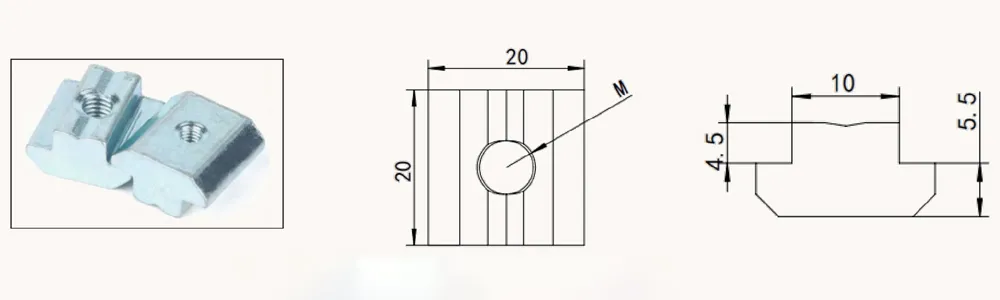
Spring ball and spring leaf T-nuts are reviewed where the nut should stay positioned in an open profile slot. Hammer nuts rely on insertion and rotation into capture. Sliding nuts are suited to hardware that must travel along an existing slot. Each family has a different assembly behavior.
Compare the sliding nut product page with the spring-nut pages before changing a BOM line.
Use a controlled installation sequence
Insert the nut with the approved orientation, position the bracket or panel, hand-start the mating screw, confirm the nut is seated, and only then tighten with the project-approved tool. Do not use the fastener to pull a mismatched or unseated nut into place.
For size and slot guidance, see the T-nut thread and slot size guide.

RFQ and work-instruction inputs
Document slot width, profile series, nut family, thread, model code, bracket thickness, access direction, and the approved assembly sequence. If rotation occurs only at a particular location, include photographs or a drawing mark-up with the RFQ.
Fit boundary
This article does not set torque, load, vibration, or anti-loosening requirements for a specific frame. Do not add adhesives, modify nut geometry, or force a nut into a slot without an approved engineering review.
Product review and FAQs
Review the sliding nut range and contact QIYI with the drawing and installation details when a different nut family may be required.
Why does my T-slot nut spin while tightening?
Check the slot fit, seating position, thread alignment, and nut family first.
Can I tighten harder to stop rotation?
No. More force can damage the profile or fastener without correcting a fit issue.
Which nut stays in position in an open slot?
Review spring ball and spring leaf T-nuts for retention-based assembly methods.