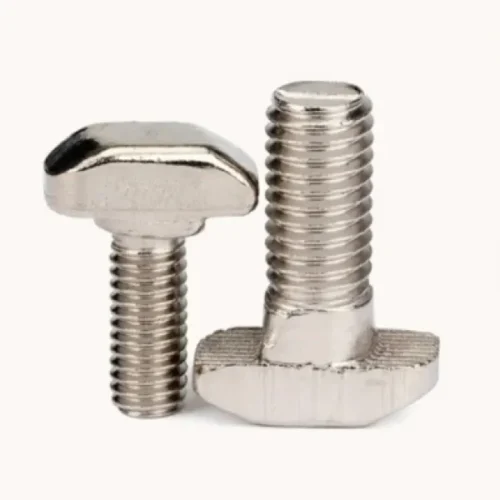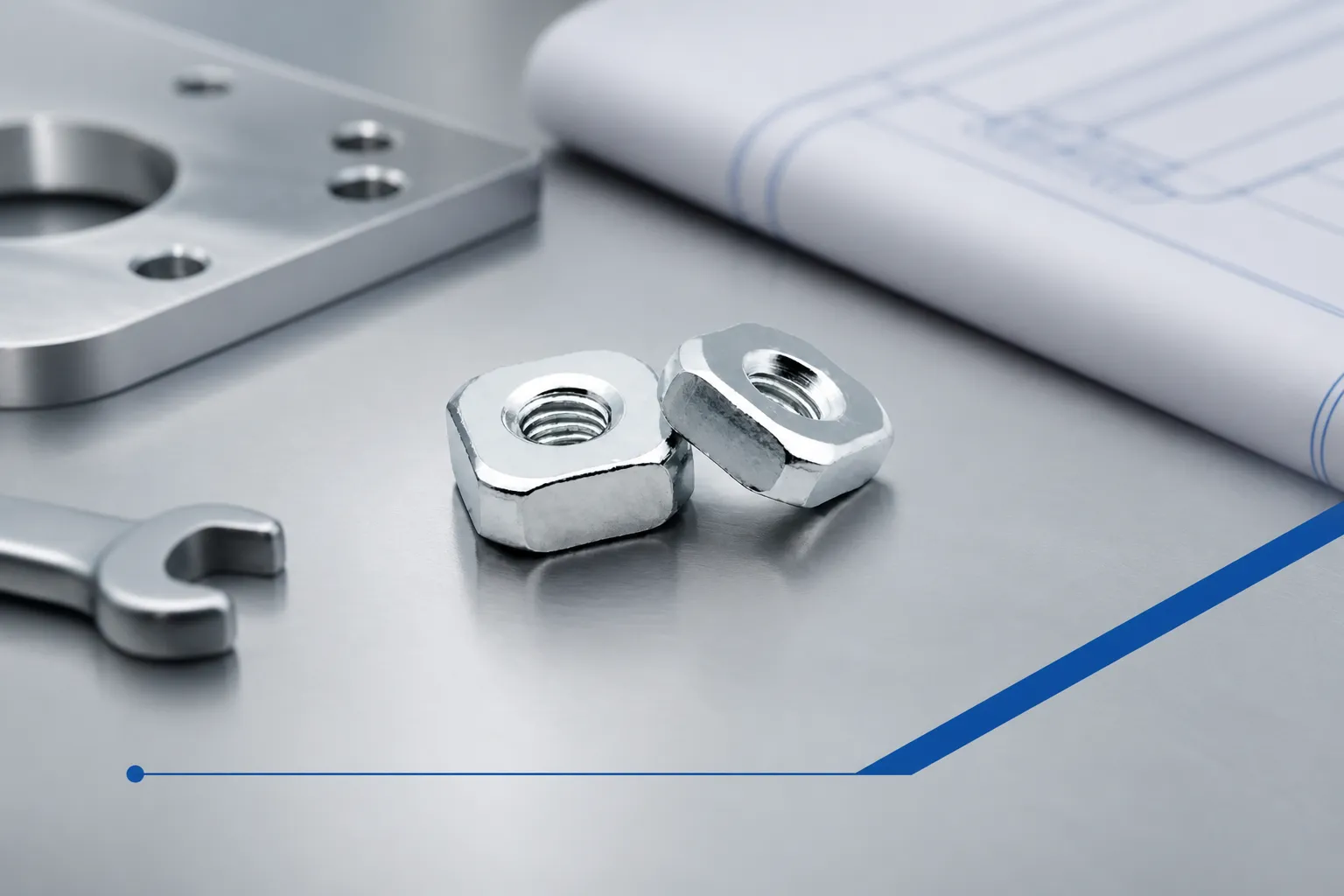
T-nut dimensions should be specified as a complete assembly requirement, not as a thread size alone. For aluminum profiles, the RFQ needs the mating thread, the actual slot width, nut family, material or finish, and the installation direction.
Why the thread callout is only one part of the specification
An M4, M5, M6, or M8 callout identifies the mating bolt or screw, but it does not prove that the nut body fits the slot. It also does not identify whether the project requires a spring ball, spring leaf, hammer, or sliding nut.
| RFQ input | Why it is needed |
|---|---|
| Thread designation | Matches the mating fastener. |
| Slot width or profile drawing | Confirms the nut body can enter and seat. |
| Nut family | Defines installation and retention behavior. |
| Material and finish | Supports the project environment and BOM. |
Match the nut family to the assembly method
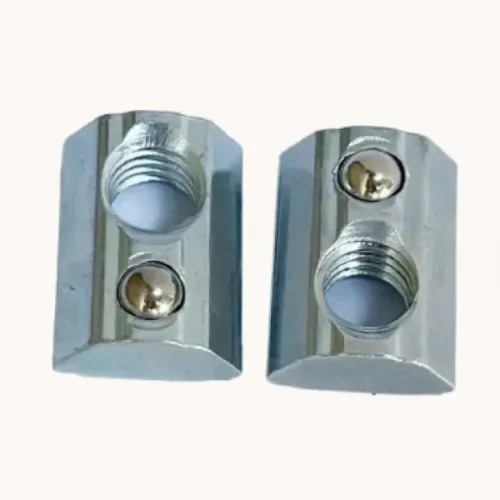
Use a spring ball T-nut where the assembly benefits from a nut that stays positioned in an open slot. Use a spring leaf T-nut where that retention method is called out. A hammer nut is inserted and rotated into capture, while a sliding nut is reviewed when hardware must move along an existing slot.
See the T-nut with spring ball range and the T-nut with spring leaf range after confirming the drawing.

Write a purchase-ready T-nut RFQ
A complete request should include the profile series or slot width, thread size, nut family, material, finish, model code if known, quantity breaks, and drawing revision. This prevents a generic request for an “M6 T-nut” from being quoted with the wrong insertion method or slot geometry.
For a comparison of retention methods, read spring ball vs spring leaf T-nuts.

Fit boundary
Do not select a T-nut from thread size alone. Slot dimensions, access direction, joint design, and the approved drawing remain controlling. This guide does not establish torque, load capacity, vibration performance, or compatibility for an unverified profile system.
Product review and next step
Review the T-nut with spring leaf product page or the spring ball range against the assembly drawing. For a quotation, send the drawing, slot width, thread, material, and quantities.
FAQs
Can I choose a T-nut by thread size alone?
No. Confirm the slot width, nut family, material, and installation access as well.
Is M6 always the right choice for aluminum profiles?
No. M6 is common, but the approved drawing defines each joint.
What should be on a T-nut drawing?
Show the profile slot, thread callout, nut family, material or finish, model code if approved, and location quantity.
When should I use a sliding nut?
Review a sliding nut where components must be added along an already assembled profile slot.