Metal roofing has a long life and is energy efficient, comes in a variety of attractive designs, is strong, and has many other unique characteristics. All of these advantages, however, can be lost by improper installation using the wrong fasteners for metal roofs. Fasteners are critical to the integrity of the entire metal roofing system so proper fastener choice is also critical for maintaining panel integrity, sealing and keeping water from leaking into the building, and providing resistance against wind uplift while ensuring the whole system will last many years.
For contractors, builders, homeowners, and purchasing agents, selecting the correct metal roofing fastening system is important because it influences how well the roof will be waterproofed, how long the roof will last, how much maintenance you will have to do on the roof, and how your building appears. If you have a building that has either an exposed fastening system for the panels or standing seam metal roof systems, corrugated metal roofs, or roofs with concealed fasteners, having knowledge regarding your options will have an impact on making better purchasing decisions.
What Are Metal Roof Fasteners?
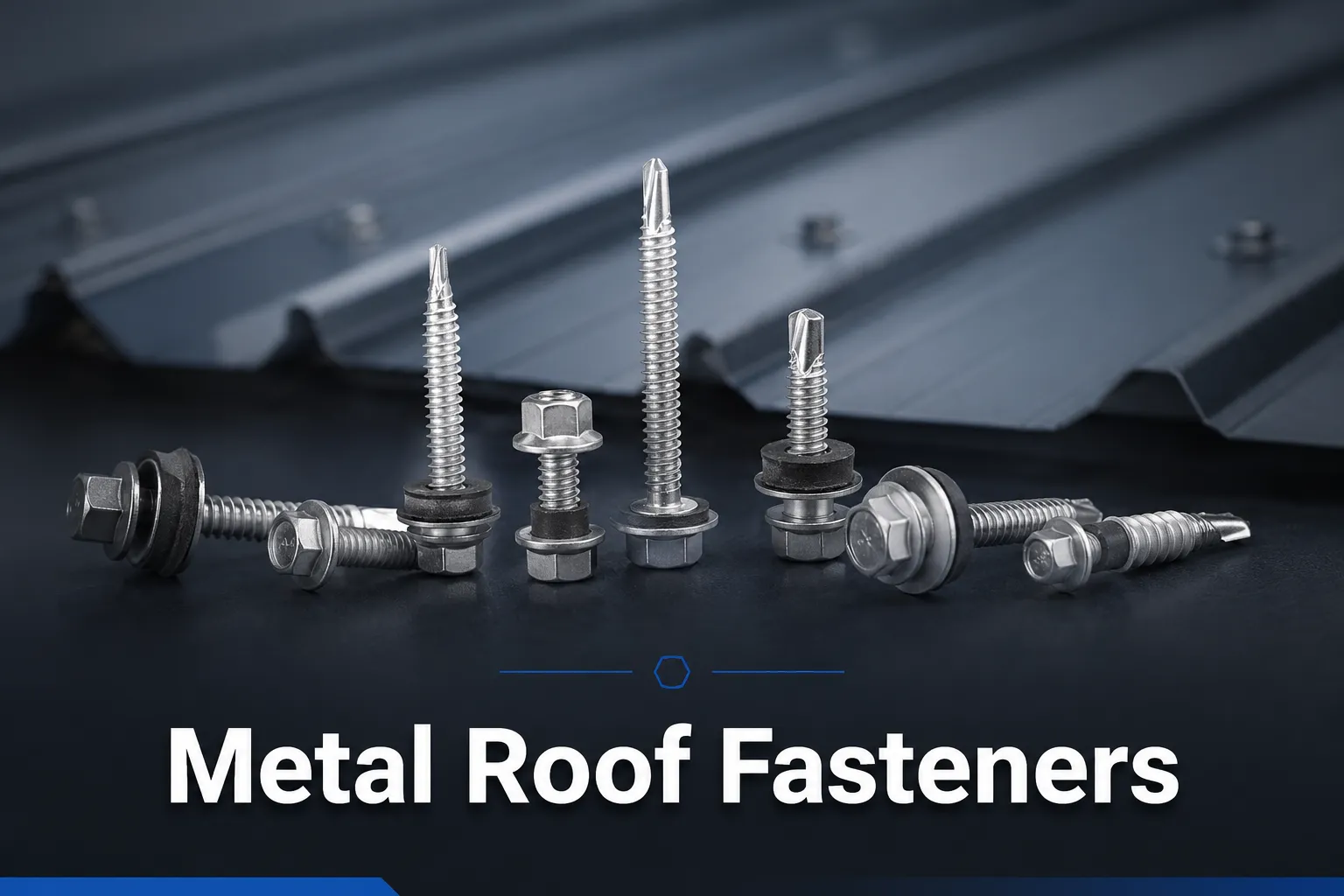
The screws, clips, bolts, washers, etc., used to hold roof panels to the roof deck (or structure) are referred to as fasteners. Although their job is very simple theoretically, it’s a lot more difficult to do the job in reality, i.e., holding the roof on strong enough to resist: water, corrosion, thermal movement, vibration, and extreme weather conditions.
Most fasteners for metal roofs typically consist of either carbon steel, stainless steel or similar types of corrosion resistant material. Many fasteners have coatings or plating to increase their durability as well. Screws in exposed fastener systems will usually include an EPDM rubber sealing washer or something comparable to provide a watertight seal around the area where they penetrate through the roof surface.
To accommodate expansion/contraction of metal due to temperature fluctuations, fasteners should be matched to panel type, substrate type, local weather conditions, and anticipated building movement. A fastener that works well on one roof system could fail on another.
Why the Right Fasteners Matter for Metal Roofing
The reliability of a metal roof depends solely on its weakest point of connection. Fasteners that are installed at low-quality levels or incorrectly will cause leaks, movement of panels, rust staining, oil canning, noise, and an early failure of the roof. Improperly fastened roofs in wind-prone areas may be at an increased risk of uplift failure as well.
Having the right fasteners is essential for metal roofs because they create a secure sealing system, help support the panels, and assist in reducing future maintenance costs. In addition to these benefits, fasteners can impact how your metal roof looks. For example, when using color-matched screws on exposed fastener panels, the fasteners will be less noticeable than if you are using screws that do not match the color of the panel. A hidden fastening system can provide a very smooth, modern look to your metal roof.
When designing commercial buildings, agricultural buildings, industrial buildings, and residential buildings the fasteners should be considered as part of the overall roof system design rather than just being viewed as an accessory that can be purchased quickly.
Main Types of Metal Roofing Fasteners
Exposed Fasteners
Fasteners that can be seen outside a roof installation, fastened each fastener through the face of the metal roofing panel and remain visible after installation. They are usually found on corrugated, R-panel, PBR-panel, and many types of roofing systems used in agriculture and utility industries.
An exposed fastener roof typically consists of three main parts: a screw head, a metal washer, and an EPDM sealing washer. Proper installation causes the washers to press together and create a seal between the panel surface and the washer. Due to the lower cost and ease of installation, exposed fastener systems are a popular choice for barns, warehouses, sheds, garages, and many other residential projects.
While all other considerations are secondary, keeping up with your roof’s care will be the biggest part you’re facing as you maintain your roof. Washers will eventually age from uv light and weathering over time. The screws may loosen slightly from thermal expansion/contraction. Therefore, it is important to periodically check that the roofing is still watertight.
Hidden Fasteners
Fasteners that are hidden or invisible are either referred to as hidden fasteners or concealed fasteners and they cannot be seen from the outside of the roof surface. These types of fasteners are typically found with standing seam (SSM) metal roof systems where panels are secured to the roof structure with clips or other fastening methods under the raised seams of the panels or the locking edges of the panels.
Metal roofs that feature concealed fasteners are typically found on modern homes, commercial facilities, architectural designs, and roof systems that are highly effective at resisting the elements over the long term due to having fewer penetrations into the panel surface.
While it may cost more to install a hidden fastener system initially, they usually do require fewer repairs over time and will last longer with a proper installation.
Self-Drilling Screws
Self-drilling screws feature a drill point shaped like a drill bit. This design allows the screw to penetrate through metal without needing to pre-drill the hole. In addition, these screws are commonly used when attaching metal panels to steel framing or purlins. With the help of self-drilling screws, installation time will be greatly reduced; therefore, you will have a more uniform fastening system.
Choosing the appropriate drill point is very important when using different types of screws; i.e. light-gauge steel, heavy-gauge steel, and wood will have different screw designs. If you use the incorrect drill point for your screw, you may end up stripping it, have poor holding power (or both), and/or have problems with the installation of your screws.
Self-Tapping Screws
While self-tapping screws do create threads as they are screwed into materials, they can sometimes require a pilot hole depending on the type of material being used. They can be used as an option to connect metal to metal or wood to metal when accuracy is necessary.
Stitch Screws and Lap Screws
One of the purposes of stitch screws (or lap screws) is to connect overlapping metal panels together, instead of directly attaching metal panels to the framing of the building. They are used to fasten together side laps, trim connections and other flashing details. Correctly fastening laps with stitch screws will help to stop panels from separating and allow for water intrusion from wind-driven rain.

Common Materials and Coatings for Metal Roof Fasteners
The performance of a fastener is determined by both its material and coating for a number of different environmental conditions. When working in dry inland conditions, many projects can use coated carbon steel screws to complete the work. However, fasteners that are exposed to coastal, industrial, agricultural, or highly humid environments require significant corrosion resistance.
Due to their superior corrosion resistance, stainless steel fasteners are most often specified for use with aluminum panels or in coastal projects or environments where chemical exposure is a concern. When properly matched to the roofing material, coated fasteners can also provide excellent corrosion protection. Examples of coated fasteners include galvanized, zinc-plated, ceramic-coated, and other specialty coatings.
When it comes to metal compatibility, it’s important to avoid using incompatible metals — especially if moisture is present, as this could result in galvanic corrosion. For example, selected fasteners may not be suitable for aluminum, copper or zinc roofing unless they are specifically made for those types of materials. Therefore, always refer to the panel manufacturer’s specifications, or consult with an experienced fastener supplier, when uncertain.
How to Choose the Right Metal Roof Fasteners
Choosing the correct fastener entails knowing more than just its length. There are several factors to consider, including what kind of roof panel you are using, the substrate you are attaching it to, your local climate, and what type of coating/finish is applied to the substrate. When selecting a fastener you must also consider any warranties associated with those products as well as how they will be installed.
It is important to know the type and thickness of your metal roofing panel, as well as the material you will be fastening to, how much pull-out resistance is required, and whether your system will be using exposed or concealed fastener systems before buying metal roofing fasteners that work best for your project. The length of the screw must provide sufficient embedment when fully extended, while not being excessively long. The head type should also be appropriate for your application and allow for secure driving without damaging the panel surface.
Another consideration to take into account is colour coordinating. A colour matched painted screw head will enhance the overall look of the finished product with a metal panel roof that has exposed fasteners. In some cases, it will be necessary to consider using concealed clips or metal roof hidden fasteners for better visual effect, especially with high-end architectural design projects.
If you are in an area that experiences snowfall, heavy rain periods, high temperatures and intense winds, then use higher quality fasteners and adhere to the installation spacing guidelines provided by the manufacturer when installing your roof. Even though choosing the cheaper screw may save you some money, the cost of having to replace a leaking roof after a few years will outweigh the initial savings on cheap screws.
Exposed vs. Hidden Fasteners: Which Is Better?
Both exposed fasteners and hidden (or concealed) fasteners can provide excellent performance provided they are properly installed and designed. Which fastener system is right for your application depends largely on budget, type of building, performance expectations, and aesthetics.
Fastening systems that use exposed fasteners normally provide considerable advantages in terms of both cost of installation and speed of installation. For this reason, many different types of agricultural, commercial, storage and residential applications often use these types of fastening systems. However, because the fasteners penetrate the face of the panel, they require periodic inspections of the fasteners to ensure that the washers are sealed properly and that the screws remain tight.
Invisible or hidden fastener systems give roofs a cleaner looks by eliminating visible penetrations through the roof, which may help to provide better long term watertightness. In addition, they often require less routine maintenance than screws or rivets. Further, standing seam roof systems with concealed clips, allow for longitudinal expansion and contraction of each panel thus providing even more value for long roof runs.
If upfront cost is your top priority, then you might prefer an exposed fastener roof. If you want a metal roof to improve the look of your home, last longer, and require less maintenance over time — than a metal roof using hidden fasteners would probably be a better option for you.
Installation Best Practices for Metal Roof Fasteners
The quality of the fasteners used to install an object is equally as important as how properly the fasteners are installed. Premium screws may not hold properly or at all, if they were installed with an excessive force (overdriven), insufficient force (underdriven), installed at the wrong angle or in an improper location.
The sealing washer should be compressed sufficiently to create a seal but compressed too much such that it will bulge excessively or deform. If you overdrive the washer and/or panel coating, damage will occur. Underdriving may allow for gaps in which water can penetrate. When fastening, all fasteners should be installed straight and not at an angle for proper sealing and holding strength.
Adhere to the fastening pattern specified by the manufacturer of the metal roofing panels. Panel fastening may occur over the flats, or through the ribs depending on the panel profile and design. For the spacing and type of fastener used, consult local building codes, wind zone requirements, and engineered drawings when determining the appropriate distance between fasteners.
In order to achieve the best possible result, installers must follow these basic guidelines: use the appropriate tools; apply uniform torque; and practice cleanliness when handling components. It is important that any metal shavings resulting from installation (the drilling process) be cleaned off the roof surface prior to completing the install, as metal shavings can rust and cause stains on panel.
Common Problems Caused by Poor Fastener Selection
Poorly installed fasteners and an inability to detect where moisture is leaking can often lead to damaged metal roofs. It’s common for water to enter via the screwheads on an exposed-fastener type of roof when wear and tear takes a toll on the washers, screws loosen up or the fasteners aren’t put in place properly.
Corrosion also poses a significant risk to fasteners. Fastener coatings should be appropriate for their intended environment; if not, rust will occur and spread, causing significant weakening and visually unattractive properties at roof connections. It is especially critical to use corrosion resistant fasteners in coastal areas.
Problems can occur because of panel movement as metal expands/contract on its own. This means that, when you install a roof, you must ensure that the fastening system can accommodate the movement of the panels, as too tight of a board may restrict proper movement or use of incorrect installation methods might lead to stresses, deformations or other forms of noise on the roof.
Installing high-quality metal roofing fasteners, according to the manufacturer’s upload instructions, is among the best means to assist in preventing these problems.
Maintenance Tips for Metal Roof Fasteners
Although metal roofs require little upkeep, they are not entirely free from needing maintenance. Doing regular inspections will reveal minor issues before they become large, costly leaks for exposed (i.e., non-sealed) metal roofs. The best time to check your metal roof is after major storms, when there has been high wind, heavy snow, or after a major change in temperature.
Inspect for visible screw loosening, washer cracking, missing fasteners, rusting, failed seals, or possible water infiltration. When the screws on your equipment have loosened and come out, you will typically replace the screw with either a larger-diameter screw or use a new screw to retighten it in order to avoid creating an oversized hole. When washers are found to be damaged, they should be replaced at the earliest opportunity.
While you will generally perform maintenance on hidden fastener systems less often than visible systems, you will still need to periodically inspect seams (edges), clips (fasteners), flashing (waterproofing), and penetrations (holes) in your roof. Additionally, roof accessories (like roof vents, skylights, snow guards, and solar mounts) should be inspected for additional areas where they attach to the roof structure because all of these are points of attachment on your roof.
FAQs
What is a hidden fastener on a metal roof?
A fastener (or “fastening component”) on a metal roof is hidden from view. It will be placed behind a roofing panel (also called a roof panel or tile), a seam/edge/clip system, or other components making up the roof’s structure to not show through to the outside of the building as you walk down the street. An example of a hidden fastener in standing seam metal roofing is to install clips onto the roof deck or framing members and then cover those clips with the seams of the metal panels themselves. Having hidden fasteners creates a smooth exterior appearance without having any exposed holes/stitches on the surface of the roof, therefore providing better weather resistance and performance throughout the life of the product.
How often should you put screws in a metal roof?
The spacing of screws in a roof will be determined by both the panel profile and the roof. It will also depend on the substrate of the building, the wind load for the area, and the fastening requirements from the manufacturer. In most cases, the screw spacing will be between 12” and 24” apart for exposed fastener metal roofing (across the purlins), but there could be significant variation from that distance. The edge of the roof, edges of the eaves, ridges, laps, and areas subject to high winds may require a greater number of screws and therefore, more closely spaced than just the 12”-24” specification. Be sure to follow the manufacturer’s fastening schedule or local codes instead of just assuming one general spacing for the entire project.
Are hidden fasteners better than exposed fasteners?
Premium roofs are typically thought of as having hidden fasteners due to the clean look they provide, fewer exposed screw holes, and less hinderance to thermal movement on some standing seam systems. Although a well-installed exposed fastener may still be a reliable and economical option; however, it depends on your: (1) Budget, (2) Roof Type, (3) Climate, and (4) Performance Expectations.
What screws are best for metal roofing?
Screws designed specifically for the panel material, substrate, and environment are considered the best screws for metal roofing. For exposed systems, quality metal roofing screws are generally used with durable coatings and will also have EPDM sealing washers. If in a coastal or corrosive environment, stainless steel or high-performance coated fasteners might be recommended. Be sure to match the fastener to the roofing manufacturer’s specifications.
Can metal roof screws be reused?
In general, don’t reuse metal roofing screws unless they’re in good condition with no signs of compression, cracking or weathering. If you do use an old screw on a re-purposed panel or for repairing the roofing system, it will have reduced seal and hold capacity as compared to when it was new. Whenever you are replacing panels or repairing your roof system, use new fasteners that are compatible with the existing roof system.
Though metal roofing fasteners are small roofing components, they can affect the performance of the roof, its appearance, and the longevity of the life of the roof all equally. Use the appropriate fastener type, material, coating, and installation method, and you will minimize leaks, increase wind resistance, and protect your investment for years to come. When deciding between an exposed fastener system or a standing seam system secured with concealed clips, it is best to match a fastening system to the design of the roof, the environment in which it will be installed, and the requirements of the manufacturer.