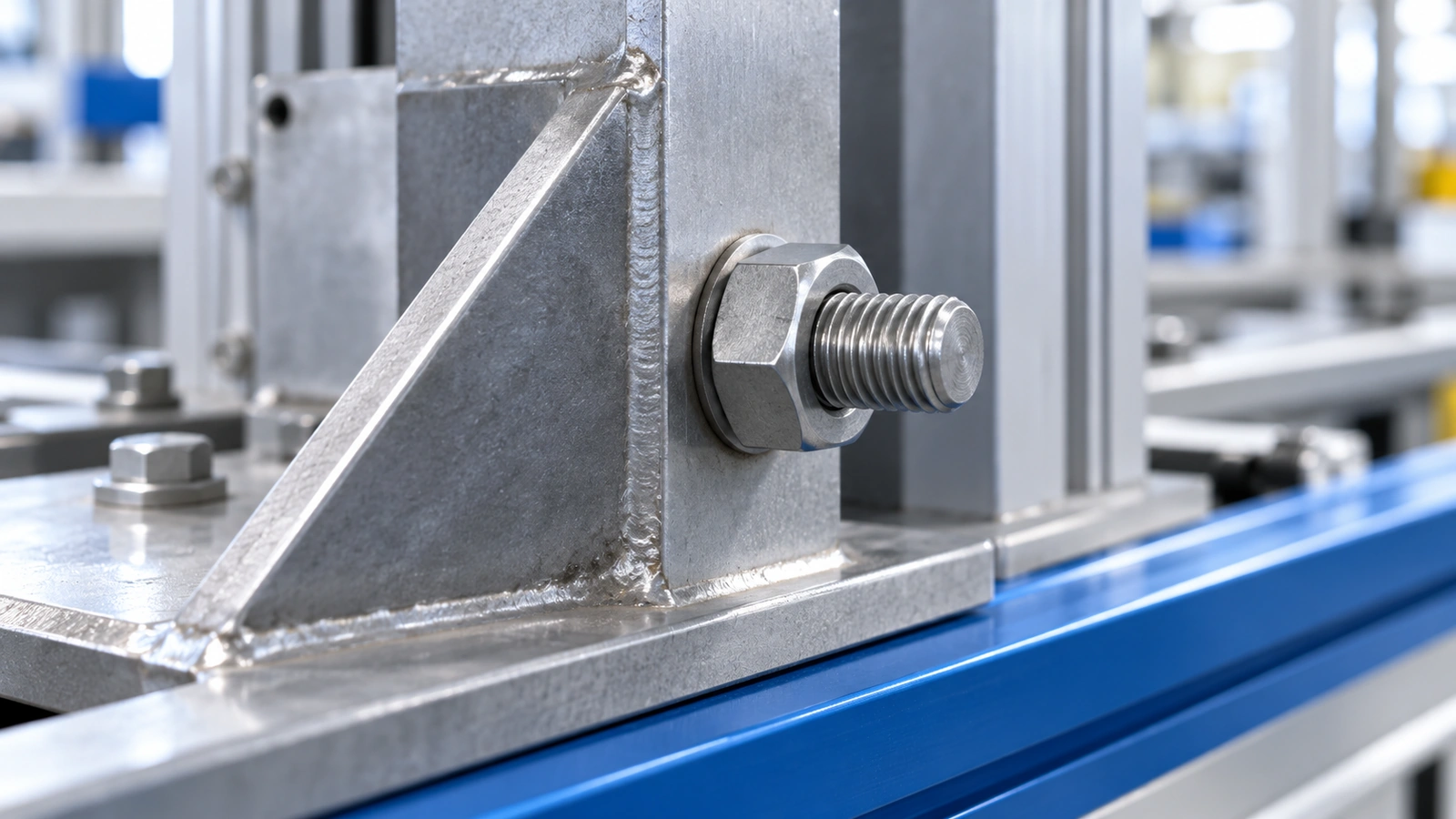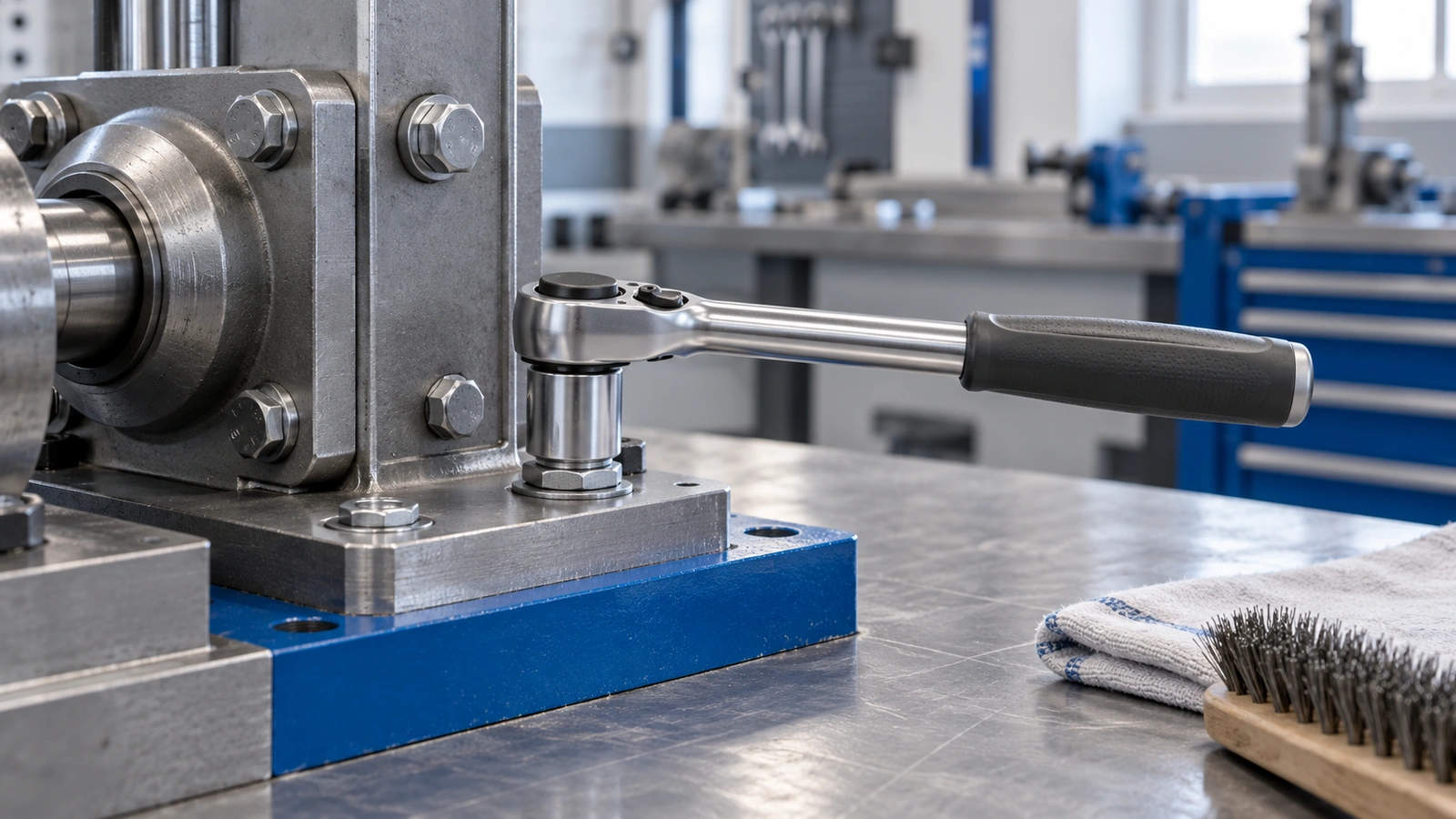
Illustrative scenario: When Lena, a maintenance engineer in Birmingham, drove a replacement fastener into an aluminum guard, the head cammed out on the first tightening pass and the guard shifted under vibration. She changed the driver twice before checking the interface: the replacement had a coarse thread, a mismatched Phillips recess, and no verified seating depth. The failure was a selection and specification problem, not proof that the fastener category was unsuitable.
Summary: A screw uses a helical thread to convert rotation into axial travel. For a single-start thread, lead equals pitch: a 1 mm pitch gives 1 mm of relative travel per revolution before elastic effects. Multi-start threads have a lead greater than their pitch. This mechanical principle is different from the machine-screw product category. Specify thread, drive, material and joint geometry together.
A screw simple machine explains why machine screws can clamp parts.
A screw is an inclined plane wrapped around a cylinder. Torque turns the thread and produces relative axial movement. For a single-start screw at a fixed input radius, smaller lead increases the ideal mechanical advantage, while friction consumes input energy. A multi-start thread needs its lead, rather than pitch alone, in that comparison. OpenStax explains why force multiplication does not create additional work or energy.
Radius matters as well. A longer handle can raise applied torque at the same hand force, but it can also overload a small screw or strip a soft tapped hole. The simplified ideal relationship is often expressed as a ratio of circumferential distance to axial rise; real joints require a friction term and account for thread angle, surface finish, lubrication, and embedment. NASA’s Fastener Design Manual treats preload, friction, and joint behavior as design variables, which is why a textbook mechanical advantage should not be converted directly into a tightening torque.
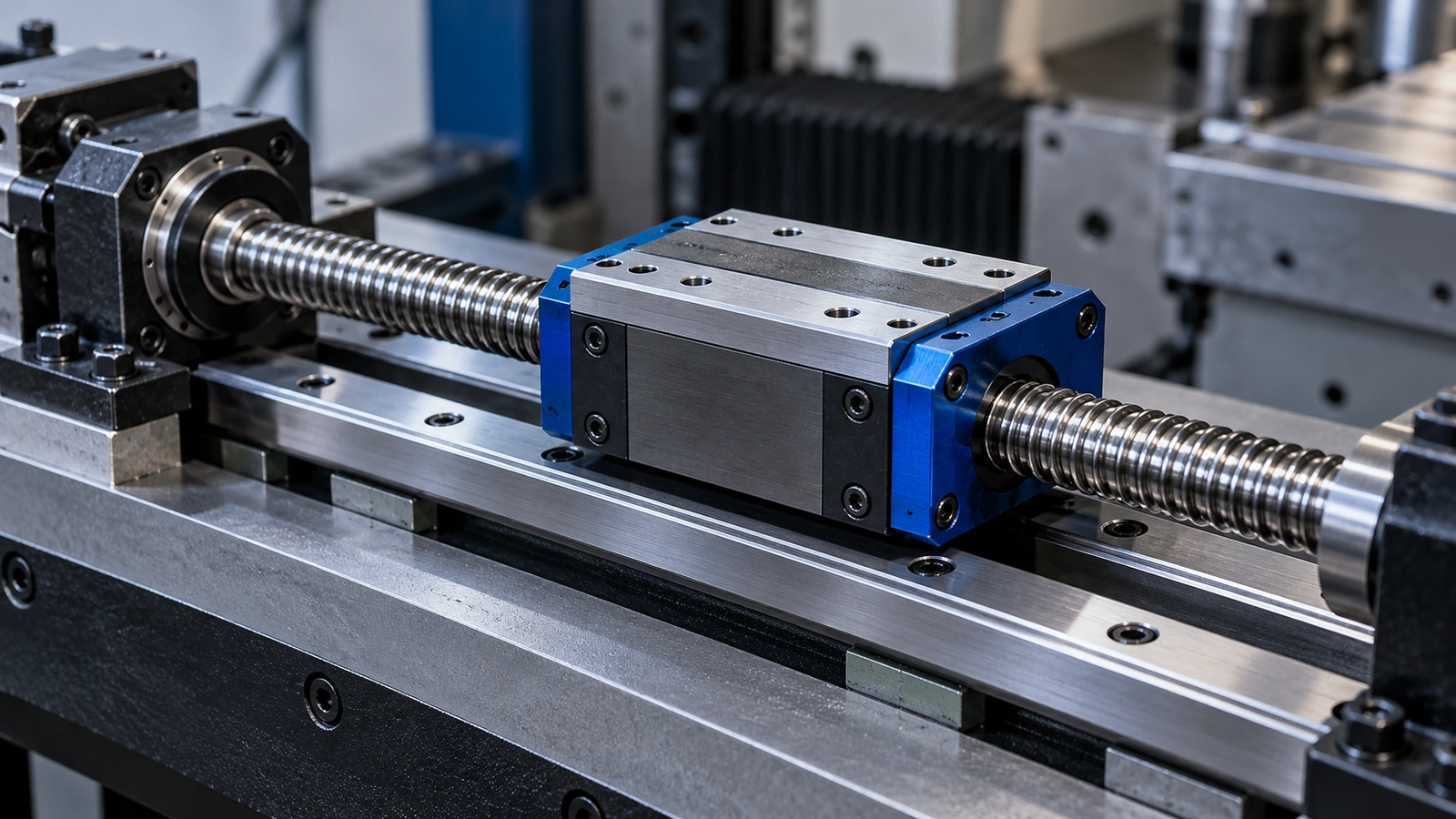
Machine screws use the screw principle as a defined fastening interface.
Machine screws normally have a uniform thread along the engagement length and are installed into a tapped hole, a nut, or a threaded insert. They are selected for a joint’s diameter, pitch, length, head style, drive, material, and environment. That is different from asking whether a screw is a simple machine: the first question concerns physics, while the second concerns a product family and its mating hardware.
For procurement, specify the complete interface. “M6” identifies a nominal metric diameter, but it does not by itself state pitch, length, head, property class, finish, or drive recess. An M6 × 1.0 screw and a fine-pitch variant may not fit the same tapped hole. Engagement also depends on the parent material, edge distance, access for the tool, and whether the joint sees vibration, temperature cycling, or corrosive exposure.
Phillips machine screws need a compatible drive and controlled installation.
Phillips drives use a cruciform recess designed to center a cross-tip driver. The common designations are PH0, PH1, PH2, and larger sizes, but a recess number is not a universal torque rating. Cam-out can occur when the bit is worn, the size is wrong, the driver is angled, or the joint requires more torque than the recess can transmit. A properly seated bit, axial pressure, and a controlled tool reduce damage; a torque-limiting driver is preferable when the joint specification provides a limit.
Other cross-recess families, including Pozidriv, look similar but use different flank geometry. A Pozidriv bit in a Phillips recess, or the reverse, can feel engaged while damaging both surfaces. Record the drive family in the bill of materials and verify it at incoming inspection. For service teams, keep the correct bit size with the spare fasteners rather than assuming every cross head is interchangeable. Phillips machine screws are only predictable when the recess and driver are treated as a matched pair.
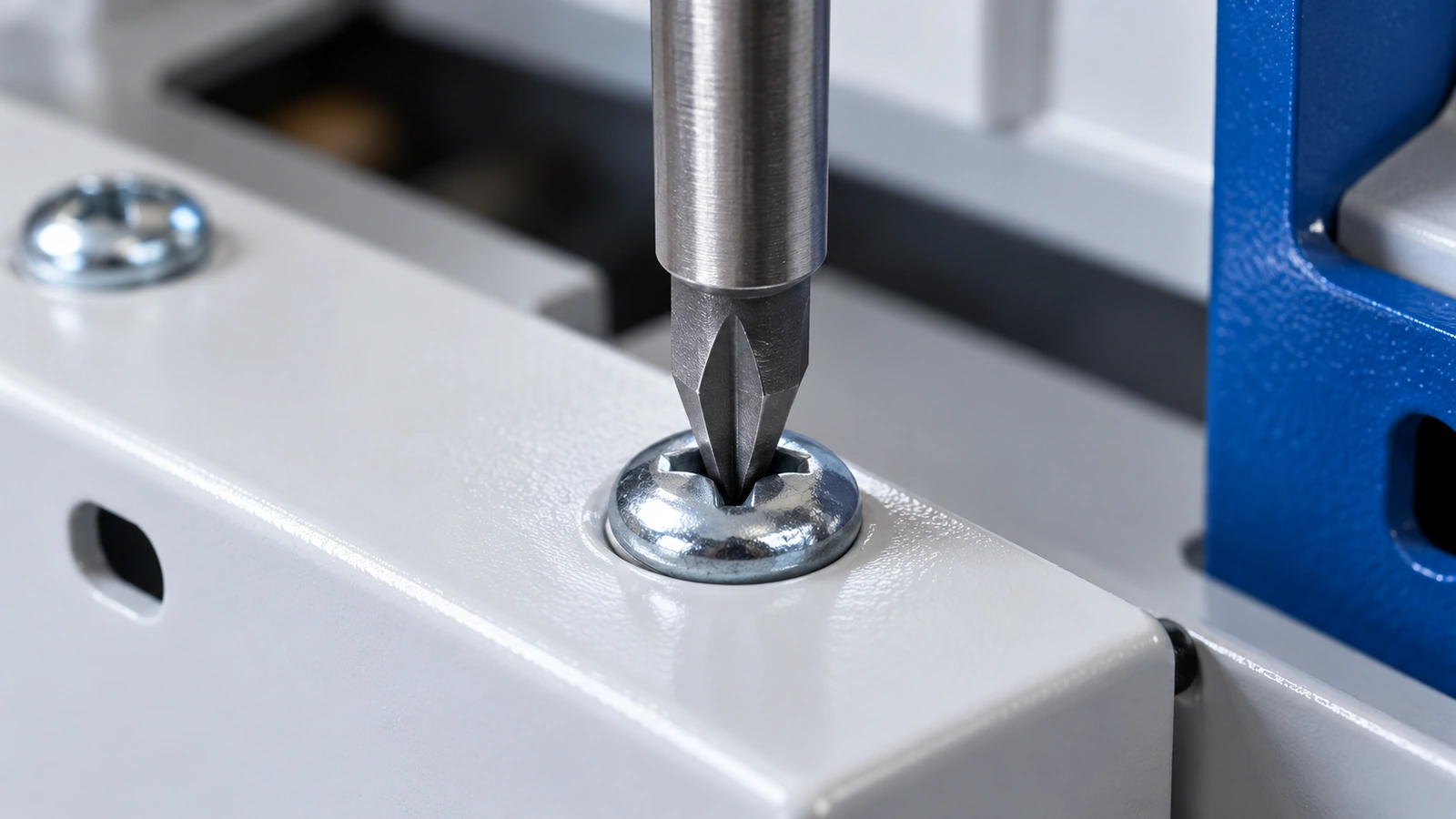
Stainless steel machine screws balance corrosion resistance with joint behavior.
Stainless grades can be useful where moisture, cleaning chemicals, or appearance make corrosion resistance important. Austenitic grades such as 304 and 316 are common choices, but their strength, work-hardening response, magnetic behavior, and corrosion performance differ by grade and condition. Galling is a known risk when stainless threads are run dry under repeated installation; compatible lubrication, slower speed, and a clean mating thread can reduce the risk. The correct material still depends on chloride exposure, temperature, galvanic contact, and required mechanical properties.
Do not infer a grade from a bright finish or from the word “stainless” alone. Request the material designation and any applicable mechanical-property documentation. ISO 3506-1 covers mechanical properties for corrosion-resistant stainless steel fasteners, while a drawing or purchase order should state the exact grade, thread, head, and finish required. Stainless steel machine screws may be appropriate for one enclosure and unnecessarily costly or mechanically mismatched for another.
Comparing machine screws by joint behavior prevents avoidable rework.
| Choice | Performance tendency | Compatibility and maintenance | Unit-cost tendency and TCO note |
|---|---|---|---|
| Phillips recess | Fast manual alignment; greater cam-out sensitivity when the bit or seating is poor. | Requires the correct PH size and axial access; inspect recesses after service. | Often economical; damaged heads can increase labor and extraction cost. |
| Hex socket or internal hex | Positive bit engagement when fully seated; can collect debris in the socket. | Needs a matching key or bit and enough tool clearance above the head. | May cost more per piece; can reduce installation damage in controlled assembly. |
| Carbon or alloy steel | Broad strength and hardness options; corrosion protection depends on finish. | Check coating compatibility, hydrogen-related process controls, and storage conditions. | Usually a lower material cost; replacement and coating controls affect TCO. |
| Austenitic stainless | Useful corrosion resistance; work hardening and galling need process control. | Separate stainless storage from contamination sources and verify mating materials. | Higher material tendency; lower corrosion-related maintenance may offset it. |
Application dimensions show where a screw simple machine adds value.
| Application | Key dimensions to specify | Typical risk to review | Verification action |
|---|---|---|---|
| Sheet-metal enclosure | Diameter, pitch, length, head clearance, tapped-hole depth, coating. | Thread stripping or insufficient engagement in thin material. | Confirm hole callout and run a fit check with production material. |
| Machine guard or panel | Drive family, tool access, vibration exposure, washer or shoulder needs. | Cam-out, loosening, or a head that sits proud of the panel. | Use a controlled driver and inspect seating after a vibration or service trial. |
| Outdoor or wash-down assembly | Stainless grade, galvanic pair, seal interface, temperature, cleaning chemistry. | Crevice corrosion, galling, or a coating that is incompatible with the environment. | Review the material specification and exposure conditions with the supplier. |
| Threaded insert or tapped block | Diameter, pitch, engagement, screw length and head clearance. | A matching diameter can still have an incompatible pitch or insufficient engagement. | Check the controlled thread callout and confirm fit with a gauge or approved mating sample. |
Standards and compliance define what a machine screw claim actually covers.
Use standards by scope. ISO 68-1 defines basic thread profiles for general-purpose metric screw threads; ISO 965-1 addresses principles and basic data for tolerance systems. ISO 3506-1 addresses mechanical properties of corrosion-resistant stainless steel fasteners. These documents help define geometry or properties, but a reference to one standard is not a blanket certification for a complete assembly, coating, or installation process.
Drawings and purchase orders should identify the thread system, tolerance class where needed, material or property class, finish, drive, dimensions, and inspection records. If the product enters a regulated market or safety-related assembly, apply the destination market’s requirements and retain supplier documentation. Unsupported claims about load, torque, corrosion life, or certification can create rejection, warranty, and traceability costs even when the screw itself appears dimensionally correct.
Selecting machine screws starts with the interface, environment, and evidence.
- Map the joint: identify the tapped hole or nut, required engagement, access direction, clearance, and whether the joint is routinely serviced.
- Define the thread: record nominal diameter, pitch, tolerance, length under head, and any shoulder or washer requirement; verify the mating part with a gauge or sample.
- Choose the drive for the process: a Phillips drive can suit accessible manual work, while a socket or another drive may better fit a controlled production tool. Match the bit family exactly.
- Choose material and finish from exposure and joint behavior. Compare corrosion needs, galvanic partners, galling risk, temperature, and documentation rather than selecting by appearance.
- Confirm evidence: request dimensional inspection, material designation, and any test or traceability records that the drawing or contract requires.
Qiyi Fastener can discuss the required configuration during sourcing. Review the fastener product catalogue and ask the supplier to confirm the actual machine-screw family, thread designation, drive, material, finish and documentation against your drawing. A general catalogue does not establish availability of every screw described in this guide.
Frequently asked questions about machine screws and Phillips drives.
Are machine screws stainless steel?
Some machine screws are stainless steel, but the category also includes carbon steel, alloy steel, brass, and other materials. Stainless grade, condition, finish, and mating material still need to be specified; “stainless” alone does not establish strength or corrosion performance.
What are the different types of machine screws?
Types are commonly distinguished by head style, drive, thread system, material, and finish. Examples include pan, flat, oval, and binding heads with Phillips, slotted, hex-socket, or other drives; the correct choice depends on the joint drawing and tool access.
What are the different types of Phillips screws?
Phillips screws vary by recess size and head style, while related cross-recess systems such as Pozidriv use different geometry. Select the driver family and size together, seat it fully, and verify the supplier’s callout rather than relying on a visual match.
Why are machine screws called machine screws?
The name refers to their traditional use in machines and machinery, where a uniform thread engages a tapped hole or nut. It describes the fastening application and form; it does not mean that every machine screw has the same material, strength, or drive.
References support the physics and design context for this screw simple machine guide.
- NASA Fastener Design Manual — Engineering guidance on threads, preload, washers and joint design.
- OpenStax College Physics 2e, Simple Machines — Mechanical advantage, force and conservation of work.
- ASME codes and standards catalogue — Look up the named B1 and B18 standard and specify the required edition; the catalogue is not a product certificate.
A screw’s advantage comes from controlled travel and force redirection; a reliable joint comes from matching the complete interface. When the drawing, material, drive, and installation process agree, the simple machine does its job quietly through every service cycle.
Specify travel and thread fit first, then verify the material and installation process. For a drawing review, review the fastener product range and contact Qiyi Fastener with the mating-thread callout, drive, environment and required quantities.