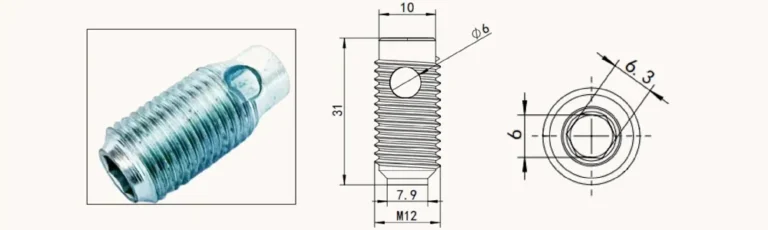
internal vs external profile connectors is a procurement and joint-planning question, not a product-name-only choice. Confirm the controlled drawing, exact profile geometry, joint location, and assembly constraints before requesting a quote.
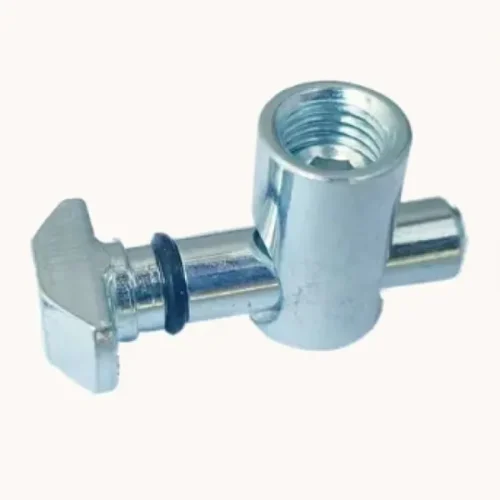
Direct answer: choose the visible and accessible joint
For a clean modular frame joint, consider an internal connector when the design requires a less visible external face and the profile interior, preparation, and assembly sequence permit that arrangement. Consider an external connector or bracket approach when outside access, later adjustment, or an exposed hardware layout is acceptable and practical. Neither approach is automatically the better engineering choice; compare the exact joint and the approved drawing.
Internal and external joint-planning table
| Frame requirement | Internal approach to review | External approach to review |
|---|---|---|
| External appearance | Check whether the internal arrangement supports the intended clean face. | Confirm whether visible connector or bracket hardware is acceptable. |
| Available space | Confirm internal envelope and any required profile preparation. | Confirm space around the profile faces and adjacent equipment. |
| Assembly access | Confirm insertion and securement can occur before the frame closes. | Confirm external tool access and the planned assembly sequence. |
| Later adjustment | Identify whether the internal joint remains reachable after assembly. | Identify whether exterior hardware supports the needed service access. |
| Drawing callout | Mark internal orientation, preparation, and joint location. | Mark external interface, connector or bracket location, and clearance. |
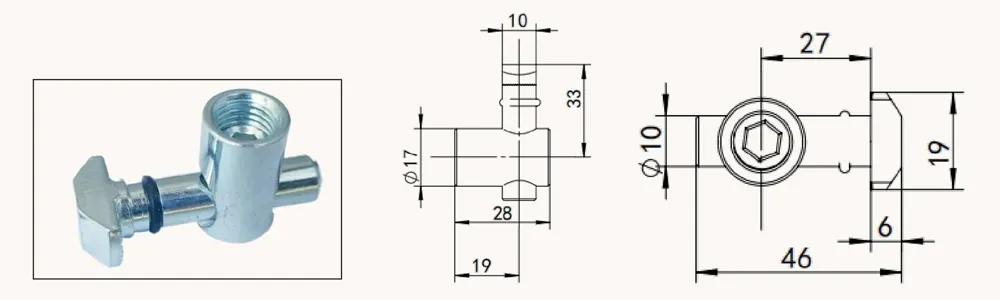
Do not use appearance as the only criterion
A concealed-looking face can be a valid project requirement, but it does not replace fit and assembly checks. Review the profile section, panel locations, cable routes, guards, and the order in which members are joined. Where an external solution is acceptable, visible hardware can simplify access; where an internal solution is required, document the preparation and closure sequence before procurement.
Compare the profile connector product page with the external bracket product page and the controlled frame drawing.
RFQ checklist for a clean-joint requirement
- Profile cross-section, joint location, and current drawing revision
- Marked faces that must remain visually clean
- Internal-space and external-clearance constraints
- Required preparation, connector orientation, and assembly order
- Panel, guard, cable, or service-access constraints near the joint
- Quantity by frame or assembly and any finish requirement

Fit Boundary
This article does not establish a load rating, stiffness, torque, vibration result, environmental seal, finish durability, or compatibility with every profile system. “Internal” and “external” describe placement, not a performance guarantee. Final connector selection and acceptance require the approved drawing and project-specific review.
Request a QIYI RFQ review
Send QIYI the current drawing, BOM line, profile details, joint mark-up, quantity, and project revision through the contact form. A complete RFQ lets the requested connector family be reviewed against the actual assembly instead of a generic description.
FAQs
Can a product name alone define the connector?
No. The profile geometry, joint arrangement, preparation, access, and drawing revision must be confirmed.
Should an assembly sequence be included in the RFQ?
Yes, when access or closing the frame can affect how the connector is installed or inspected.
Can the guide establish load capacity or torque?
No. Use the approved drawing and the documentation for the exact part and project.